Journal archive
Search and archive
Explore history by person, place, era or topic.
From the journal
46 articles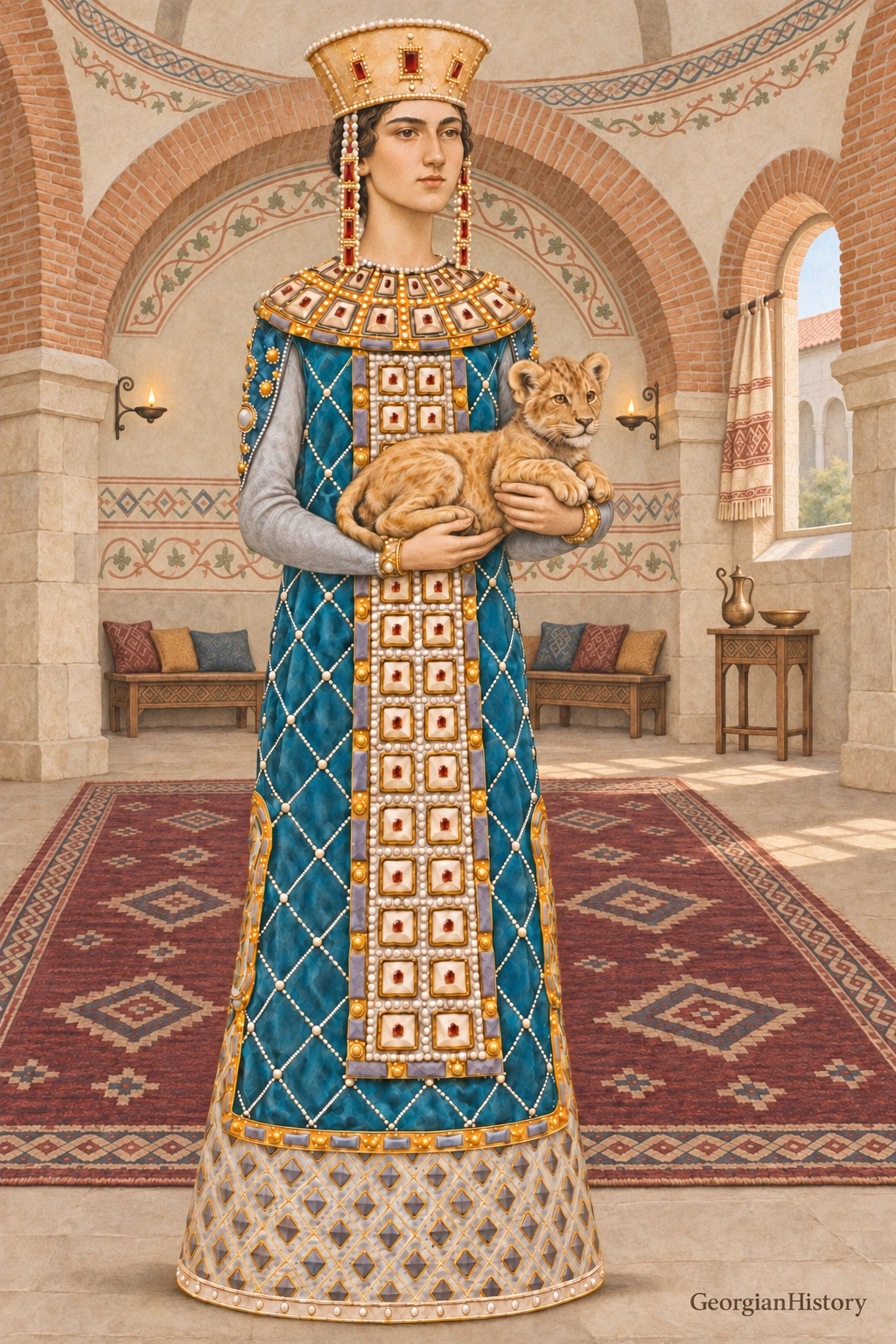
Culture and heritage
How People Dressed in Georgia · Part 1. Late twelfth-century royal dress: the bisoni, loros, pearl ornament, and crown, examined through the Vardzia portrait and a museum reproduction.
Read the story 
Heraldry
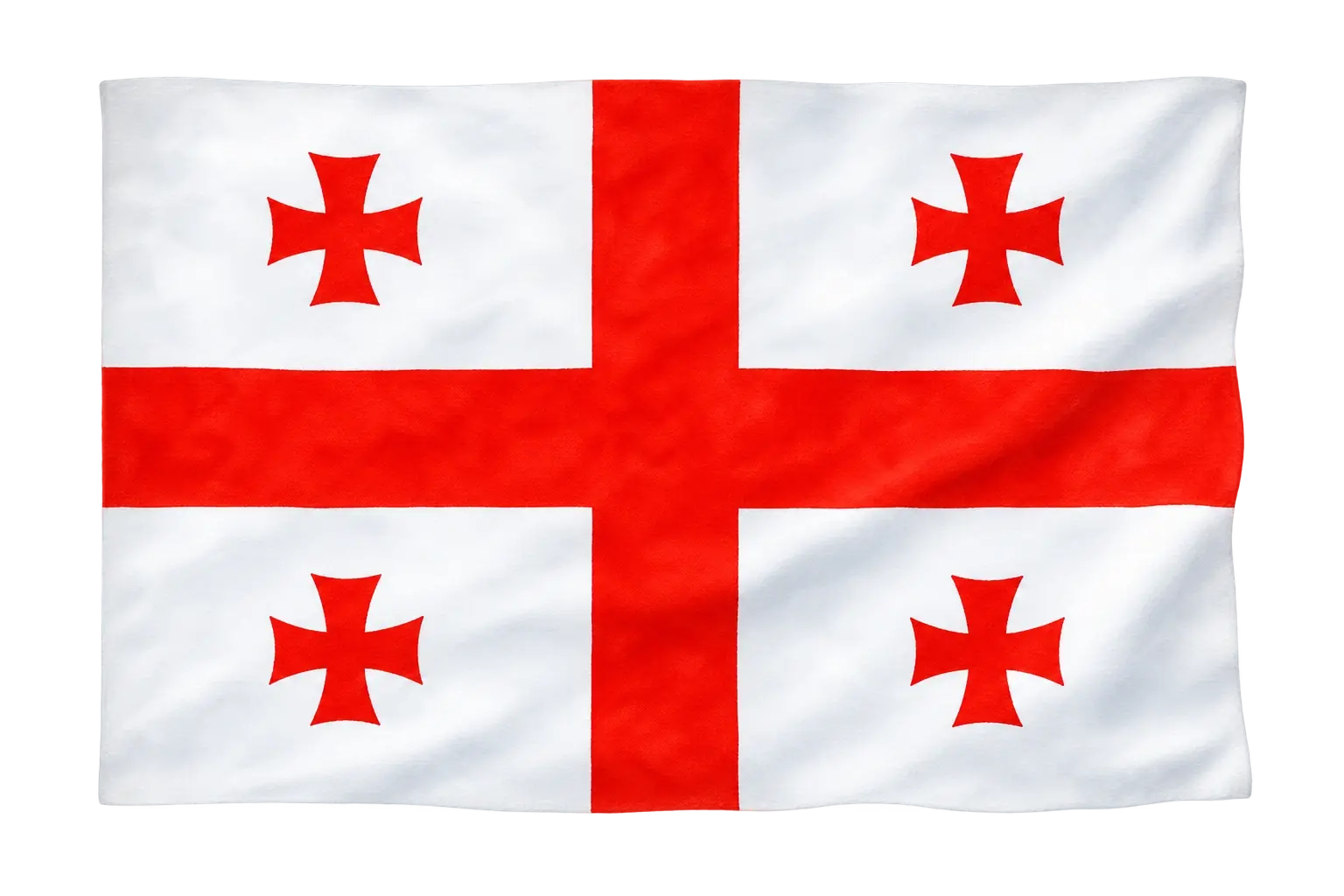
How Georgia restored its historic flag in 2004
Read the story 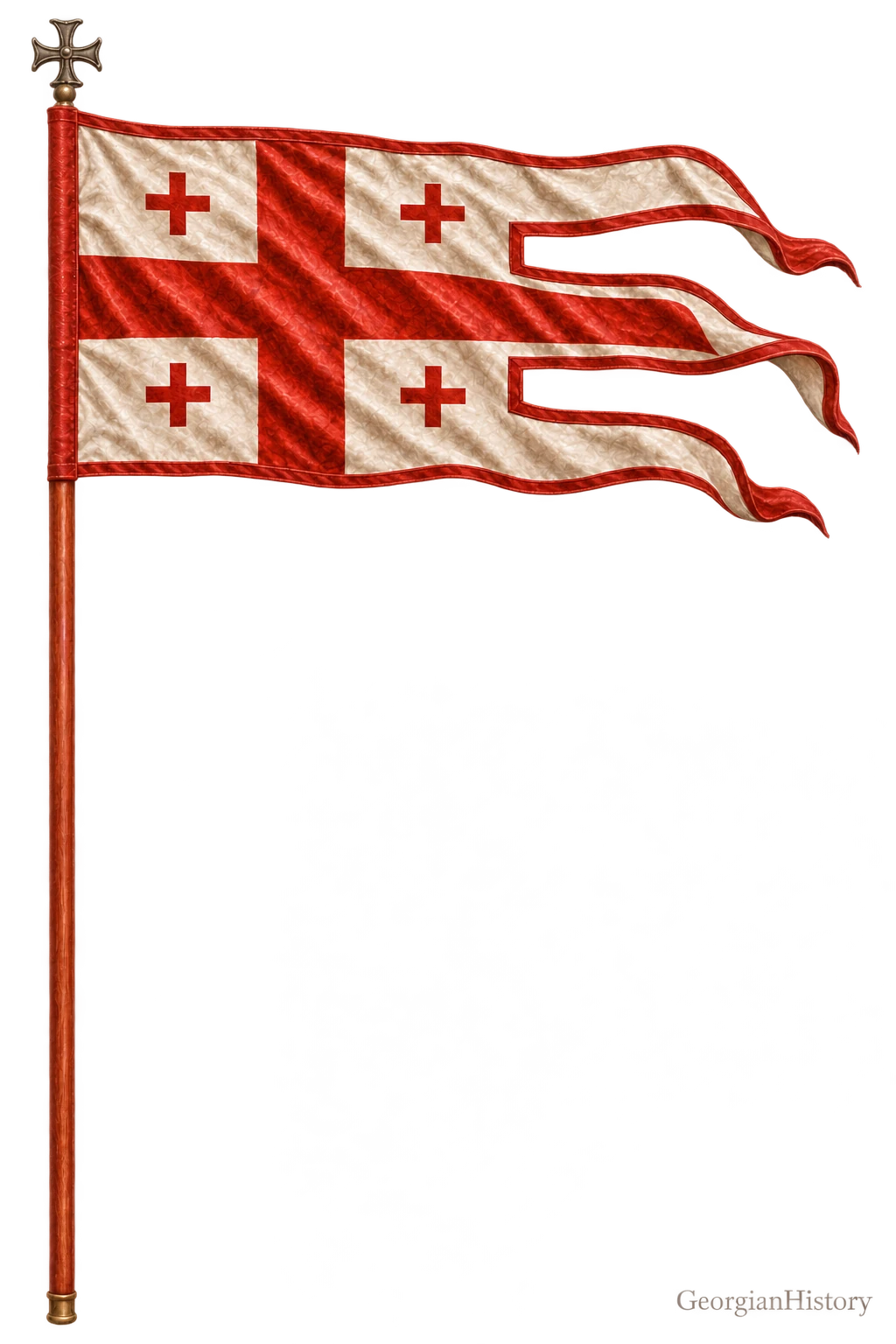
Heraldry
How Tbilisi and Kutaisi came to recognise one king, what the ruler of Samtskhe pledged, and what a 1339 chart shows above Tbilisi.
Read the story 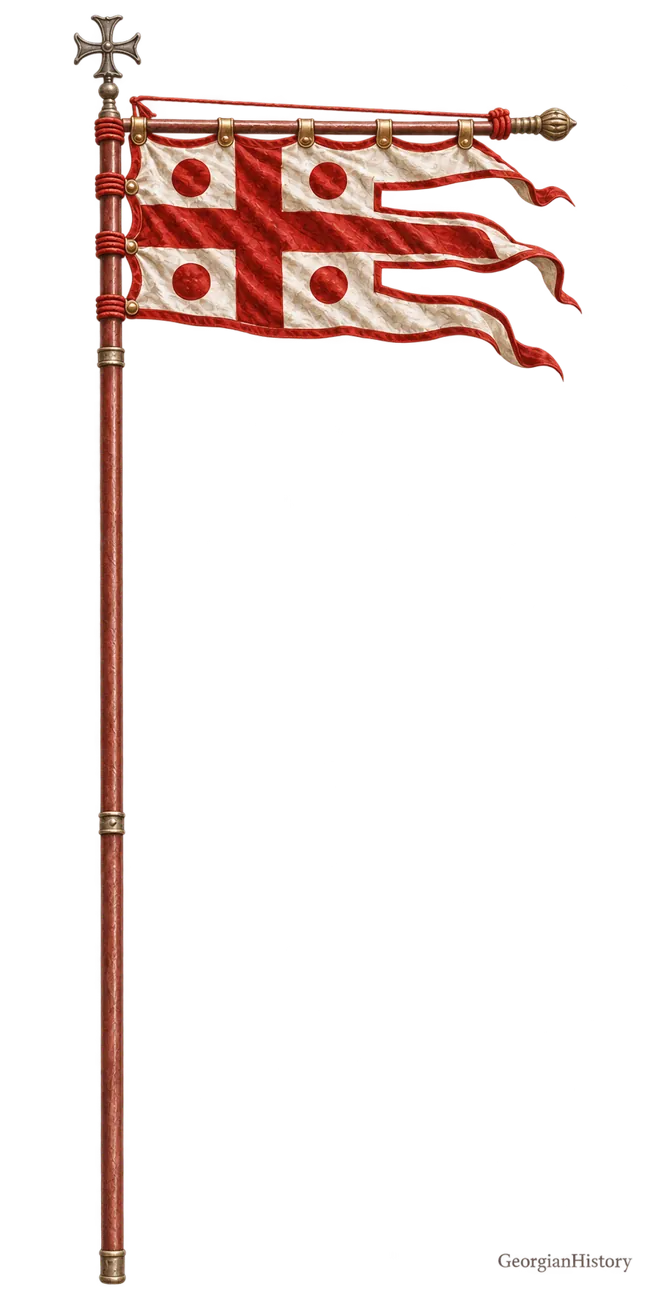
Heraldry
How might Georgia’s royal banner have changed by Queen Tamar’s reign? A Georgian chronicle, an Armenian account and a small mark on coins offer clues.
Read the story 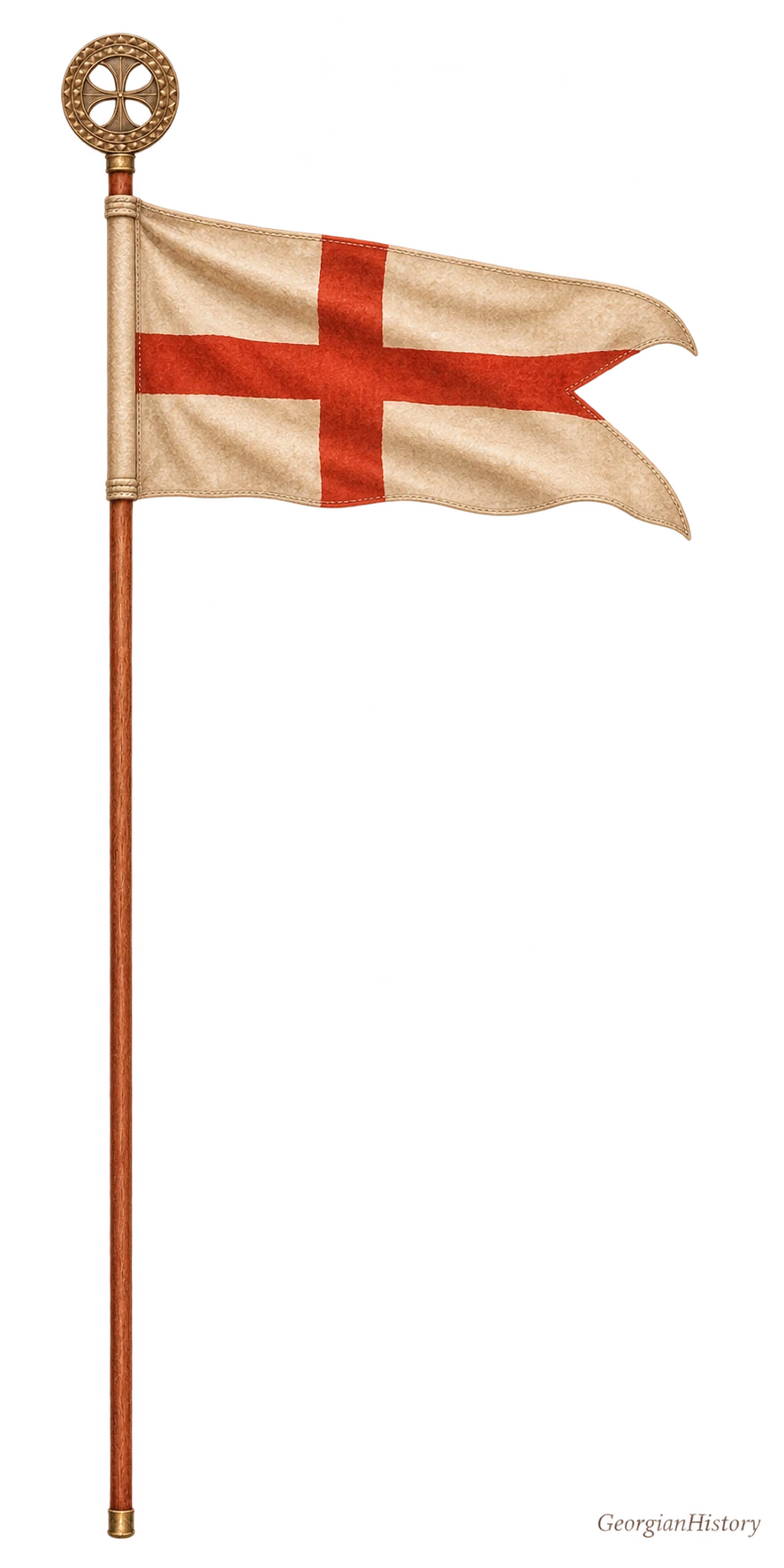
Heraldry
How Tamar’s chronicler described the royal banner, and what guided our reconstruction of its cloth and finial.
Read the story 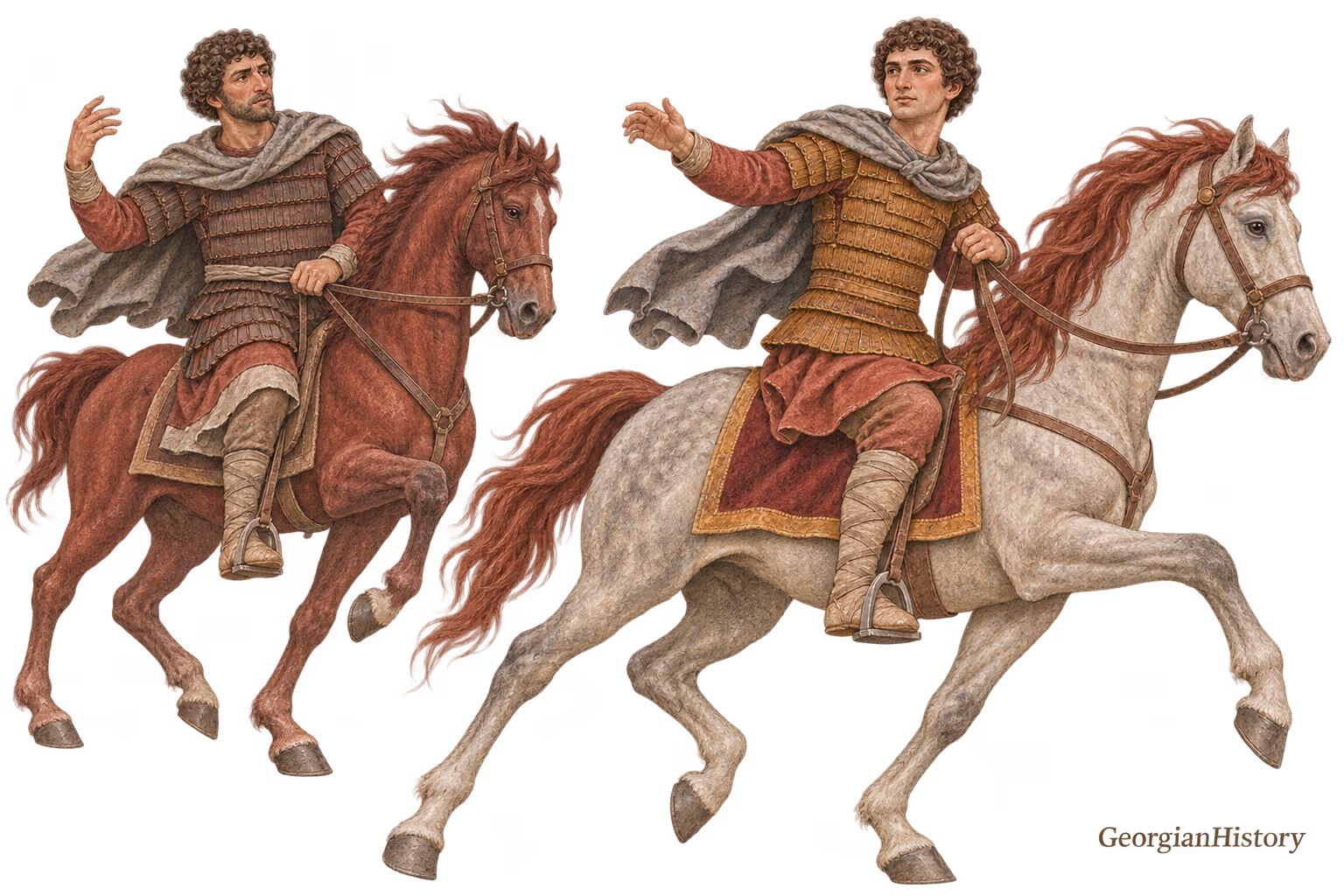
Armies and arms
Warriors in Frescoes · Sheet F09 · Church of St George, Upper Svaneti · 11th–12th centuries
Read the story 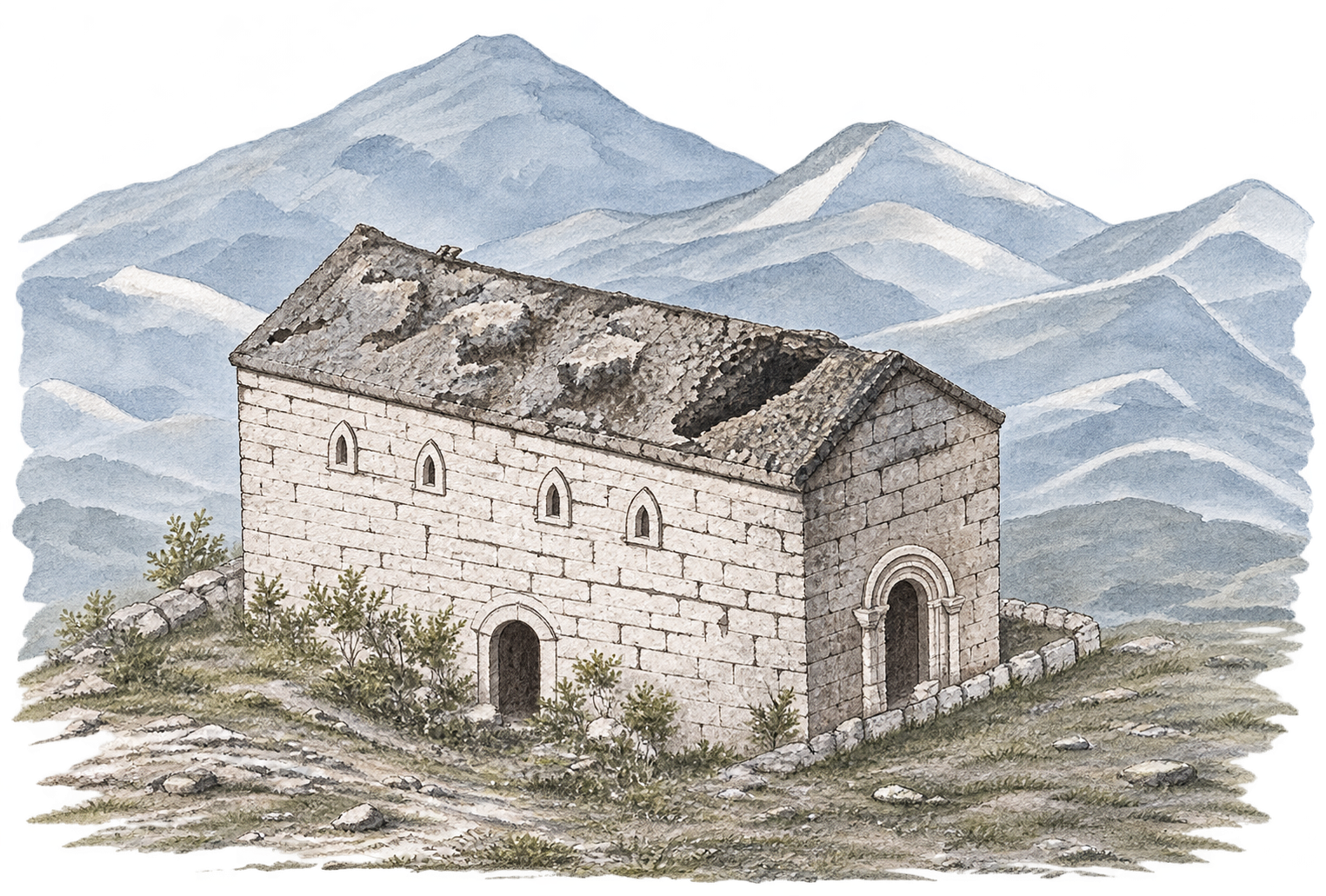
Culture and heritage
A stone church above the Assa Gorge
Read the story 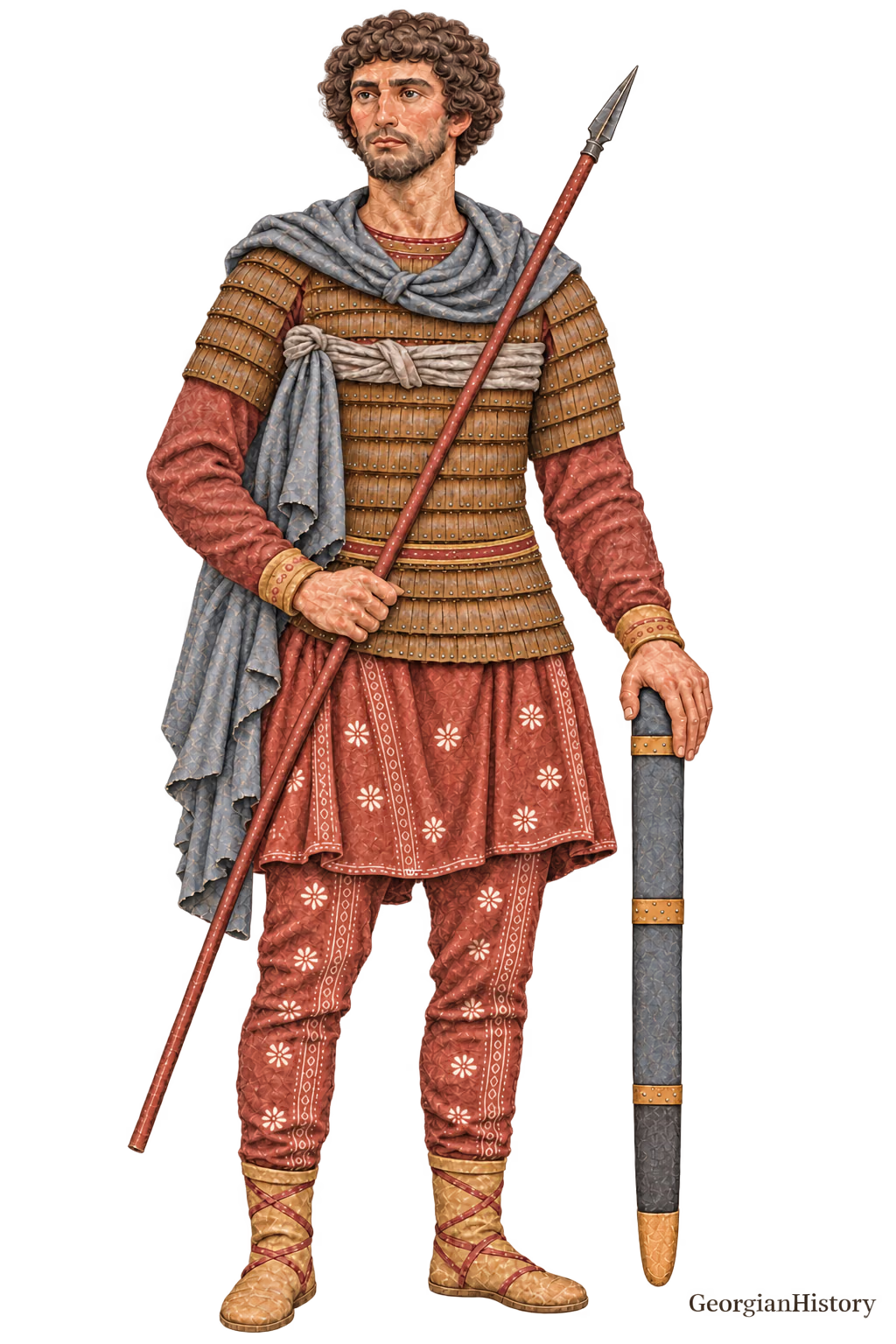
Armies and arms
Warriors from Frescoes · Issue 2 · F03 · Svaneti · Church of St George · Around the turn of the twelfth century
Read the story 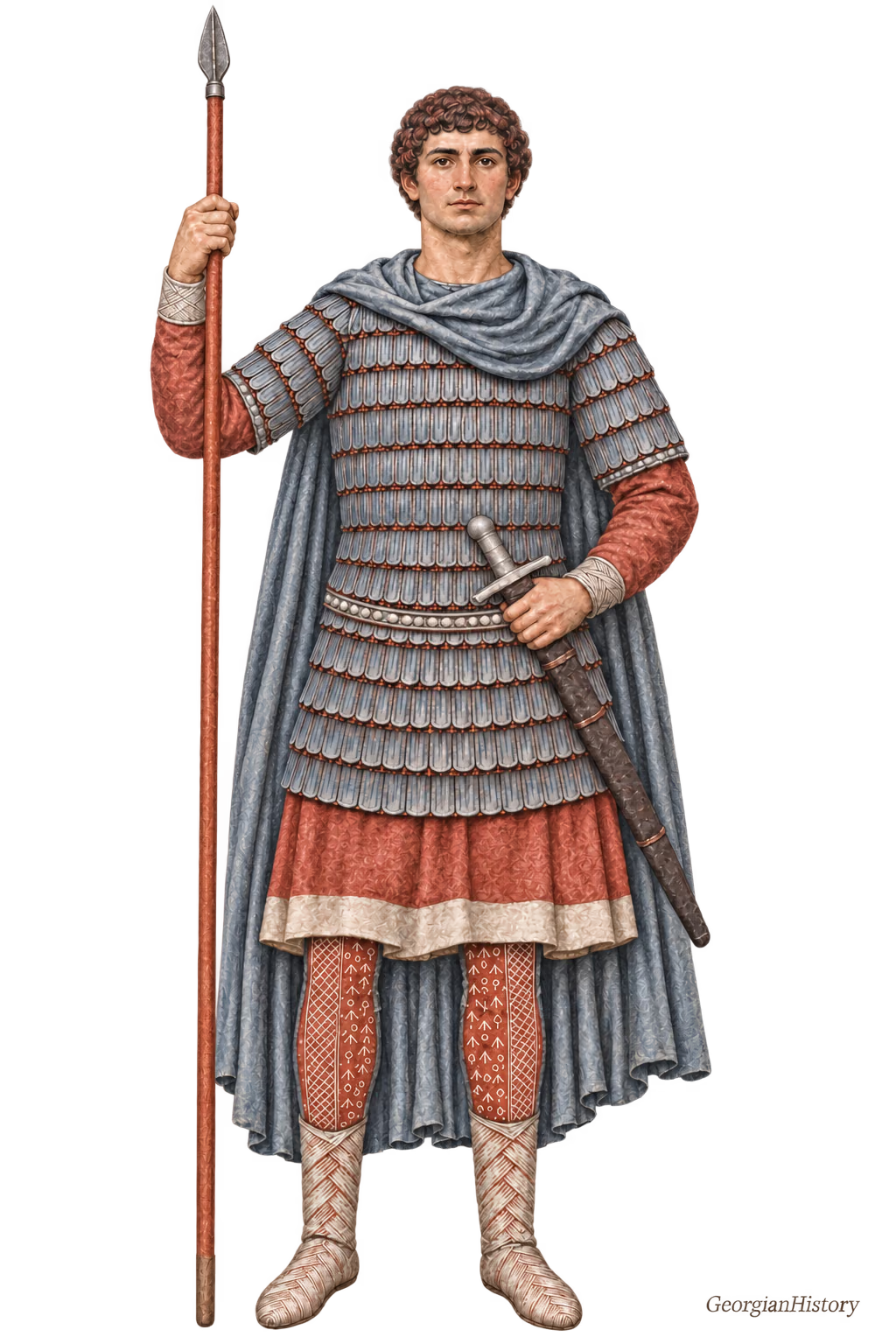
Armies and arms
Armour and weapons in a thirteenth-century Georgian fresco. Warriors from the Frescoes, plate F01.
Read the story 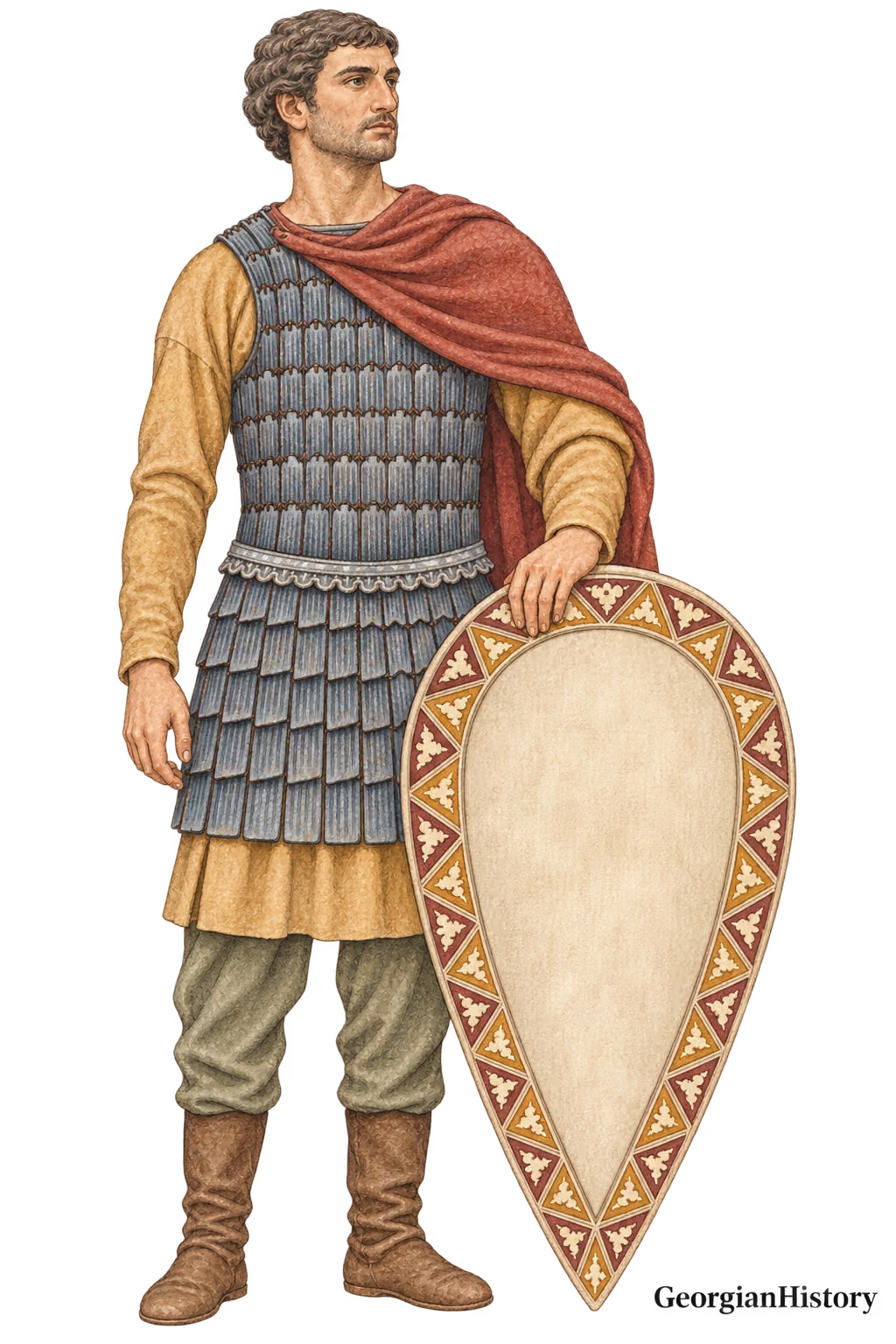
Armies and arms
Warriors in frescoes · Sheet F07. Shield and lamellar armour in a twelfth-century Georgian mural.
Read the story 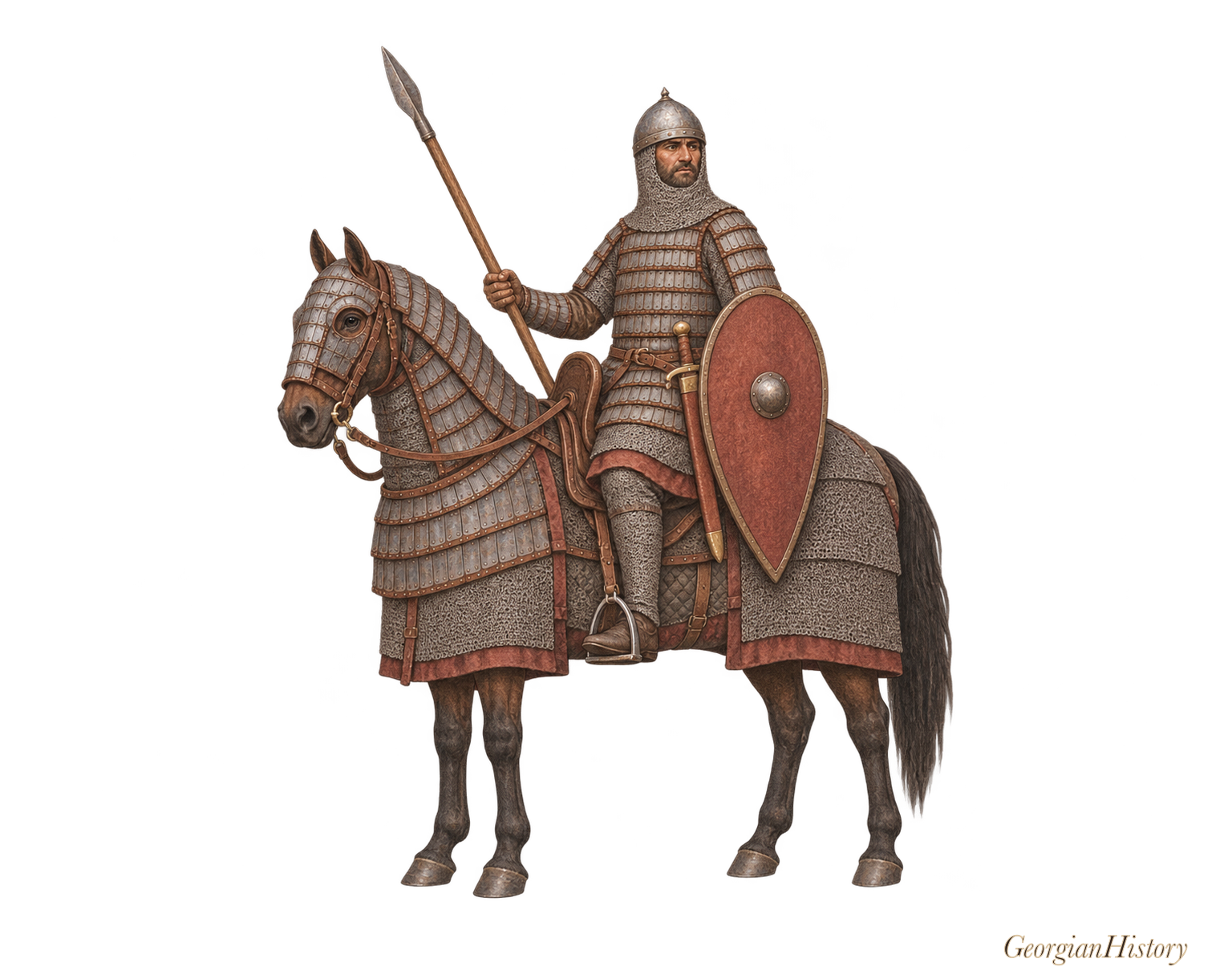
Armies and arms
A foot soldier and two horsemen in three GeorgianHistory watercolours.
Read the story 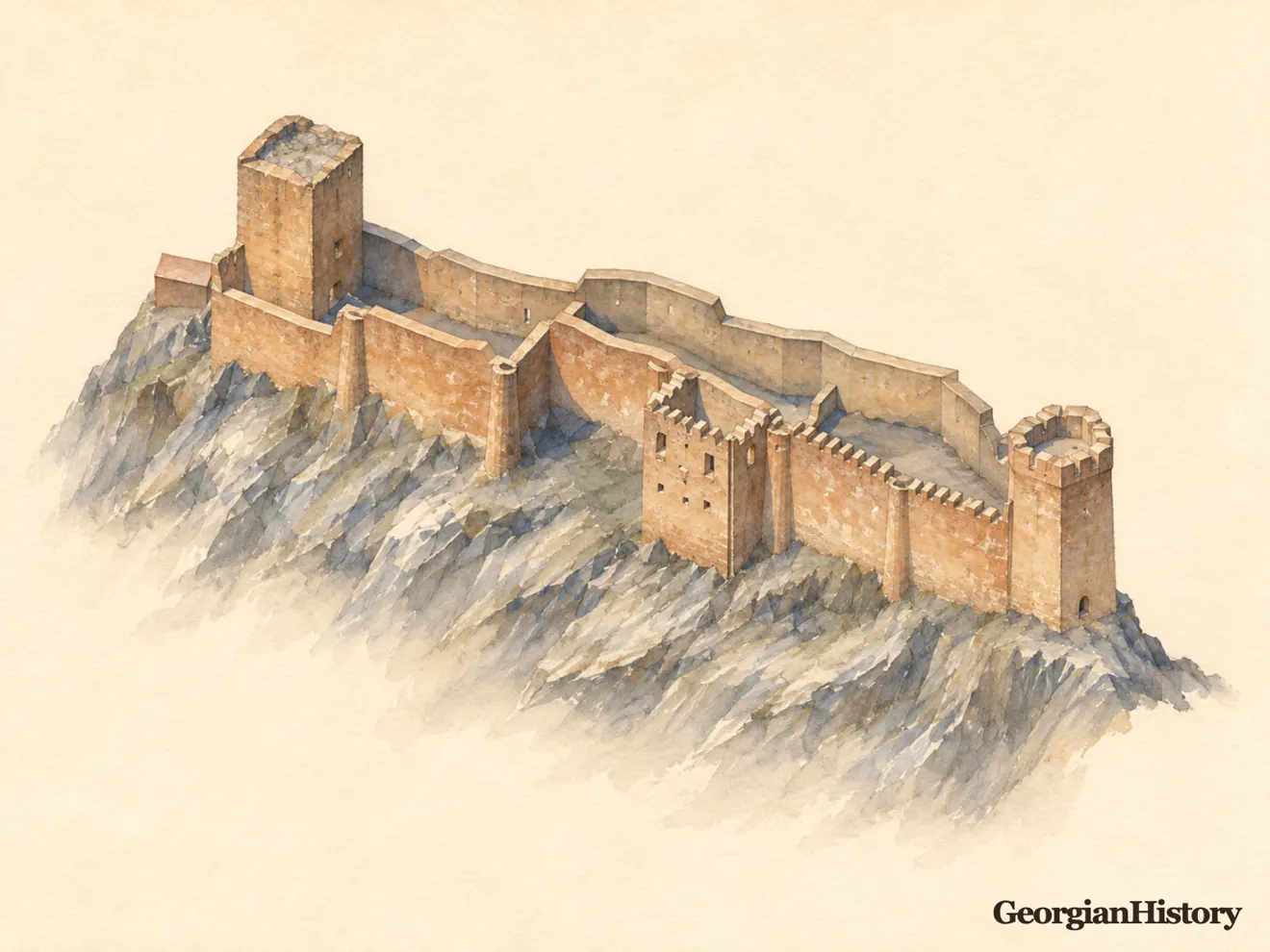
Historic places
The history of a fortress in Samtskhe–Javakheti, with watercolour views of its citadel and an interactive 3D model.
Read the story 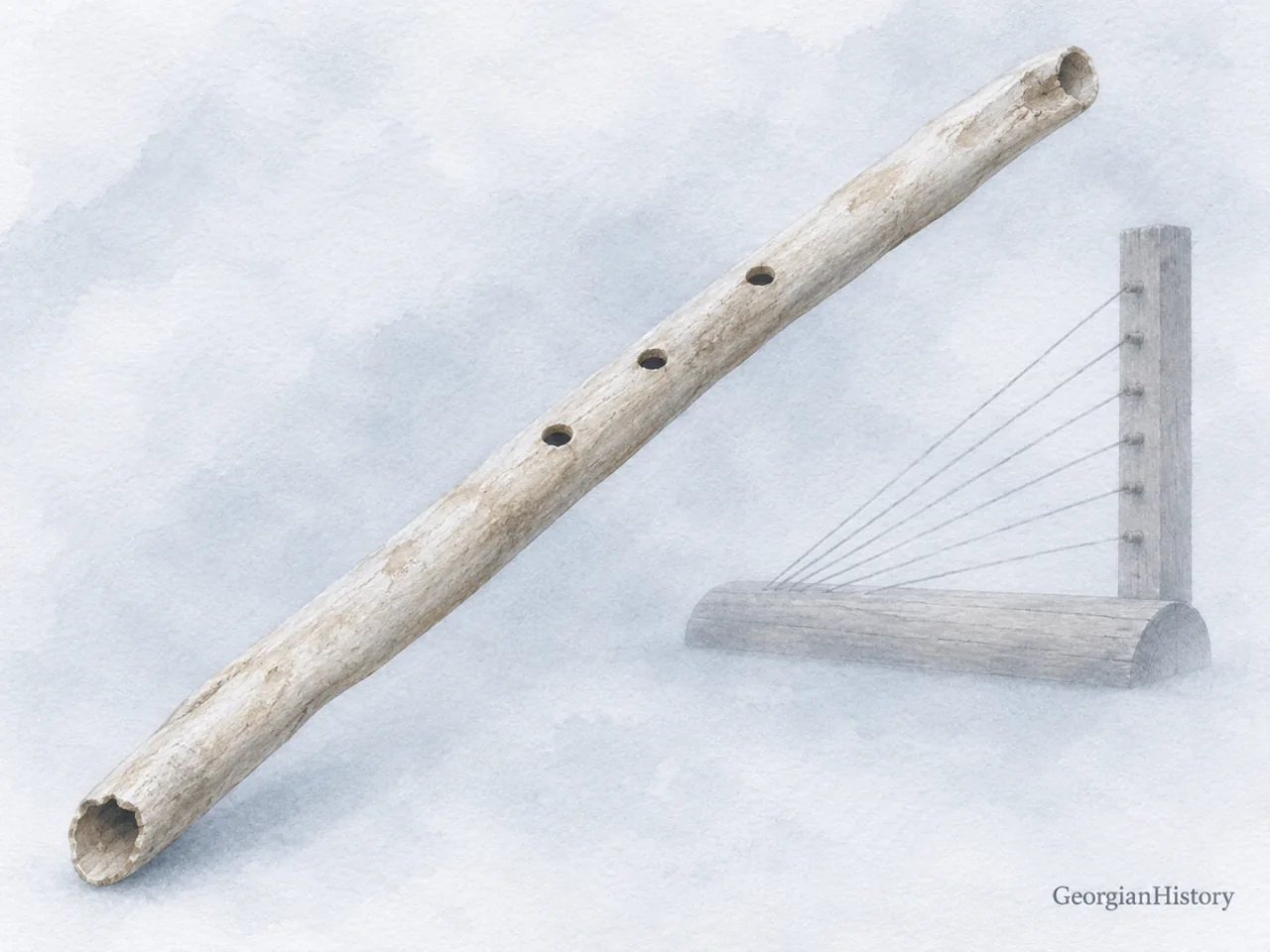
Culture and heritage
Bronze Age bone flutes, musicians at Uplistsikhe and Vani, the ebani in medieval texts, and the string instruments of Georgian folk tradition.
Read the story 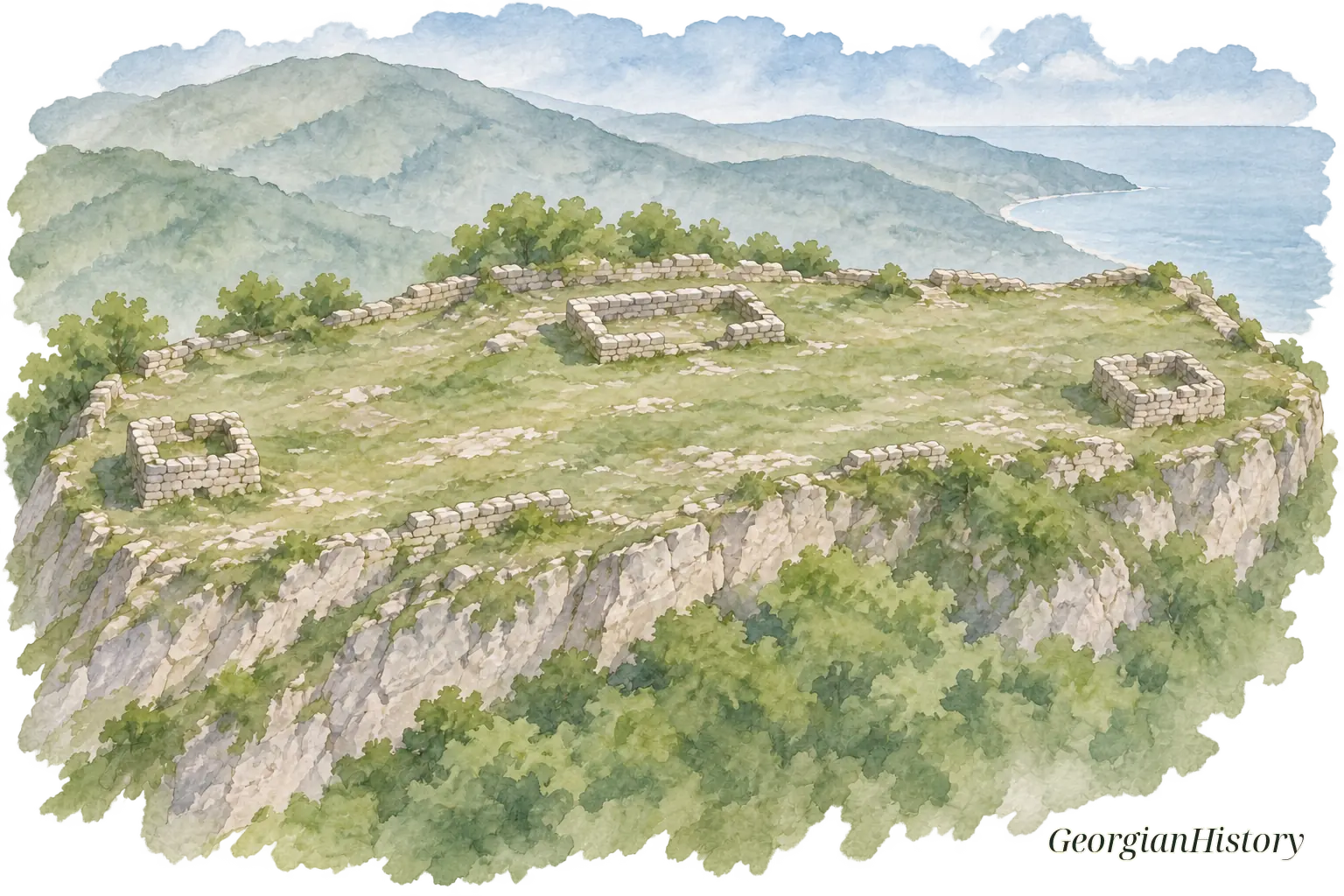 GeorgianHistory
Archaeology
The upper citadel of Anakopia stood on the summit of Mount Iveria above New Athos. The fortified town's walls enclosed part of the southern slope. This album pairs watercolors with archaeological diagrams and descriptions from Georgian scholarship.
Read in Russian 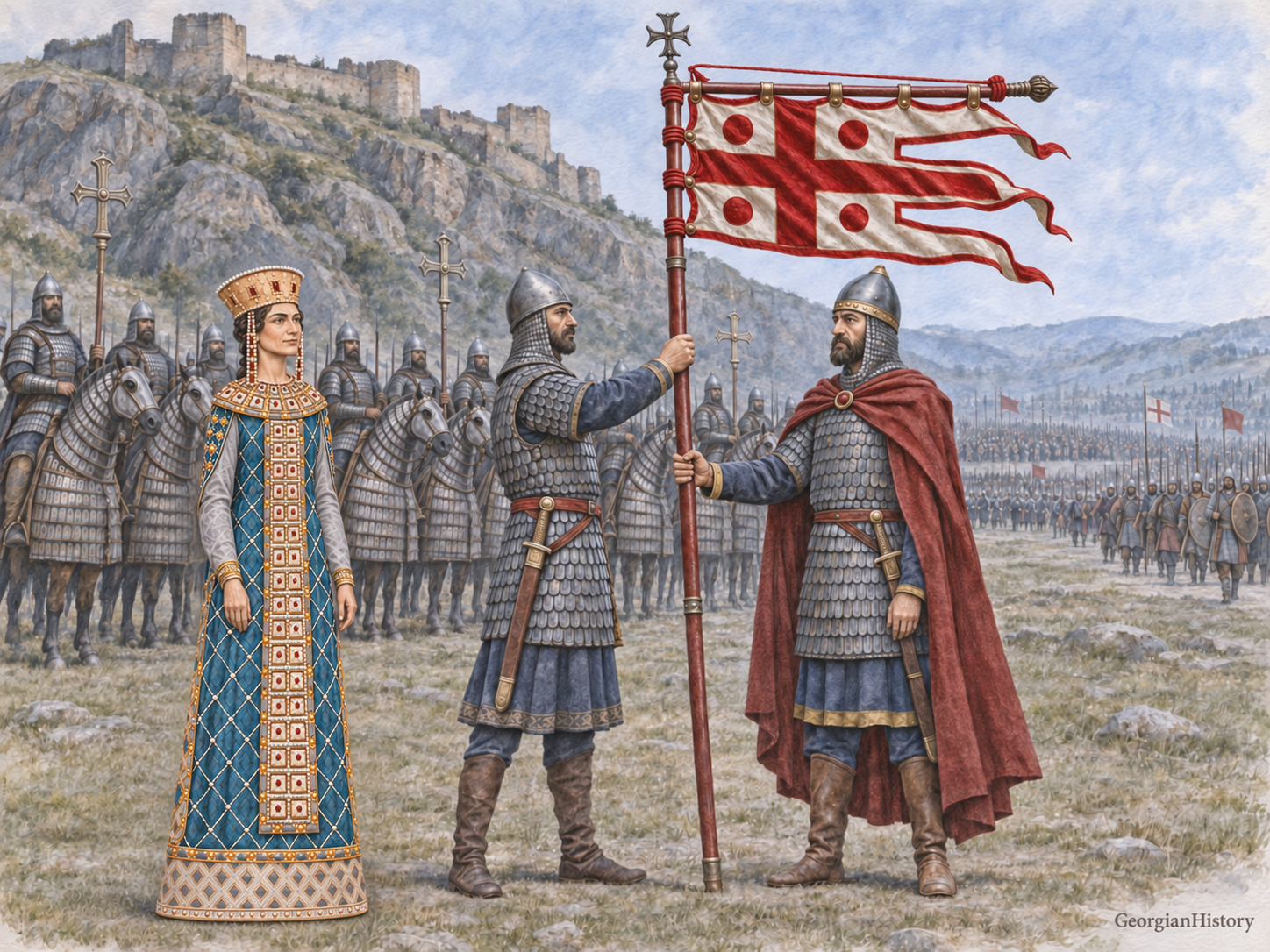
Wars and battles
Read the story 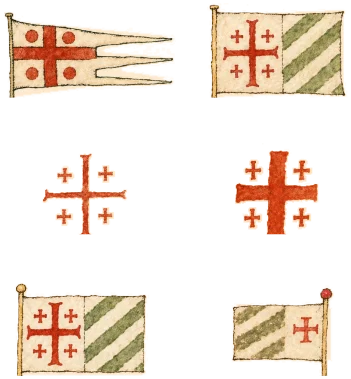
Heraldry
Georgian Banners · Part 1 of 6
Read the story 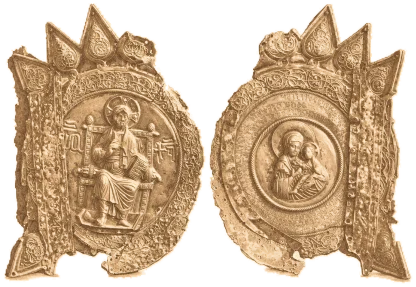
Heraldry
Georgian Banners · Part 2 of 6
Read the story 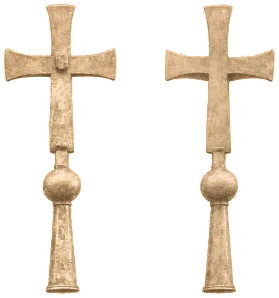
Heraldry
Georgian Banners · Part 5 of 6
Read the story 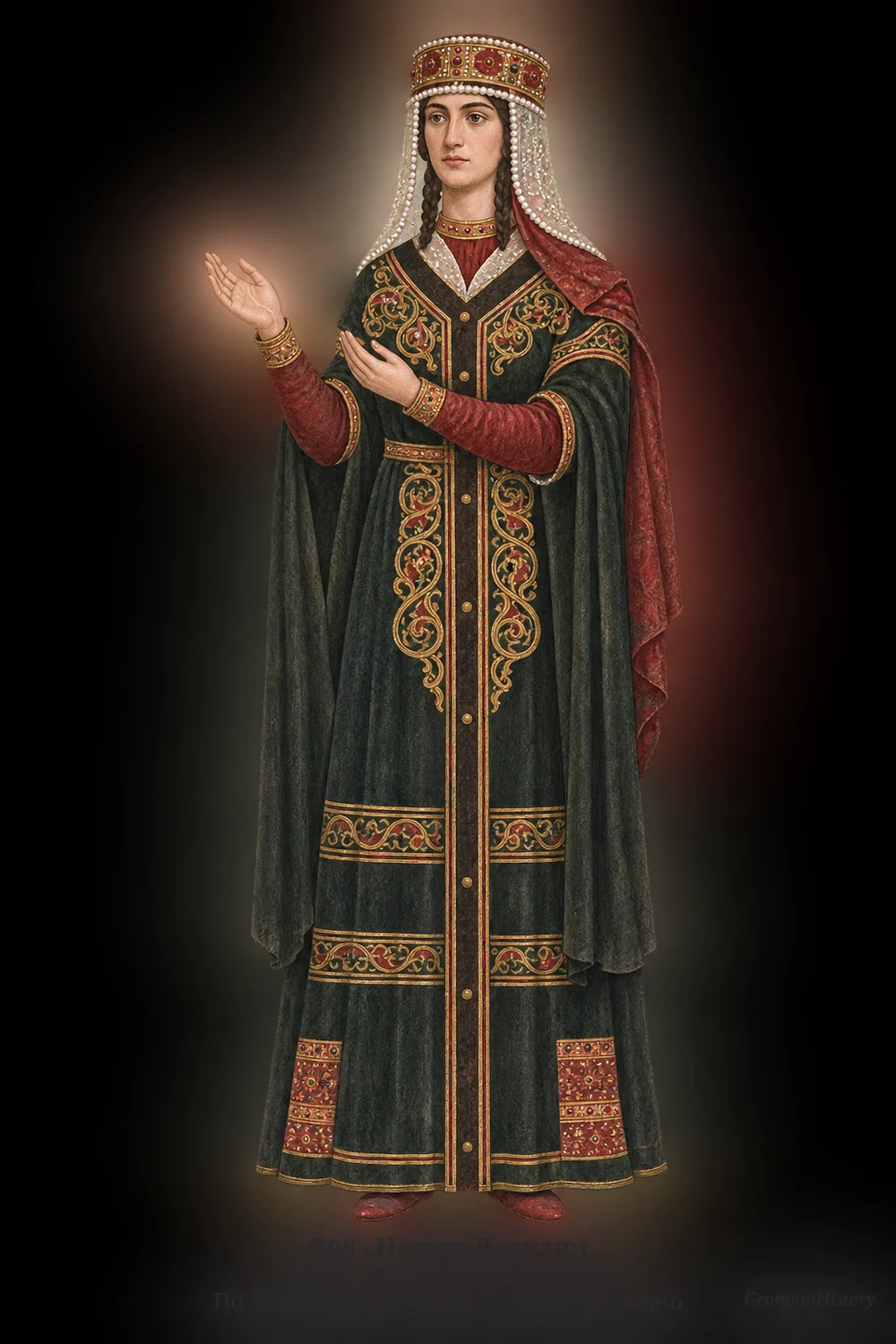
Culture and heritage
How People Dressed in Georgia · Issue 3. Khobi, Odishi. Nateli Dadiani’s long dress, hanging sleeves and mandili in the family fresco at Khobi.
Read the story 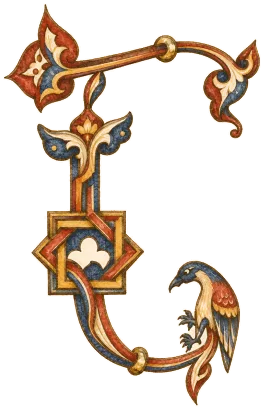
Culture and heritage
The Mokvi Gospels of 1300
Read the story 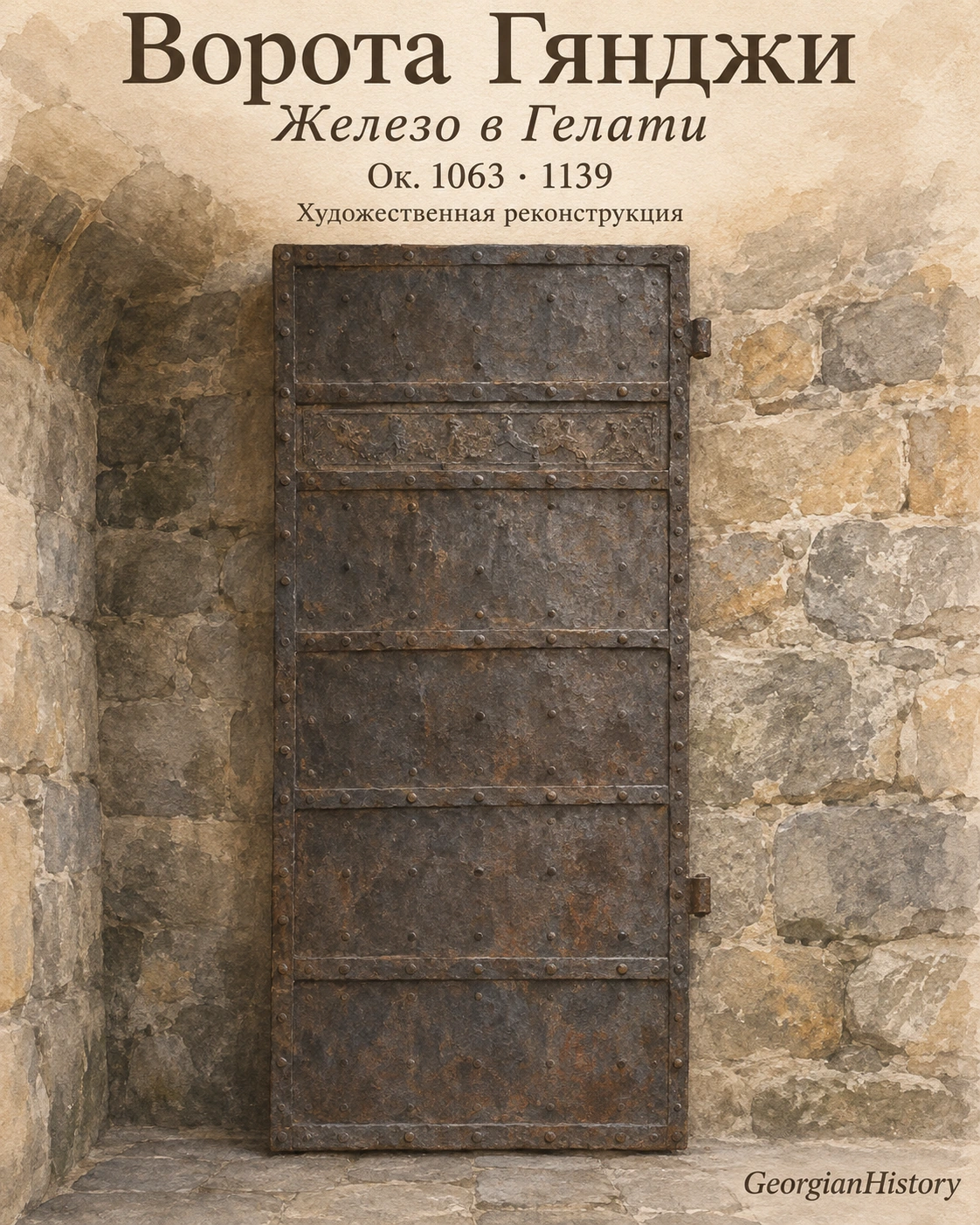 The Gate of GanjaIron at GelatiC. 1063 · 1139Artistic reconstruction
Culture and heritage
11th–12th centuries. What an Arabic inscription and an Armenian chronicle reveal about the iron gate leaf at Gelati.
Read the story 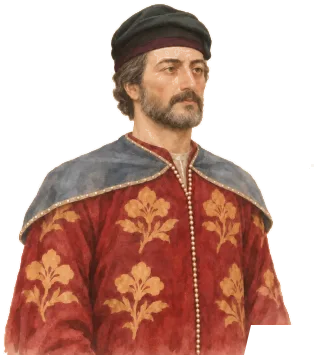
Culture and heritage
How People Dressed in Georgia · Issue 2. Kartli and Kintsvisi. Zaza Panaskerteli-Tsitsishvili lived in the fifteenth century. We examine his costume through the surviving painting and the history of the medical book through manuscript Q 877.
Read the story 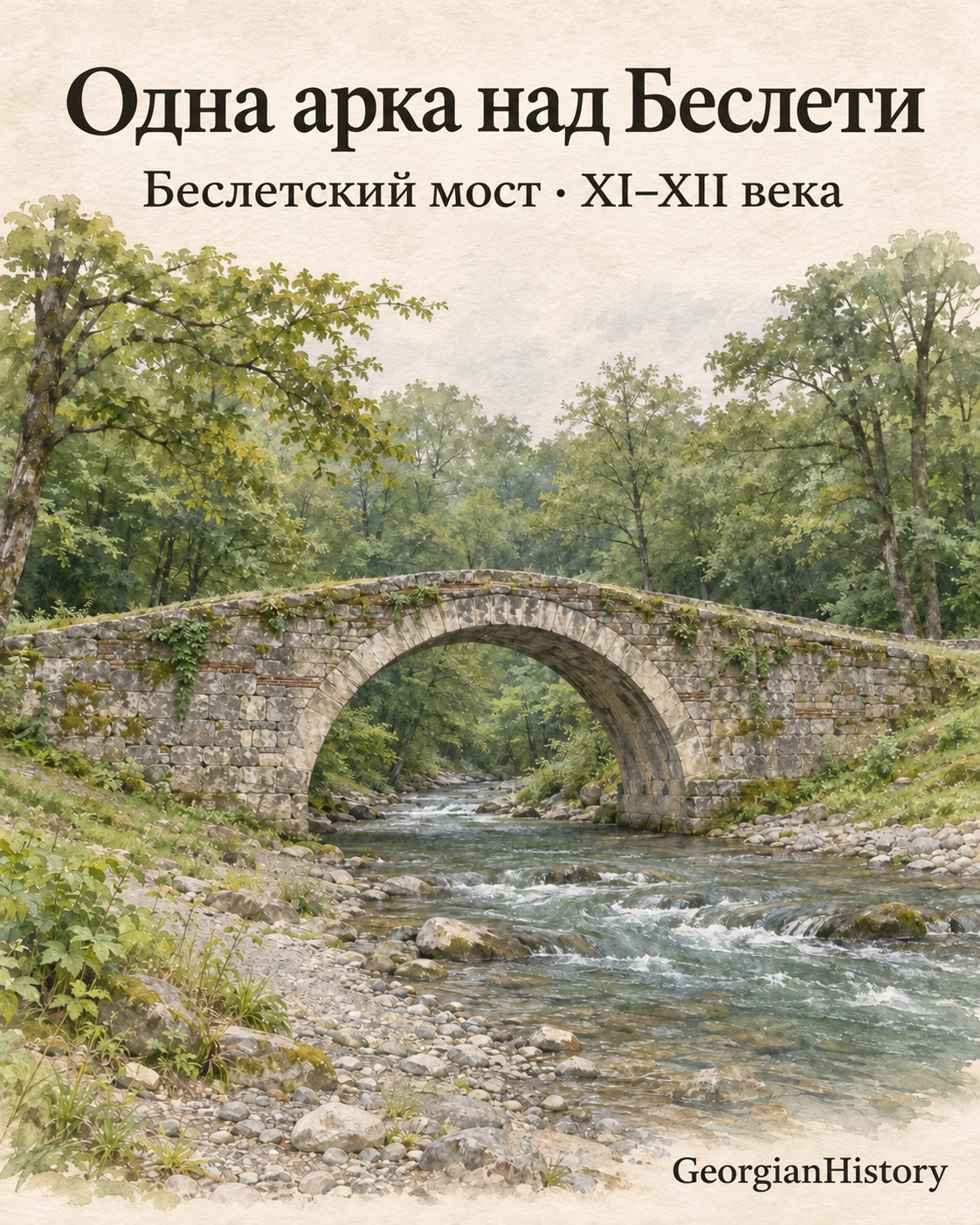 One Arch over the BesletiBesleti Bridge · 11th–12th centuries
Culture and heritage
Besleti Bridge near Sokhumi, eleventh to twelfth centuries. What a stone arch and a Georgian prayer tell us about a medieval river crossing.
Read the story 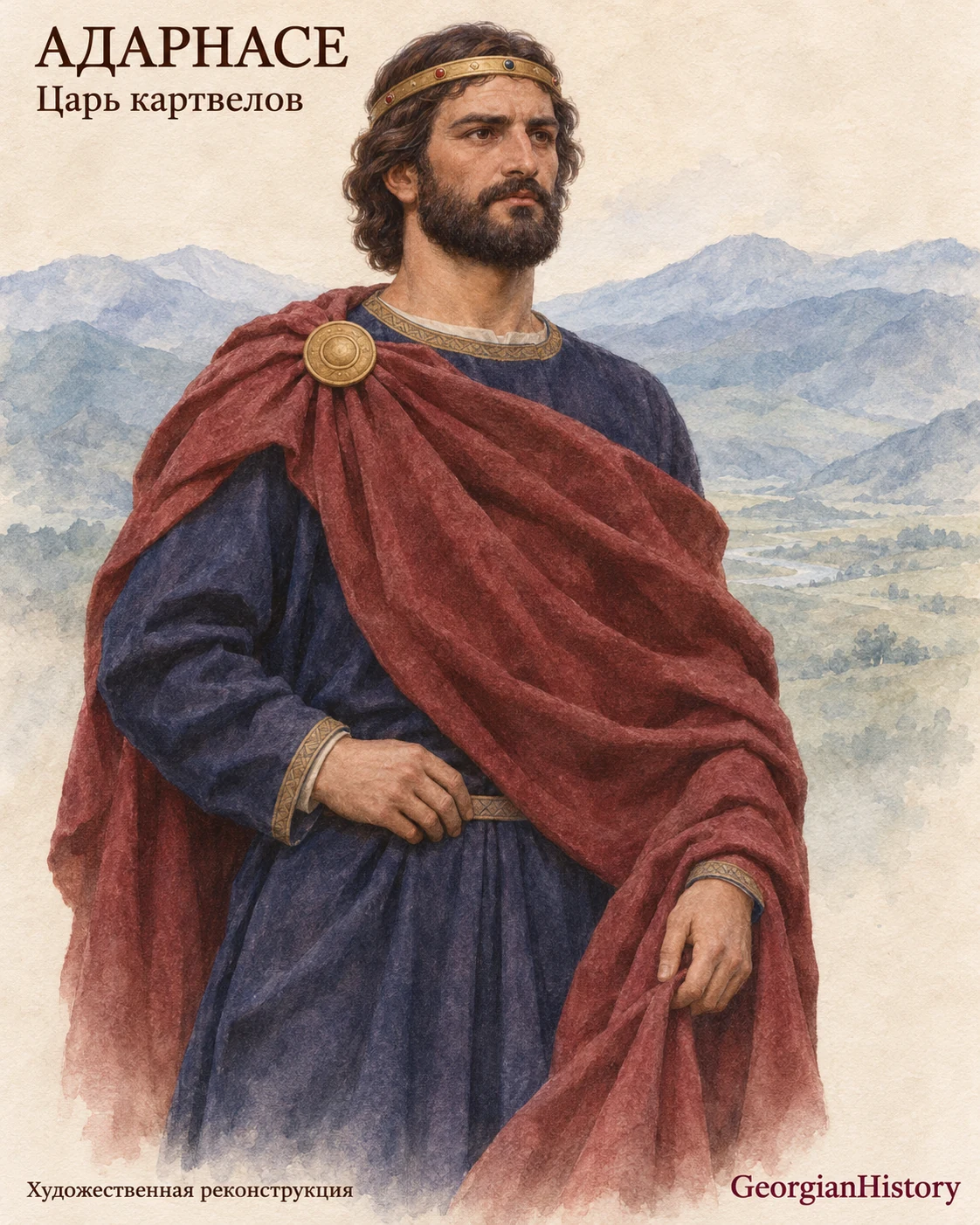 AdarnaseKing of the KartveliansArtistic reconstruction
Rulers and figures
Late ninth to early tenth century. How the title of king of the Kartvelians took root in Tao-Klarjeti, and why its adoption is dated differently.
Read the story 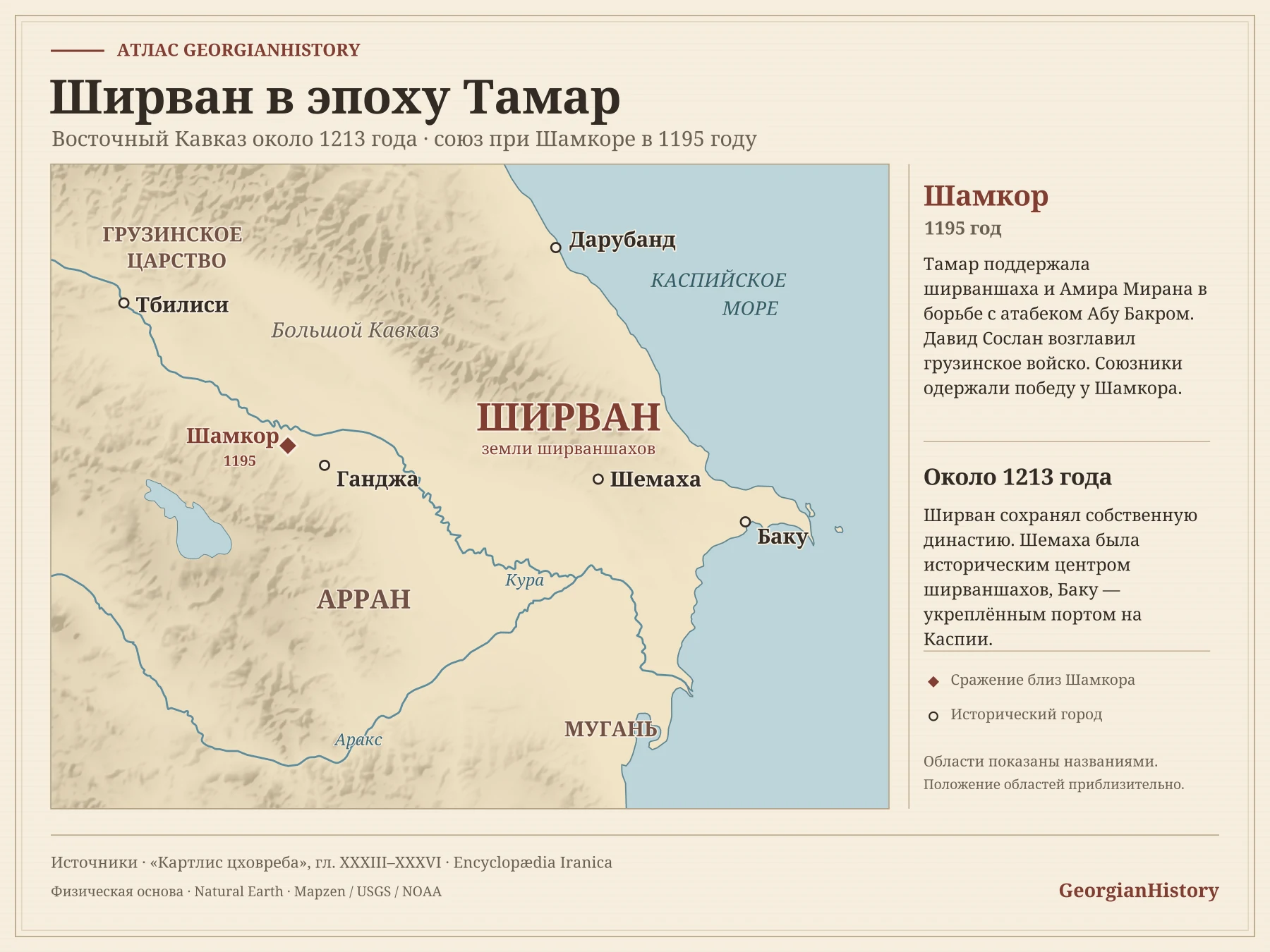 Shirvan in the Age of Tamar
Maps
Who ruled the western shore of the Caspian Sea, why the Shirvanshah turned to Tamar, and what changed after the Battle of Shamkor.
Read the story 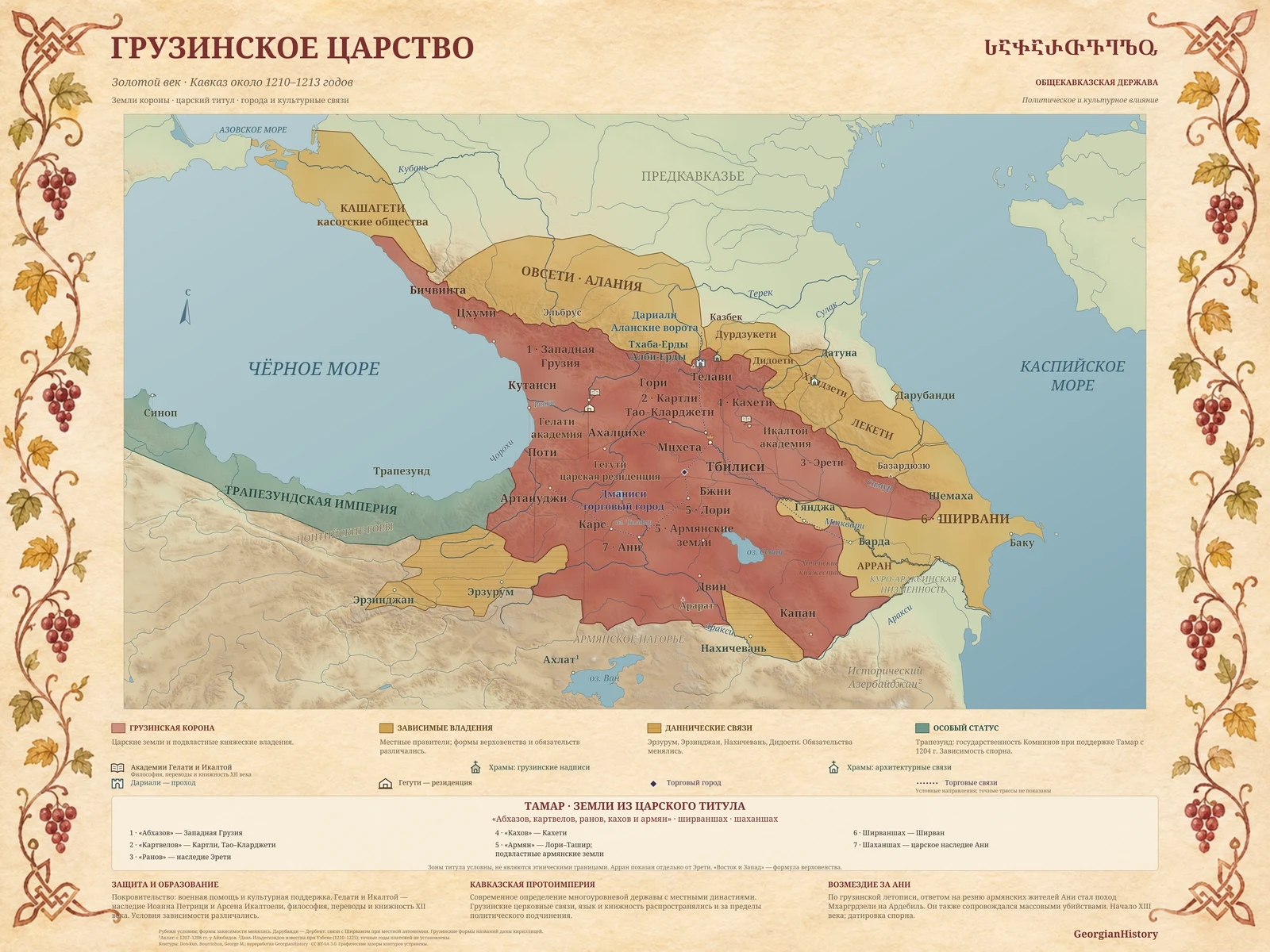
Maps
A political map of Tamar’s era showing lands of the Georgian crown, neighbouring powers, and territories linked to the kingdom. Zoom in or download the 10K map.
Read the story 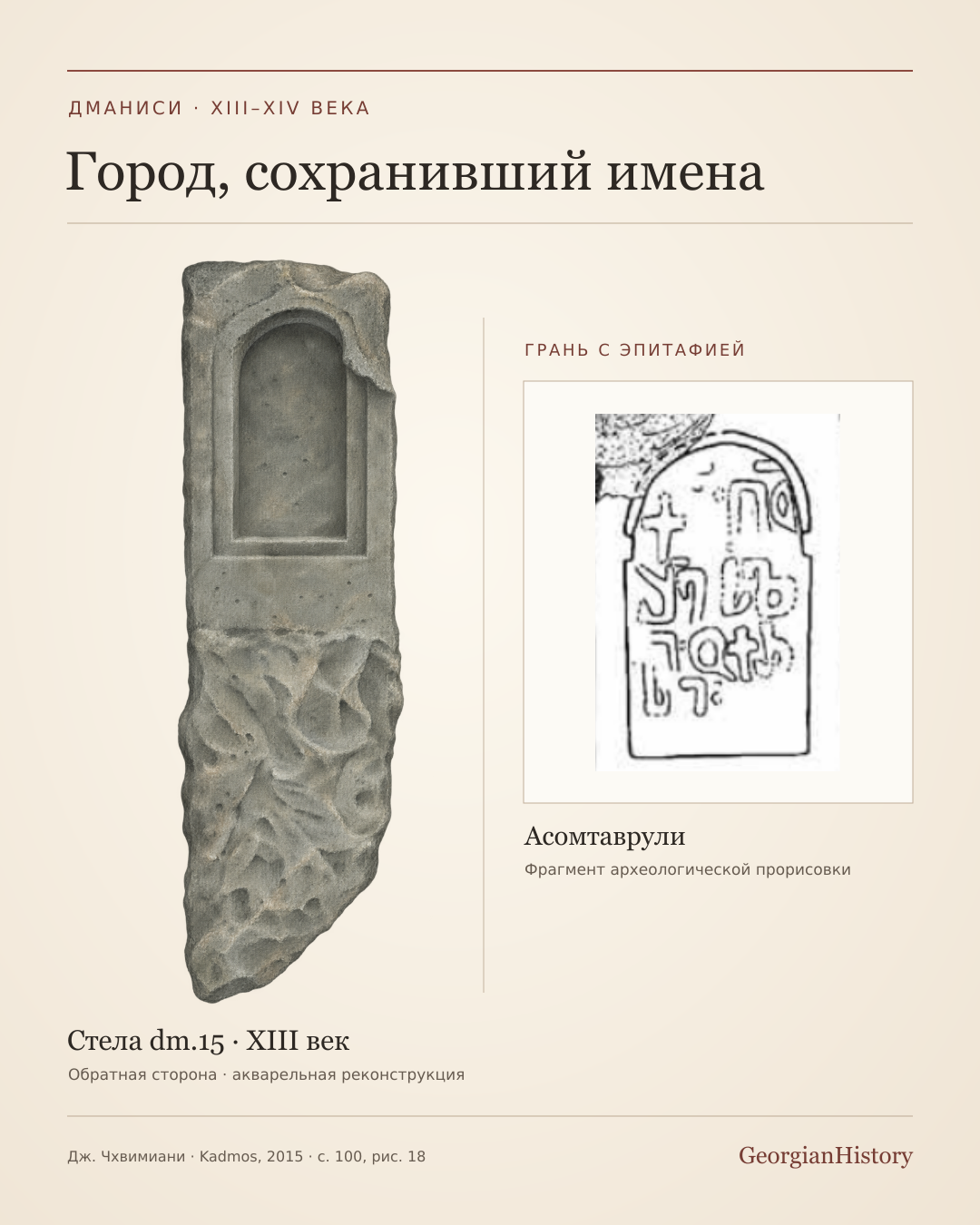 The City That Preserved Its NamesDmanisi · 13th centuryStele dm.15 · 13th centuryAsomtavruliArchaeological drawing
Archaeology
What Georgian, Armenian, and Arabic inscriptions from the 13th- and 14th-century necropolis at Dmanisi reveal about life in the Mashavera valley.
Read the story 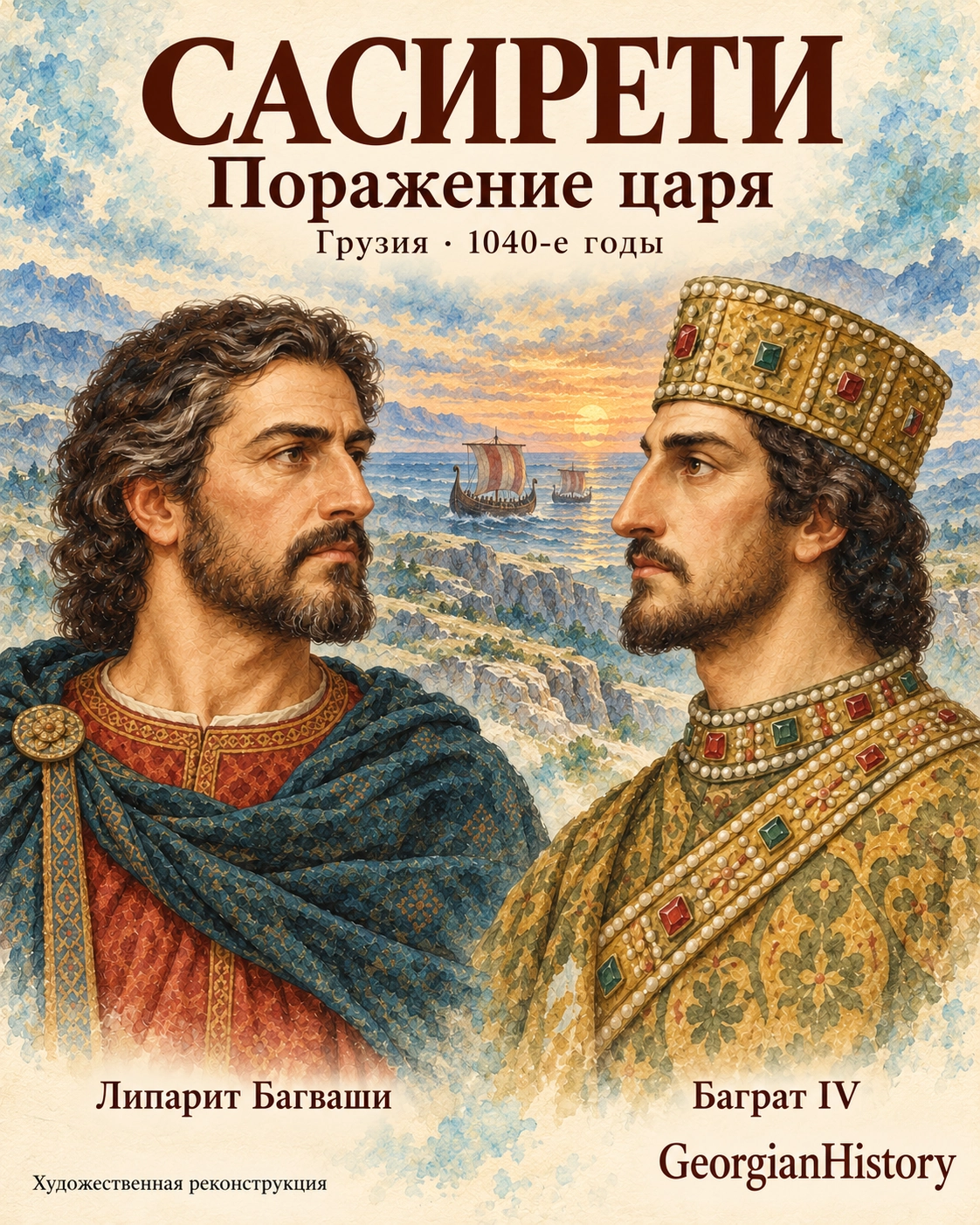 SasiretiThe King’s Defeat · 1040sLiparit BaghvashiBagrat IVArtistic reconstruction
Wars and battles
Bagrat IV, Liparit Baghvashi, and a divided Georgian kingdom in the 1040s. The eristavi’s victory exposed the limits of royal power and the fragility of his own.
Read the story 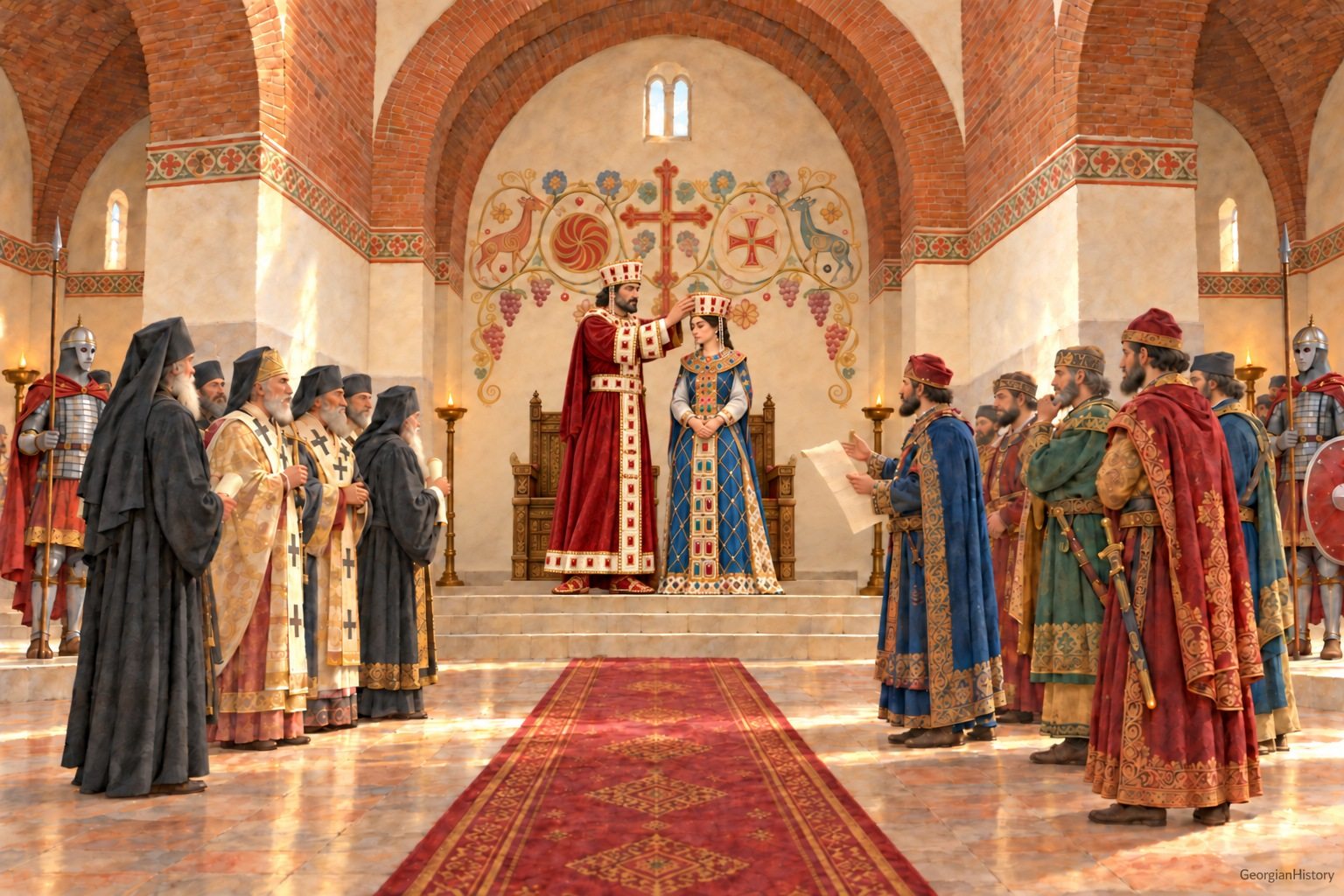
Political history
Behind the throne stood a country of farmers and aznauri, provincial governors and officials, clergy, artisans, and scribes. Their labour, rights, and duties shaped the kingdom.
Read the story 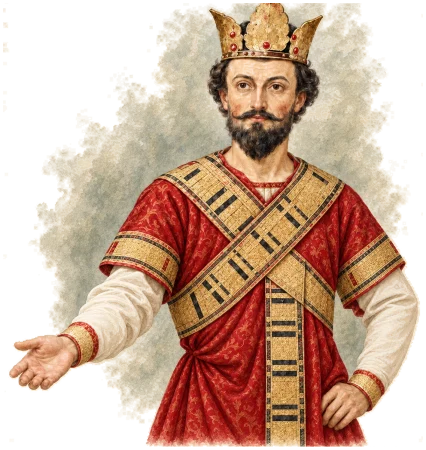
Political history
In 1465 George VIII was captured near Lake Paravani. His captivity accelerated a shift in power in Georgia as the struggle for Kartli unfolded.
Read the story 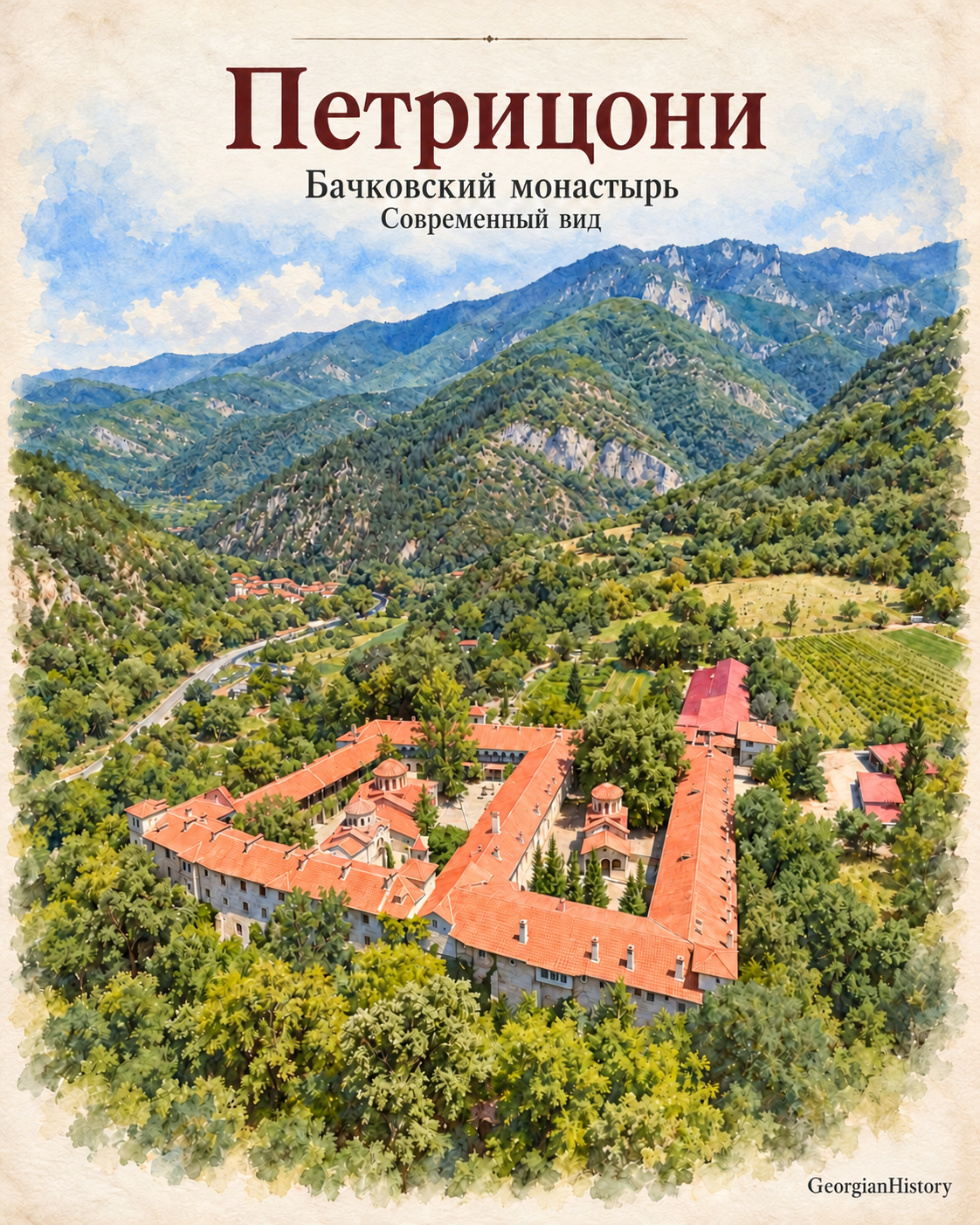 PetritsoniBachkovo Monastery
Historic places
Petritsoni, 1083. The rule of a Georgian monastery in Byzantium set out how to help travellers, from food and warmth in winter to shelter for the sick.
Read the story 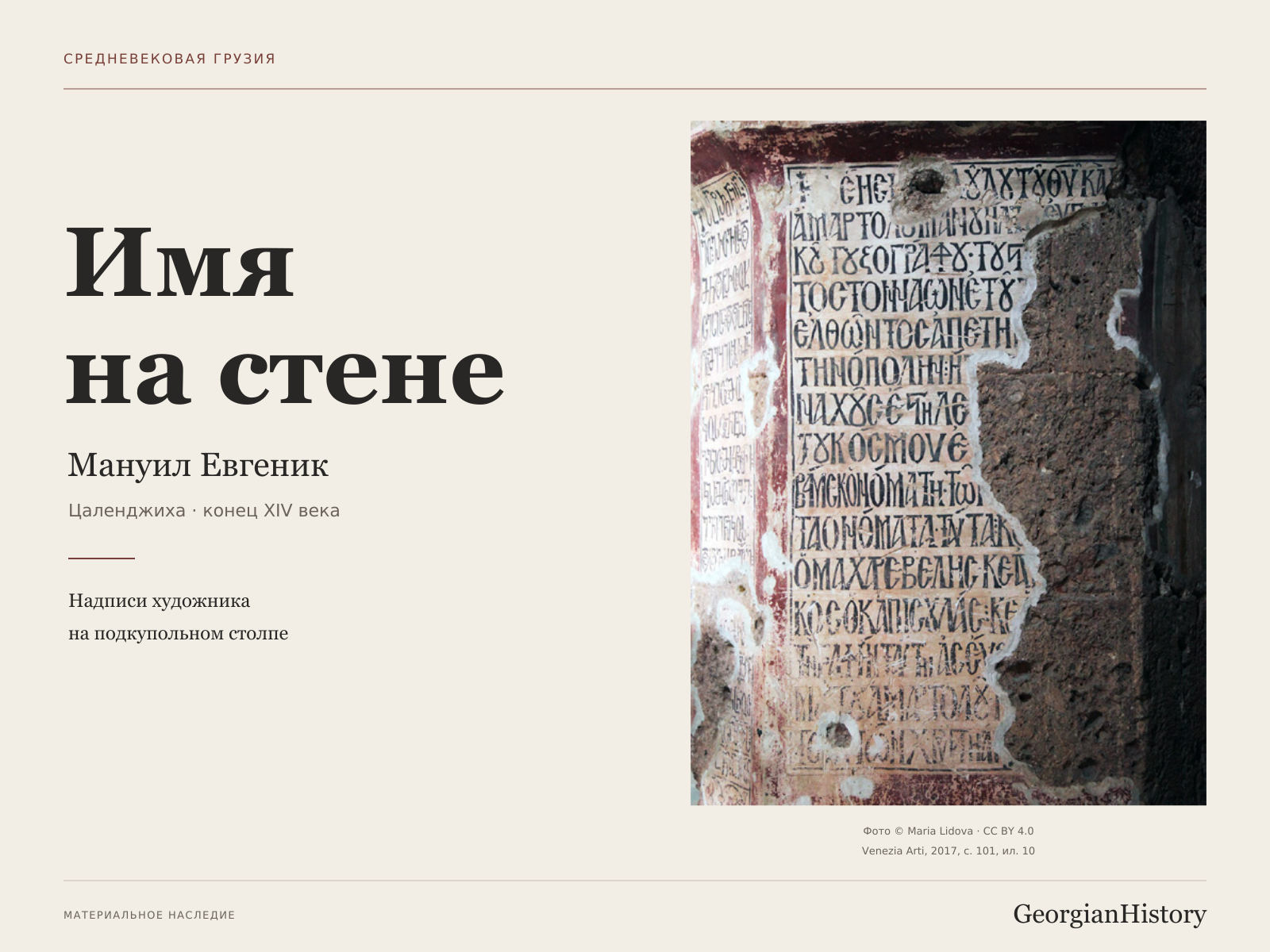 A Name on the WallManuel EugenikosTsalenjikha · Late 14th century
Culture and heritage
In the late 14th century, a Georgian patron commissioned a painter from Constantinople. Surviving inscriptions tell the story of the painter, patron, and envoys.
Read the story 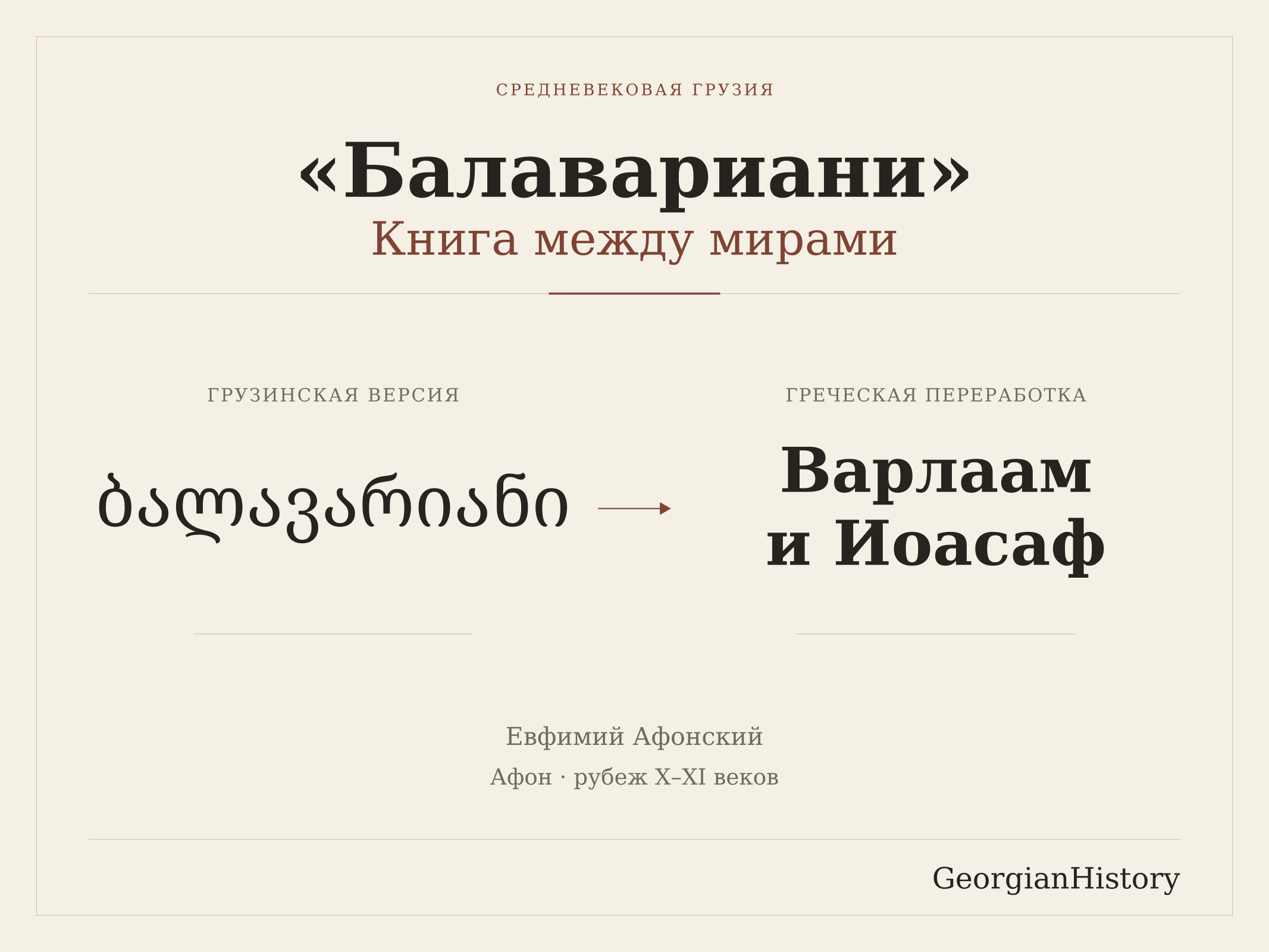 BalavarianiA Book Between Worlds
Culture and heritage
A Georgian Christian tale rooted in an Indian tradition became the basis of the Greek Barlaam and Josaphat and entered medieval European literature.
Read the story 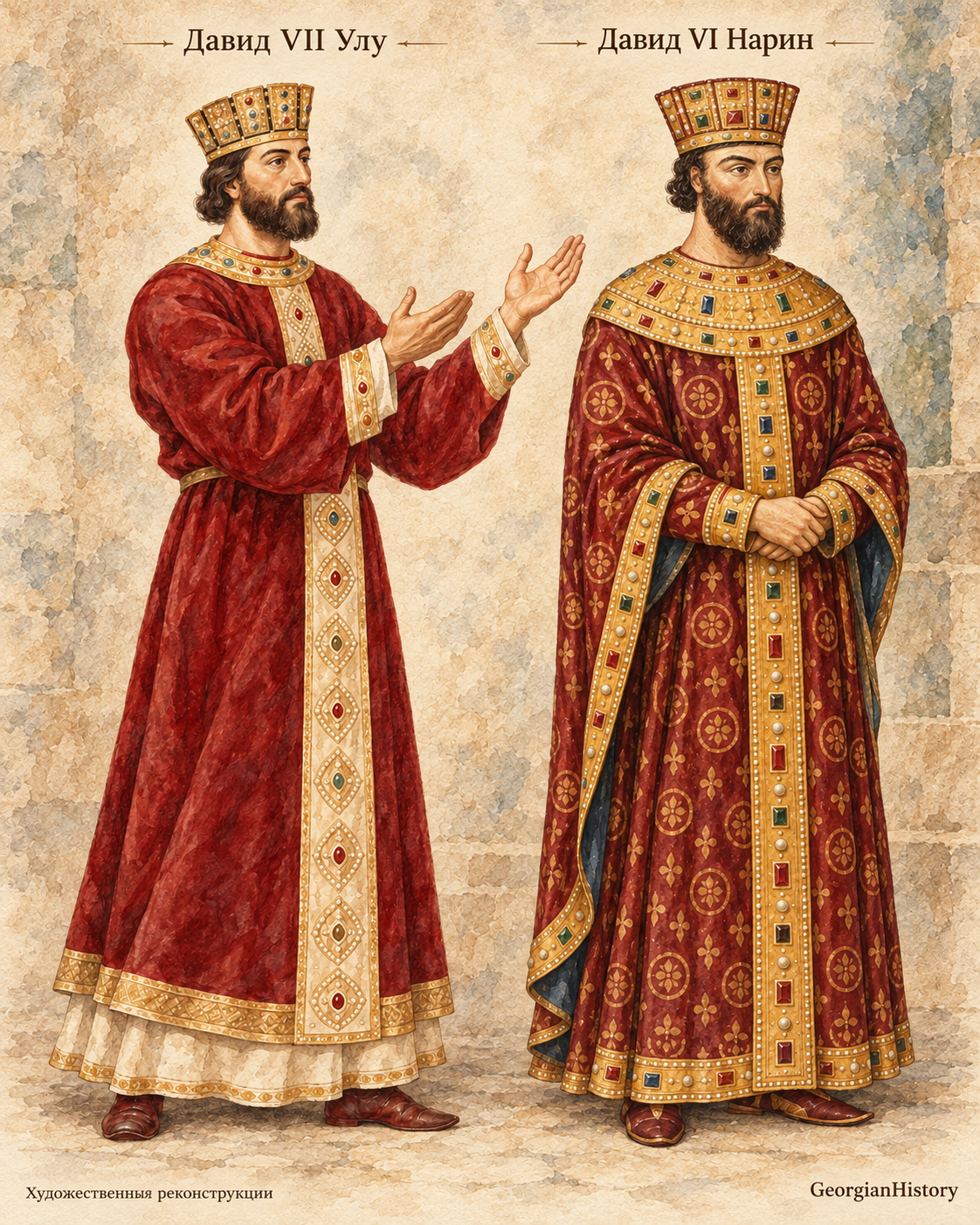 David VII UluDavid VI NarinArtistic reconstructions
Political history
The life of David VII Ulu illuminates the links between birth outside marriage, acknowledged kinship, and the right to inherit.
Read the story 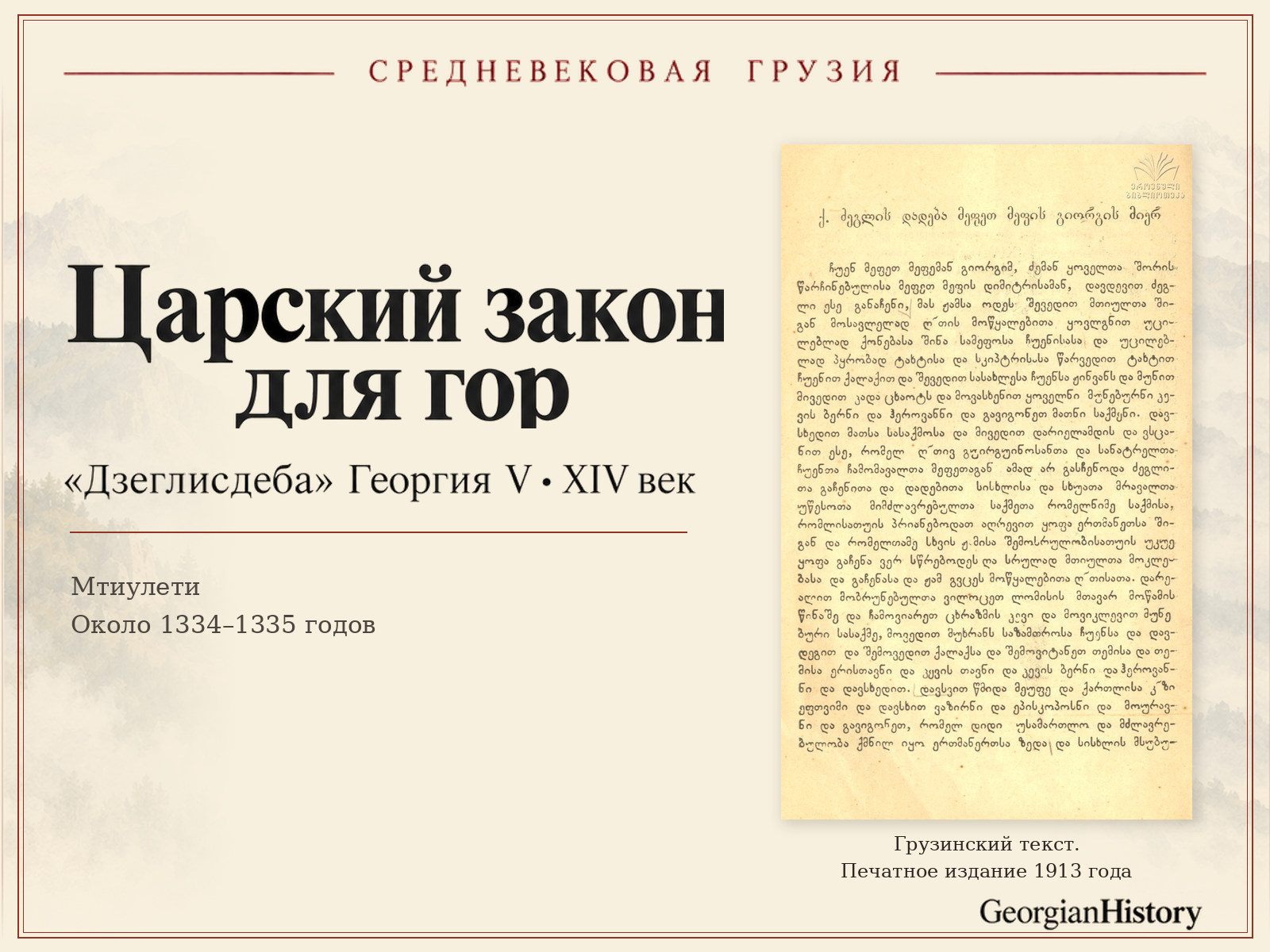 Royal Law for the MountainsGiorgi V’s DzeglisdebaMtiuleti · c. 1334–1335Georgian text · 1913 edition
Political history
Mtiuleti, around 1334–1335. How George the Brilliant’s law code assigned responsibility for a ruined fortress, limited interest on debt, and asserted royal authority in mountain communities.
Read the story 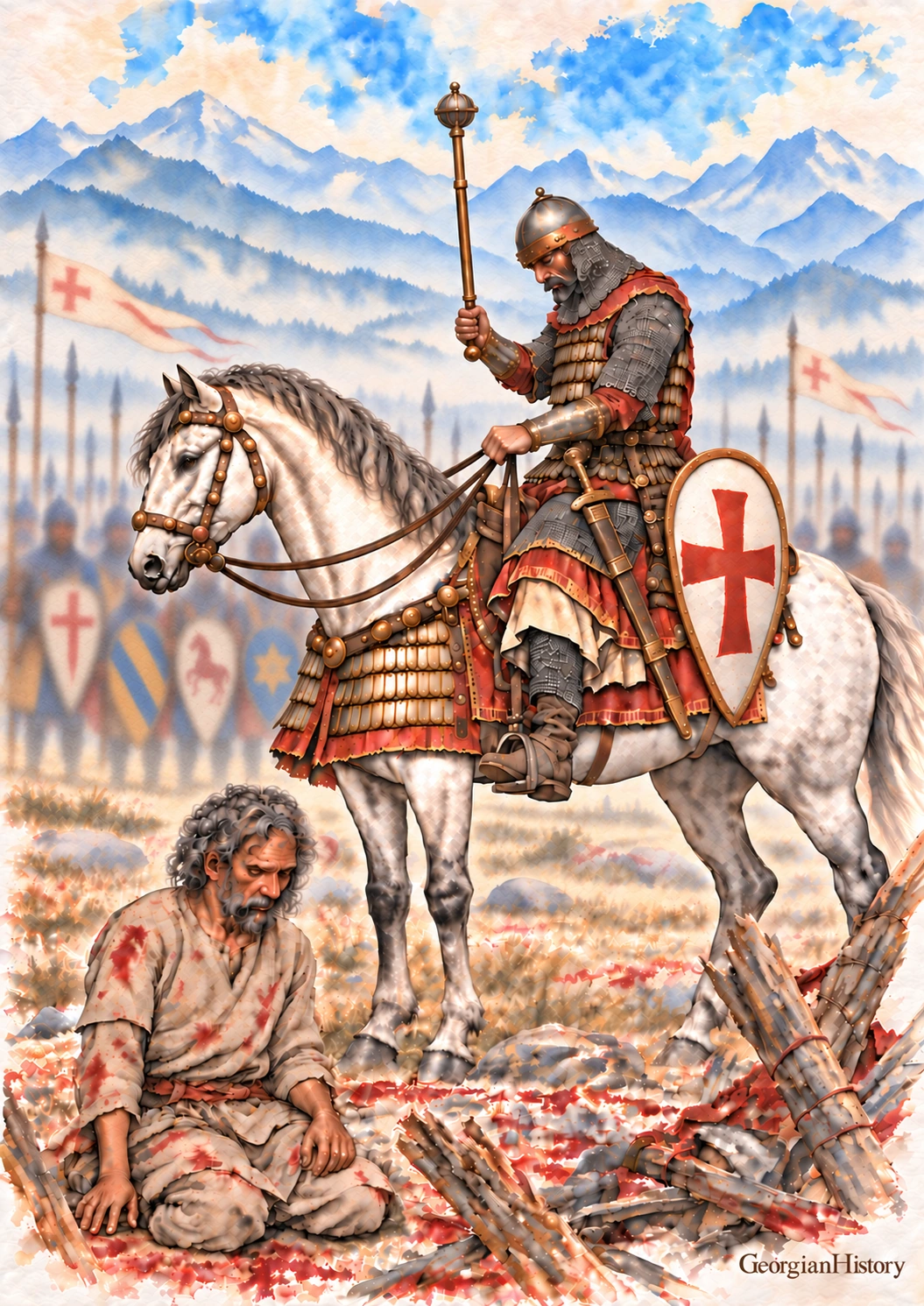
Armies and arms
Lakhti and gurz, fighting maceheads and ceremonial maces, as examined by Mamuka Tsurtsumia.
Read the story GeorgianHistory Library
The full text of The Mace in Medieval Georgia, with written sources, images, and museum specimens.
Read the story 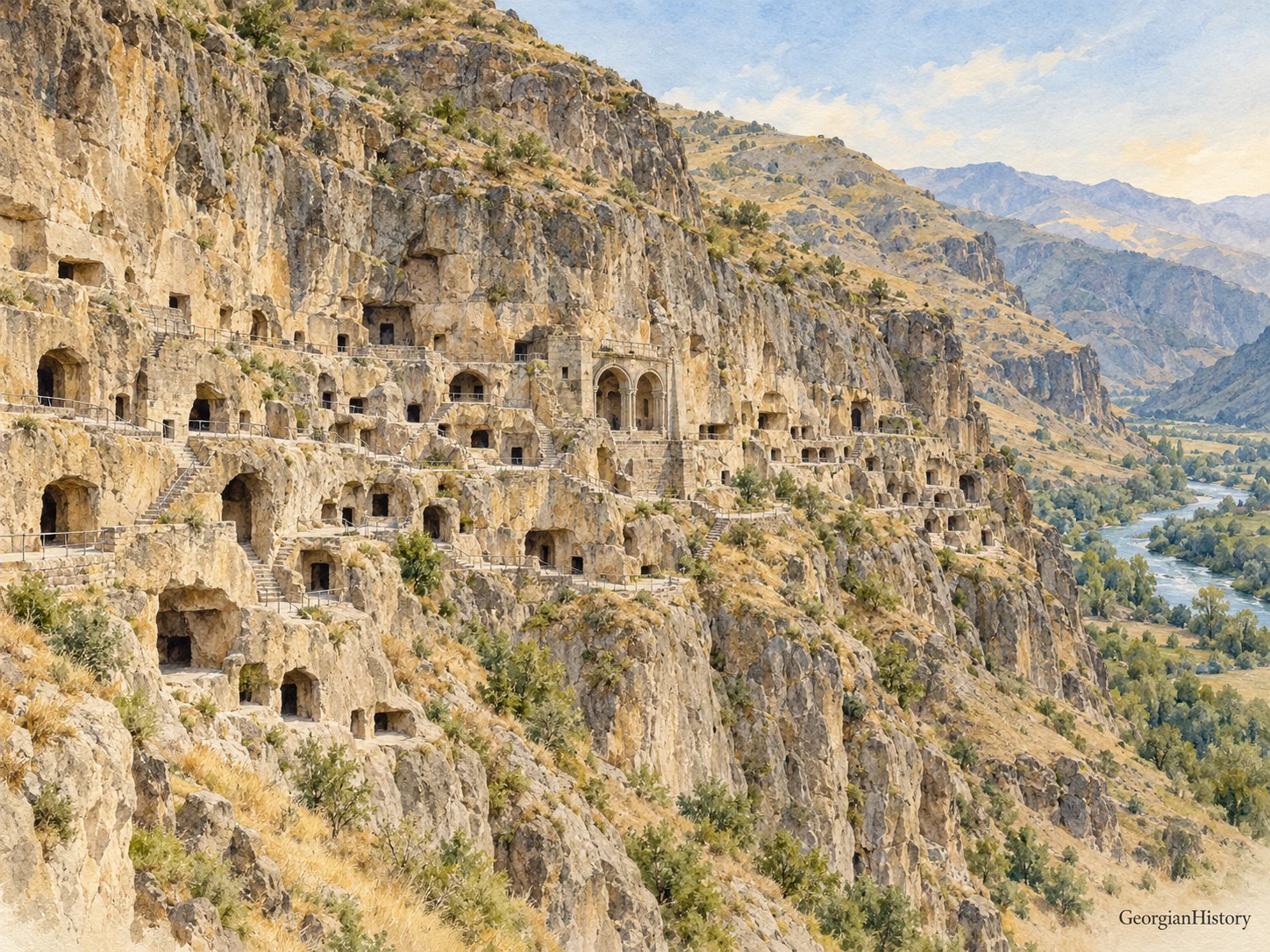
Historic places
Rock-cut shelters, water supply, a pharmacy, wine cellars, and Tamar’s fresco in the monastic complex above the Mtkvari valley.
Read the story 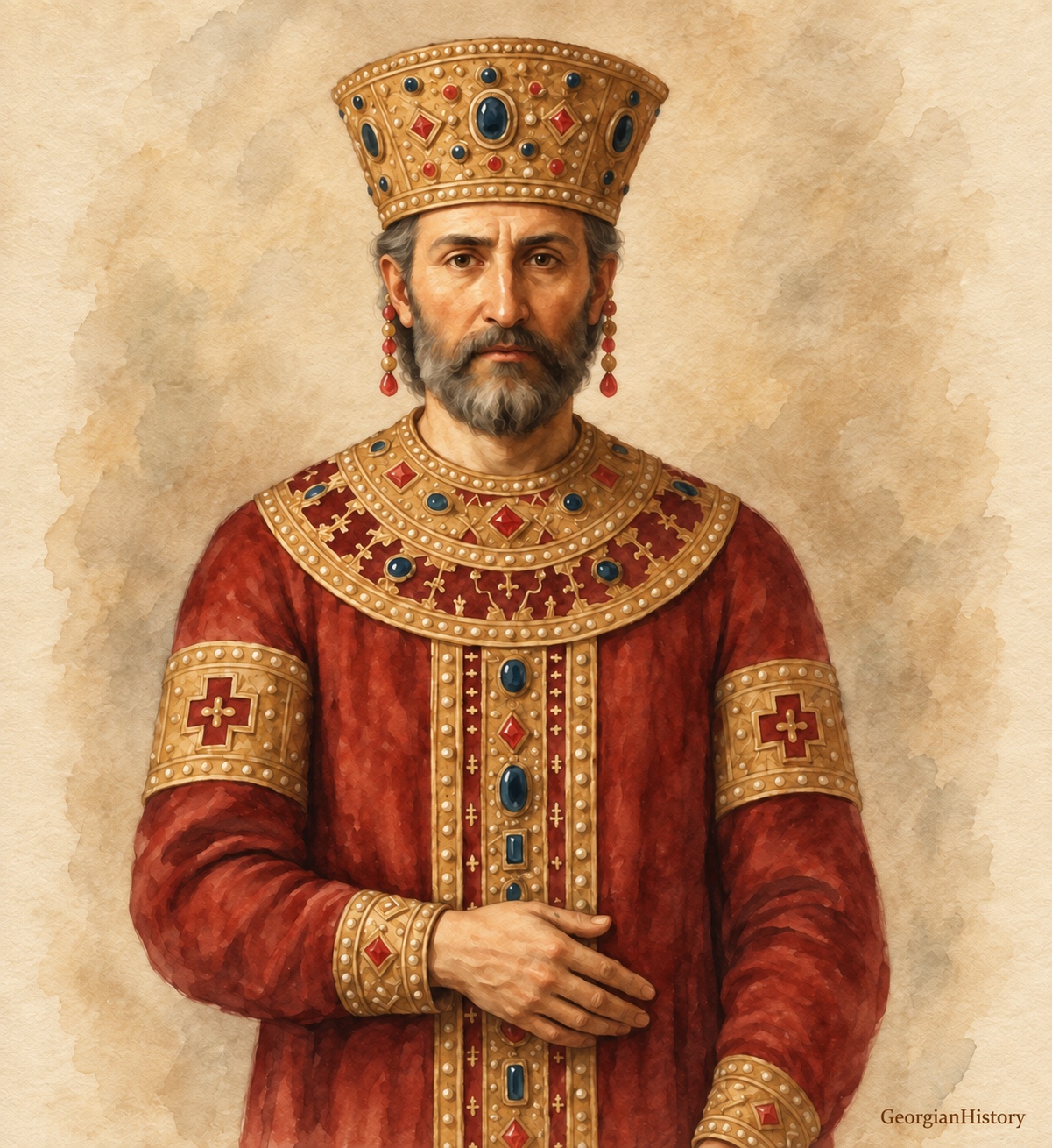
Political history
How the western kingdom, Kartli, and the Bagrationi domains came together under Bagrat III, and why their union took decades.
Read the story 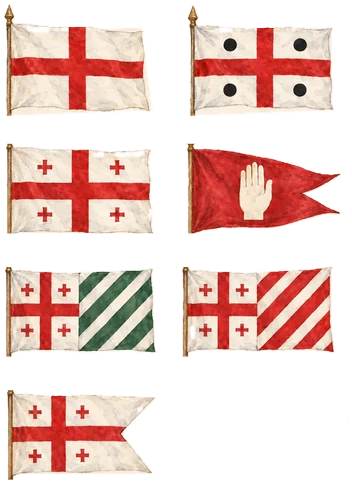
Heraldry
What 14th- to 16th-century portolan charts can tell us about the Georgian lands, and where the evidence ends.
Read the story Culture and heritage
David the Builder’s story extends beyond the battlefield. A monastery and academy near Kutaisi preserve another side of his vision.
Read the story Rulers and figures
Bagrat III’s son inherited a united crown. Holding the country together and defending his claims in the southwest were tasks still ahead.
Read the story Rulers and figures
Before the united kingdom emerged, Byzantium reckoned with the ruler of Tao. His legacy helped make unification possible and laid the groundwork for conflict.
Read the story Wars and battles
Years passed between the Mongols’ first appearance and their conquest of Georgia, bringing further wars, devastation, and a shift in the balance of power.
Read the story 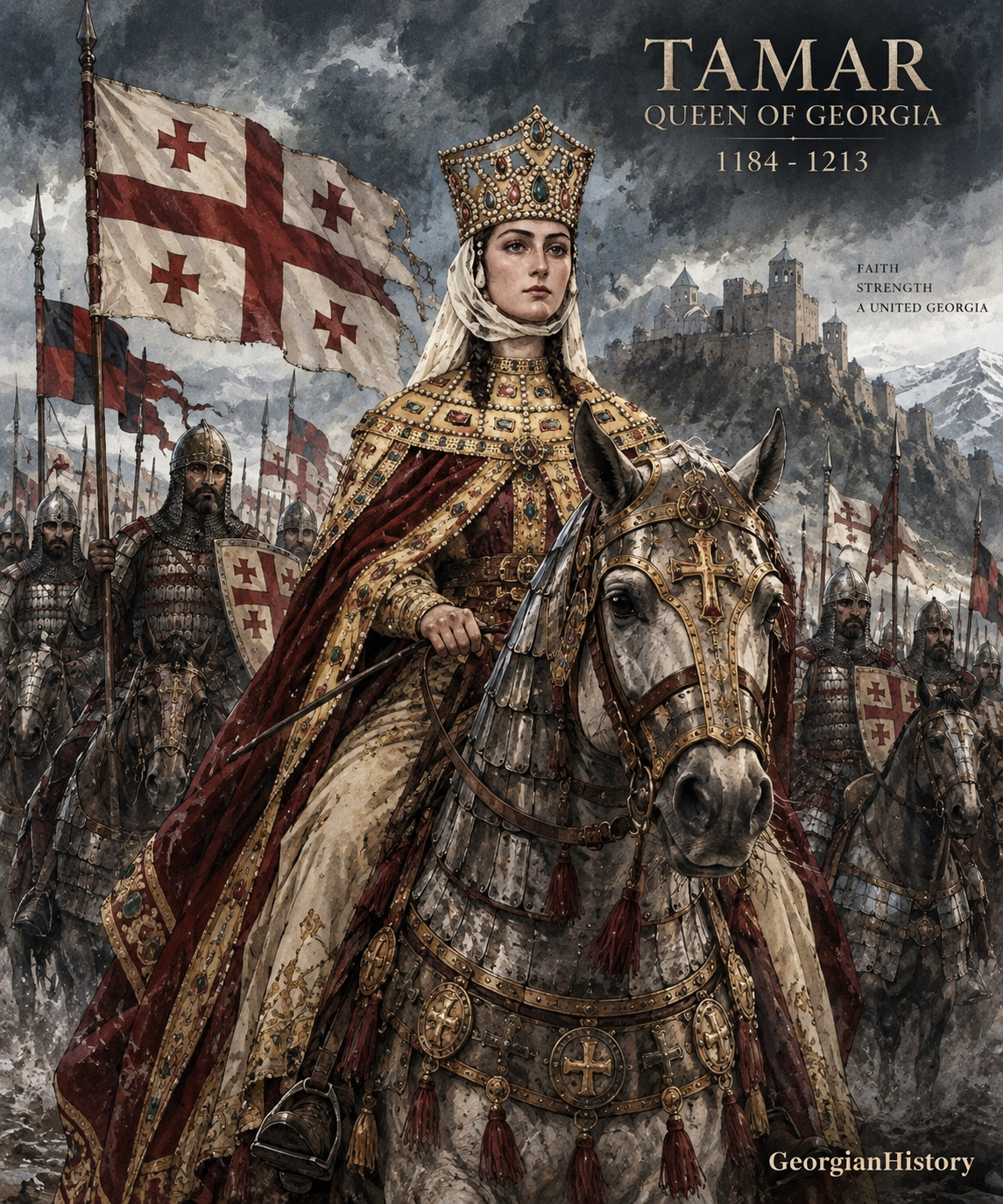 TamarQueen of Georgia1184–1213
Political history
The Golden Age was a time of military victories, political influence, and remarkable cultural flourishing.
Read the story 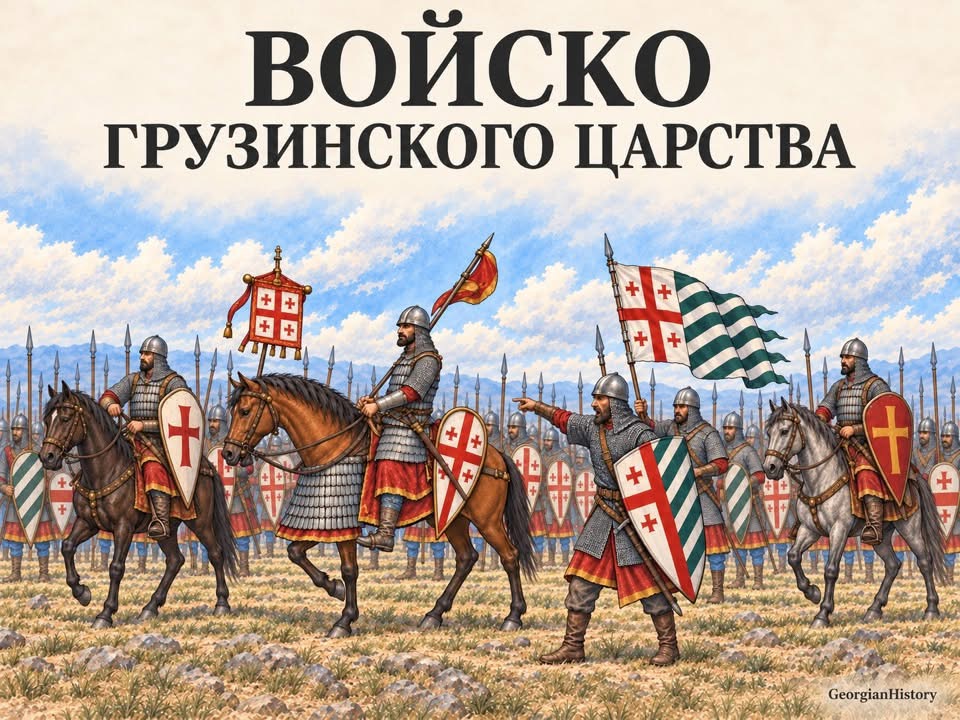 Army of the Kingdom of Georgia
Armies and arms
Behind the armoured rider stood land, livelihoods, and people. A royal summons set in motion a system of loyalties, duties, and authority.
Read the story