A Name on the Wall: Manuel Eugenikos in Tsalenjikha
In the late 14th century, a Georgian patron commissioned a painter from Constantinople. Surviving inscriptions tell the story of the painter, patron, and envoys.
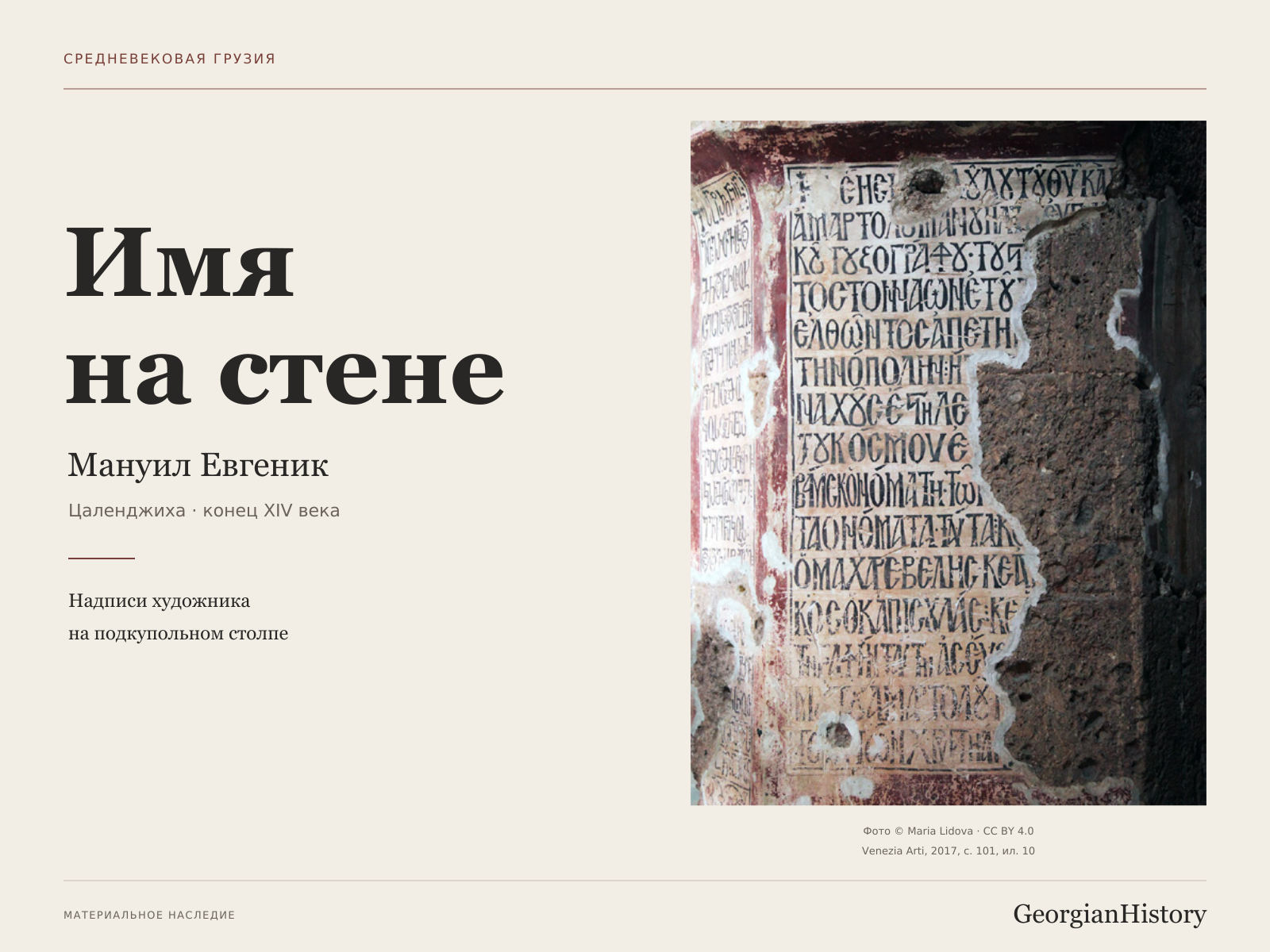
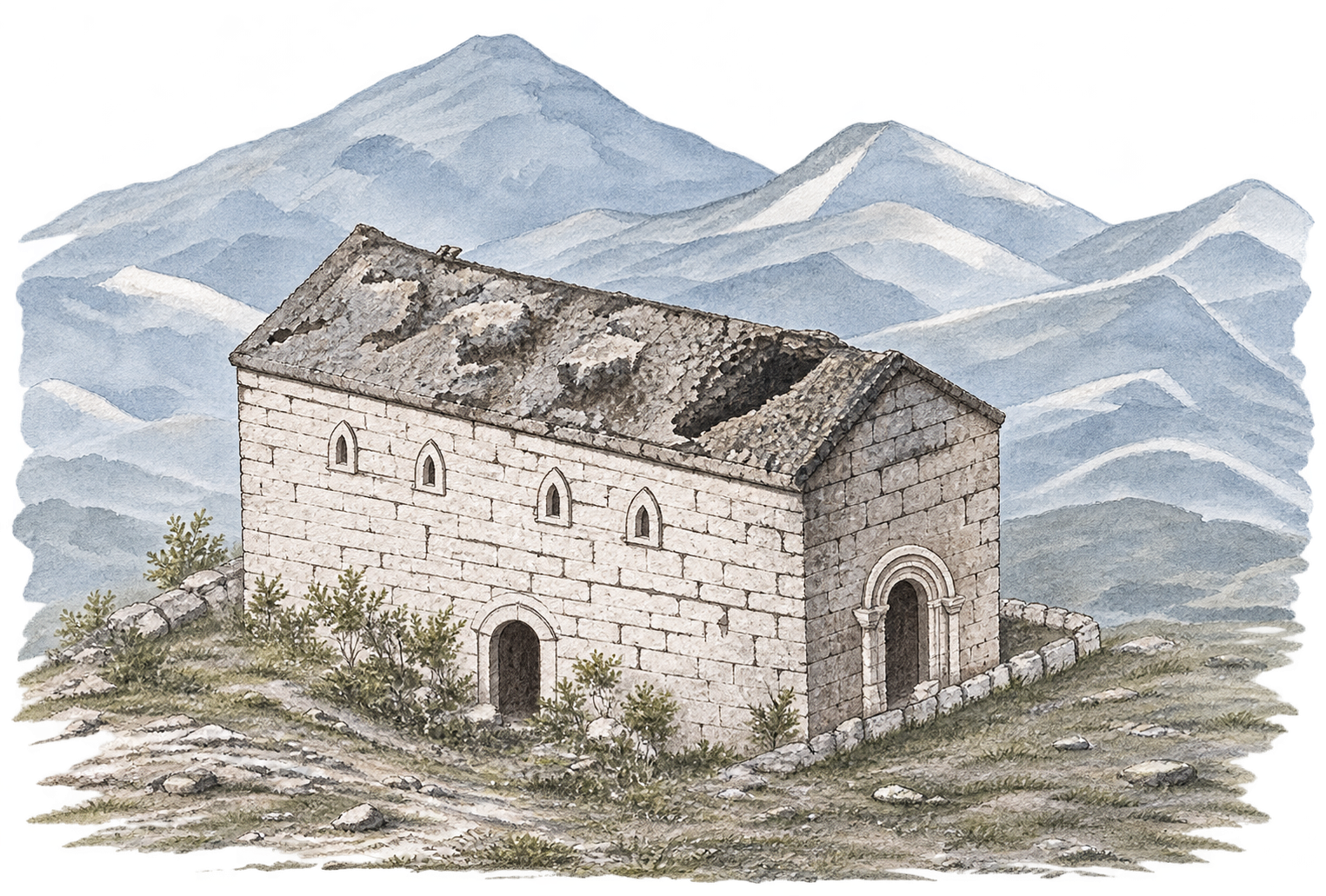
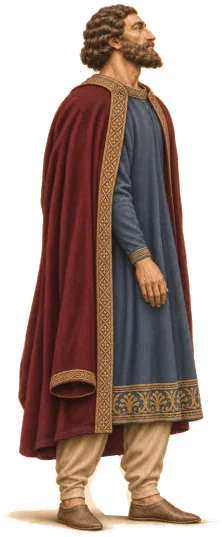
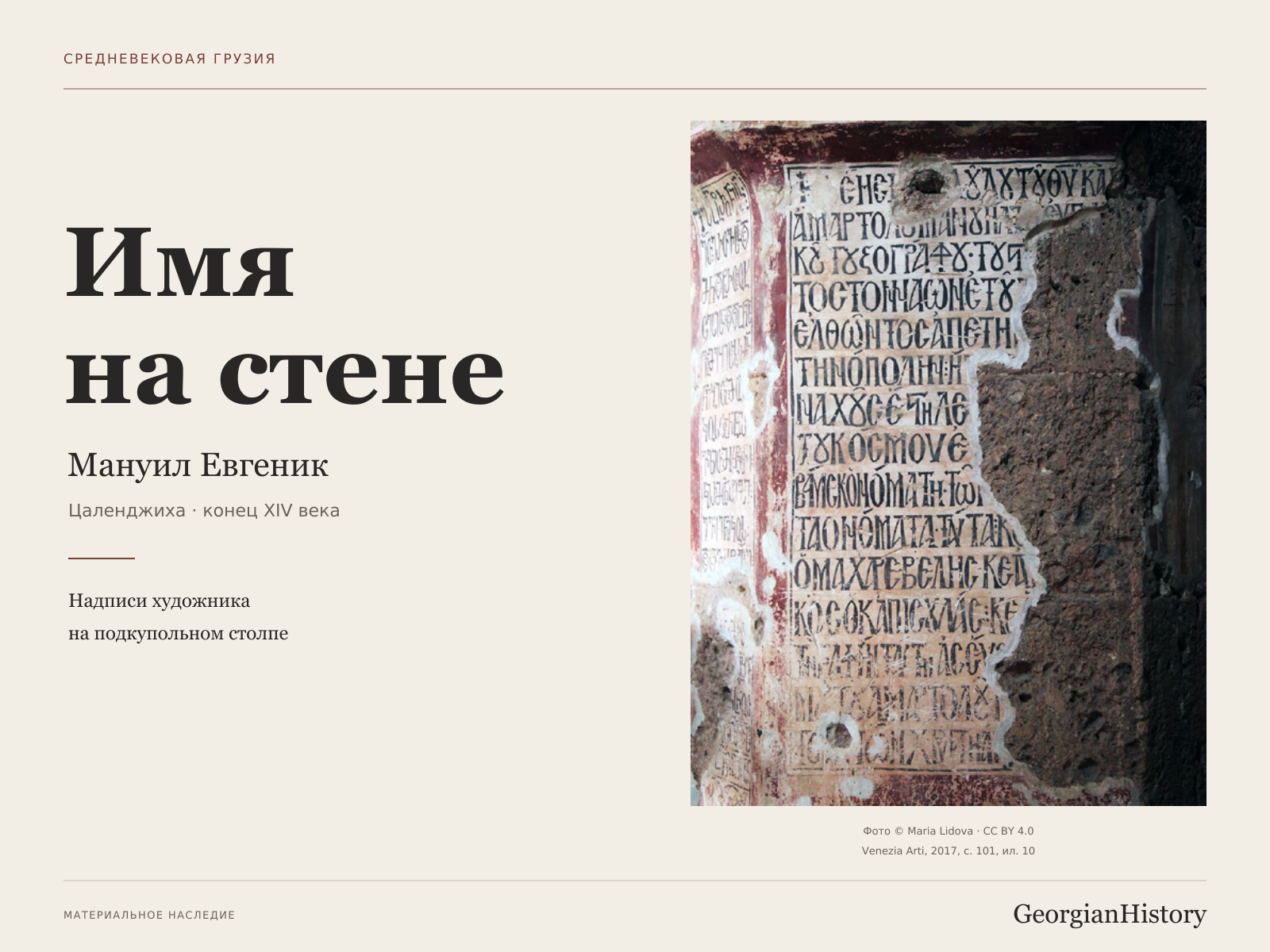
 The walls of the church at Tsalenjikha preserve sacred images alongside the story of the man who came to paint them. His name was Manuel Eugenikos. He travelled from Constantinople at the invitation of Vameq I Dadiani, and inscriptions beside the paintings preserve his memory. For the history of medieval art, this is a rare chance to see a named artist, patron and intermediaries behind the images. [1, 2, 3]
The commission belongs to Vameq’s rule in Odishi, a historical region of western Georgia, from 1384 to 1396. This range does not establish the precise year in which every fresco was completed. The church at Tsalenjikha was decorated again in later years, and the ensemble now preserves several phases of work. Our focus is a specific episode in the late fourteenth century, the invitation of a painter from the Byzantine capital. [2, 5]
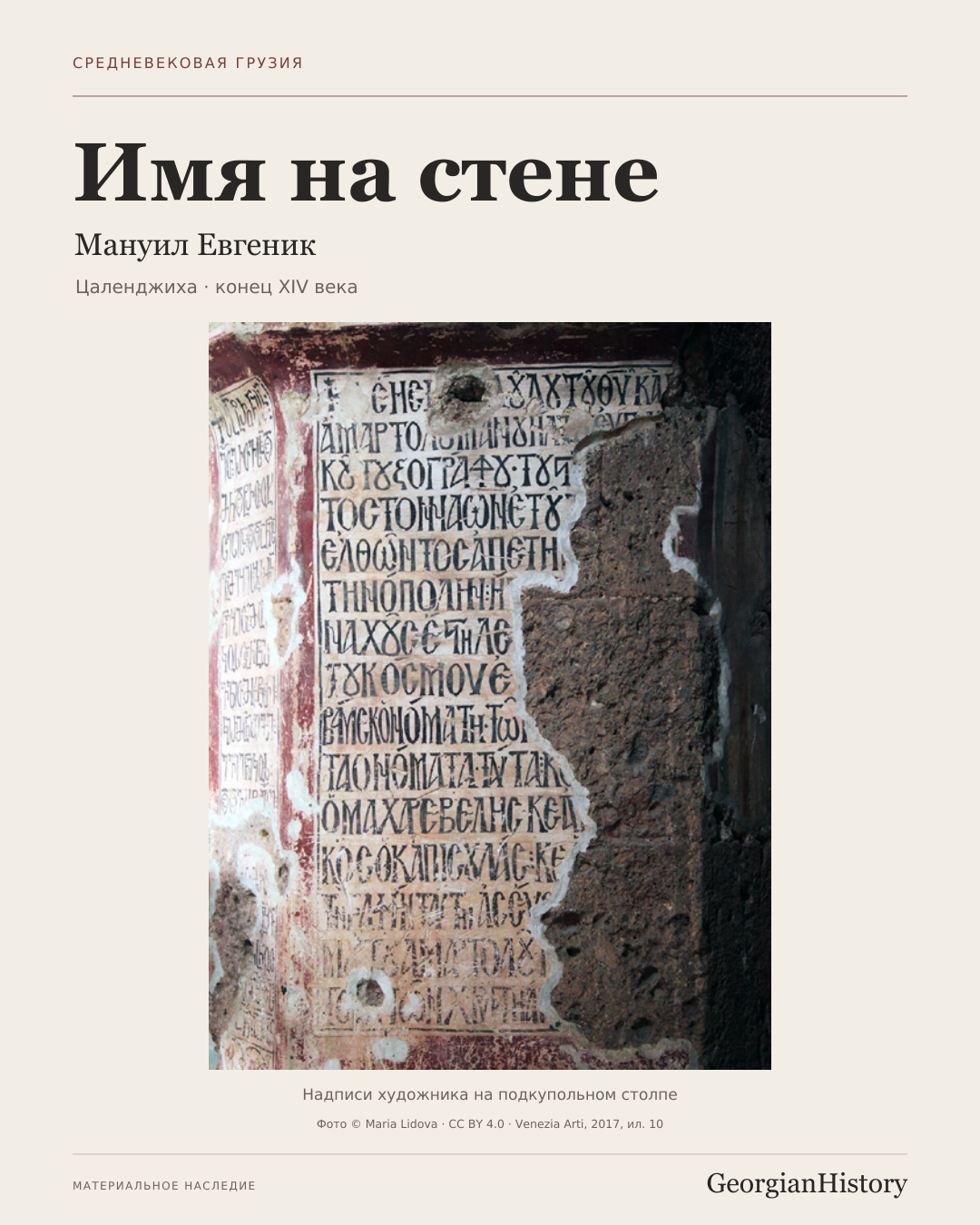
The identification rests on more than similarities in painting style. Two Georgian inscriptions and one Greek inscription survive on the western piers supporting the dome. One Georgian text calls Vameq eristavt-eristavi and mandaturtukhutsesi and attributes the commission to his orders. Another records how Makharebeli Kvabalia and Andronike Gabisulava travelled to Constantinople and returned with the painter. This reveals how the commission was arranged. The patron made the decision, envoys were sent and the artist arrived. [1]
The Greek inscription gives the painter’s side of the story. Manuel calls himself a servant of God and a sinner, records his work and arrival from Constantinople and asks to be remembered in prayer. Unlike a modern signature in the corner of a painting, this acknowledgement of authorship is joined to a hope for salvation. As Maria Lidova’s research shows, these texts challenge the assumption that Byzantine artists were necessarily anonymous. Religious humility could coexist with the preservation of a name. [1, 3]
The Georgian text puts “kyr” before Manuel’s name. It is a respectful form of address derived from the Greek word for “lord” or “sir”, rather than a personal name. That honorific provides no basis for filling gaps in his biography. Nor should the two envoys automatically be called assistant painters. Research from the Chubinashvili Centre explicitly disputes that widespread attribution. The inscription establishes their role in inviting the artist. It does not establish that they painted. [1, 5]
The arrival of an artist from Constantinople did not turn the church into a straightforward copy of a model from the capital. Scholars distinguish several painting styles in the ensemble, and most images have Georgian inscriptions. Saints venerated in Georgia feature prominently in the programme. The visiting master’s work became part of the local artistic setting. This fits the wider picture of Georgian art in the fourteenth century, when painters in Georgia worked alongside the adoption of Byzantine forms. [2, 4]
The historical importance of Tsalenjikha extends beyond the beauty of the frescoes. The monument preserves evidence of how a major artistic commission took shape. The patron arranged the invitation, the envoys brought the artist, and the paintings became part of a Georgian church. The inscriptions record the participants’ names, although much of their story remains unknown. Their strength lies in preserving a trace of an actual collaboration between Constantinople and western Georgia.
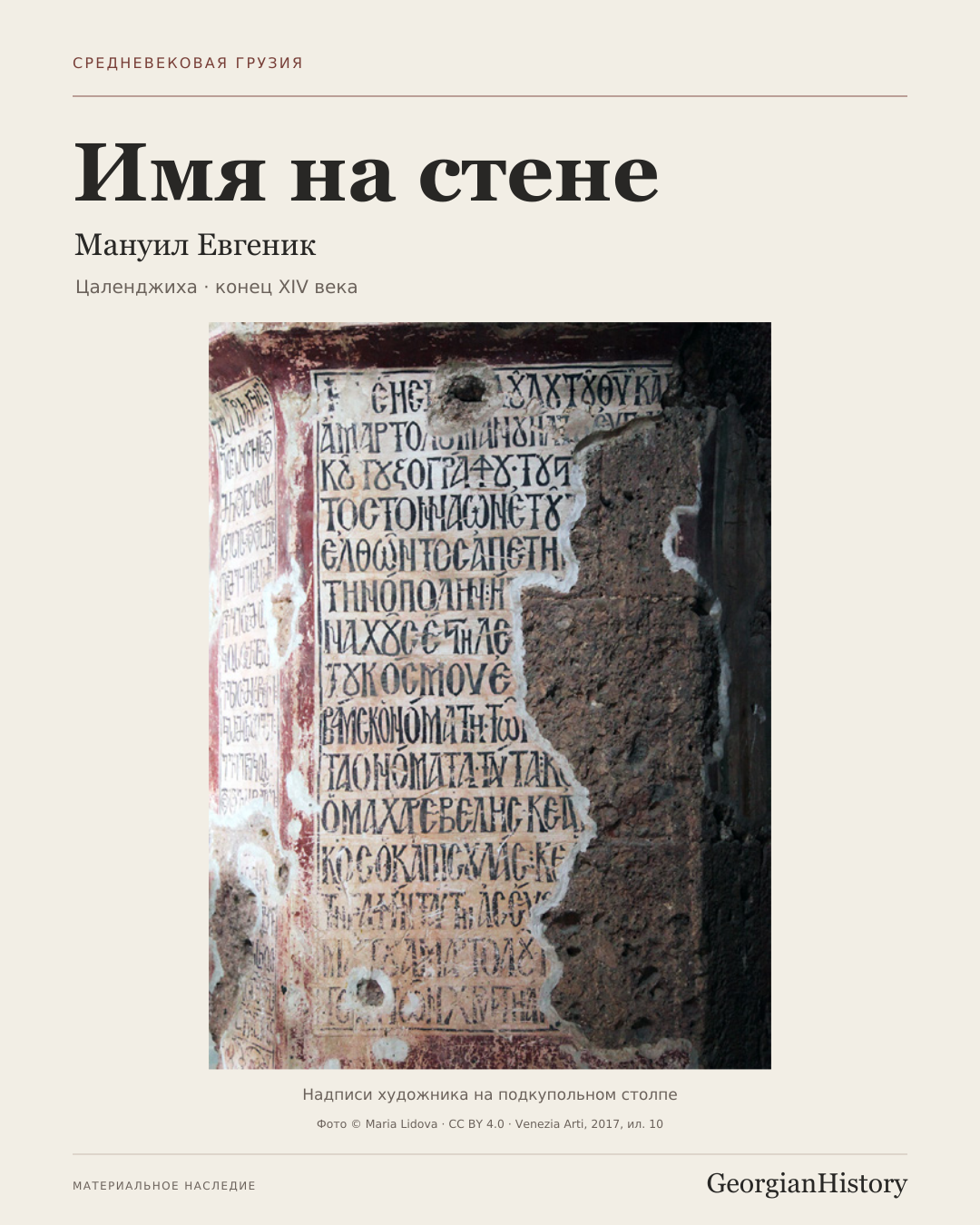
Download the poster: 4:5 · 4:3.
Sources and further reading
- 1. Mariam Didebulidze and Ketevan Mikeladze (eds.). Painters in Medieval Georgia. Chubinashvili Centre, Tbilisi, 2022. G. Gagoshidze’s catalogue of Georgian inscriptions, no. 20, pp. 215–218. Greek inscription pp. 252–253, profession of the envoys p. 80, note 12, and “kyr” p. 110. Photographs p. 240, figs. 16–17.
- 2. Teresa Shawcross. The Frescoes of Manuel Eugenikos of Constantinople and His Byzantino-Georgian Atelier at the Church of the Savior at Tsalenjikha. Medieval Black Sea Project, Princeton University. Publication date unspecified, accessed 20 October 2026. Commission, inscriptions, workshop and later renewals, fig. 3 and notes 10–12, 19 and 22.
- 3. Maria Lidova. Manifestations of Authorship: Artists’ Signatures in Byzantium. Venezia Arti, 26, 2017, pp. 89–106. Especially p. 101, note 34, fig. 10 and the conclusions on p. 102. DOI: 10.14277/2385-2720/VA-26-17-6. The form of the artist’s inscription as a prayer.
- 4. N. Aladashvili and D. Tumanishvili. “ბიზანტიური ხელოვნება” (Byzantine Art). Georgian Encyclopedia of the National Academy of Sciences. Online publication year unspecified, accessed 20 October 2026. Fine arts section, fourteenth-century context and Tsalenjikha.
- 5. S. N. Tatarchenko. “Manuel Eugenikos.” Orthodox Encyclopedia, vol. XLIII, p. 409. Published online 23 February 2021. Dating and the meaning of “kyr”. The identification of the envoys as artists is disputed. See source 1, p. 80, note 12.
The exact year of the commission and the attribution of individual frescoes to particular masters remain open to debate. The two Georgian inscriptions were checked against the Chubinashvili Centre’s 2022 scholarly edition. Variant readings of damaged lines were retained without supplying a continuous reconstruction. The identification of the envoys as painters remains disputed.