Two Riders on the Façade at Adishi
Warriors in Frescoes · Sheet F09 · Church of St George, Upper Svaneti · 11th–12th centuries
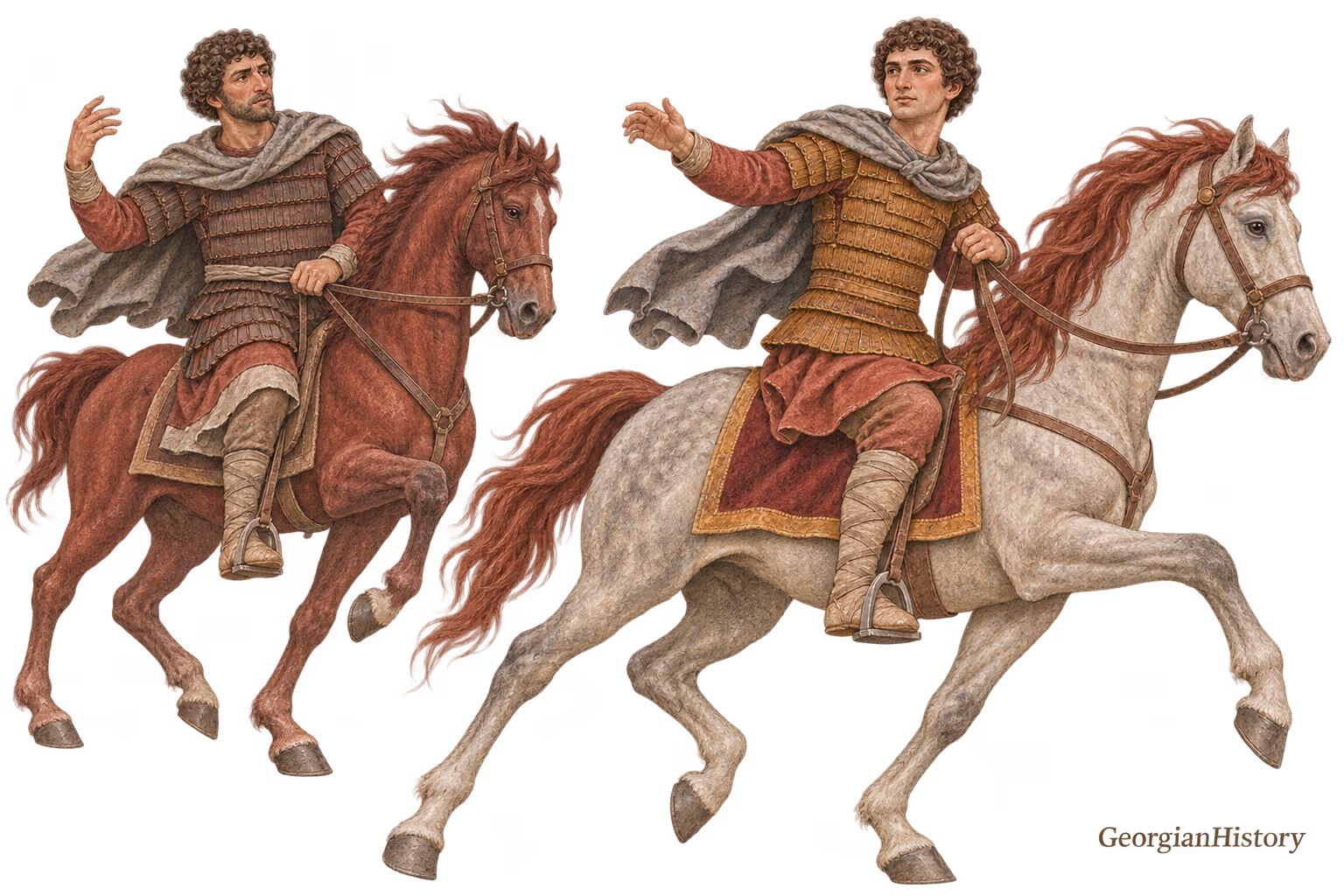
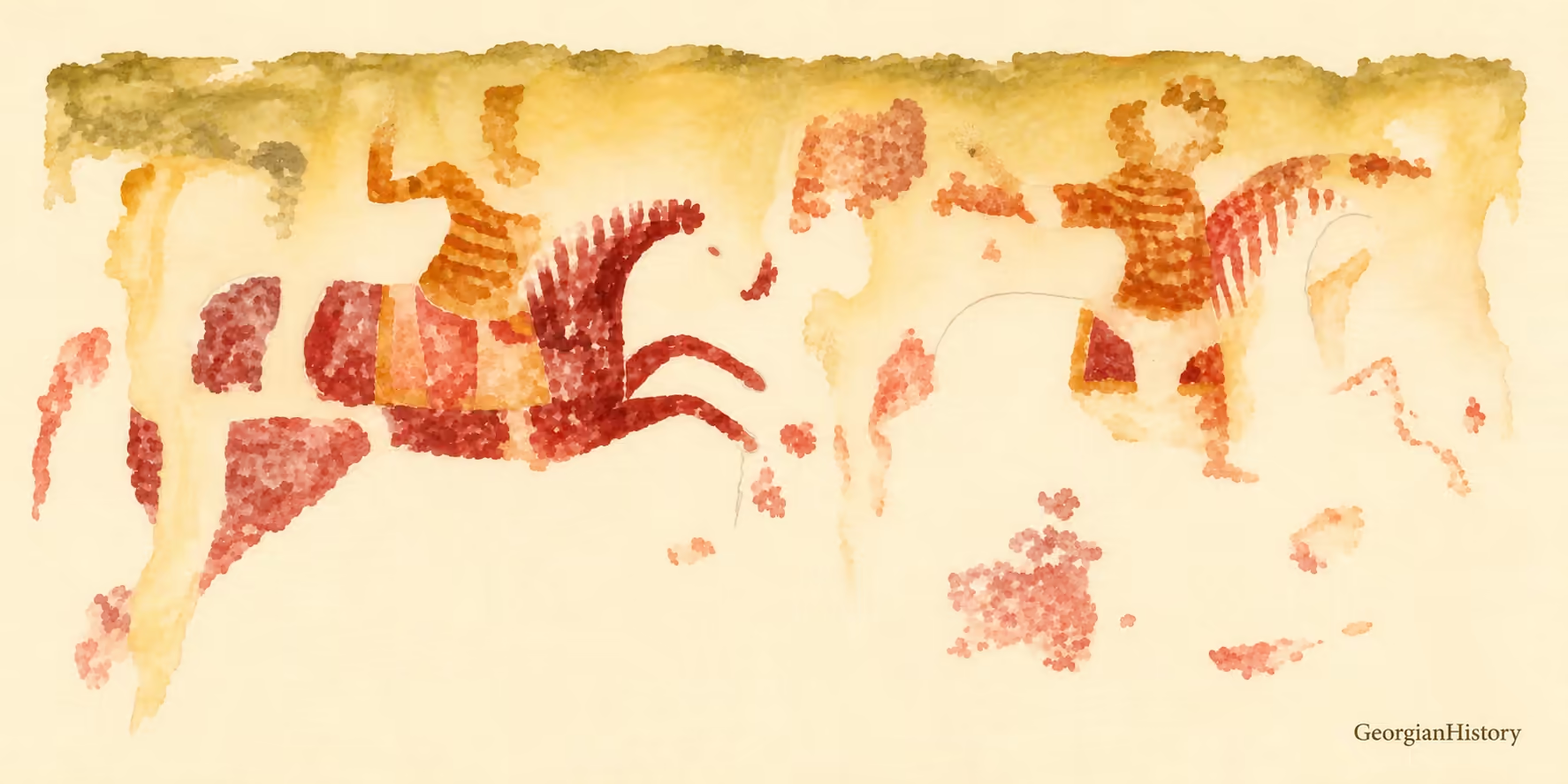
 Fragments of two mounted figures survive on the north façade of St George’s Church at Adishi. On the left, a dark red horse lifts both forelegs. On the right, a russet mane and fine outlines mark the second horse. These traces guided the movement and placement of the figures in our reconstruction.
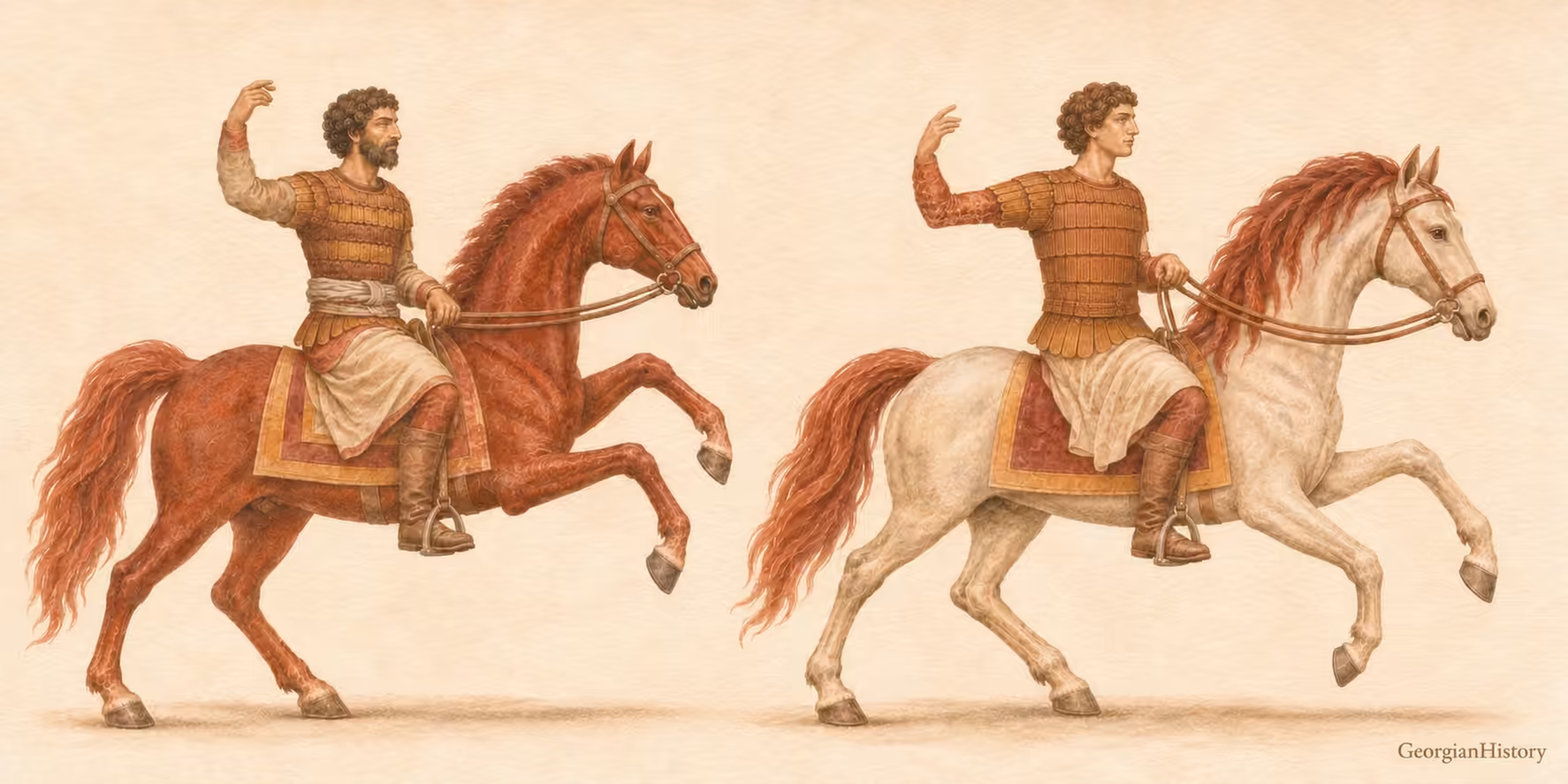
George leads, Theodore follows
Both riders face right. Tamar Dadiani identifies the leading rider as George and the one behind as Theodore. Traces of images beneath the horses help identify them. Dadiani reads them as the fallen Diocletian and the dragon. The dark red horse is a familiar feature of Theodore’s portrayal in Georgian art. The caption to the photograph dates the façade painting to the 11th–12th centuries. Tamar Dadiani, pp. 313–314, fig. 4.20
George’s armour and saddlecloth
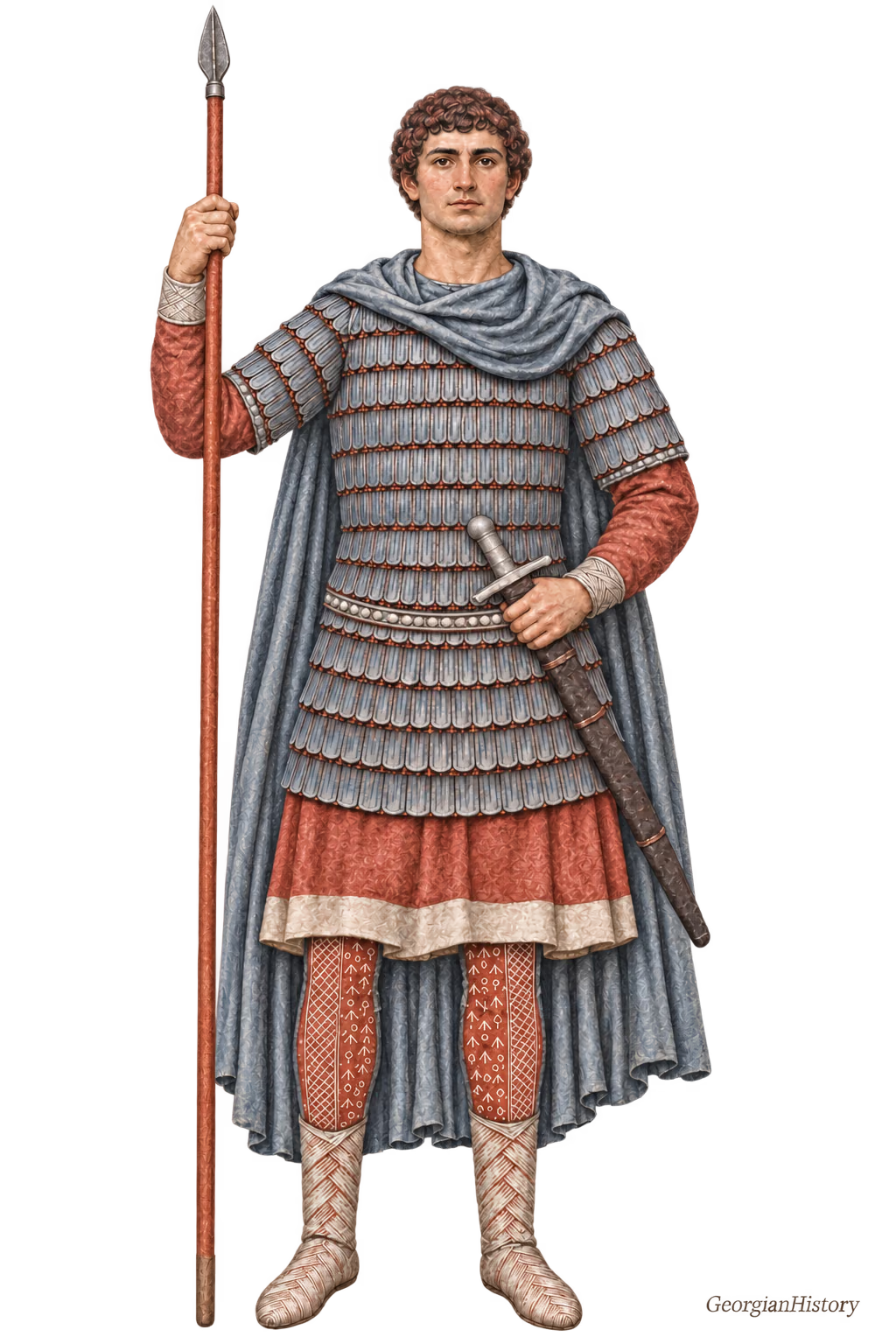
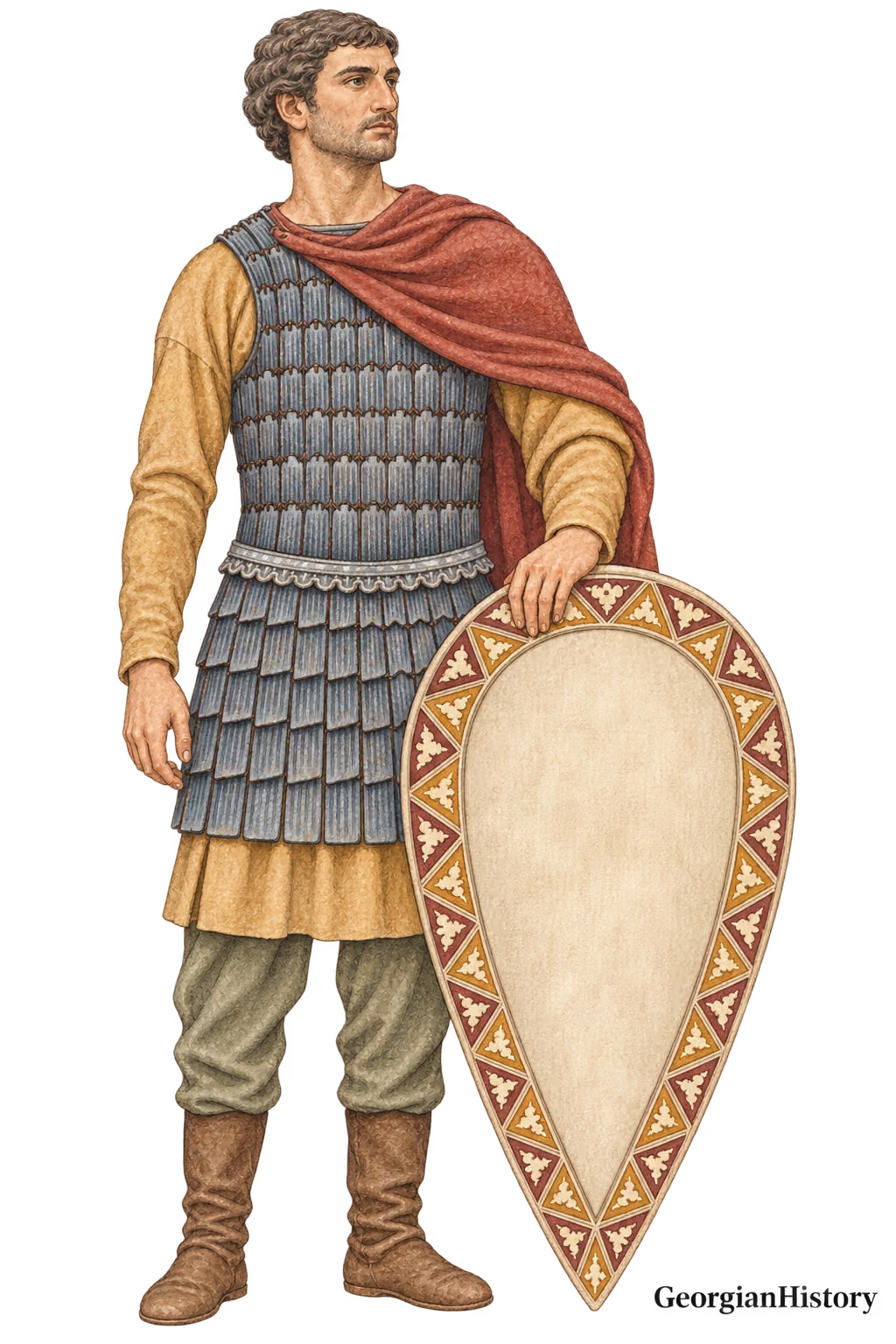
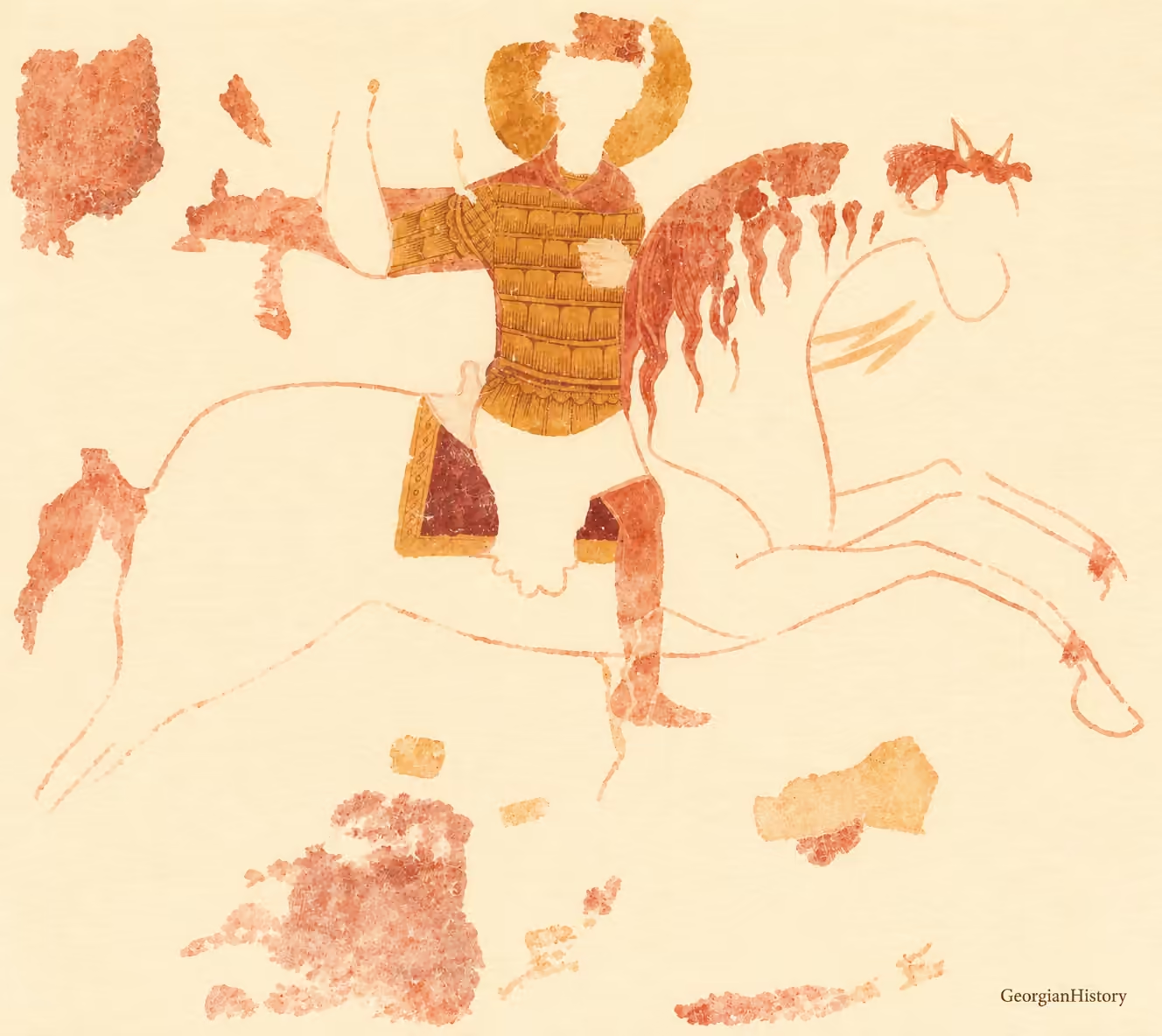
The wider photograph records the composition. S. Sarjveladze’s close-up shows horizontal rows of rectangular plates, part of the upper-arm defence and a short plated skirt. Mamuka Tsurtsumia identifies both riders’ armour as lamellar. In George’s watercolour we followed the shape and arrangement of the plates and painted a dark red saddlecloth with an ochre border. The ochre tone of the armour follows the mural. It gives little basis for identifying the original colour of the metal. Mamuka Tsurtsumia, pp. 79–80, 95, fig. 21
Reconstructing Theodore
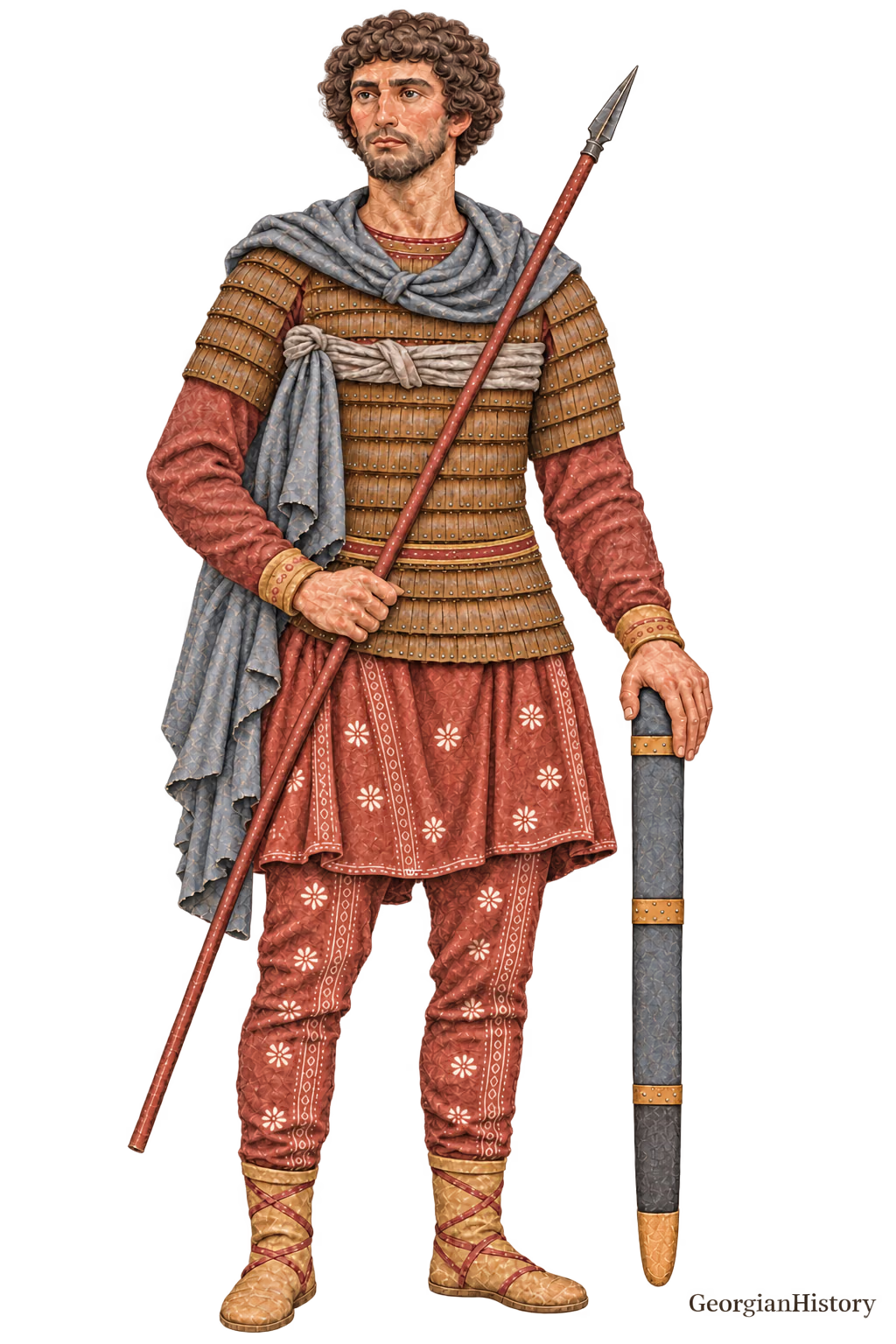
The wider photograph shows the arched neck and raised forelegs of Theodore’s dark red horse. Bands are visible across the rider’s torso. For the armour we followed the horizontal rows of rectangular plates described by Tsurtsumia. The size of individual plates, the joints between them and their fastenings are conjectural. The darker armour helps distinguish the two riders at a glance. Mamuka Tsurtsumia, pp. 79–80, 95, fig. 21
From fragments to complete figures
Pale gaps in both watercolour studies mark lost paint. The reconstruction keeps the riders in sequence and travelling right, with Theodore on a dark chestnut horse and a russet mane on George’s horse. The latter’s light coat is an artistic choice. Its surviving outline gives little evidence of its original colour. We supplied the faces, exact positions of the hands and hind legs, footwear, saddles and straps where the mural leaves the outlines incomplete.
How we made the cover
The cover catches the horses at different points in their stride. George’s ochre armour with rectangular plates stands out, while Theodore wears darker armour and rides a chestnut horse. The turns of the riders’ heads, the folds of the cloaks and the way they sit in the saddle give the scene movement. The reconstruction focuses on the riders. Fragments of the haloes and traces of figures beneath the horses appear in the watercolour studies.
A separate composition with warrior saints survives on the west wall inside the same church. It is the subject of sheet F03, ‘The Warrior from Adishi’. Read sheet F03
Sources and further reading
- Tamar Dadiani. Chapter on St Theodore Tēron and St Theodore Stratēlates. In Warrior Saints in Medieval Georgian Art, Tbilisi, 2025, pp. 313–314, fig. 4.20. Photograph by Zurab Tsertsvadze.
- Mamuka Tsurtsumia. The Evolution of Splint Armour in Georgia and Byzantium. Byzantina Symmeikta 21, 2011, pp. 79–80, 95, fig. 21. Photograph by S. Sarjveladze.
- Close-up, fig. 21
- Tbilisi State University. Adishi, Church of St George. Wall-painting catalogue.