The Mace in Georgia: Weapon and Symbol of Power
Lakhti and gurz, fighting maceheads and ceremonial maces, as examined by Mamuka Tsurtsumia.
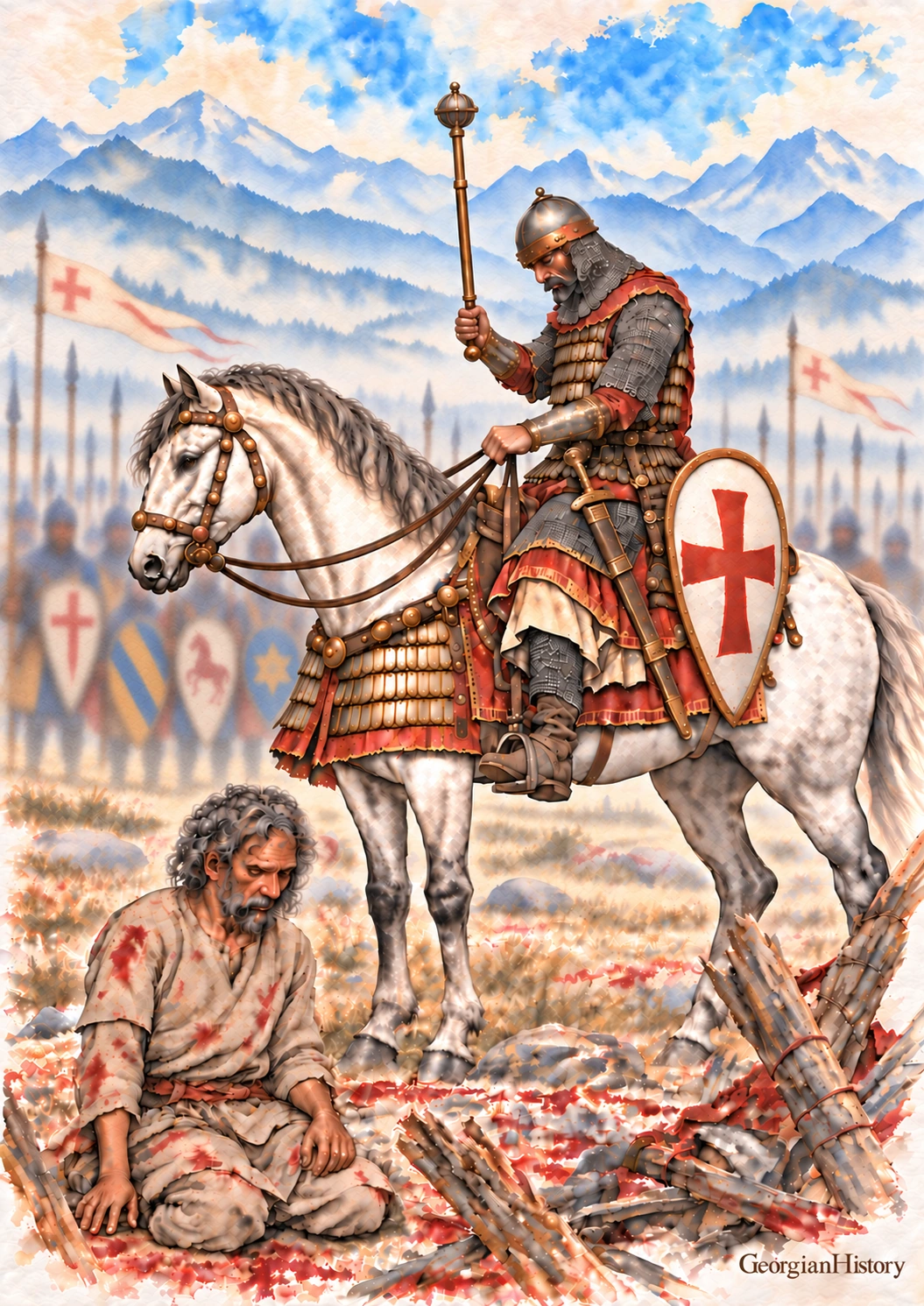
 The sword and spear defined the appearance of a medieval horseman. Over time the mace acquired an increasingly prominent place beside them, a weapon whose strength lay in its heavy blow. In Georgia it went from relatively infrequent mention as military equipment to becoming a distinctive part of an armed warrior's kit and a symbol of authority.
Mamuka Tsurtsumia's study “The Mace in Medieval Georgia” traces that development through written accounts, images and objects in museum collections.
Lakhti and gurz
Two main terms appear in Georgian sources. A lakhti is a mace with projecting flanges, and a gurz is a mace with a rounded head. Both terms are associated with the Persian weapons tradition.
The difference in shape had a practical purpose. A rounded head delivered a heavy, crushing blow. A lakhti's flanges concentrated the impact on a smaller area. Such a weapon could seriously injure even an armoured opponent, though the result depended on the force of the blow, where it landed and how the armour was made.
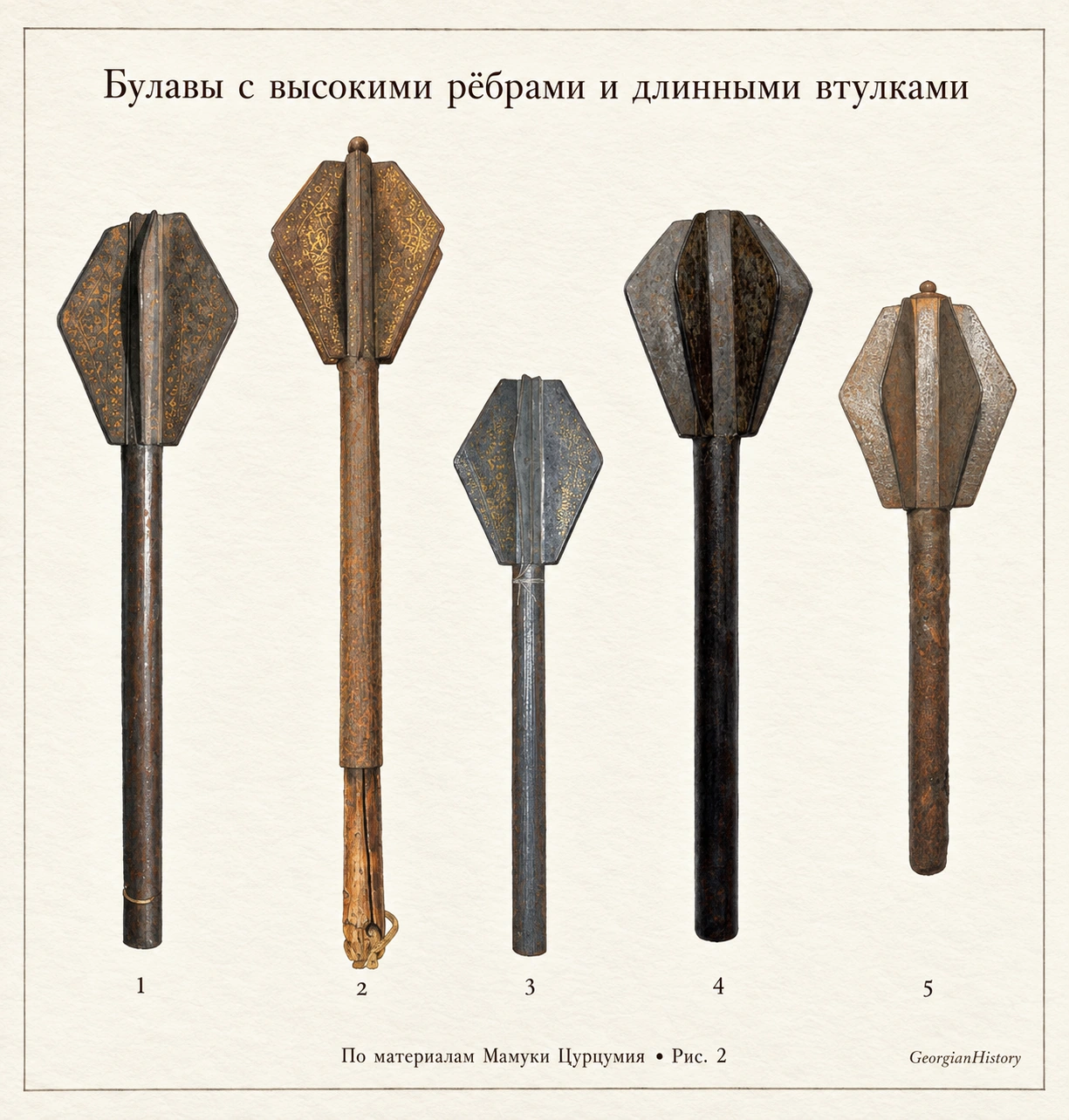
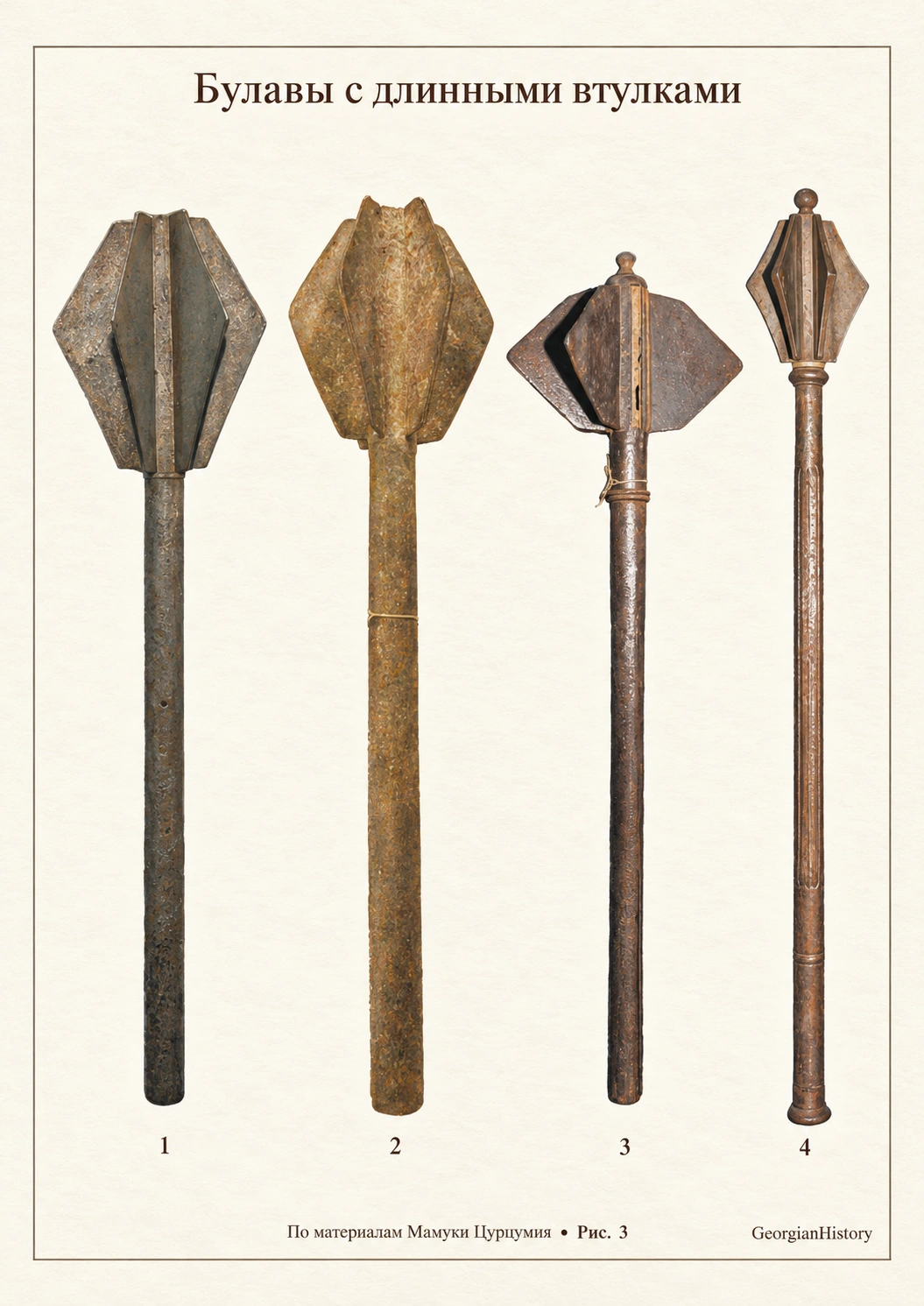
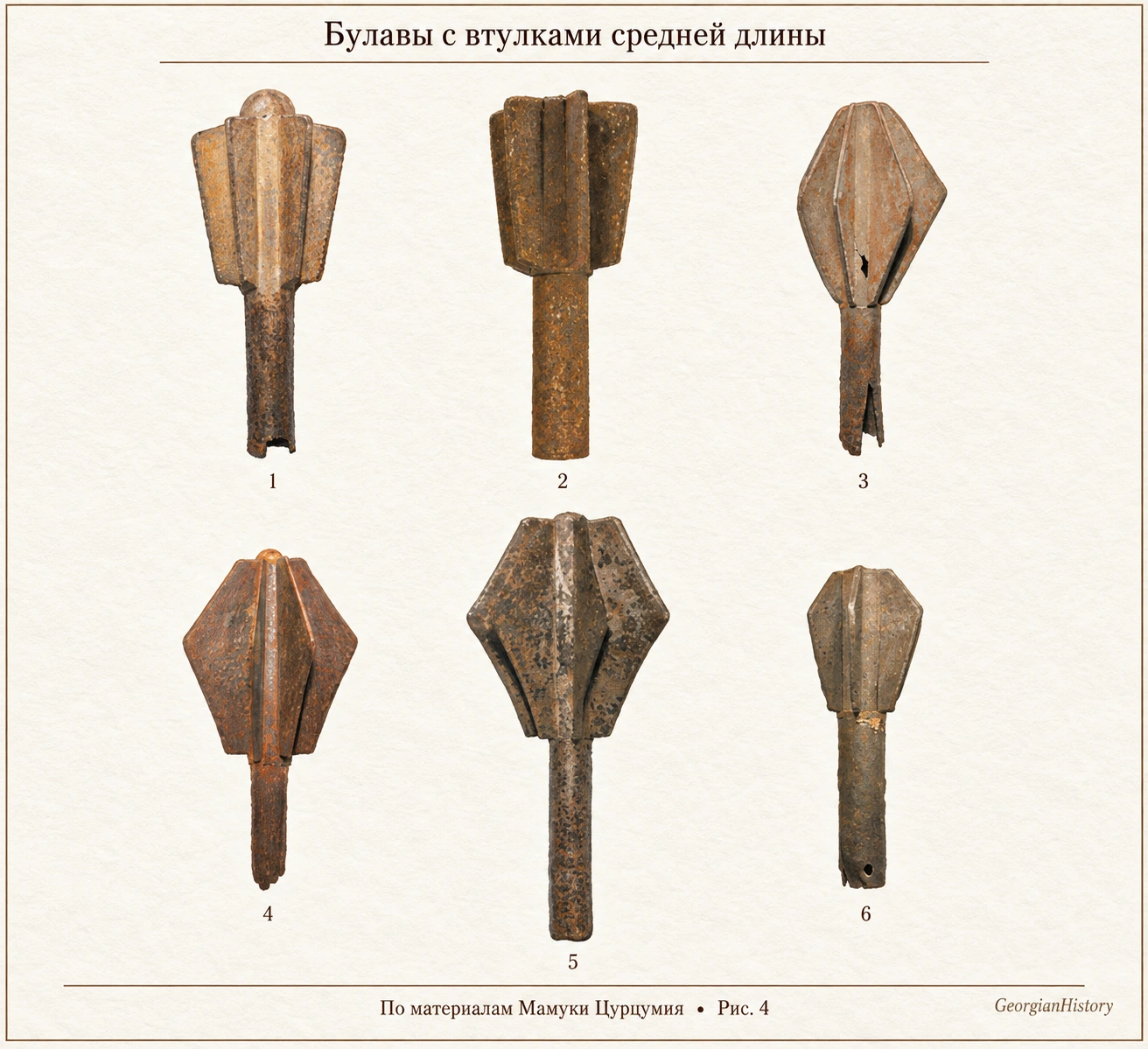
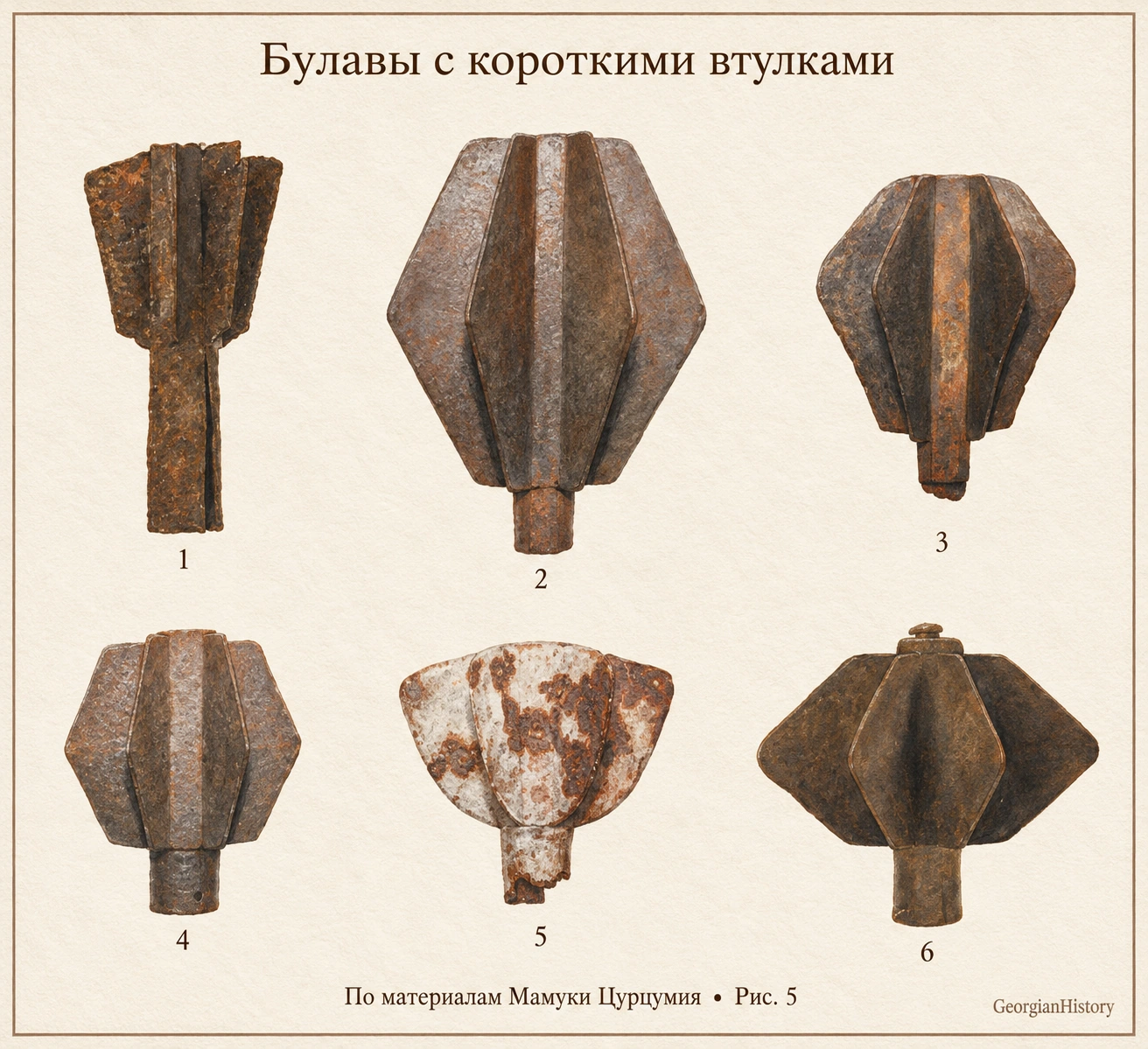
Maces varied in the shape of their heads, the number and form of their flanges, the length of their sockets and the construction of their handles. Museum examples show how diverse this weapon could be.
How its place in the army changed
In the twelfth century the mace had yet to take a leading place in Georgian weaponry. Tsurtsumia notes that it appears relatively infrequently in the literature and images of the period. The spear and sword remained the principal weapons.
The mace gained importance after the Mongol conquest. Tsurtsumia links this change to Mongol and Iranian military influences. The spread was gradual as the mace supplemented existing weapons.
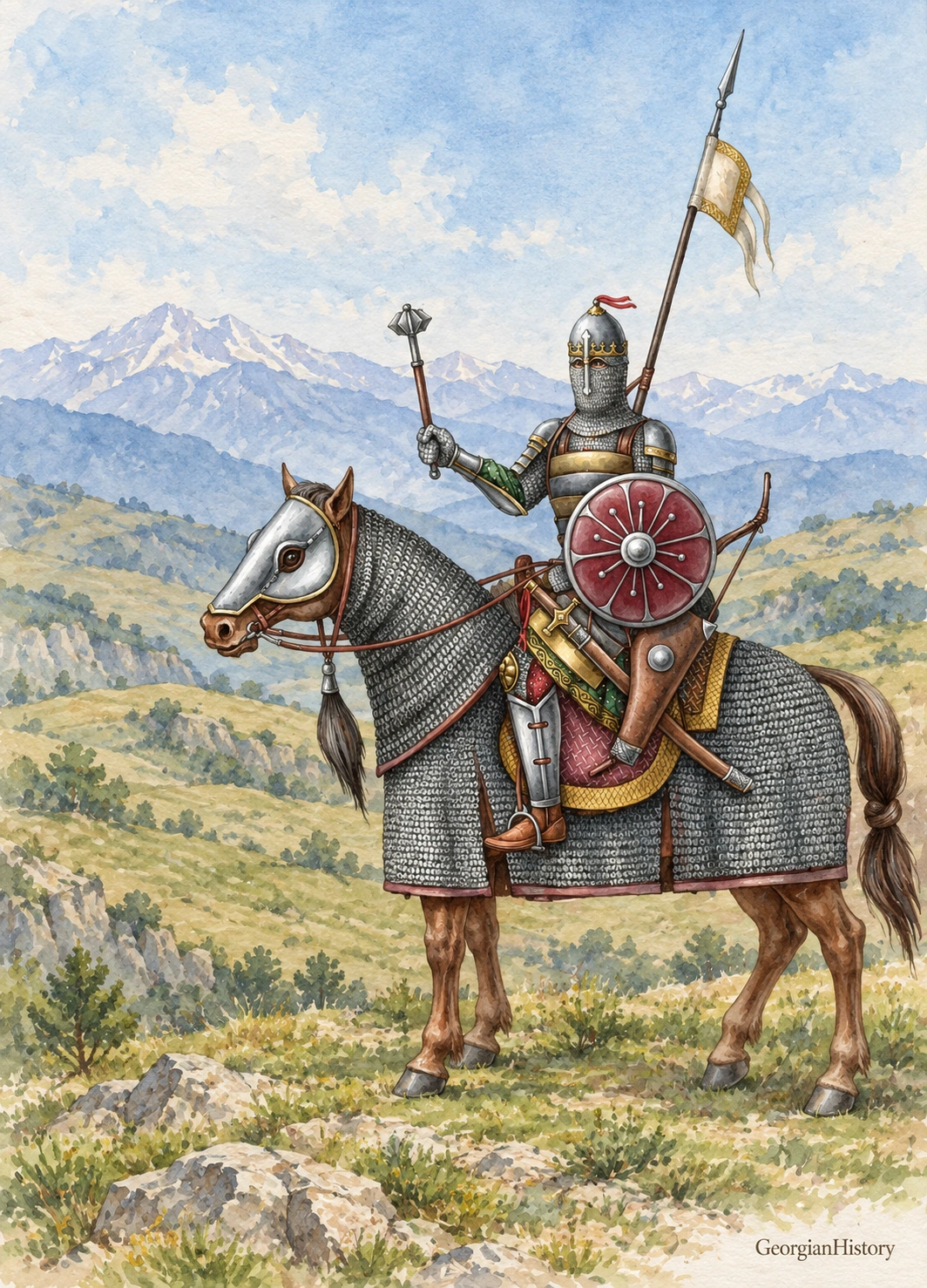
By the sixteenth and seventeenth centuries it had become an important part of the equipment of a heavily armed Georgian warrior. Literary descriptions of battles present a characteristic sequence: the fighting began with spears, continued with sabres and ended in exchanges of mace blows.
These accounts are not exact records of every battle, but they reflect how contemporaries understood the place of different weapons in close combat.
Georgian examples and neighbouring traditions
Georgia's museums hold locally made maces, foreign pieces and examples influenced by neighbouring schools of weapon-making. Tsurtsumia examines them in the context of Byzantine, Mongol, Iranian and Ottoman traditions.
An object in a Georgian museum collection was not necessarily made in Georgia. The origin of each example requires separate study.
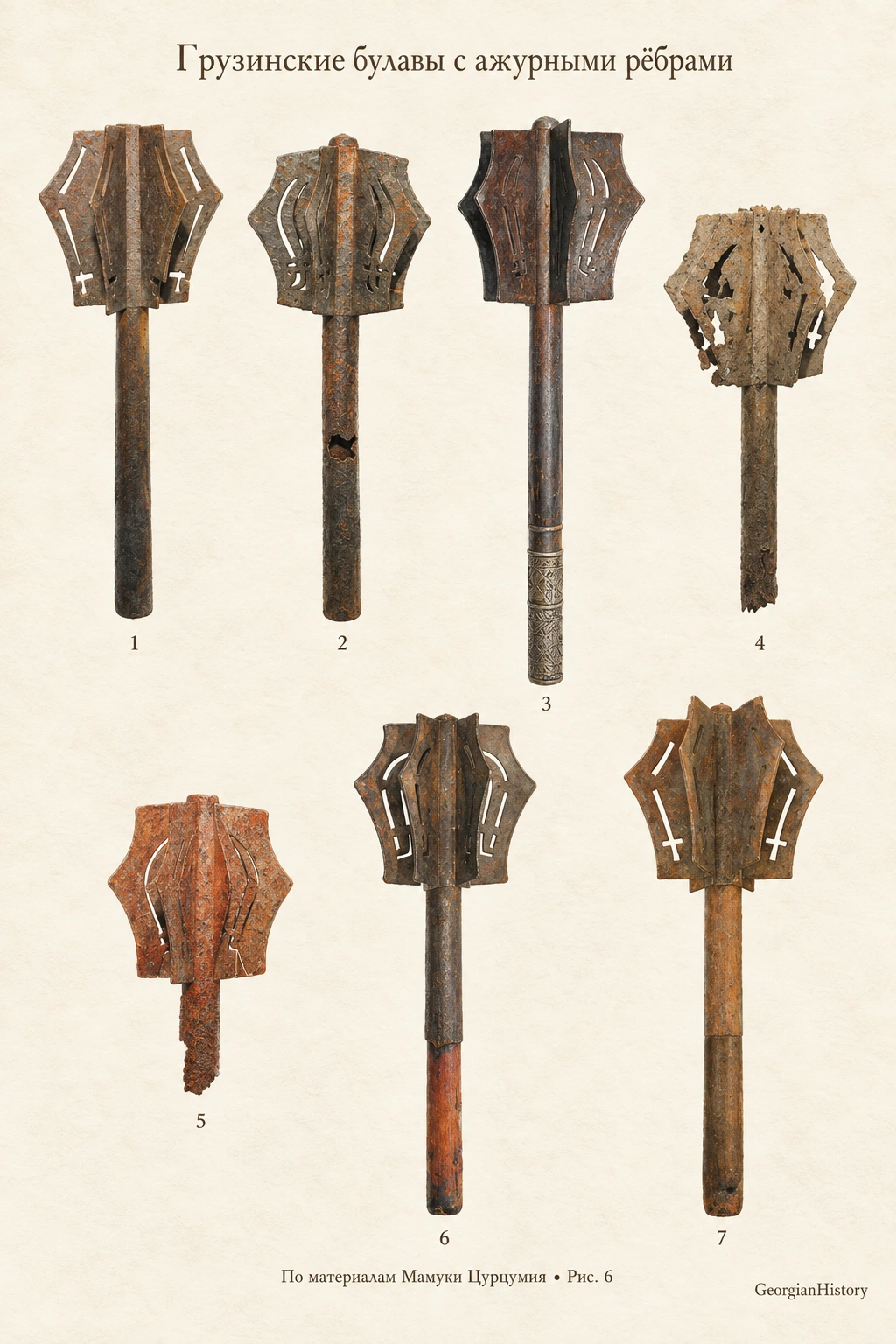
Georgian maces with openwork flanges are especially distinctive. Their heads have elongated openings, and some feature small cross-shaped cutouts. The intricate metalwork gave the weapons a recognisable appearance and shows the skill of their makers.
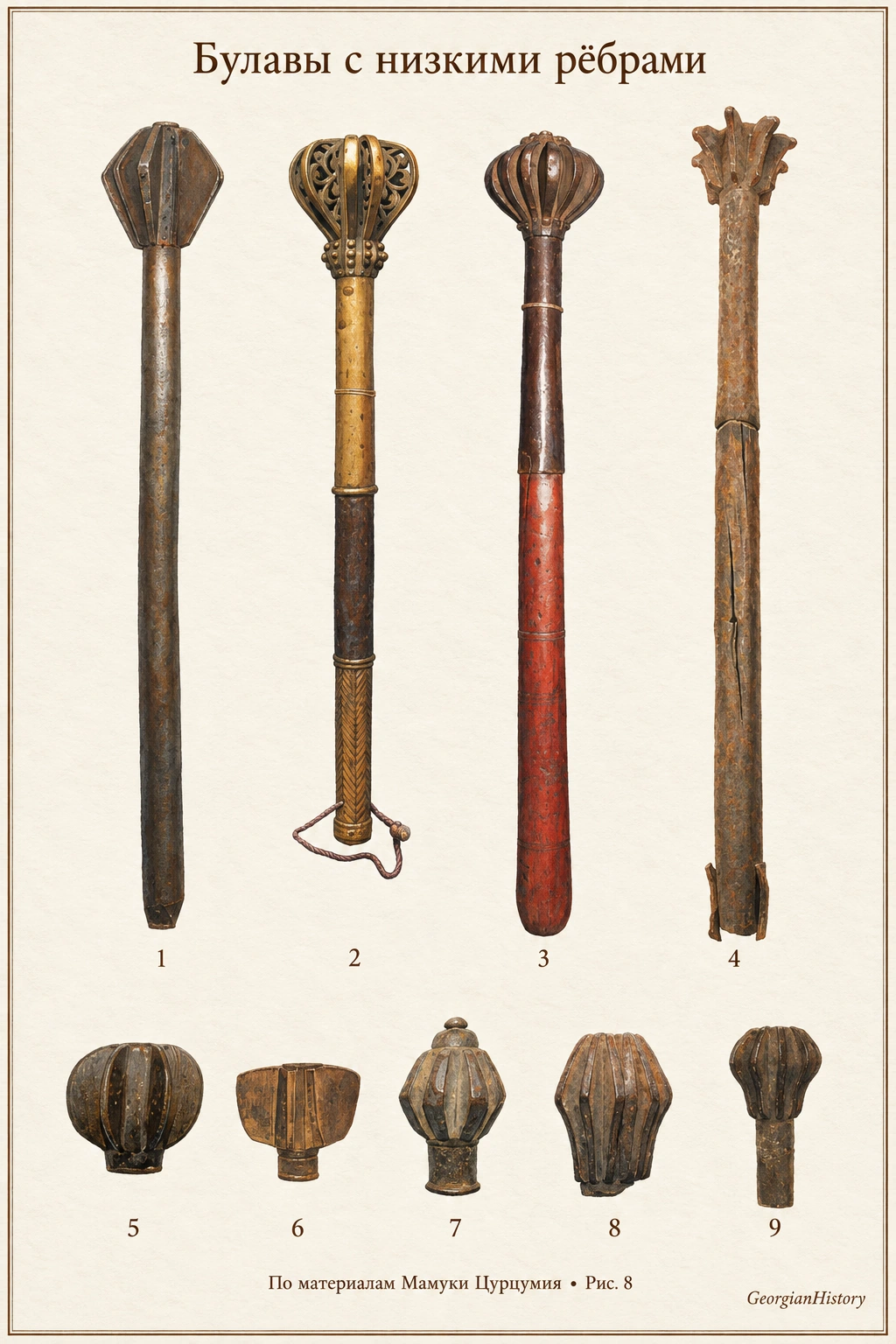
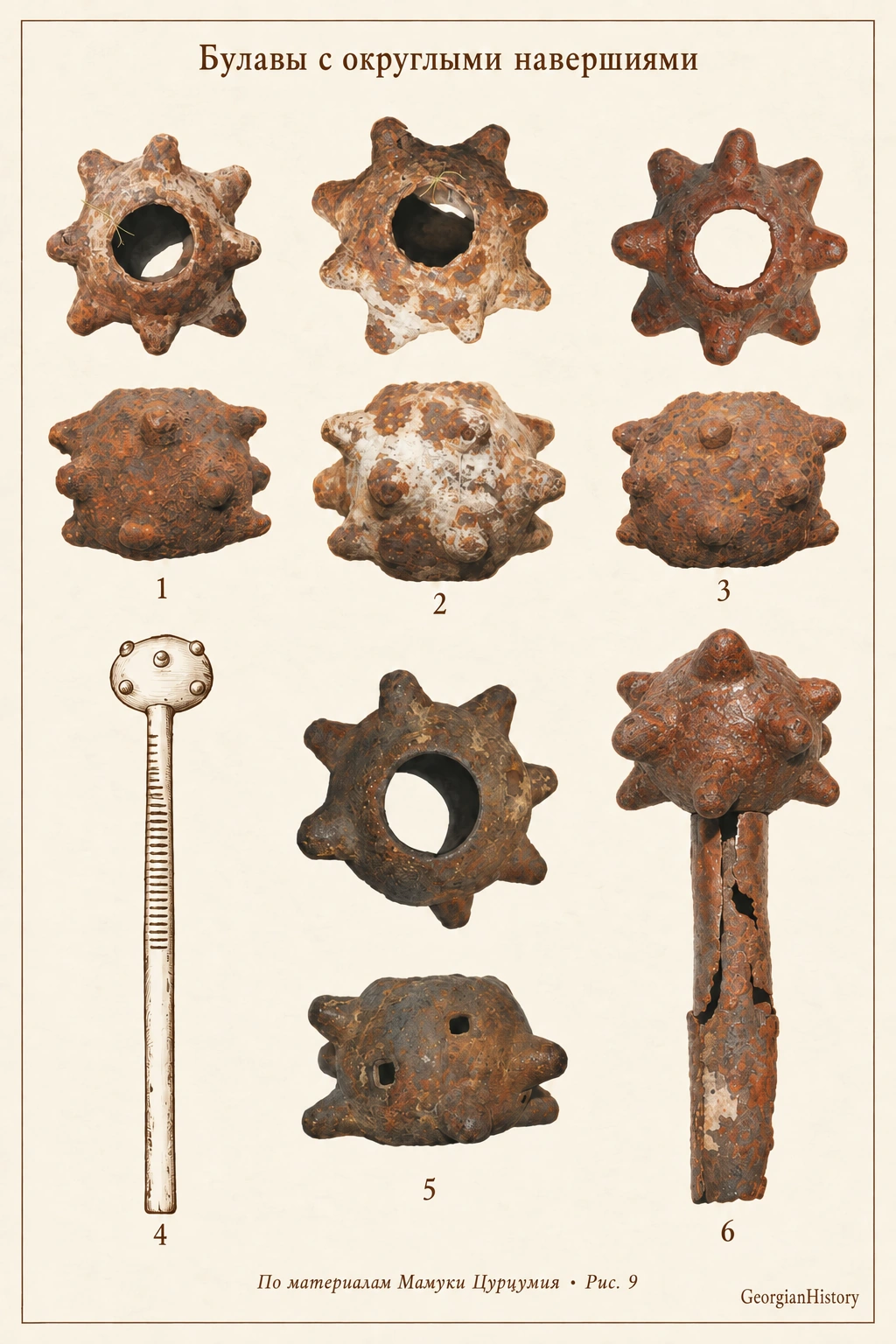
Simpler shapes survive alongside them: rounded heads with projections, maces with tall, angular flanges and compact examples with low flanges. Damage, corrosion and missing handles are now part of the history of these objects.
At the belt and saddle
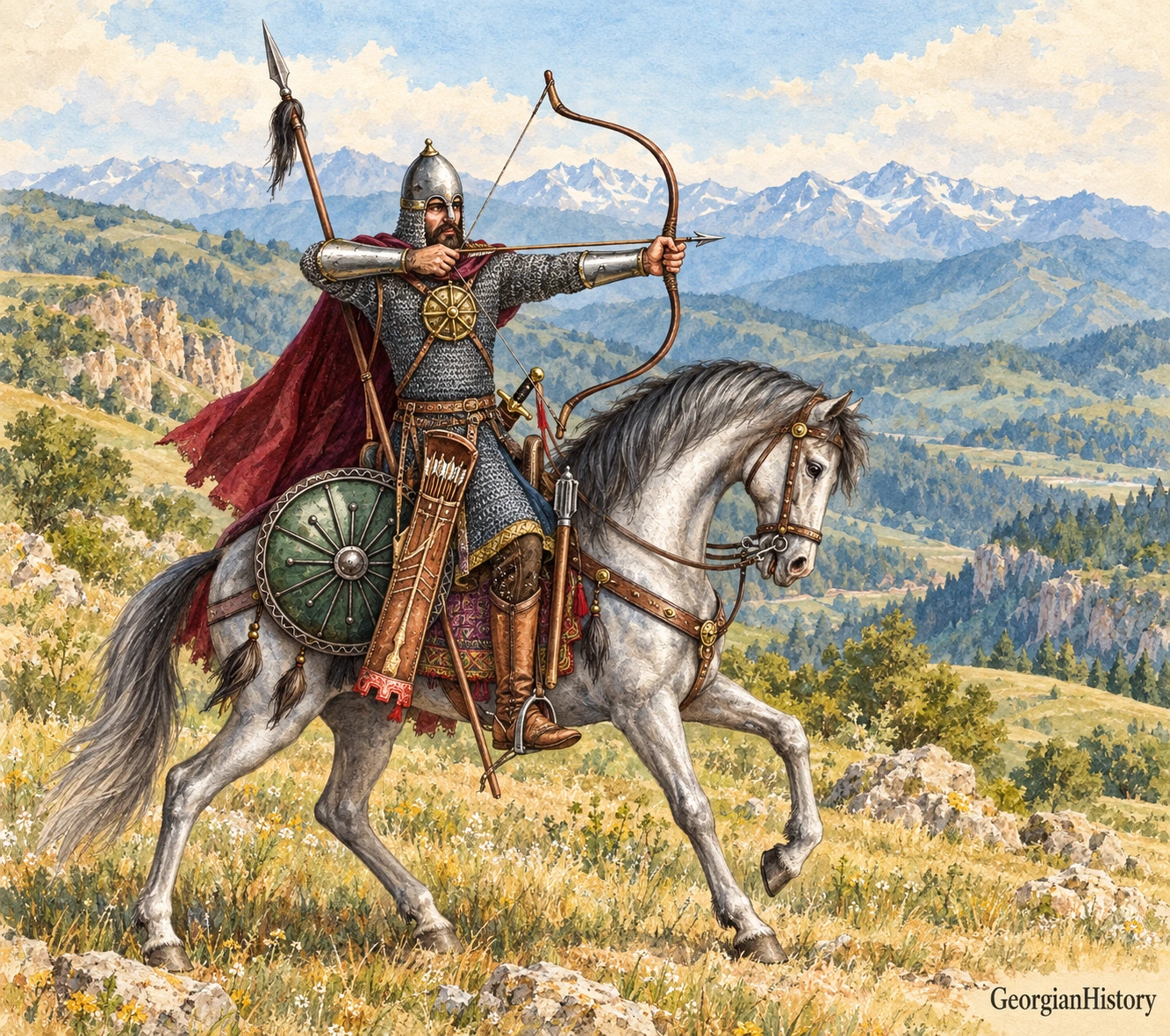
A mace was carried where it could be drawn quickly in battle. Georgian written and visual sources attest to weapons tucked into the belt. The warriors in images discussed by Tsurtsumia are also shown carrying them this way.
Maces were also fastened to saddles. This can be seen in a late fourteenth-century fresco of Saint George at Tsalenjikha. Tsurtsumia notes that the Greek artist Manuel Eugenikos painted the fresco, so the method depicted may reflect Byzantine practice.
Such details reveal the day-to-day life of a museum object: how the weapon was transported, where it was kept and how it was taken in hand.
A symbol of authority
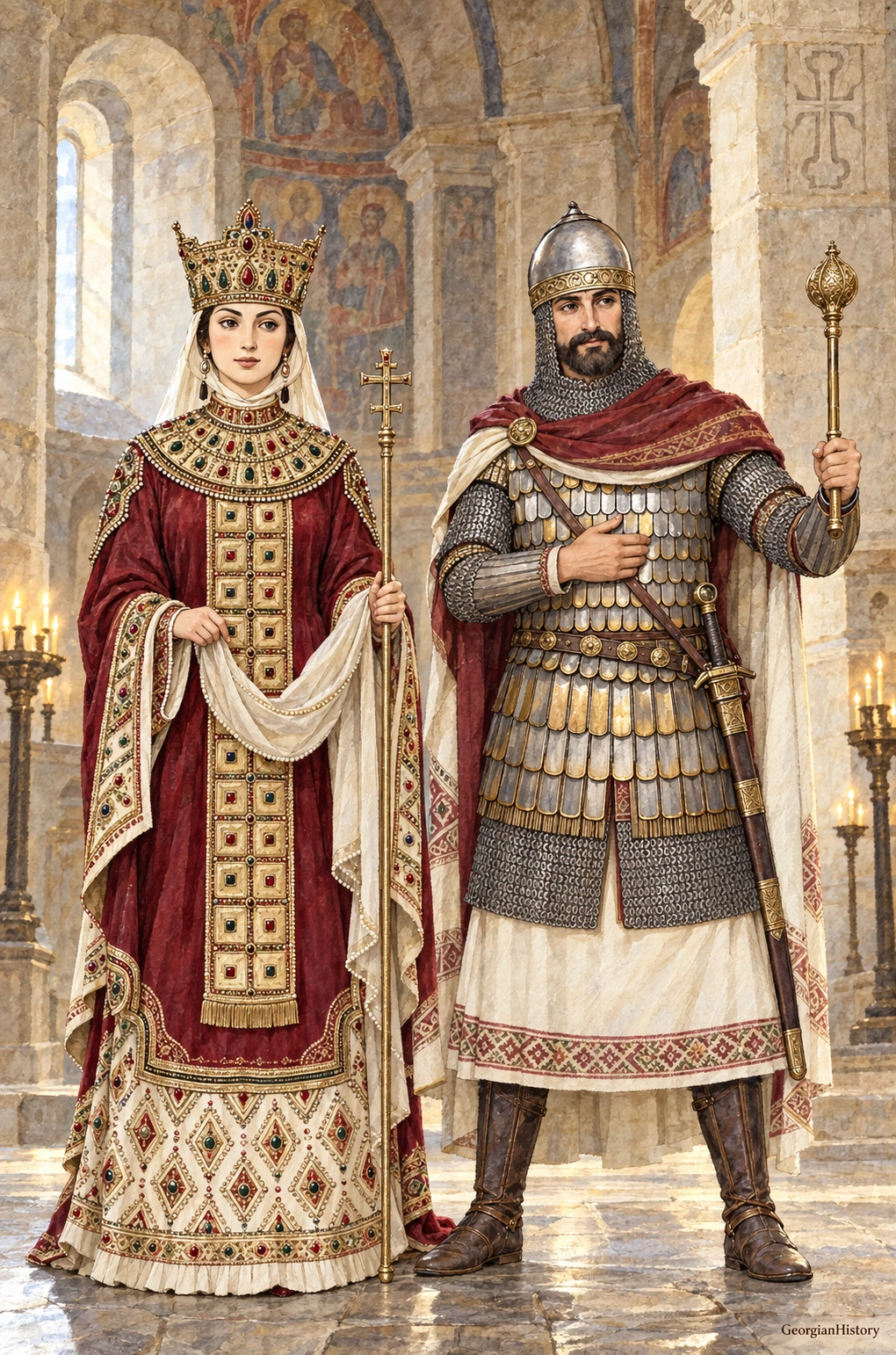
A mace could mark the owner's standing and right to command or represent the community, as well as serving as a weapon.
In Svaneti it signified the authority of the makhvshi, the head of a community, during military campaigns and public assemblies. A painted wooden mace in the Mestia museum follows the shape of a metal weapon. Tsurtsumia suggests it served a ritual or ceremonial purpose.
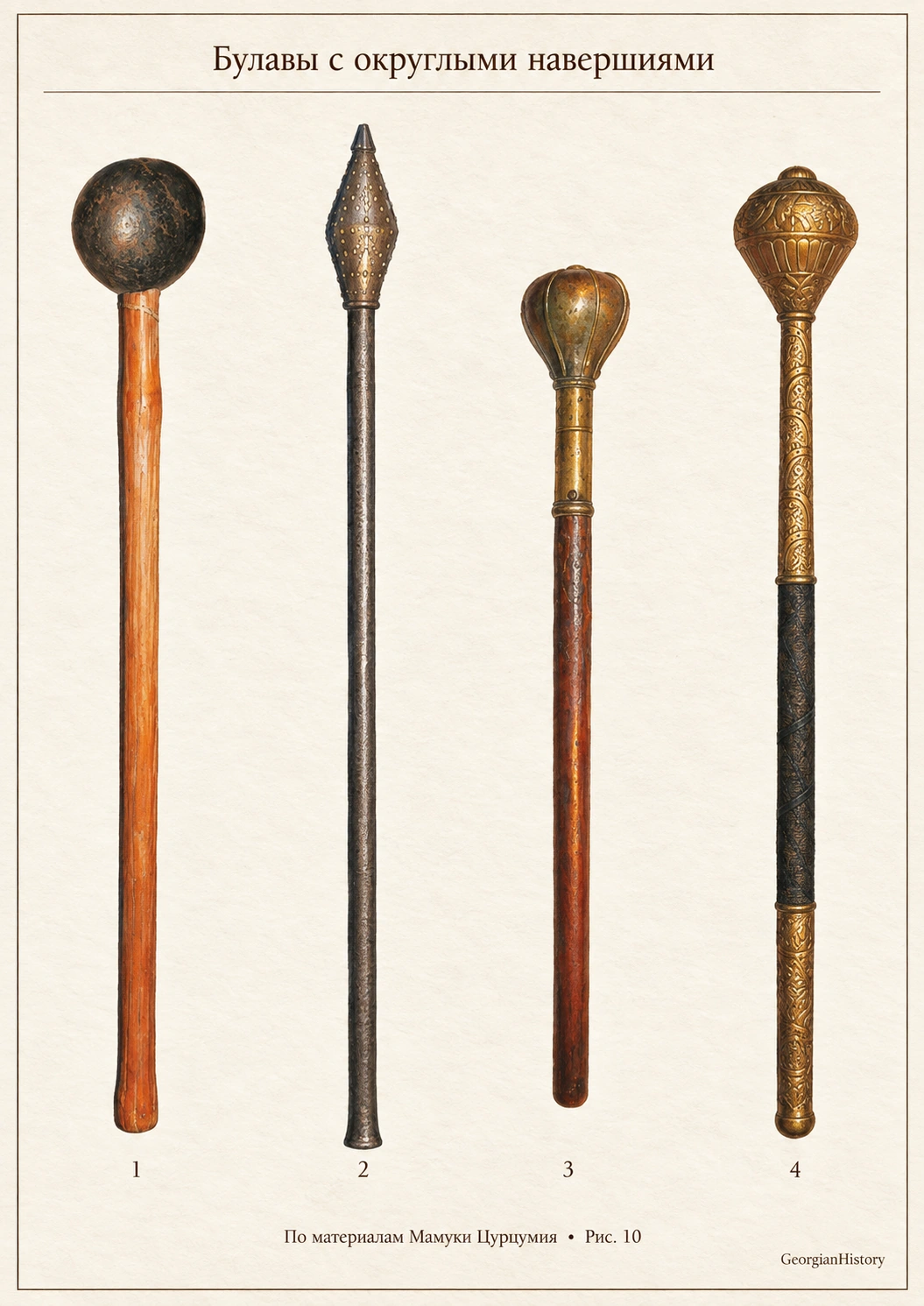
Other maces associated with rank stand out for their rich decoration, including gilding, engraving, openwork and ornamented handles. Tsurtsumia identifies several of these as symbols of authority without a combat function.
Decoration alone does not establish that a mace was ceremonial. Decorated weapons could still be used in battle, and their purpose must be inferred from several features taken together.
In Georgian history the mace combined the force of its blow with the authority of its owner. On the battlefield it was a weapon for close combat, and on ceremonial occasions it visibly signalled the right to lead others.
Maces · A watercolour atlas
GeorgianHistory watercolour redrawings based on the illustrations in Mamuka Tsurtsumia’s study. The plates show the shapes of the objects. Check the scale and finer details against the original publication. The specimen numbers follow the source.
Weapons and power
Mamuka Tsurtsumia’s study
Mamuka Tsurtsumia. The Mace in Medieval Georgia. Acta Militaria Mediaevalia XIV (2018), pp. 87–114. Full text in English · 28 pages · PDF, 8.3 MB.