Prayers and Names on the Weapons of Georgian Warriors
From a prayer on the Wawel helmet to an invocation of the Cross on the gun of Erekle II.
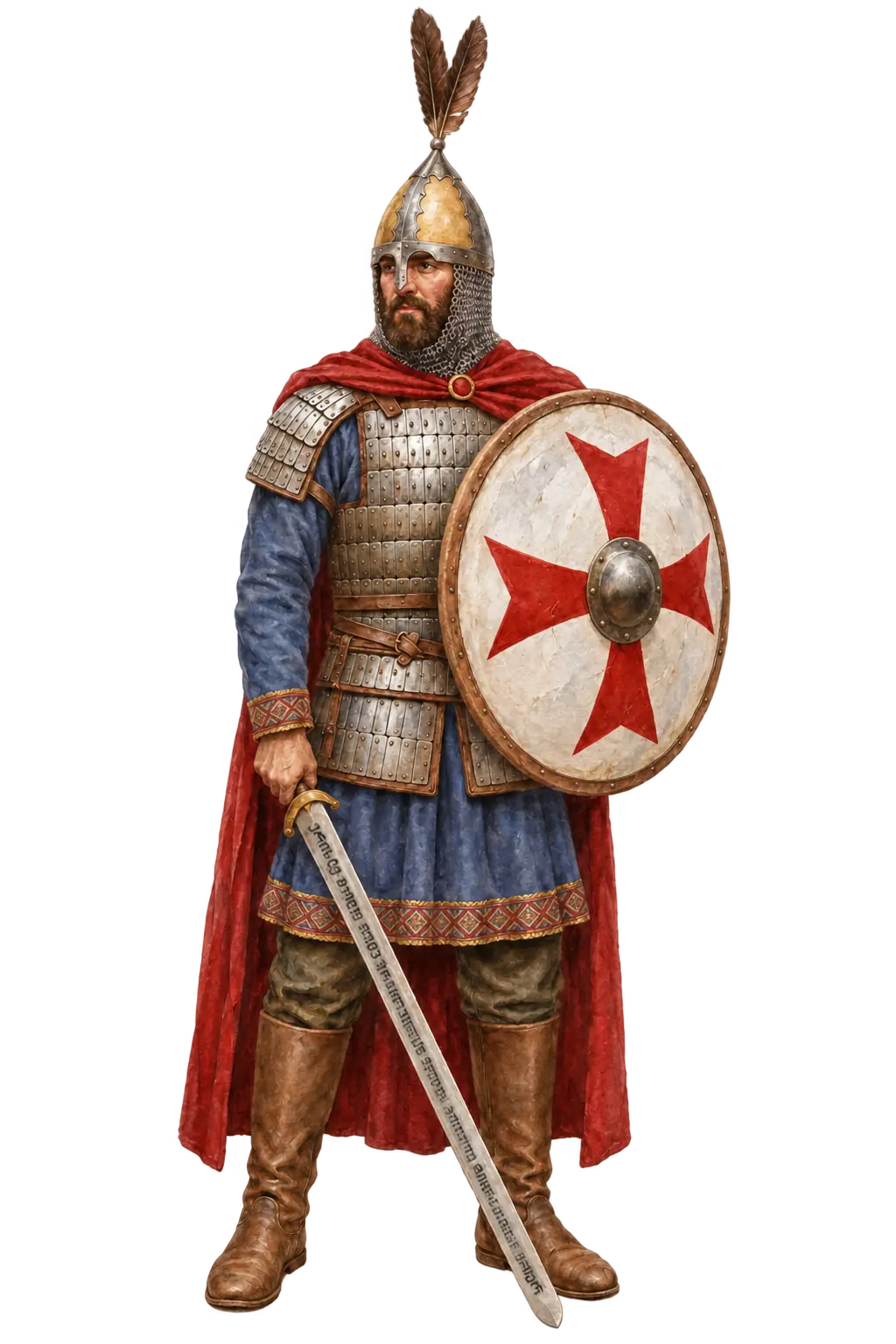
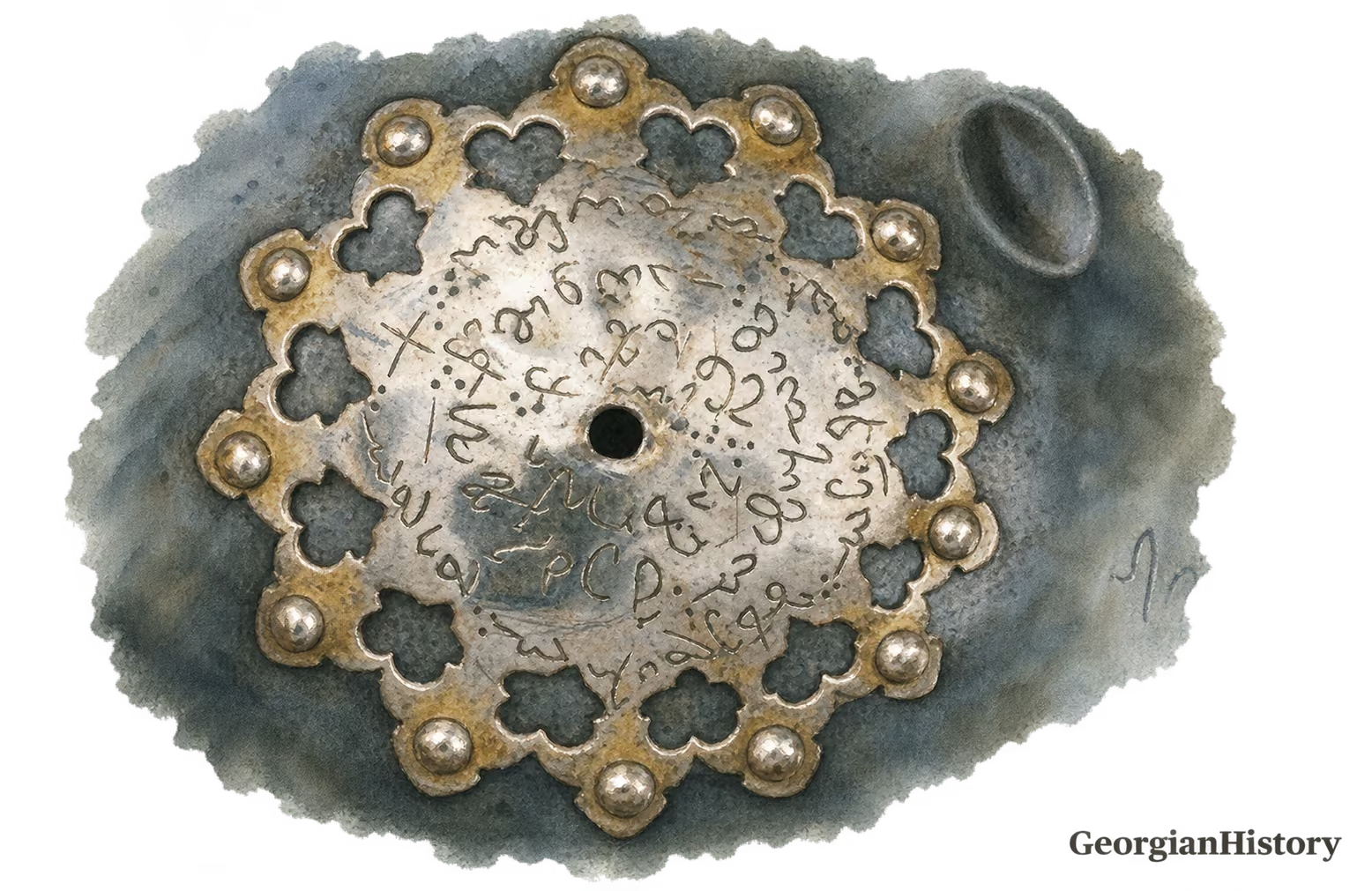
 The name of a Georgian warrior survives at the crown of an old helmet in Kraków’s Wawel Royal Castle. It comes at the end of a short prayer asking God and Saint George to grant the owner victory. Other surviving weapons bear invocations of the Cross of Christ. These objects show how inscriptions could give personal arms a religious meaning.
A prayer on the crown of the helmet
Mamuka Tsurtsumia dates the steel body of the Wawel helmet to the fourteenth century. The Georgian inscription was added to the rosette on its crown several centuries later. The paleographer Valery Silogava read the inscription and dated it to the seventeenth century. [1, 2]
The prayer asks God and the valiant warrior, great Saint George, to grant victory to Sazvereli Chijavadze. It calls the saint a warrior and gives both the personal name and surname of the man for whom victory is sought.
The Chijavadzes belonged to the nobility of Imereti. Sources mention two men named Sazvereli in the seventeenth century. Which of them owned the helmet remains uncertain.
Whom did the inscriptions invoke?
In the eighteenth century, a line addressing the Cross was inscribed on the flintlock gun of King Erekle II. It appears as entry 87 in the corpus of Georgian inscriptions. [3]
ქ. ირაკლის სიქადული საძლეველო მტერთა ჯვარო ქრისტესო
Its sense is “Cross of Christ, Erekle’s glory, through you enemies are overcome!” The Chijavadze helmet asks for victory to come. Here the owner praises the Cross as the source of victory. The corpus records the wording and leaves its position on the gun unspecified.
Even royal weapons could carry very short inscriptions. The gun of Solomon I, king of Imereti, reads “მეფის სოლომონისა ვარ”, meaning “I belong to King Solomon.” The weapon names its owner in the first person. [3, no. 89]
What blades and grips tell us
A striking example is an eighteenth-century Mingrelian backsword in Stockholm’s Royal Armoury (inv. no. 7323). The inscription is cut into the grip in the Mkhedruli script. Researchers interpret its opening sign as an abbreviation of the name of Christ. In their reading, Svimon then relates how the king bestowed the weapon on him and girded him with it. A Christian invocation may have introduced an account of the honor bestowed on the warrior. [4]
An inscription on the grip of Bezhan Tsereteli’s weapon preserves his name. The hilt of Katsia Dadiani’s backsword combines two techniques. The shorter family inscription is in relief, and the longer one is engraved. Describing all such inscriptions as “inlaid prayers” would give a false impression. [4, 5]
Another example comes from Svaneti. Until the late nineteenth century, the Matskhvarishi church in the Latali community kept a silver mace with a rhyming inscription, a gift from Bezhan Robakidze. Tsurtsumia’s account gives the donor and the form of the text. The words of the verse remain unknown. [6]
The mkhedari’s sword and its inscription
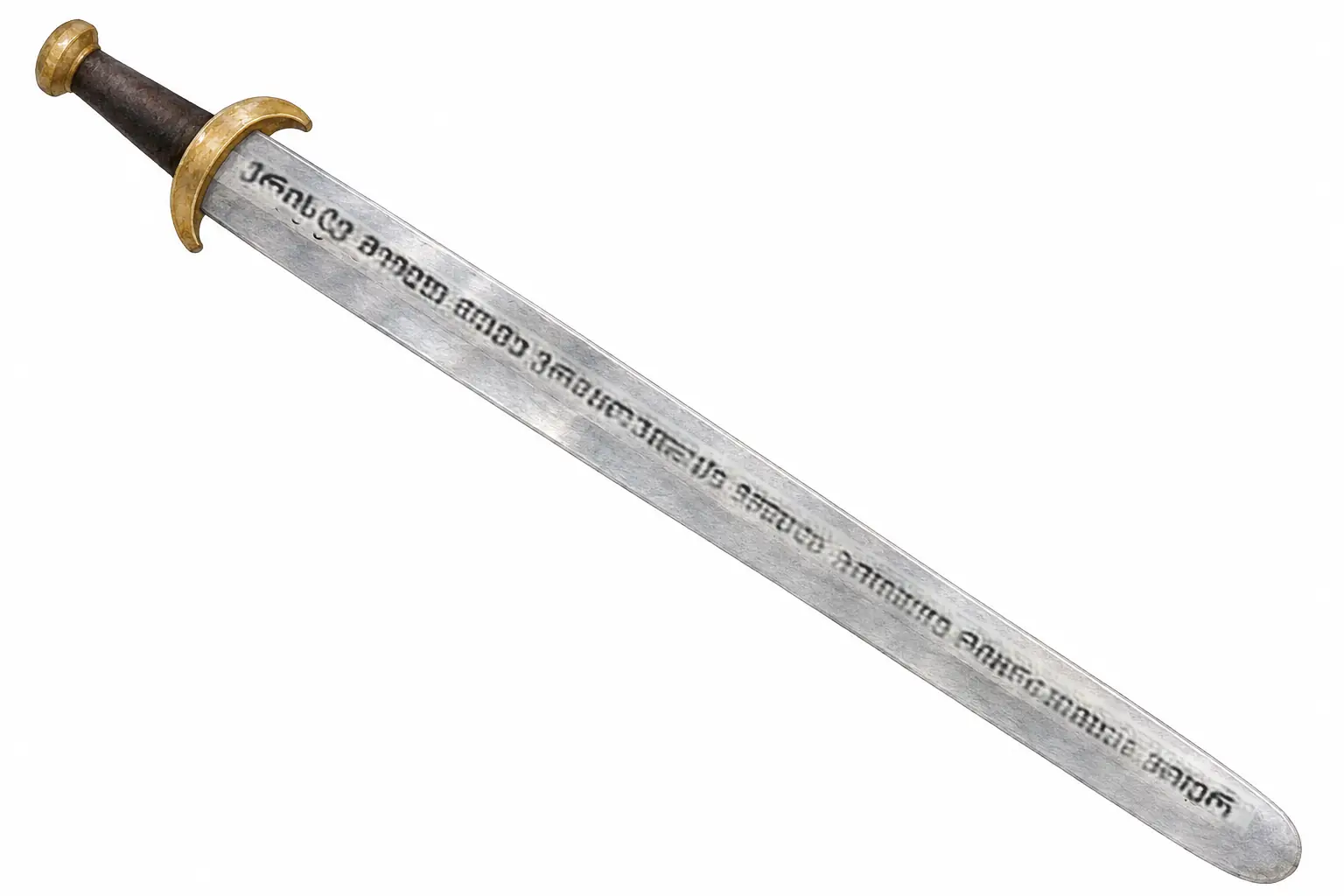
Researchers date the surviving double-edged sword from Khevsureti to the eleventh or twelfth century. Photographs of both sides have been published. The long line of characters is known from a modern illustration by Artur Klimko. Its opening may read “ქრისტე” (“O Christ”). The complete text and its relationship to the museum sword remain uncertain. [7]
The sources attest to a Georgian tradition of prayer inscriptions on personal arms. The direct examples above date to the seventeenth and eighteenth centuries. The publications consulted have yet to yield a comparable Georgian text on a medieval shield, mail shirt, or breastplate.
Sources and further reading
- [1] M. Tsurtsumia. The Wawel helmet, p. 83, fig. 4
- [2] Georgian Encyclopedia. The Wawel helmet and the Georgian reading
- [3] TITUS. Corpus of Georgian inscriptions, entries 87 and 89
- [4] I. Bakradze and V. Kiziria. Western Georgian weapons, pp. 25–27
- [5] M. Anisimova and V. Kiziria. The Dadiani backsword, fig. 13
- [6] M. Tsurtsumia. The mace in medieval Georgia, p. 95
- [7] M. Tsurtsumia. Medieval sword and sabre from the Georgian National Museum, pp. 159–160