Mustering the Banners in Georgia
Georgian Banners · Part 5 of 6
 In 1721, Vakhushti Bagrationi took command of the vanguard sadrosho of Lower Kartli. On Vakhtang VI’s orders, he carried out a census of its population. This episode in the historian and cartographer’s life shows how closely command of the army was tied to the administration of the land and the people who were to assemble under one banner.
The land that raised an army
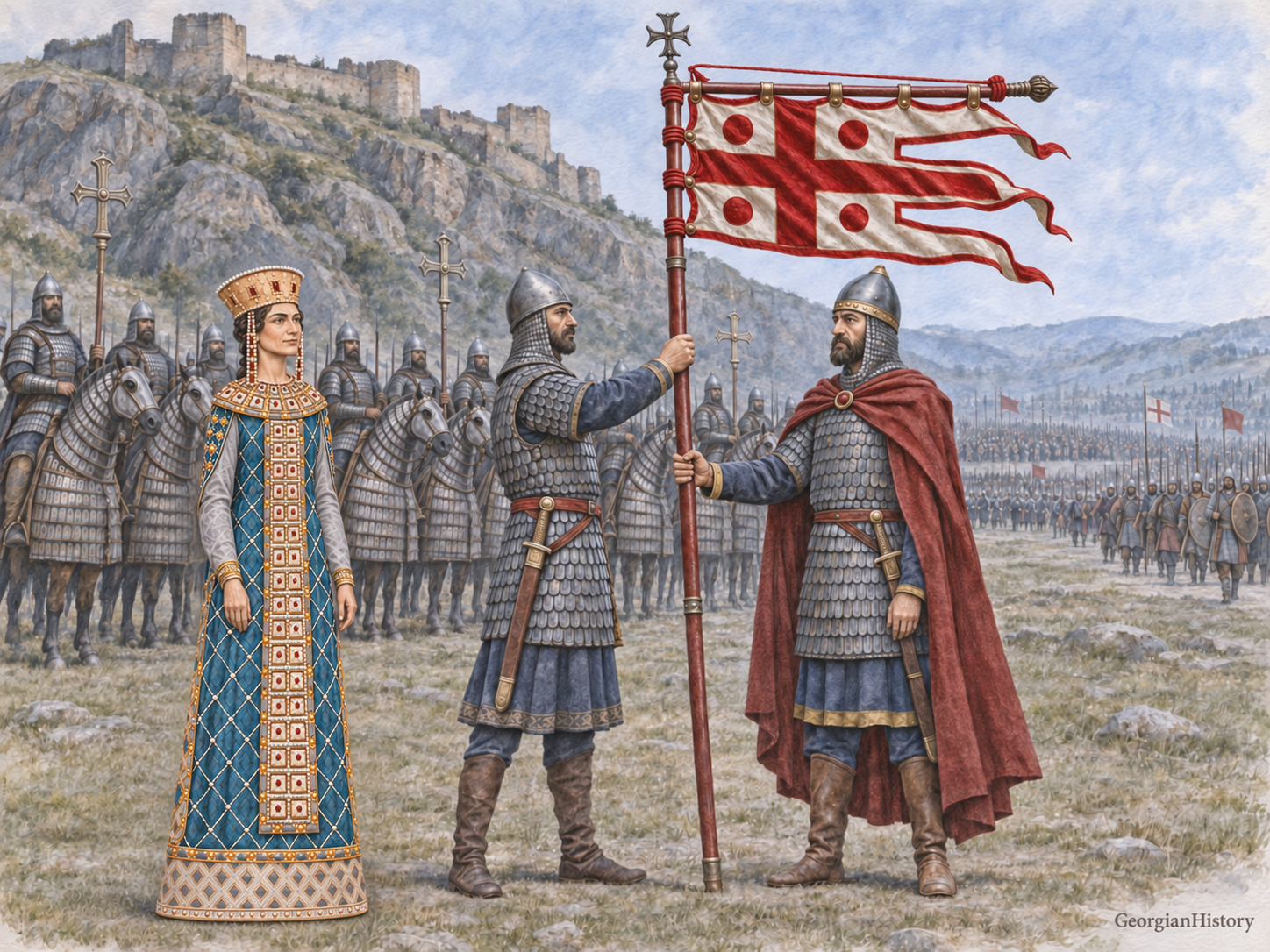
A **sadrosho** was a military-administrative district. It comprised a territory with its own commanders and contingent. When the banners were summoned, units assembled from these lands. Names such as “vanguard” or “right wing” indicated where each unit stood in the army.
In his account of the unified kingdom, Vakhushti distinguished four sadroshos. He associated the vanguard with Tori, Tsikhisjvari, Akhaltsikhe and other southern lands. The right wing drew its troops from west of the Likhi Range, and the left from Hereti and Kakheti. He listed separately those who marched under the royal banner. This was an eighteenth-century account of an earlier military order, written by a man who knew the sadrosho system from his own service.
Who led the troops under the banners
In Kartli, the vanguard sadrosho assembled in Lower Kartli, where the Baratashvili led the troops. The Amilakhvari commanded the right wing and the Mukhranbatoni the left. The royal sadrosho covered the lands on the right bank of the Kura from Tbilisi to Tashiskari. The catholicosate diocese of Mtskheta had its own commander and also marched under the royal banner.
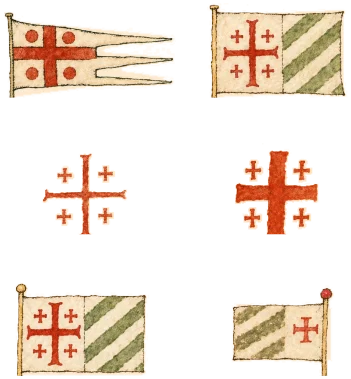
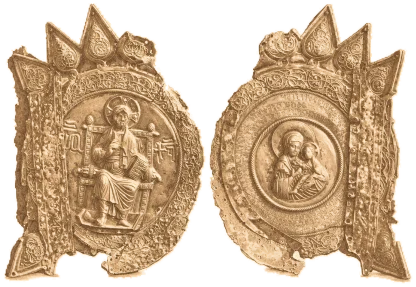
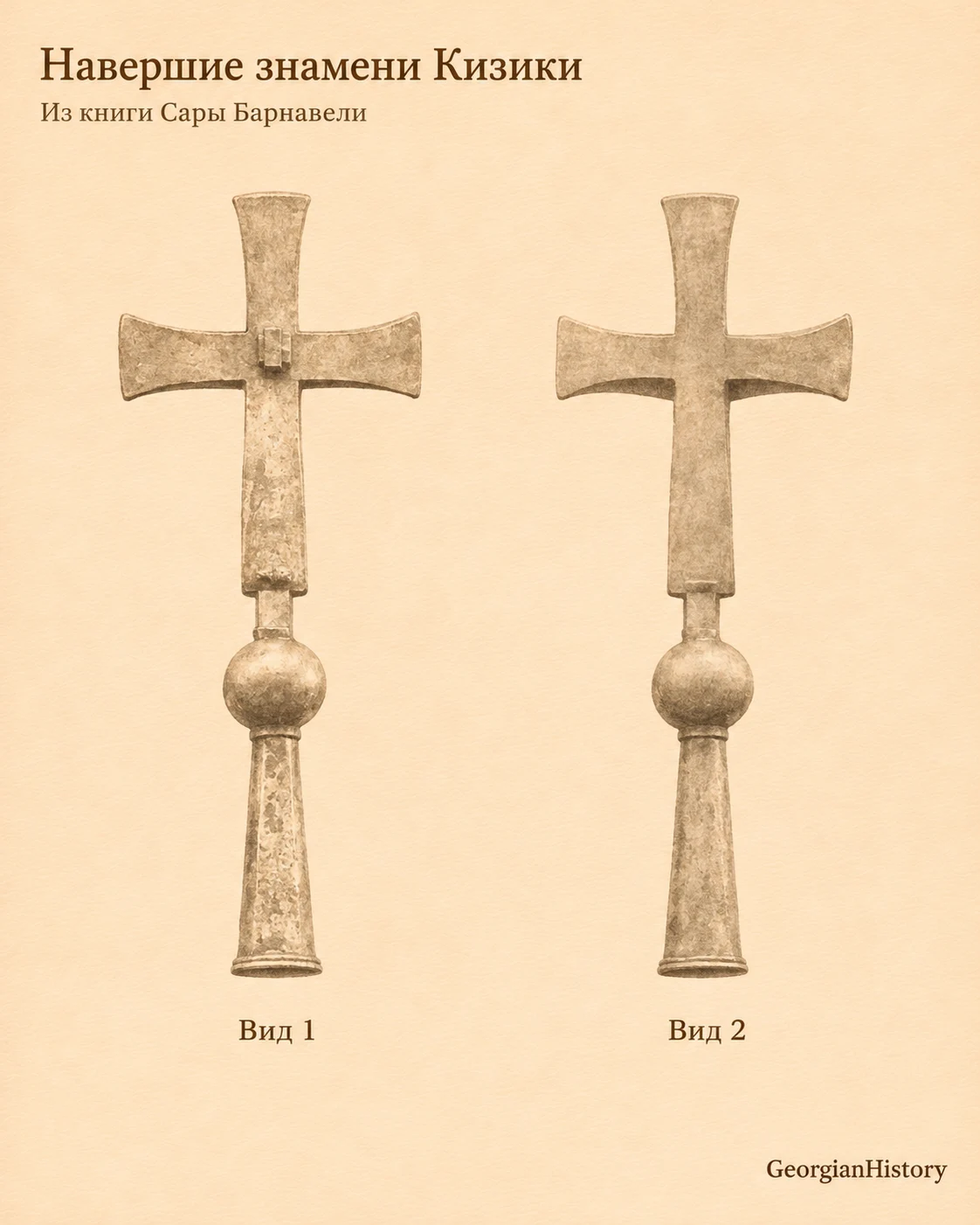
In Kakheti, bishops were entrusted with command of several sadroshos. The bishop of Nekresi commanded the right wing, and the bishop of Rustavi the left. Kiziki was under the bishop of Bodbe. In the seventeenth and eighteenth centuries Kakhetian princes often took command on campaign. Administrative descriptions and surviving objects tell us how the system worked. Sara Barnaveli’s book, for example, preserves photographs of the Kiziki banner finial, a cross with a sphere and a socket for the pole.
In Imereti, Argveti and Racha were among the territories with sadroshos of their own. Leading princes were entrusted with their command.
Vakhushti and the emblems on the map
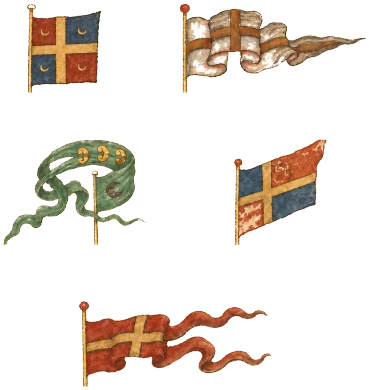
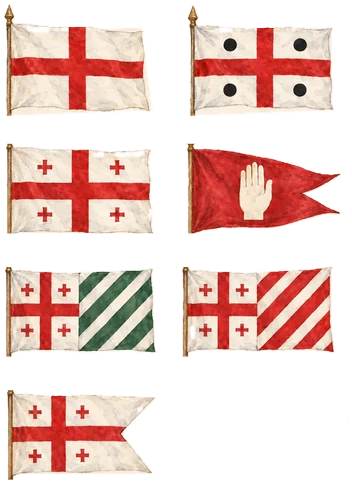
On his 1735 map of the Caucasus, Vakhushti included the coats of arms of kingdoms, principalities and regions. Tornike Asatiani identifies three versions of the emblem of Georgia. One is associated with Saint George, another with the Bagrationi coat of arms, and the third with the Archangel Michael. Animals and mountain outlines appear among the regional emblems. In this form the drawings belong to the atlas. Connecting an individual emblem to a physical banner requires evidence about that particular object.
Sources and further reading
- Vakhushti Bagrationi, Description of the Kingdom of Georgia, in Kartlis Tskhovreba, vol. IV.
- “Sadrosho”, Dictionary of Medieval Georgian Administration.
- Georgian Encyclopedia, entry on Vakhushti Bagrationi. His 1721 appointment and census.
- Tornike Asatiani, The Story of Georgian Heraldry, Tbilisi, 2023, pp. 23–27, figs. 40–44.
- Sara Barnaveli, Georgian Banners, Tbilisi, 1953, plate XIX.