Two Khevsurian Pari Shields
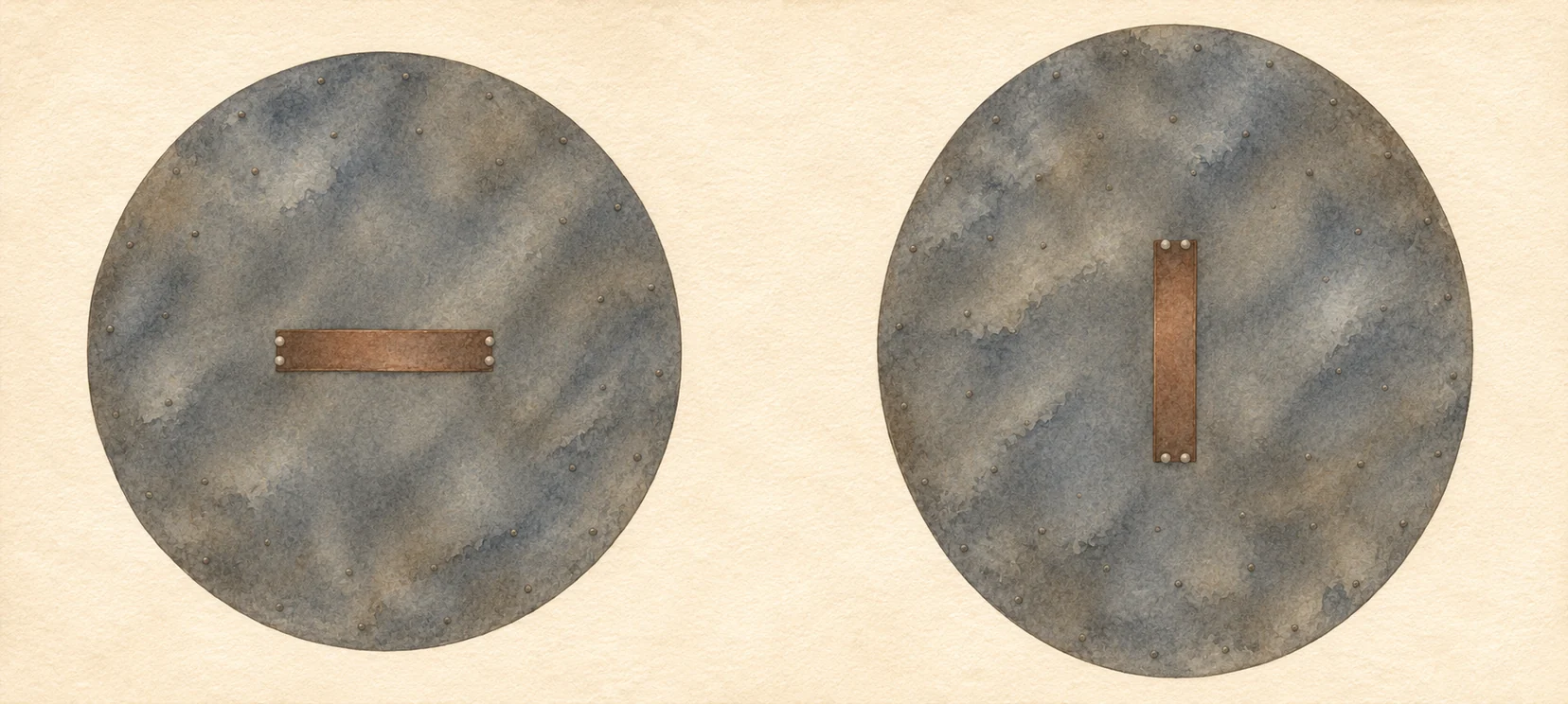
Shields from the Eliava and Tianeti museums at the same scale
 The catalogue describes the shield in the Givi Eliava Museum as round and the one in Tianeti as slightly oval. The comparison shows the outlines of these two Khevsurian pari shields at the same scale. Catalogue, pp. 99–100
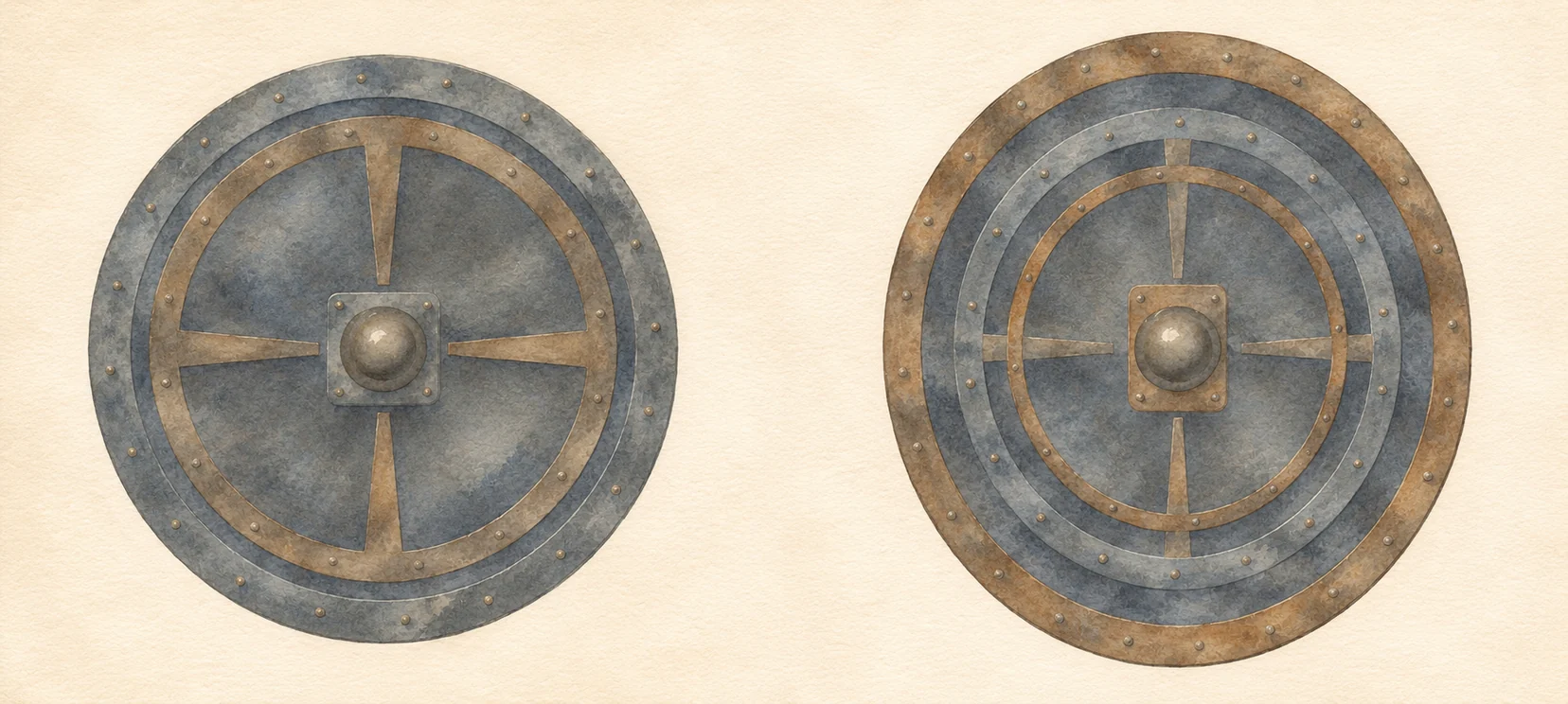
Two shields from museum collections
The Givi Eliava Martvili Local History Museum holds the shield under catalogue number e/630/1/a-1. The catalogue dates it to the nineteenth or twentieth century. The iron shield measures about 30 cm in diameter and is listed as 2–3 mm thick. The catalogue classifies it as type Ia. Catalogue, p. 99
Tianeti shield TMM 25.84 is dated to the eighteenth through twentieth centuries and classified as type IIIa. It is also made of iron. The catalogue gives a height of 32.5 cm and a thickness of 1.5–2 mm. It lists 29.8 cm under ‘diameter’. We used that figure as the width of the comparison model. Catalogue, p. 100
How a pari was made
The shield was held by a grip on the inside. A raised boss at the centre of the face covered the hand. Metal rings and strips were fastened to the shield plate. Khevsurian equipment also included the smaller ubispari. Bakradze, Dvalishvili and Kiziria give a diameter of about 15–20 cm for an ubispari and about 30 cm for a pari. Catalogue, pp. 97–98
For comparison, the Russian Museum of Ethnography holds a shield numbered 8762-13758. Its catalogue record lists iron, rawhide and a diameter of 28 cm. Photographs show both sides of this specimen. Russian Museum of Ethnography object record
What the 3D models show
In the 3D gallery you can rotate both shields and compare their outlines against a shared scale. The models draw on the catalogue and the general description of Khevsurian pari construction. The arrangement of strips and rivets, the surface relief and the colour are provisional. Photographs of the objects are needed to verify the shape of the grips and their fittings on the reverse.