The Return of the Five Crosses
How Georgia restored its historic flag in 2004
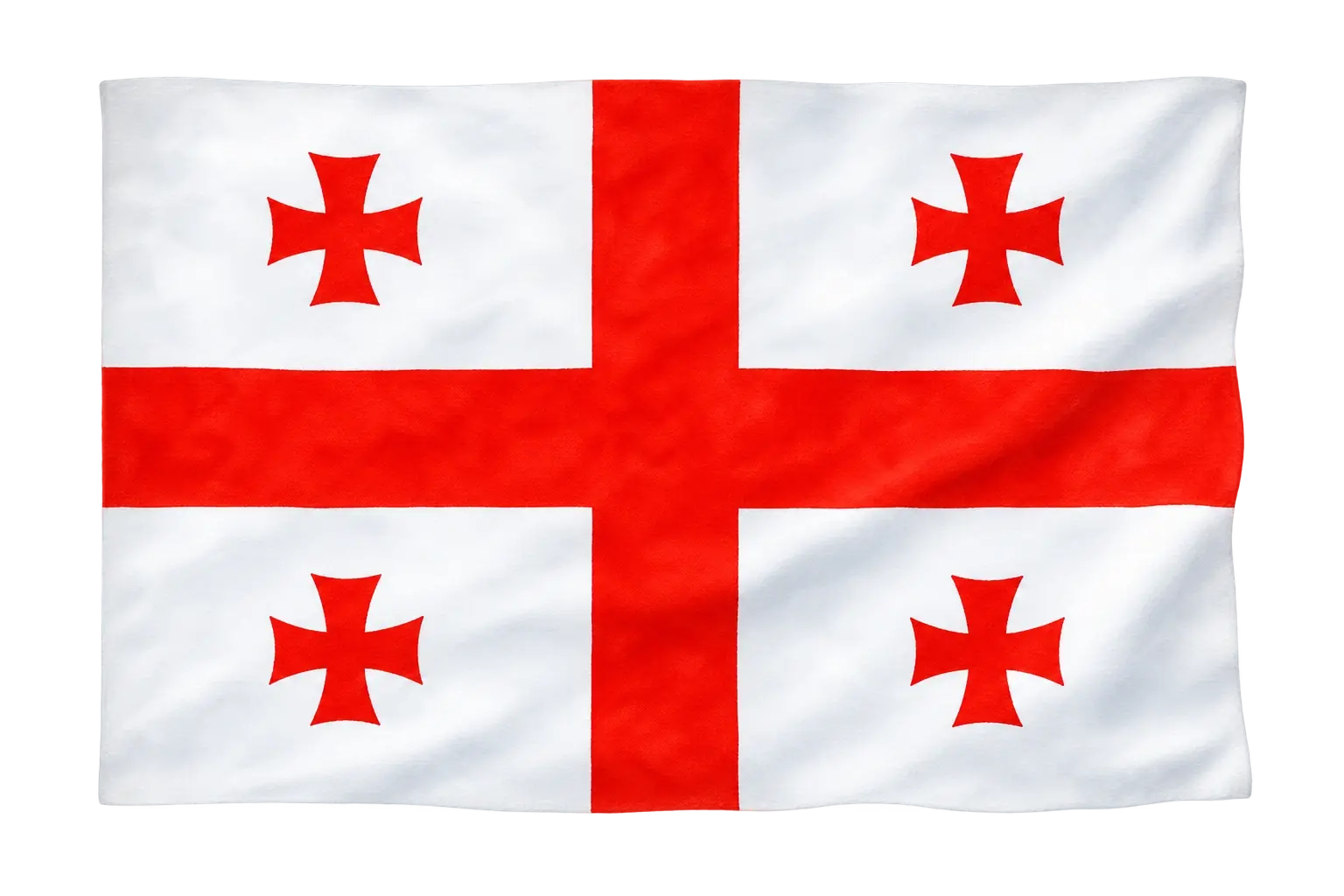
 On the evening of 14 January 2004, a white flag bearing five red crosses was raised over parliament in Tbilisi. In November, Mikheil Saakashvili’s supporters had carried it through the streets during the Rose Revolution. It now replaced the dark red flag of the first Georgian republic, which Georgia had readopted in 1990.
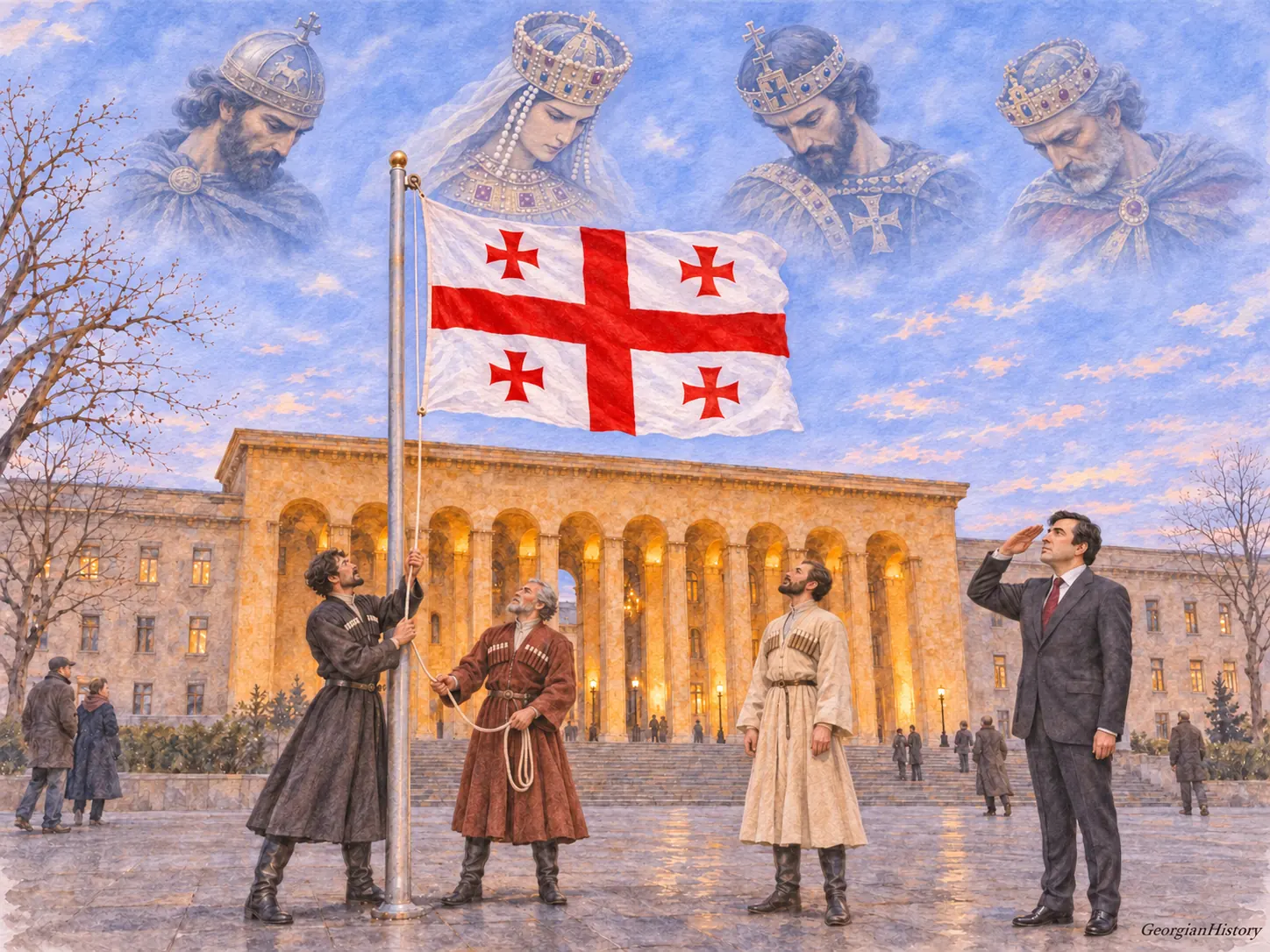
Saakashvili, who had already won the presidential election, proposed restoring the five-cross flag as the national flag. On 14 January, Justice Minister Zurab Adeishvili presented the bill to parliament. The deputies approved it. Nino Burjanadze, acting president until Saakashvili’s inauguration, signed it into law.
From Gorgasliani to the five crosses
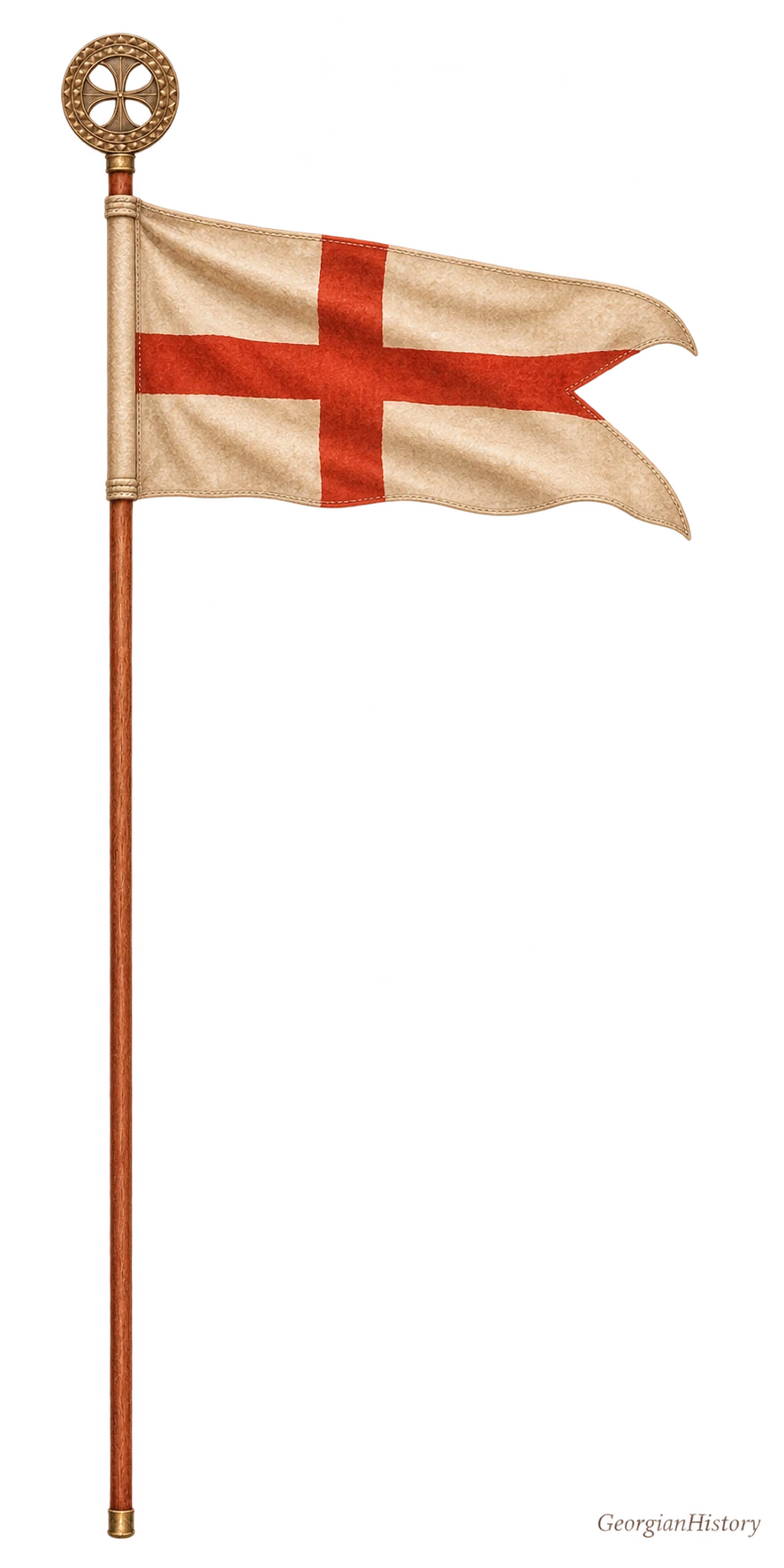
Our first article began with a name. Gorgasliani preserved the memory of Vakhtang Gorgasali, the fifth-century king of Kartli. Centuries later, stories of his white banner were still told at Tamar’s court. We painted a single red cross on white cloth in our first watercolour. The actual design of Vakhtang’s banner is unknown.
In the second article, the royal banner appears as Tamar prepares her army for a campaign in Iran. In Tbilisi she inspected the troops, entrusted the banner to the protection of the Virgin of Vardzia and handed it to her commander, Zakaria Mkhargrdzeli. The Georgian Chronicles give this one banner two names, Gorgasliani and Davitiani. The chronicler records who gave Zakaria the banner but does not describe its design.
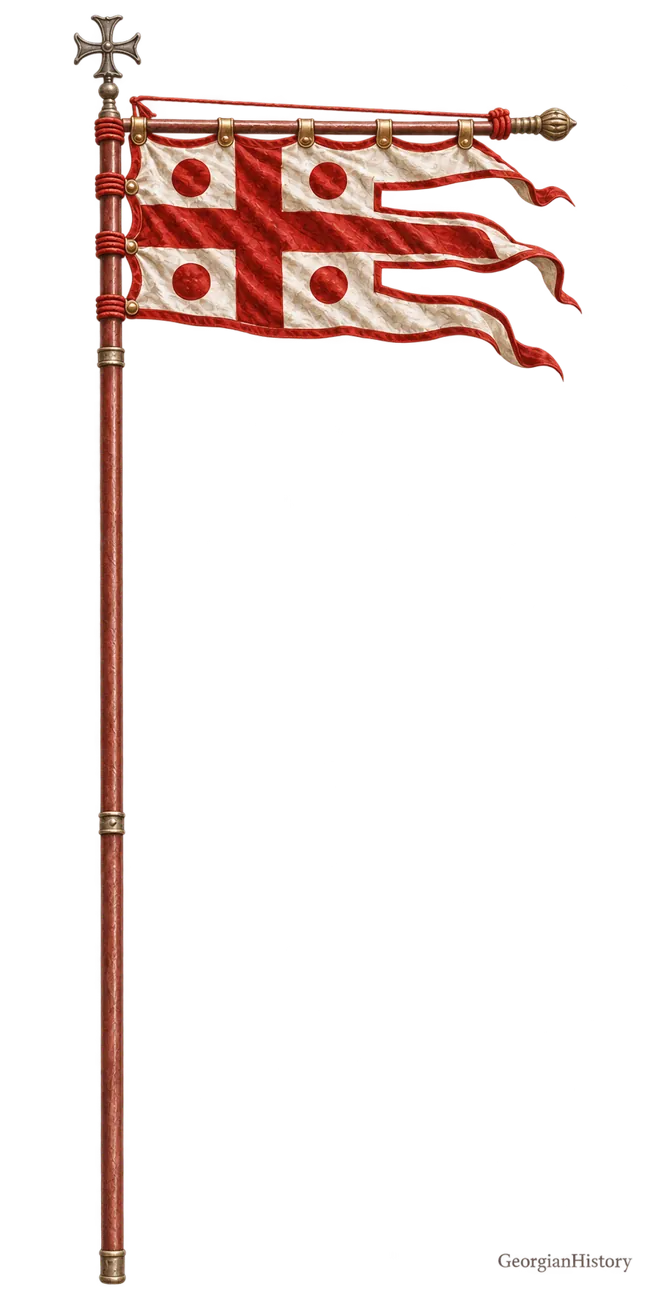
Our second watercolour draws on two kinds of evidence. The thirteenth-century Armenian historian Stepanos Orbelian mentions a red emblem on the king’s white banner. A copper coin of David IV the Builder shows four dots between the arms of a cross. The same motif appears on a coin of Tamar and David Soslan dated 1200. This is why four roundels surround the cross in our painting. The idea that they might represent the four Gospels is a GeorgianHistory hypothesis.
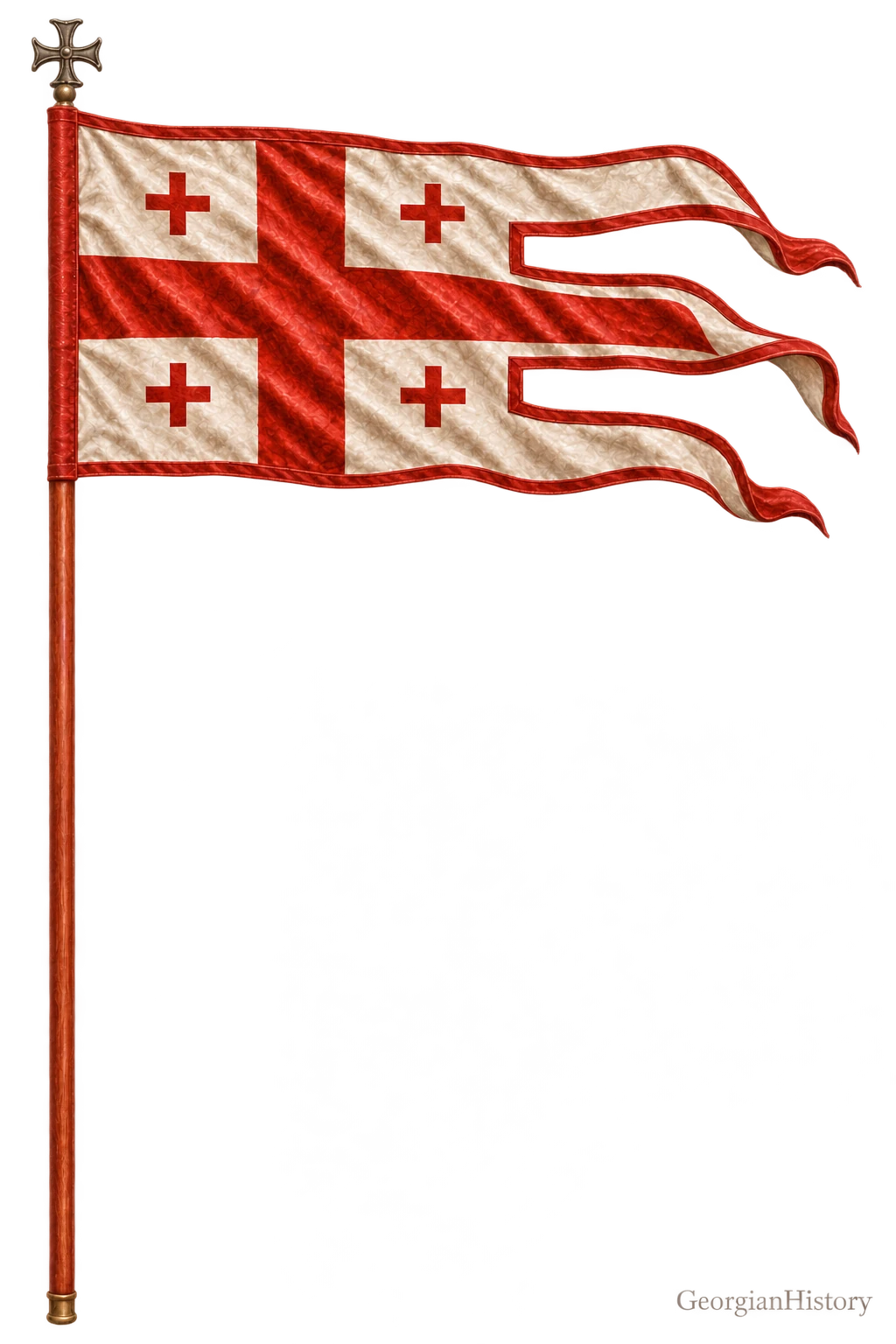
The third article followed the mapmakers of the reign of George V the Brilliant. On a chart of 1320, Pietro Vesconte drew a single-cross flag at Phasis, near present-day Poti, and a cross with four dots at Sebastopolis, today’s Sokhumi. Nineteen years later, Angelino Dulcert drew a large cross with four smaller crosses above Tbilisi. The arrangement is familiar today. The sources do not tell us whether George V ever ordered roundels to be replaced by crosses.
How the historic flag returned
The medieval banner’s name even entered the language of modern parliamentary debate. A commission on national symbols was already at work in Georgia in 1993. On 9 June 1999 parliament adopted a resolution that named the historic flag Gorgaslian-Davitiani and asked the president to submit legislation restoring traditional state symbols. More than four years passed before the five crosses were raised over parliament.
On 25 January 2004 Saakashvili took the presidential oath on Rustaveli Avenue. That day he signed Decree No. 31, setting out the flag’s precise design and dimensions. A large red cross reaches all four edges of the white cloth. Each of the four quarters contains a small red cross with flared ends. National Flag Day is observed on 14 January, the anniversary of the parliamentary vote.
“We used it as a national symbol that comes from our national history.”
Mikheil Saakashvili, answering a question about the new flag at the Parliamentary Assembly of the Council of Europe, 28 January 2004. English transcript. [1]
Work on national symbols continued after January. On 2 March Saakashvili set up a temporary state commission to organise a competition for a coat of arms and its motto. By then, the national flag had already been adopted.
On the map of 1339, five crosses marked Tbilisi. Almost seven centuries later, people in Tbilisi saw them fly above their parliament. By restoring its historic flag, Georgia raised above its capital a symbol by which it had been known in the Middle Ages.
Sources and further reading
- PACE. Saakashvili’s remarks on the flag, 28 January 2004
- Parliamentary Resolution No. 2060, 9 June 1999
- Law on the national flag, 14 January 2004, Articles 2 and 6
- Decree No. 31, 25 January 2004
- The Council of Heraldry on Saakashvili’s initiative, p. 53
- Civil Georgia on the parliamentary vote, 14 January
- The bill and the evening flag-raising
- Civil Georgia on the inauguration, 25 January
- The Georgian Chronicles, vol. II, p. 104, lines 5–10
- M. Tsurtsumia on the coins, figs. 140 and 142
- A. Tvaradze on Angelino Dulcert’s chart
- A. Tvaradze on Pietro Vesconte’s chart
- Stepanos Orbelian in the Armenian digital library