George V the Brilliant. Georgia under One Royal Banner
How Tbilisi and Kutaisi came to recognise one king, what the ruler of Samtskhe pledged, and what a 1339 chart shows above Tbilisi.
 When George was first raised to the throne in 1299, his authority barely extended beyond the walls of Tbilisi. In Kutaisi, in the west, kings of another branch of the Bagrationi dynasty held court. In the south, the Jaqeli family ruled Samtskhe. Within a generation, Tbilisi and Kutaisi acknowledged the same sovereign, and the new ruler of Samtskhe swore allegiance to him. George V the Brilliant had brought Georgia together again under one crown.
The king they called the King of Tbilisi
George was the son of Demetre II. He spent his childhood in Samtskhe at the court of his maternal grandfather, Beka Jaqeli. He was still a boy when the Ilkhans first gave him the royal title in an attempt to set him against his elder brother David VIII. The Georgian Encyclopedia records the title by which he was then known, “King of Tbilisi”.
By the time he gained effective power in 1318, George knew both the princely court of Samtskhe and the men who shaped the Ilkhan’s decisions. His alliance with the powerful emir Choban gave him time to consolidate his position in eastern Georgia. Reuniting the kingdom took years and began under Mongol overlordship. [1]
How Kutaisi and Tbilisi came to recognise one king again
The turning point came in Imereti. Michael, king of western Georgia and son of David Narin, died in 1329. His heir, Bagrat, was still young. According to the eighteenth-century historian Vakhushti Bagrationi, Bagrat’s supporters took him into the fortress of Kutaisi. George crossed the Likhi Range with his army and approached the city.
Vakhushti relates that the two sides reached an agreement. Bagrat recognised George’s authority and handed over the fortresses of Imereti. In return he received Shorapani and became its eristavi, or provincial governor. The heir to the throne of Kutaisi still held lands, but now he held them from the king of a reunited Georgia. The Georgian Encyclopedia dates the incorporation of the west to 1329. Vakhushti places the grant of Shorapani in 1330. [2], [3]
Samtskhe and the oath of the Jaqeli
In 1334 George’s uncle Sargis II Jaqeli, prince of Samtskhe, died. His son Qvarqvare succeeded him. George confirmed the succession, granted Qvarqvare the title of atabag and received his oath of allegiance. The Jaqeli family kept its hereditary lands. The king’s authority now extended to the south as well. [1]
In the mountain communities of eastern Georgia, royal authority took a different form. George travelled through Mtiuleti in person, brought representatives of the highlanders to Tbilisi and convened the royal council. The compilation of the law code known as Dzeglis Dadeba is associated with this journey. The king who had received fortresses in Kutaisi now heard the communities’ representatives and worked with his council to establish how disputes would be tried. [5], [4]
Reunification and the end of Mongol rule
The Georgian Encyclopedia dates the end of tribute payments to 1335. Citing written records and coins, the historian Giuli Alasania argues that formal dependence on the Ilkhans continued after reunification. The dispute concerns the timing and extent of independence. Within Georgia itself, one king already ruled east and west. [1], [3]
Under one royal banner
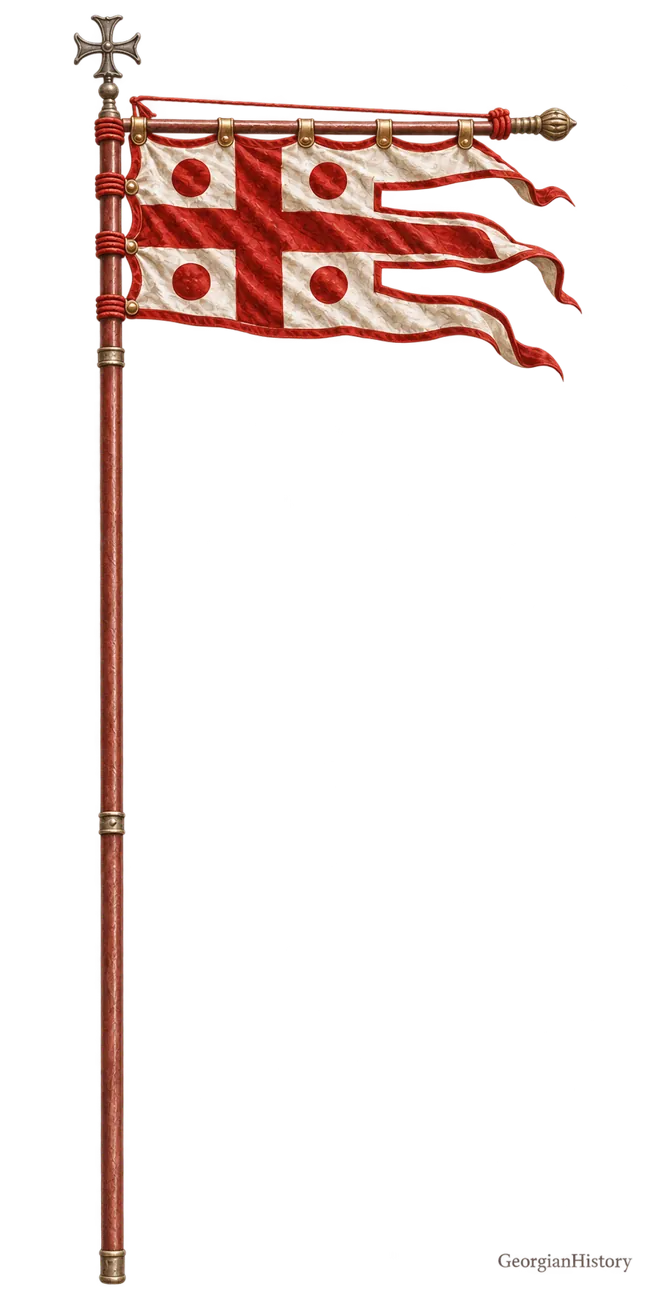
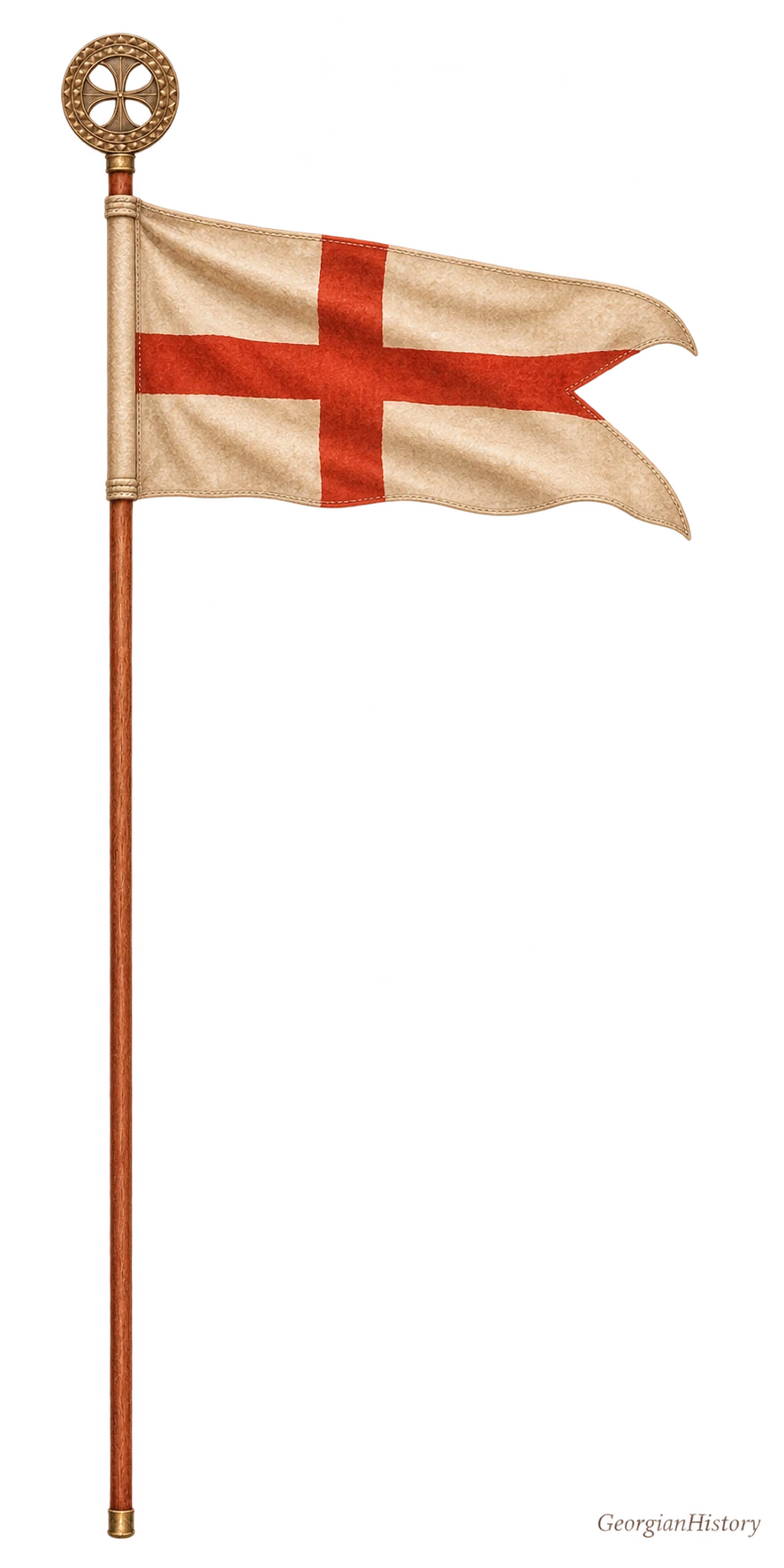
A century before George, a chronicler described how Tamar blessed her army before a campaign and entrusted the royal standard, “Gorgasliani and Davitiani”, to Zakaria Mkhargrdzeli. The commander marched beneath it in the queen’s name. This episode inspired our choice of the banner for George’s story. In the watercolour, the king greets the townspeople while a soldier on foot carries the standard in sight of the horsemen and the people gathered at the gates. [6]
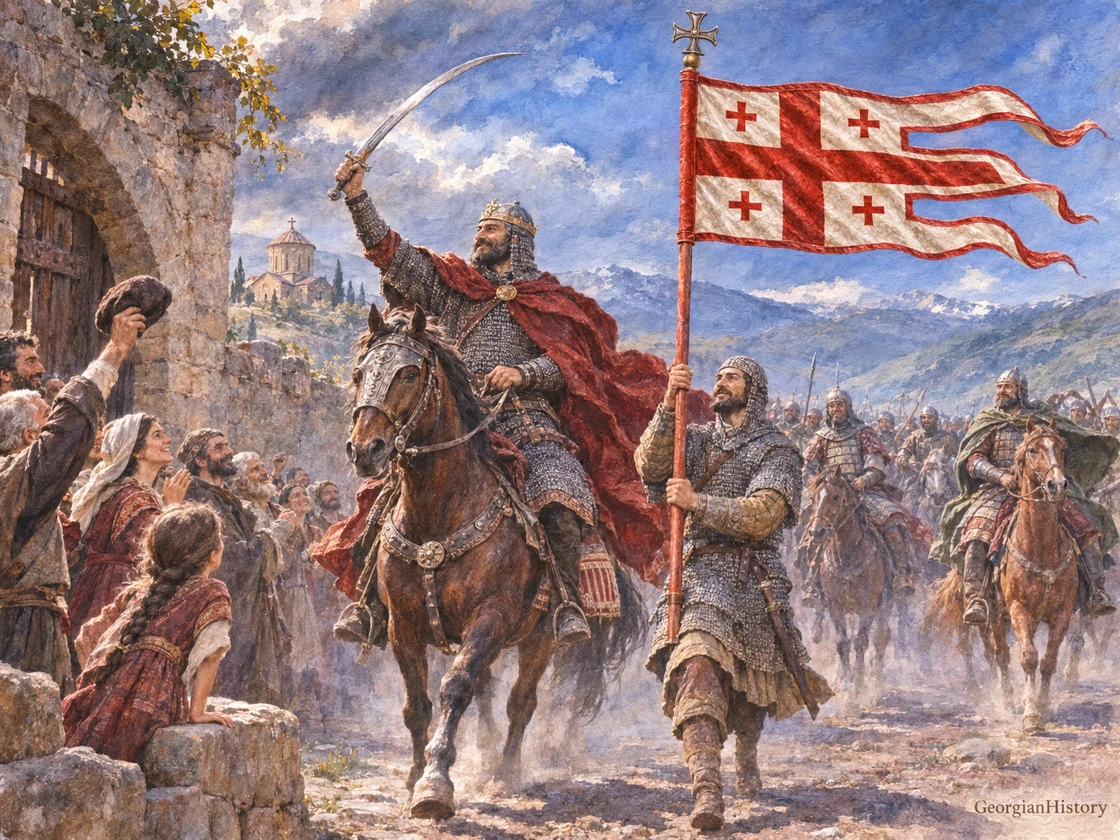
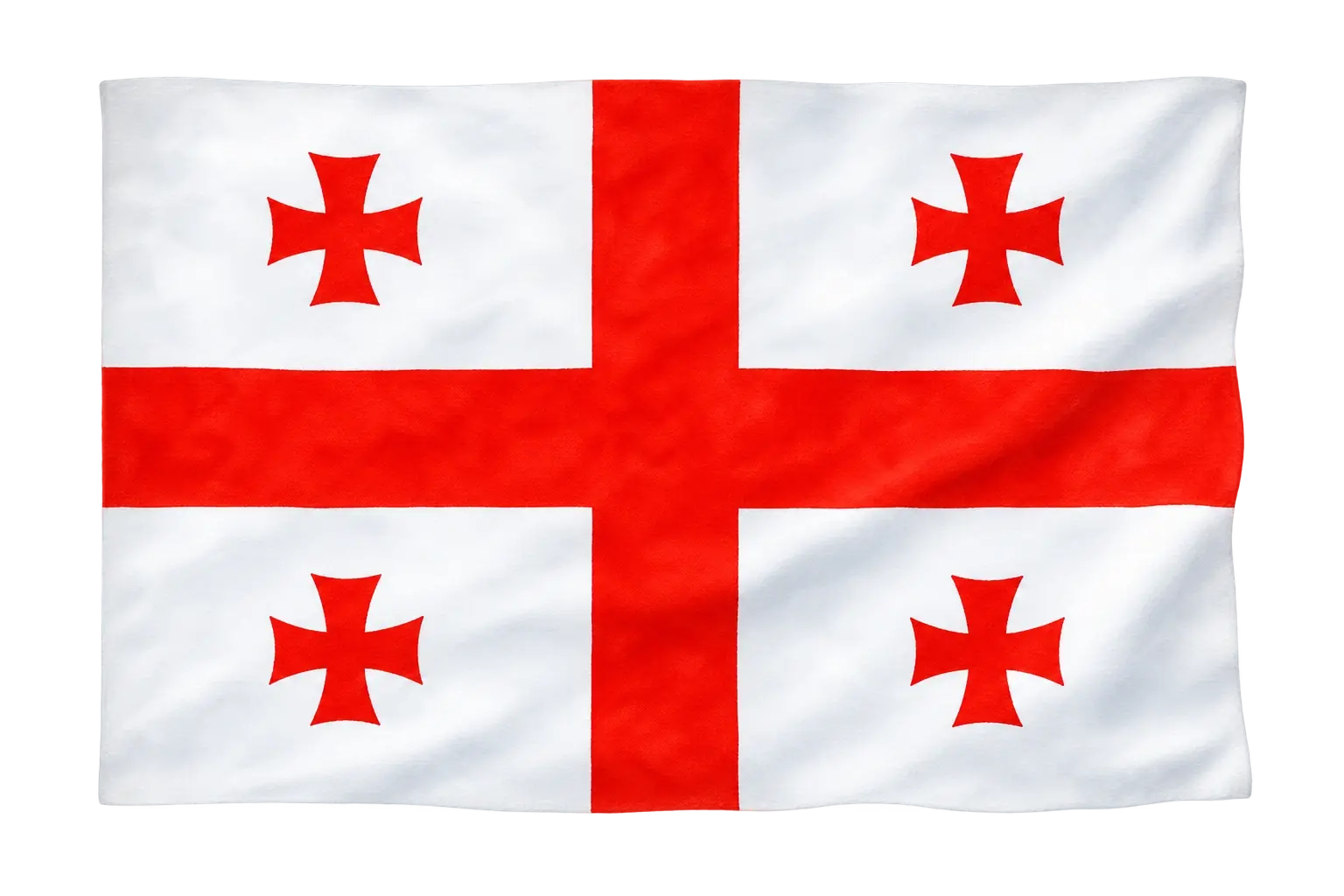
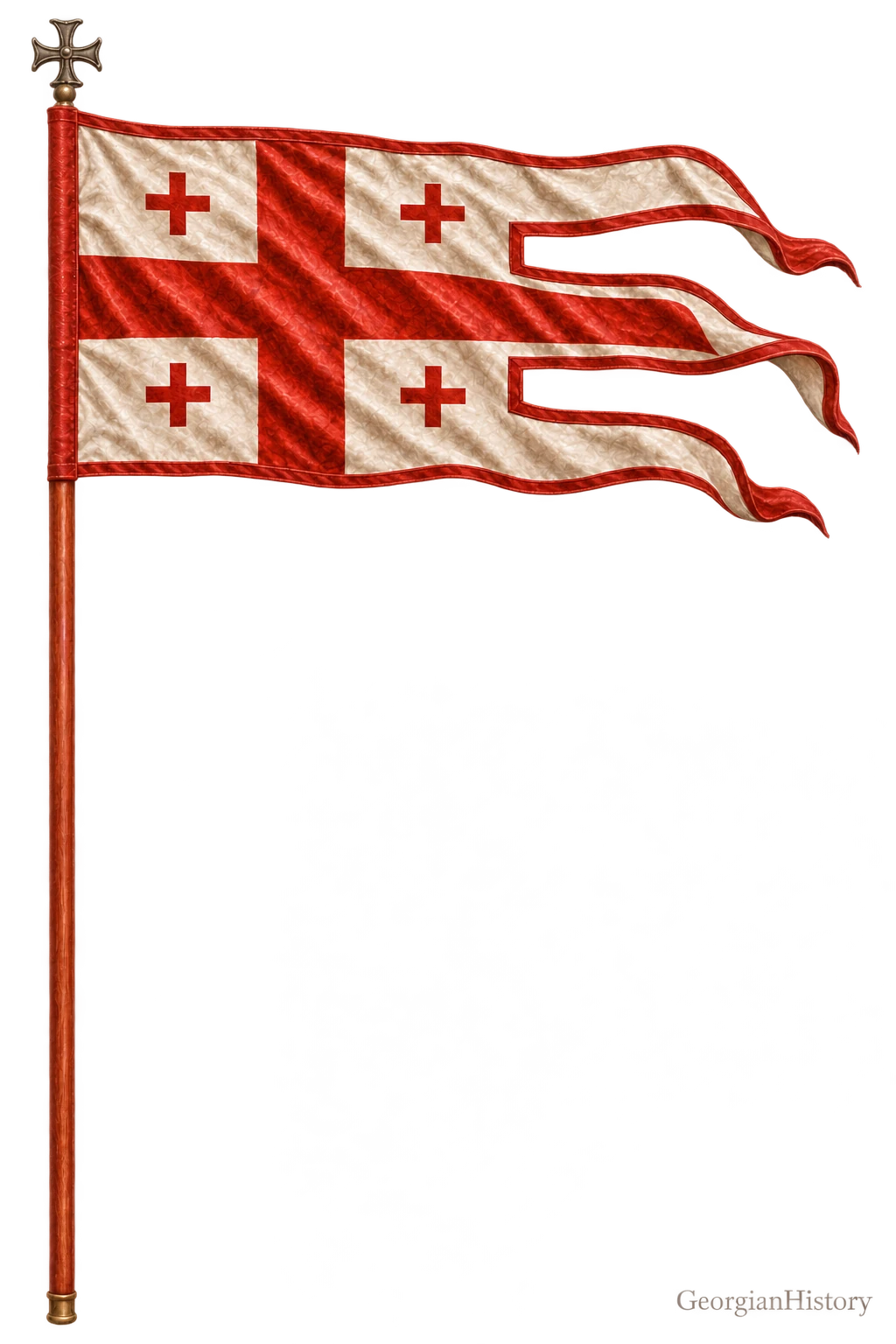
A nautical chart made by Angelino Dulcert in 1339, during George’s lifetime, depicts one large cross and four smaller ones above Tbilisi. The mapmaker placed the emblem over the city. The three tails of the flag, the straight arms of the small crosses and the metal finial in our watercolour are details of the GeorgianHistory reconstruction. We know of no order by George himself to replace four roundels with crosses. [7]
Three reconstructions of the royal banner
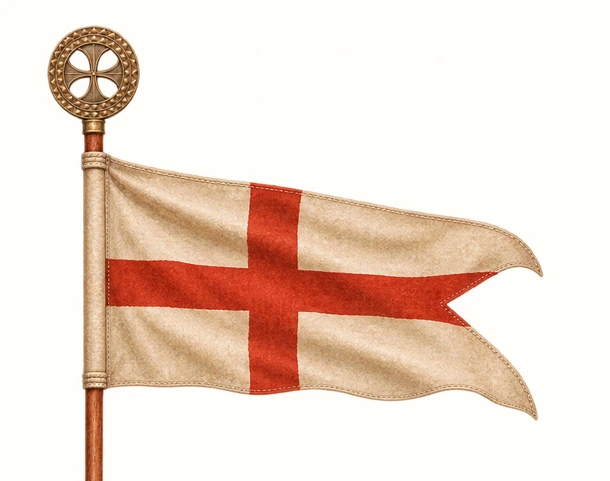
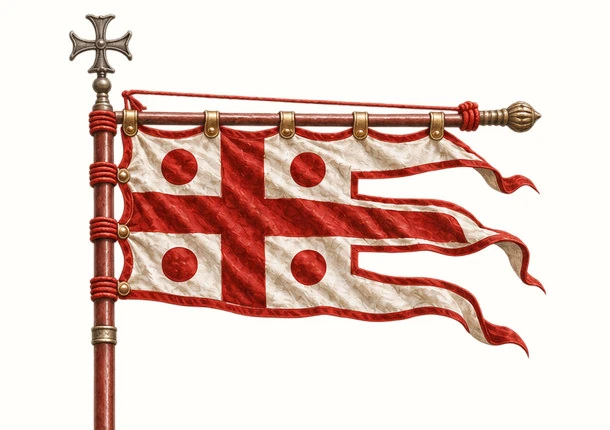
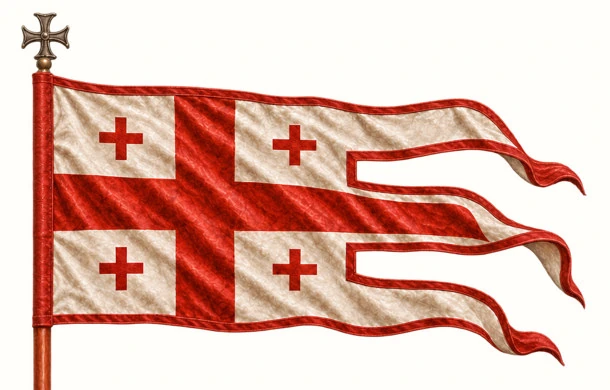
Three GeorgianHistory watercolours. Their sequence illustrates a hypothesis about the development of the motif. A portolan chart from 1339 shows five crosses above Tbilisi.
Download the illustrated issue with contents (PDF, in Russian)In the first article in the series, the name of Vakhtang Gorgasali lives on in the name of the standard. In the second, Tamar entrusts it to her commander. In the watercolour of George V, people from lands once ruled separately gather under the royal banner. For Kutaisi, Tbilisi and Samtskhe, Georgia was one kingdom again.
Sources and further reading
- Sh. Khantadze. “George V”. Georgian Encyclopedia
- Vakhushti Bagrationi. Description of the Kingdom of Georgia. Kartlis Tskhovreba, vol. IV, pp. 257–258. Tbilisi, 1973
- G. Alasania. Level of Independence in Georgia Throughout the 14th Century. Kutaisi and Shorapani, pp. 973–974
- Laws of George V. Manuscript edition, 1914, pp. 607–626
- N. Khocholava-Machavariani on the Dzeglis Dadeba and the royal council, p. 276
- Kartlis Tskhovreba, vol. II, p. 104, lines 5–10. Presentation of the royal banner
- T. Asatiani. The Story of Georgian Heraldry, p. 33, fig. 56. The banner above Tbilisi on the portolan chart of 1339