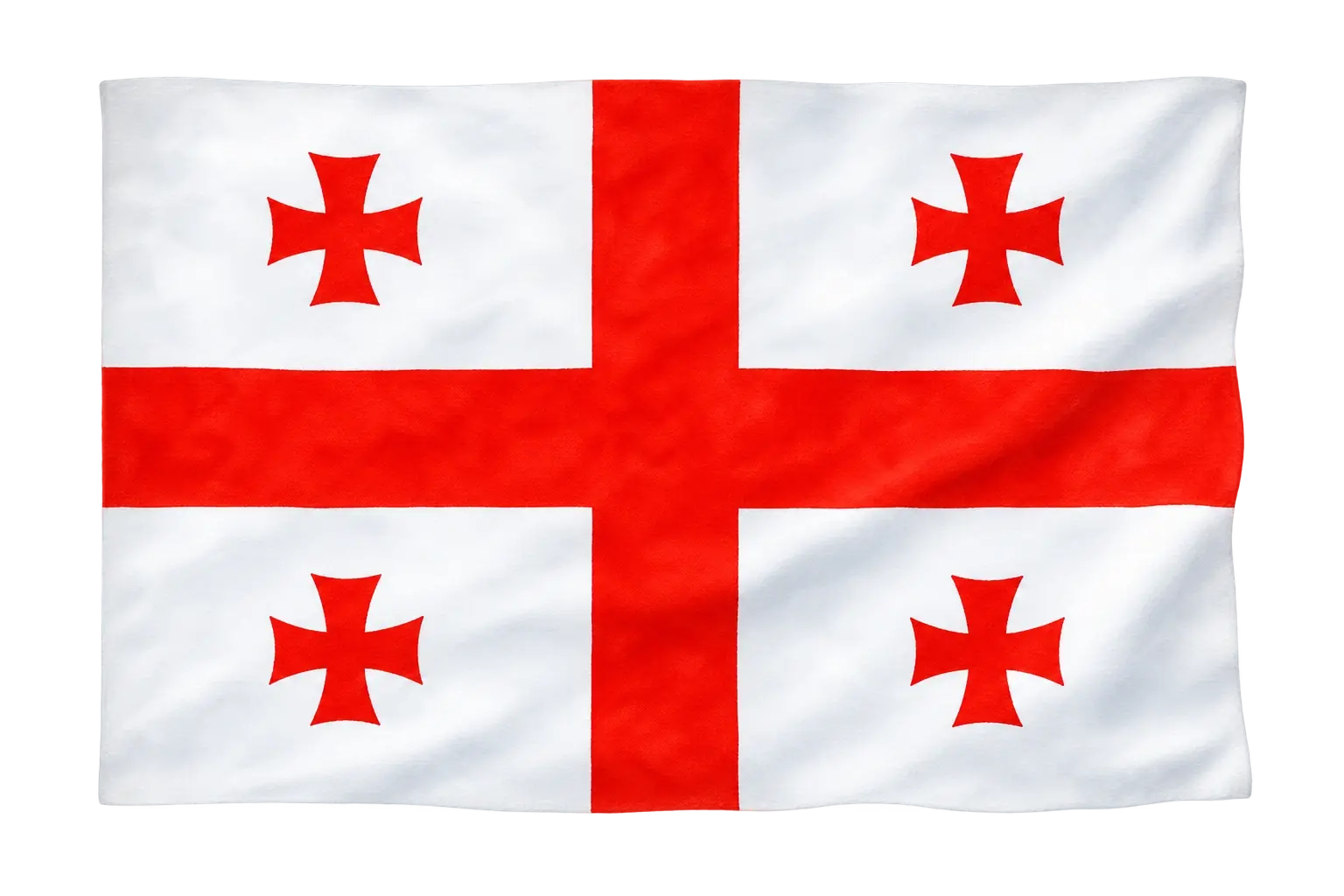
From Gorgasliani to Davitiani. The Cross and Four Roundels
How might Georgia’s royal banner have changed by Queen Tamar’s reign? A Georgian chronicle, an Armenian account and a small mark on coins offer clues.
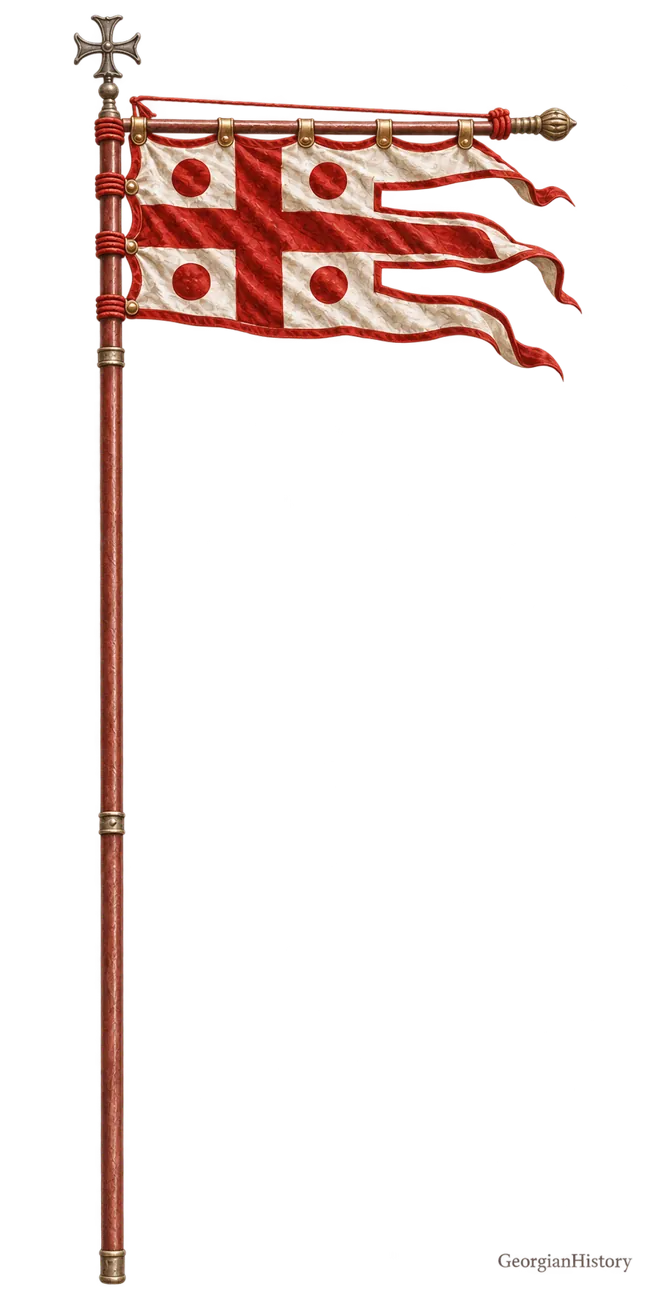
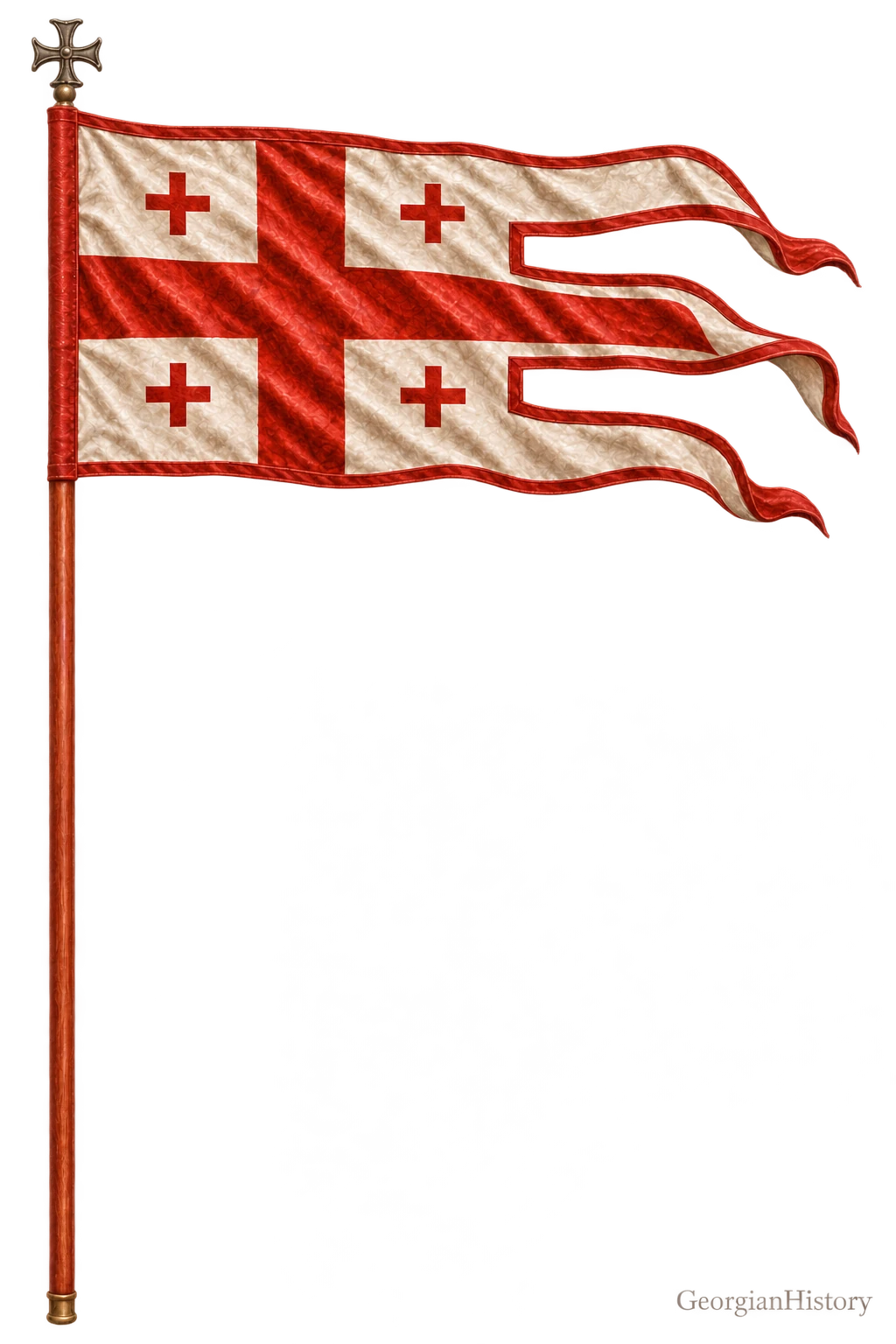
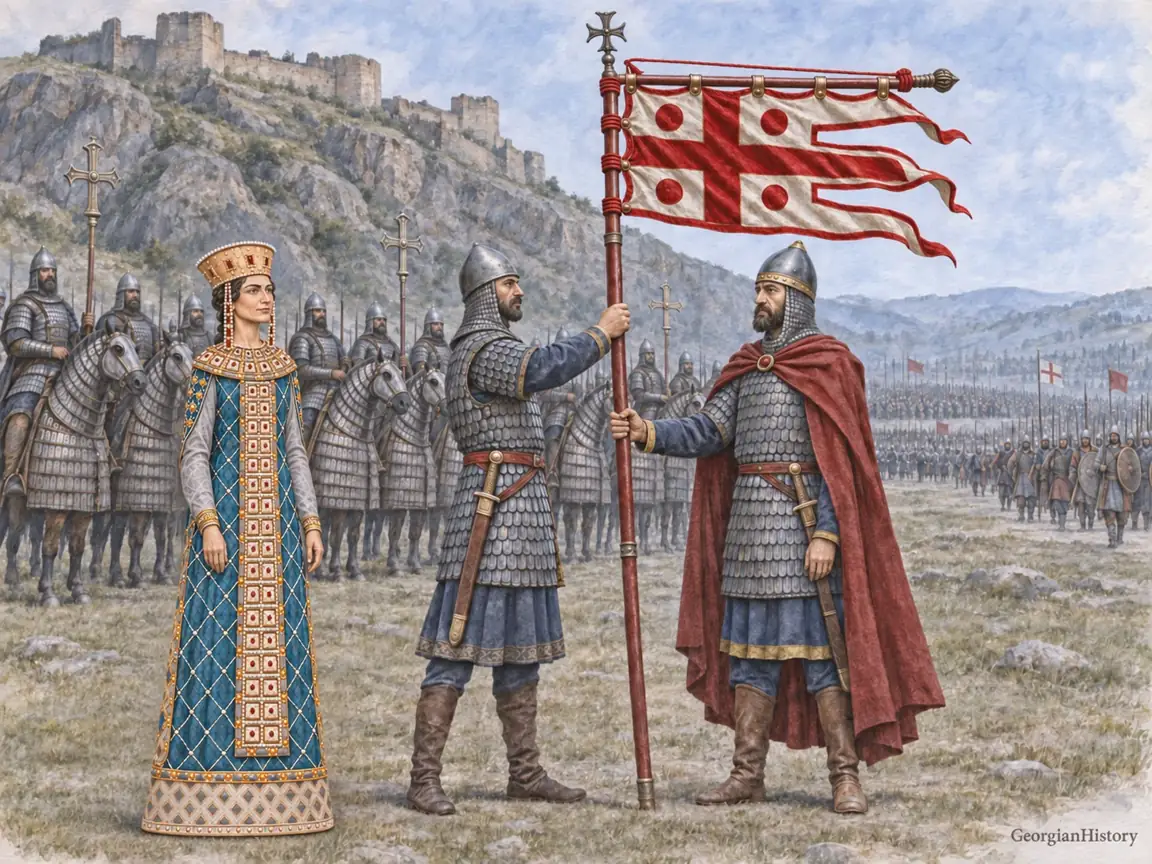
 In autumn, before a campaign into Iran, Queen Tamar reviewed the army in Tbilisi. Her chronicler remarked on the horses and armour before describing a single object passing from the queen to her commander. Tamar commended the banner to the Mother of God of Vardzia, blessed the army and handed the standard to Zakaria Mkhargrdzeli, the commander-in-chief. The Georgian text calls it “Gorgasliani and Davitiani.” The noun for banner is singular. Both names belong to one royal standard.
How the design might have changed
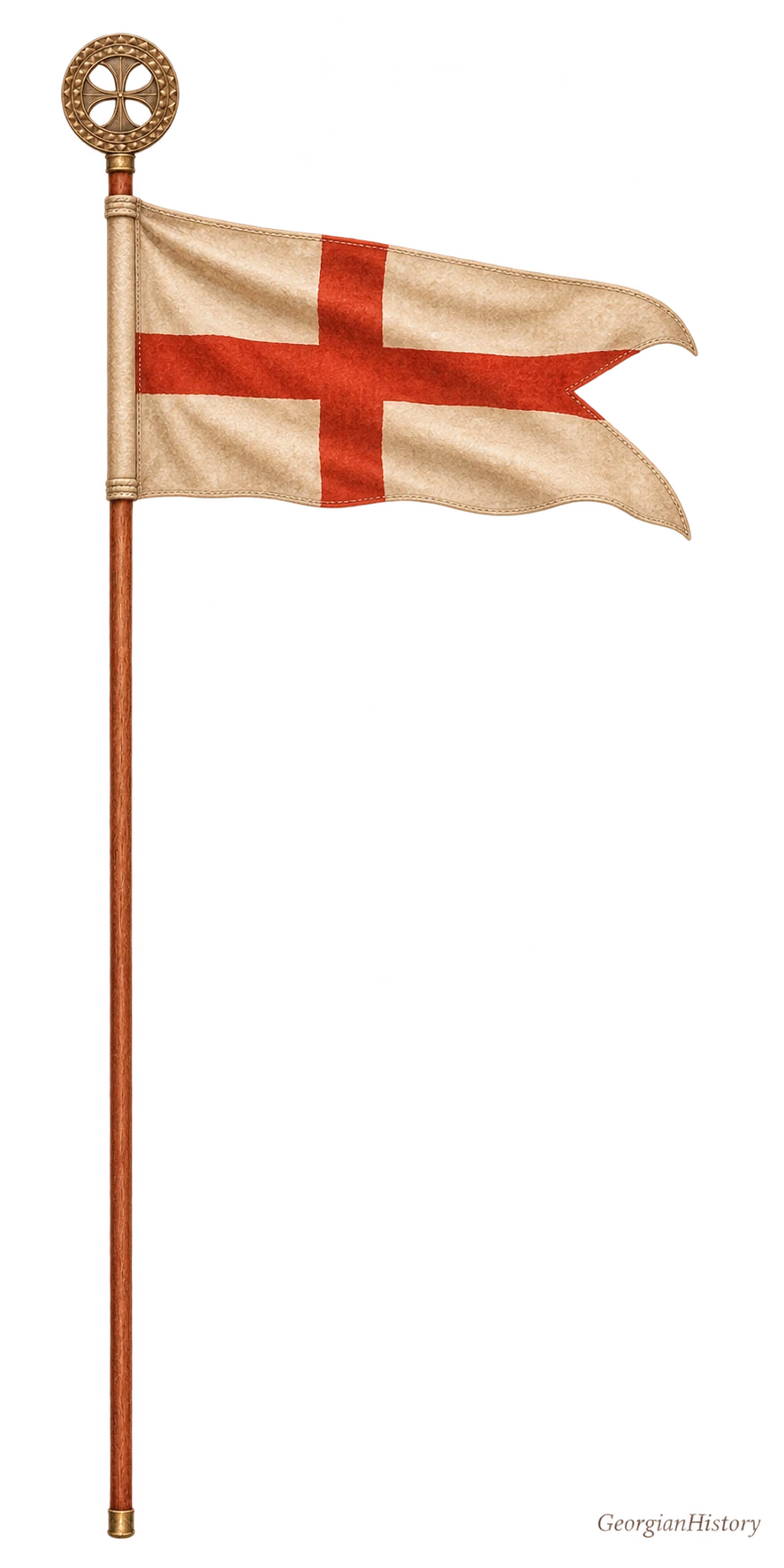
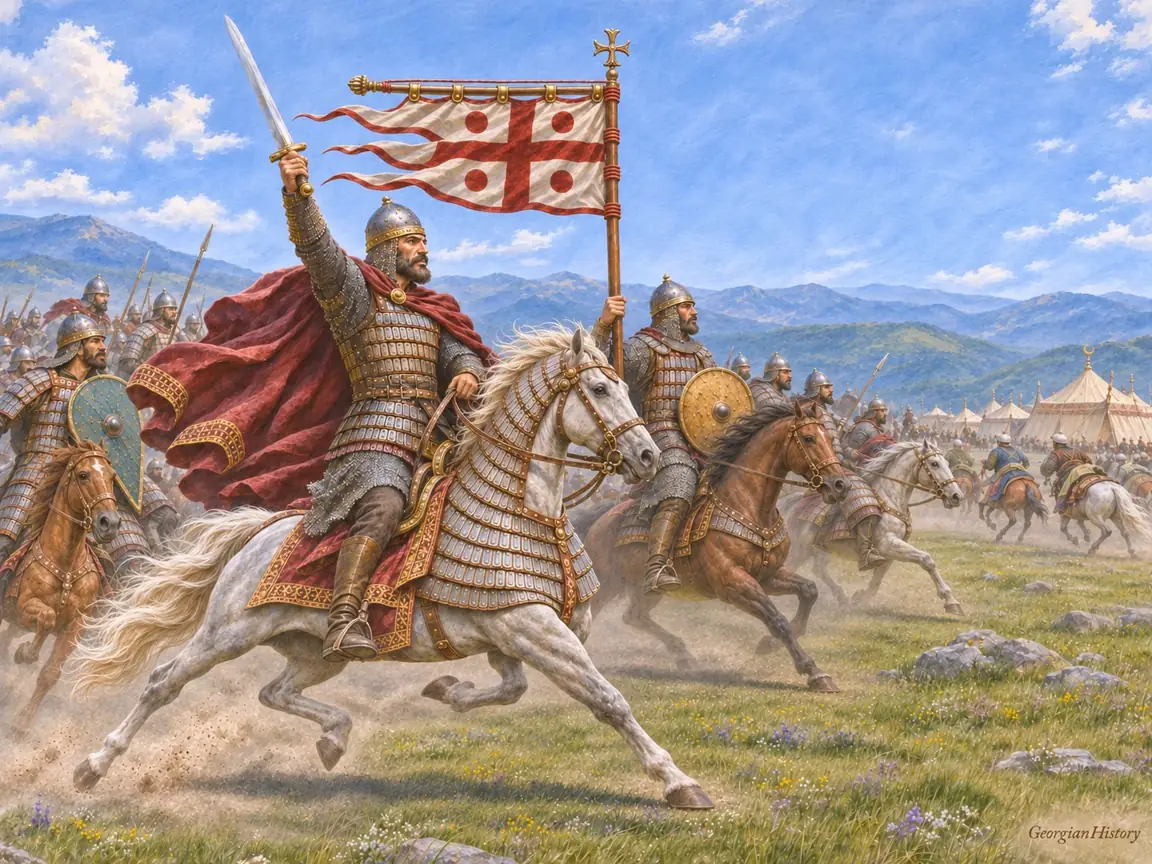
The name Gorgasliani recalls Vakhtang Gorgasali. In our first reconstruction a single red cross divides the white cloth into four empty quarters. The second keeps the cross and adds a red roundel to each quarter. We propose this sequence as one way the earlier design could have developed into the banner we associate with the double name. Its date is unknown. The chronicler records the two names but says nothing about a change in design.
In what sense was this Georgia’s banner? In the account of Zakaria, the army sets out under it and receives it from the queen. It is in this sense that GeorgianHistory understands it as a banner of the kingdom. Whether other Georgian standards of the period carried the same cross and roundels remains an open question.
Where to look on the coins
On the reverse of a copper coin of David IV the Builder, the cross occupies the centre. A dot sits between each pair of arms. On a copper issue of Tamar and David Soslan dated 1200 the motif is much smaller. On Berlin specimen 18293278, look at the upper left of the obverse, within the date. The large central device is a separate mark.
Mamuka Tsurtsumia also compares these issues with a coin of Rusudan dated 1230. The motif appears on parchment too. In a charter of Bagrat IV dated 1057–58, such a cross precedes the signature of Catholicos George. A craftsman in Tamar’s time could have known this design. Tsurtsumia suggests that the motif may have passed from royal usage onto flags. A coin die cannot tell us precisely how it appeared on cloth.
A red sign in an Armenian account
Writing in the late thirteenth century, the Armenian historian Stepanos Orbelian distinguished the Georgian king’s banner, white with a red sign, from the banner granted to the Orbeli family, red with a white sign. Levon Babayan quotes the passage while examining Orbelian’s account of his family’s privileges. The Armenian words կարմիր նշան mean “red sign.” Orbelian gives us the colours. In this passage he specifies neither the shape of the sign nor the number of figures.
Could the roundels represent the four Gospels?
We propose a possible Christian reading. The central cross could stand for Christ and the roundels for the four accounts of his life, the Gospels according to Matthew, Mark, Luke and John. This is GeorgianHistory’s working hypothesis. We have found no medieval explanation in the sources examined that assigns this meaning to the roundels on the royal standard.
The chronicler preserved the banner’s name and tells us who received it from the queen. Orbelian records the colours, while the coins show the cross with four dots. Our watercolour brings those different kinds of evidence together in one possible reconstruction of the Gorgasliani-Davitiani.
Sources and further reading
- Kartlis Tskhovreba, vol. II, p. 104, lines 5–10. The banner is given to Zakaria.
- M. Tsurtsumia. Georgian Flags and European Portolan Charts, figs. 135, 140, 142–143.
- Berlin Münzkabinett. Coin of Tamar and David Soslan, no. 18293278. Photograph of the obverse.
- Levon Babayan on Stepanos Orbelian. Armenian text, note 100, citing p. 378.
- Previous article. Gorgasliani. The Banner of Vakhtang Gorgasali.