Children Born outside Marriage in Medieval Georgia: Royal Blood and Inheritance
The life of David VII Ulu illuminates the links between birth outside marriage, acknowledged kinship, and the right to inherit.
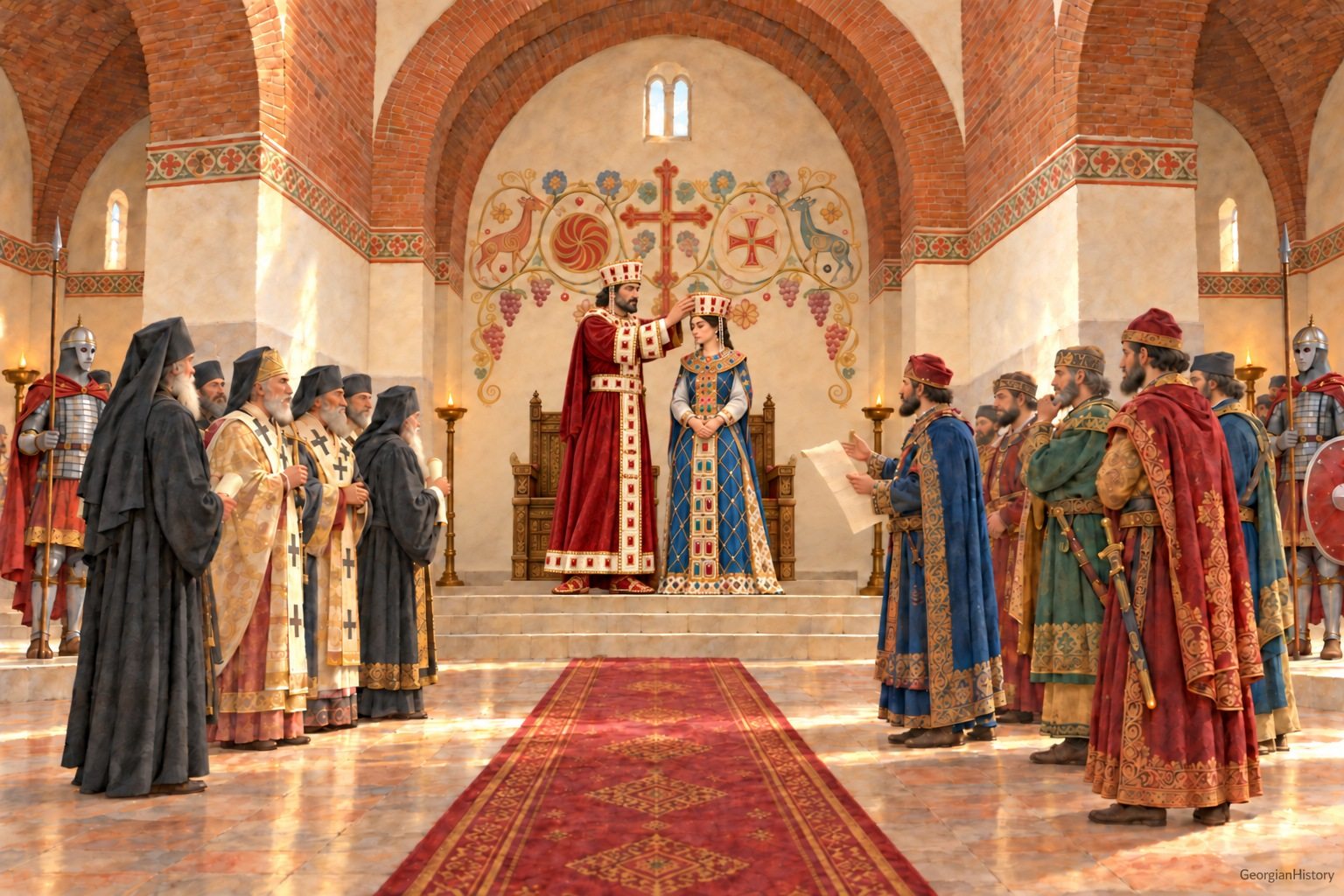
 In medieval Georgia, even a king’s son could face a barrier that descent from the Bagrationi alone could not remove. He might be acknowledged as a royal descendant and backed as a contender for power, while his right to inherit the throne was disputed. The issue lay in the circumstances of his birth. His parents were outside a lawful marriage. The story of David VII Ulu, Queen Tamar’s grandson born out of wedlock, shows the distinction between acknowledged kinship and inheritance rights.[1]
The word “bastard” comes from a Western European tradition, but the situation it described was also known in Georgia. Georgian legal tradition had its own terms for a child born out of wedlock, including ბუში — bushi and ნაბიჭვარი — nabichvari. For a historian, these terms point first to a person’s origins and the legal restrictions attached to them. Identifying the father tells only part of the story. We need to know whether the parents’ union was legally recognised and what rights their child could acquire through them.[2]
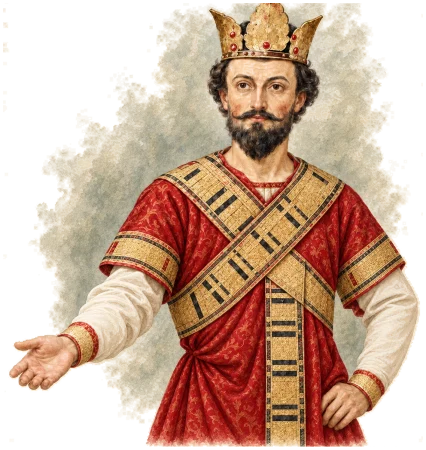
David had royal ancestry on his father’s side. His father, King George IV Lasha, was Tamar’s son. According to the Chronicler, author of the Hundred Years’ Chronicle, the king fell in love with a married woman from Velistsikhe in Kakheti and brought her to live with him. She bore him a son. The child was named David and entrusted to the king’s sister, Rusudan, to raise.[3]
The chronicler says that the clergy and grandees demanded that King George IV Lasha enter a lawful marriage. The king refused, and the woman was separated from him and returned to her husband. This source condemns the king’s conduct, while other accounts take a more favourable view of him. A conflict central to the issue is clear across these differences in judgement. The king’s personal wishes clashed with the requirements of lawful marriage, and the circumstances of the union shaped his son’s position.[3][4]
The example explains why the status of children born out of wedlock went beyond private life. When property and authority passed through kinship, the legitimacy of a person’s birth could become an argument between heirs. David belonged to the royal family, but rivals could challenge the claims that followed from his descent. Recognition as a king’s son and recognition as his lawful heir were separate questions.[1]
Birth outside marriage did not necessarily mean the loss of all rights. In his study of Georgian inheritance law, Giorgi Chavleishvili observes that provisions in the thirteenth- and fourteenth-century law code of Beka and Aghbugha suggest a possibility. Legitimate children and those born out of wedlock may have been treated more alike on their mother’s side than on their father’s. The author presents this conclusion cautiously. When examining inheritance rights, it matters which parent a person claimed property through.[2]
The history of children born out of wedlock in Georgia therefore requires us to distinguish descent, relations with parents and the right to a particular inheritance. Family property and the royal throne were also different kinds of inheritance. David’s fate sheds particular light on the second question. Birth outside marriage could be a serious barrier even for someone whose ties to the ruling dynasty were acknowledged.
After King George IV Lasha died in 1223, Rusudan took the throne. Later, under Mongol rule, George IV Lasha’s son gained the backing of part of the Georgian nobility and became a claimant to the crown alongside another David, Rusudan’s legitimate son. Both were Tamar’s grandsons, but the circumstances of their birth placed them differently in the succession dispute.[1]
Birth outside marriage now became a legal argument with practical force. The supporters of George IV Lasha’s son understood that Georgian law governing the kingdom stood in the way of his claim. They asked for the case to be heard under Mongol rules.[1]
A contemporary, John of Plano Carpini, also preserves an account of this appeal. He describes the claimants’ kinship inaccurately, but gives the substance of David’s request. David wanted the case judged by Mongol custom, which made no such distinction in this matter between the children of a lawful wife and those of another woman. The same person’s legal position could thus change according to the tradition used to decide the dispute.[5]
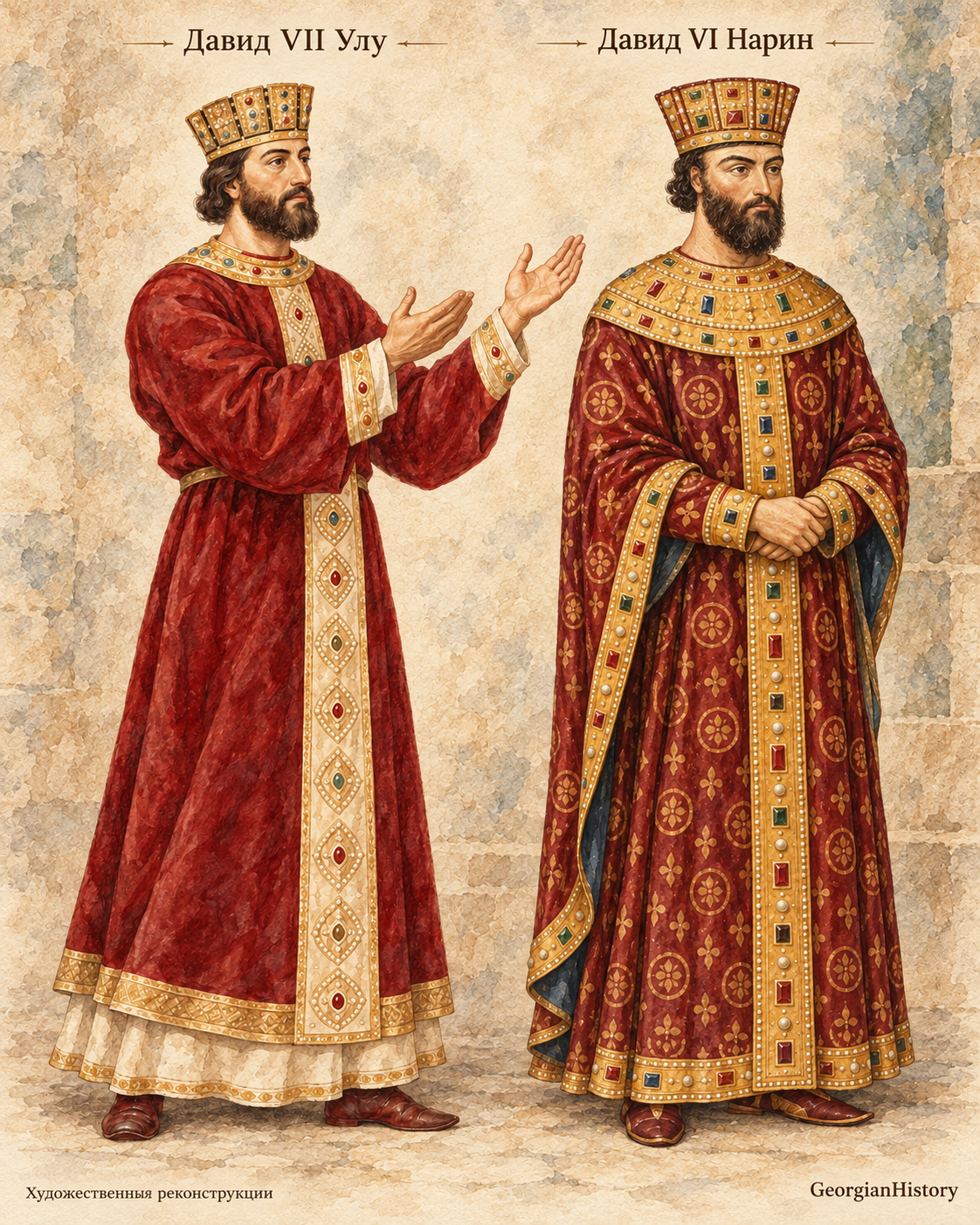
In 1247, Khan Güyük confirmed both Davids as kings. King George IV Lasha’s son born out of wedlock became David VII Ulu, and Rusudan’s son became David VI Narin.[1]
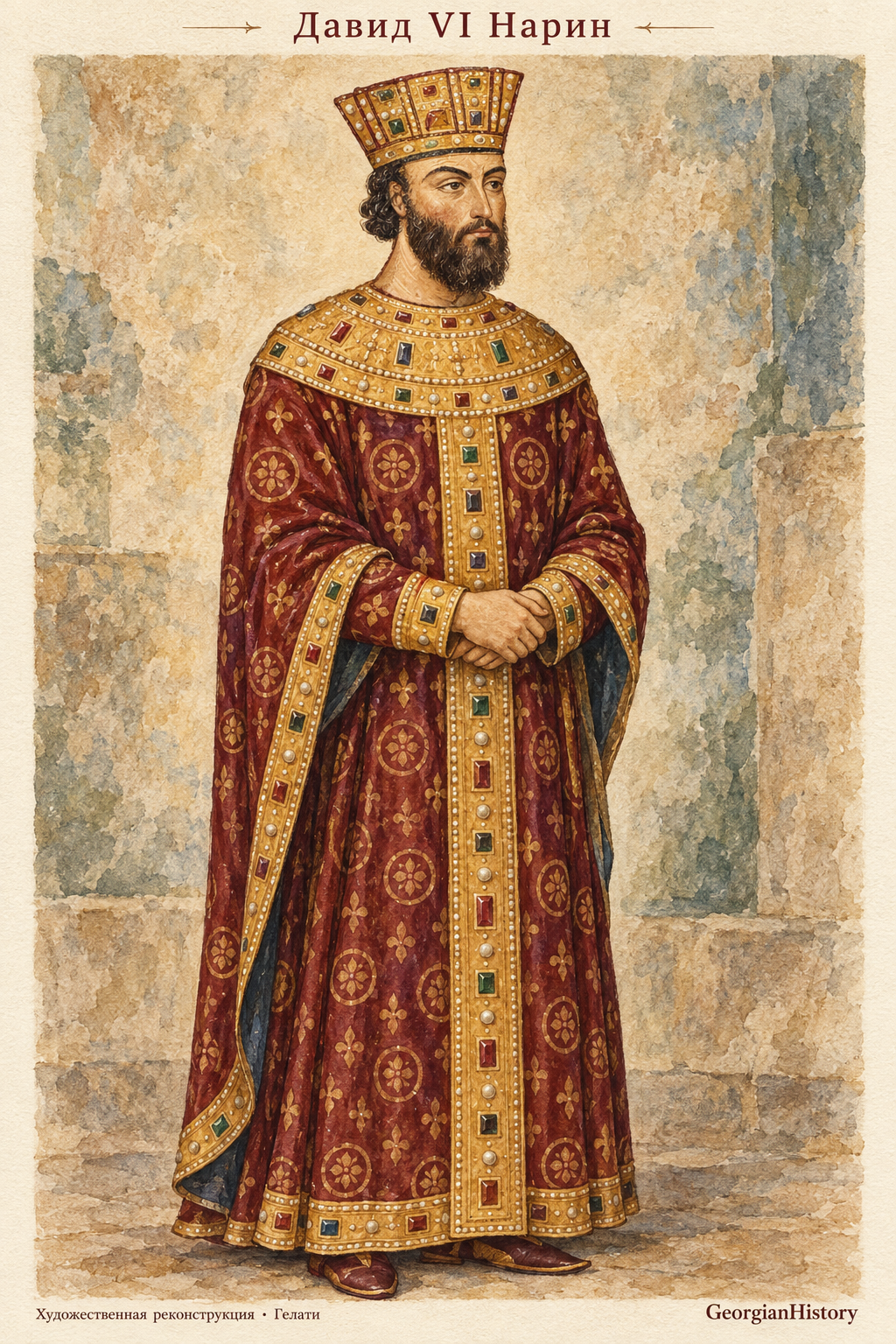
Ulu’s accession shows that political support and a ruling by the supreme authority could overcome a legal restriction. The circumstances of his birth were the same. What changed were the terms on which his claim could be recognised.
Throughout this struggle David remained the son of King George IV Lasha and grandson of Tamar. His acknowledged ties to the royal house gave him grounds to pursue the crown, and his birth outside marriage gave opponents grounds to contest his claim. His fate illuminates the position of a person born out of wedlock through one specific dispute over recognised ancestry, acknowledged rights and the authority that could decide his future.
GeorgianHistory
Sources and further reading
- 1. V. Guchua. “David VII Ulu.” Georgian Encyclopedia, Georgian National Academy of Sciences. David’s origins, the succession dispute, the appeal to Mongol law and the confirmation of two kings in 1247. In Georgian.
- 2. Giorgi Chavleishvili. Forms of Succession in the Kingdom of Georgia and Castile: A Comparative Analysis of Medieval Law. Journal of Law, 2025, Special Edition, pp. 123–133. For children born out of wedlock, see pp. 131–132 and notes 72–74. The researcher presents the conclusion about children’s position on the maternal side as a hypothesis. Restrictions on the paternal side are also discussed with reference to the later law code of Vakhtang VI. These later rules should not be assumed to apply throughout the Middle Ages.
- 3. The Chronicler. The Hundred Years’ Chronicle, in Kartlis Tskhovreba. In Georgian. Scholarly edition: Kartlis Tskhovreba, ed. S. Qaukhchishvili, vol. II, Tbilisi, 1959.
- 4. Sh. Khantadze. “George IV Lasha.” Georgian Encyclopedia. On differences in how historical sources assessed the king. In Georgian.
- 5. John of Plano Carpini. History of the Mongols, chapter VII, § I, points 4–5. Russian translation. The account is inaccurate on the claimants’ kinship and some details of the dispute. The evidence used here concerns the appeal to Mongol custom.
Full text of Giorgi Chavleishvili’s study, posted by the author.