Paravani: A King in Captivity
In 1465 George VIII was captured near Lake Paravani. His captivity accelerated a shift in power in Georgia as the struggle for Kartli unfolded.
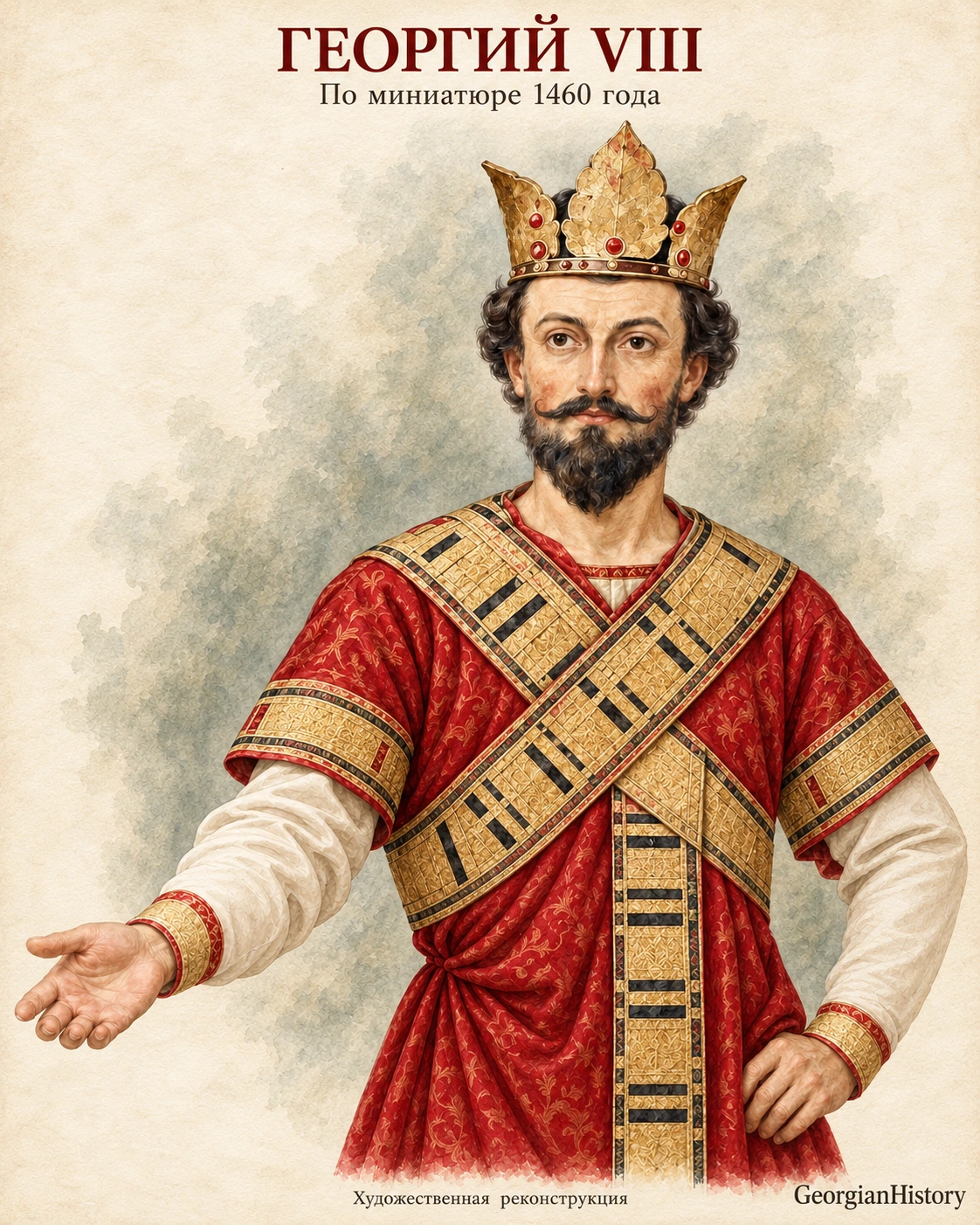
 In 1465, the man taken prisoner by Lake Paravani was more than a military commander. Qvarqvare II Jaqeli, atabeg of Samtskhe, had captured George VIII, the king who was trying to hold together a disintegrating Georgian monarchy. Release did not restore his former position. A ruler who had laid claim to a united Georgia continued to reign in Kakheti alone. Between those two forms of power lay a crisis that the outcome of a single battle cannot explain. [1, 2]
In 1463, George had already lost at Chikhori to Bagrat, his rival from the Bagrationi dynasty. The victor established himself as king of Imereti. Historians call him Bagrat VI, but in the succession of Imeretian kings he is Bagrat II. The distinction matters. Both numbers refer to the same man, whose ambitions extended beyond western Georgia. He later took advantage of George's capture to extend his rule into Kartli. [3]
Samtskhe cannot be treated as a united camp that followed its ruler unconditionally. According to the academic article on the Battle of Tavparavani, the atabeg's opponents among the local nobility turned to the king for help. George encamped with his army near Paravani. The conflict therefore reached beyond a struggle between the royal centre and an autonomous prince. Within the principality itself, some factions saw their interests as bound up with royal power. The rivals fought for lands and for the loyalty of those who controlled them. [2]
The most dramatic moment is much less well documented than its consequences. Vakhushti Bagrationi, writing in the eighteenth century, recounts Qvarqvare's surprise attack and capture of the king. Almost three centuries separate his account from the events, so it cannot serve as a precise reconstruction of the battle. [4] The capture itself rests on more than later historical tradition. Cyril Toumanoff compared accounts of it with fifteenth-century documents, including Constantine's charter of 1466. The evidence for the main event is firmer than the evidence for all the circumstances of the capture. [5]
The political outcome mattered more than the details of the clash. Bagrat moved into Kartli and proclaimed himself king of Georgia in 1466. The ruler of Imereti was now claiming a wider authority. His rival's capture gave him room to act beyond the western kingdom, and George's release did not undo Bagrat's advantage. The royal title still mattered, but several centres of power were competing for it. [3]
George tried to recover his position in Kartli but eventually ended up in Kakheti. In that kingdom's history he is known as George I. The academic encyclopedia dates his reign in Kakheti to 1466–1476. The change of number records a much larger shift. The same monarch entered the history of a separate kingdom. His rule continued on a different territorial scale. [1, 2]
Paravani did not draw an immediate line between unity and fragmentation. Western Georgia already had a king of its own, the atabeg of Samtskhe sought autonomy, and the king's return from captivity did not end the struggle for Kartli. The significance of 1465 lies in how it accelerated this redistribution of power. The capture of one man changed the possibilities open to several rulers. George VIII's story shows how a unified monarchy gave way to rival kingdoms through a succession of defeats, claims and failed attempts to return to power. [1, 2, 3, 5]
Sources and further reading
- 1. G. Akopashvili (გ. აკოფაშვილი). “გიორგი VIII”, George VIII. Georgian Encyclopedia, Georgian National Academy of Sciences. Online publication year not stated, accessed 22.10.2026. The full entry was consulted. It confirms reign dates, the defeat of 1463, capture in 1465 and transition to a separate reign in Kakheti. Principal chronological source.
- 2. M. Zaldastanishvili (მ. ზალდასტანიშვილი). “თავფარავნის ბრძოლა”, Battle of Tavparavani. Same academic publication. Online publication year not stated, accessed 22.10.2026. The full entry was consulted. It confirms the appeal to George by the atabeg's opponents, the royal camp by the lake, the capture and subsequent efforts to recover his position in Kartli.
- 3. K. Chkhataraishvili (ქ. ჩხატარაიშვილი). “ბაგრატ VI”, Bagrat VI. Same academic publication. Online publication year not stated, accessed 22.10.2026. The full entry was consulted. It confirms the two regnal numbers, Bagrat's reign in Imereti after Chikhori and his actions in Kartli in 1466.
- 4. Vakhushti Bagrationi. “აღწერა სამეფოსა საქართველოსა”, Description of the Kingdom of Georgia, eighteenth century. Scholarly edition: ქართლის ცხოვრება, vol. IV, text established by S. Qaukhchishvili, Tbilisi, 1973. The Georgian passage in “ცხორება სამცხე-კლარჯეთისა”, History of Samtskhe-Klarjeti, subsection “ა. ყუარყუარე, დ წელი მთავრა”, was consulted for the paragraphs on the royal camp and surprise attack. The link leads to a public electronic transcription of the text. It confirms what the later account says, while the reliability of its details is not independently established. The passage's print pagination was not checked.
- 5. Cyril Toumanoff. The Fifteenth-Century Bagratids and the Institution of Collegial Sovereignty in Georgia. Traditio, 7, 1951, pp. 169–221. DOI: 10.1017/S0362152900015142. The introduction and notes 102, 128, 135–141, 155 and 167 available on the page were consulted. Note 135 on fifteenth-century documents and notes 141 and 167 on readings and divergences between chronicles are particularly important. The full text behind the access restriction was not consulted. Constantine's original charter was not checked separately.