The Dress of Nateli Dadiani
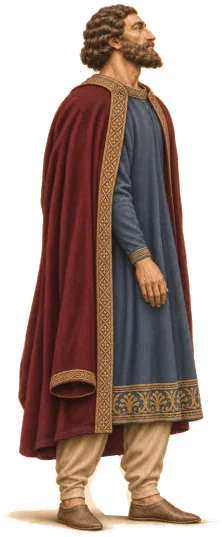
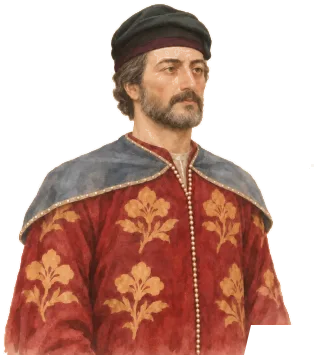
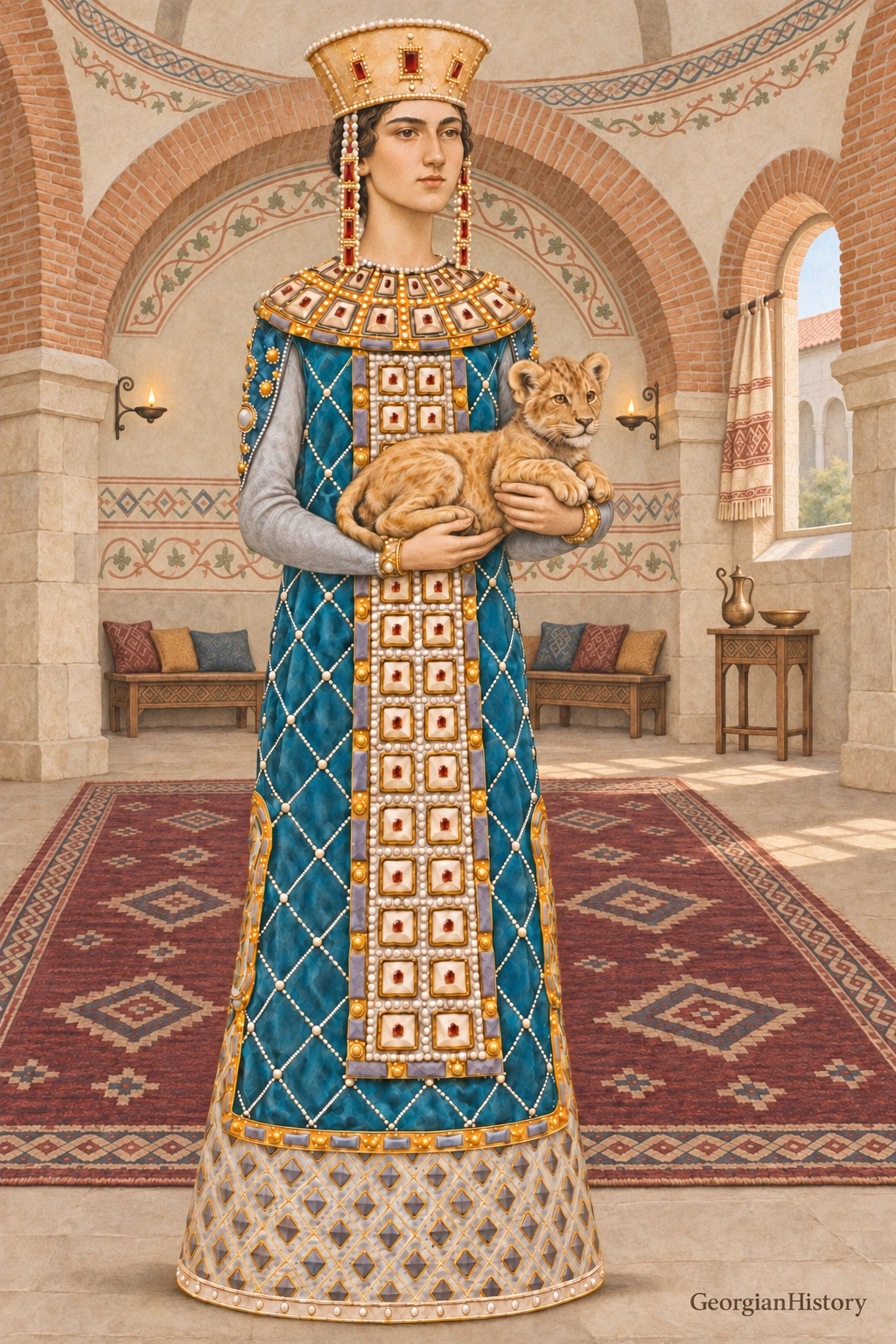
How People Dressed in Georgia · Issue 3. Khobi, Odishi. Nateli Dadiani’s long dress, hanging sleeves and mandili in the family fresco at Khobi.
Fresco and reconstruction
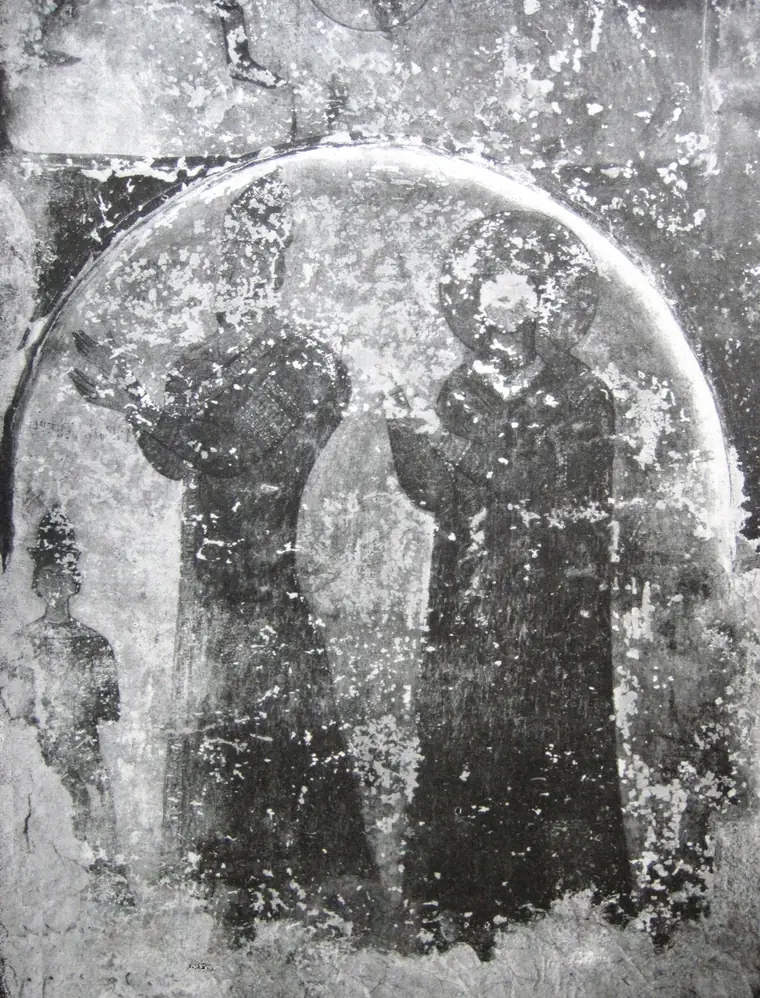
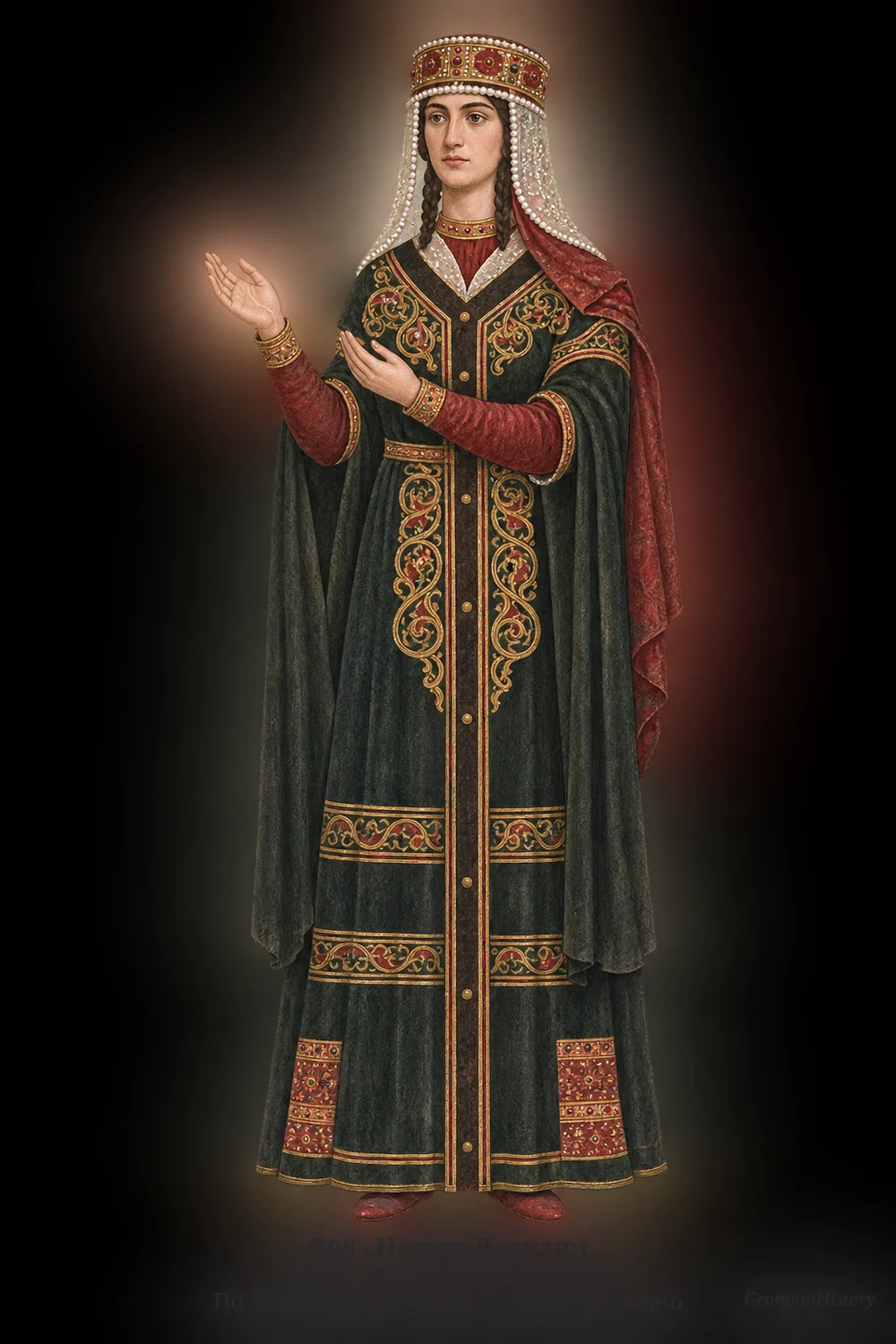
 Nateli Dadiani stands on the right of the Khobi family fresco in a long, dark dress. Large plant motifs run down the front, and the sleeves hang at the sides. The archival reproduction shows the outline of the garment. Historian Giorgi Kalandia describes its decoration and headwear in greater detail. [1, 2]
The family portrait at Khobi
The Church of the Virgin at Khobi Monastery served as a burial place for the Dadiani family, rulers of Odishi in western Georgia. The southern bay, where Shergil Dadiani’s family burial chapel was located, contained scenes from the life of John the Baptist. In the lower register of the south wall was a donor portrait, a depiction of a patron and his family. Nateli stands beside her husband Shergil, and the composition included their children. The fragment removed from the wall is held at the Shalva Amiranashvili Museum of Fine Arts. [1, 3]
Dress and hanging sleeves
Kalandia describes two rows of large plant motifs running from the chest to the hem. The hanging parts of the sleeves reach almost to the bottom of the dress. As Nateli raises her arms in prayer, the fitted sleeve follows her forearm, while the longer section of fabric hangs down beside her body. [1, 2]
Kalandia identifies the decoration as embroidery in red and metal thread. In metal thread, metal is combined with a textile base, such as silk. The fresco gives limited evidence for the fabric composition and the construction of the seams. [1, 2]
The mandili and diadem
Kalandia identifies Nateli’s mandili, a thin cloth worn over the head. He describes embroidered crosses, small pearls, and a diadem decorated with stones. The outline of the headwear is fragmentary in the reproduction. The watercolor follows the museum catalogue for its general appearance. The precise fit and placement of the ornaments are conjectural. [1, 2]
Embroidery from Martvili
Nateli and Shergil gave Martvili Monastery an epigonation, a square liturgical vestment worn at the hip. The Georgian National Museum dates it to the thirteenth century. The 34 × 34 cm object is embroidered with the Descent into Hell. The museum records silk, gold and silver threads, pearls, and coral. This surviving object adds evidence about embroidery materials to what we can see in the Khobi fresco. [4, 5]
When was the portrait painted
Ketevan Mikeladze and Viktor Lazarev date the paintings associated with Shergil’s family portrait to the turn of the fourteenth century. Giorgi Kalandia proposes the first half of the thirteenth century. He identifies the boy in the portrait as Tsotne Dadiani, known from the chronicle account of the plot at Kokhtastavi. Kalandia cites a donor inscription and commemorative entries from the Monastery of the Cross in Jerusalem that name members of the family. [3, 6, 7]
Vakhtang Beridze, whose view Kalandia discusses, believed the fresco depicted a different Tsotne with his parents. The identification determines which written evidence can be associated with the portrait. [7]
GeorgianHistory
Sources and further reading
- Shalva Amiranashvili. History of Georgian Art. Tbilisi, 1971. Reproduction of the Khobi family portrait.
- Art Palace of Georgia. Textile from Georgia, vol. I, pp. 64–65. Nateli’s dress, ornament and mandili.
- Ketevan Mikeladze. Wall Paintings of the Church of the Virgin at Khobi Monastery, 2024. The location, date and present collection of the portrait.
- Georgian National Museum. The epigonation donated to Martvili Monastery by Shergil and Nateli Dadiani.
- Orthodox Encyclopedia. The form of the epigonation and how it was worn.
- Viktor Lazarev. History of Byzantine Painting, VIII.13, “Georgia”. Paragraph on Khobi and note 152.
- Giorgi Kalandia. The Dioceses of Odishi, ch. V, § 1. Documents on the Dadiani family and the case for an earlier date.