Gelati: A Kingdom That Built and Thought
David the Builder’s story extends beyond the battlefield. A monastery and academy near Kutaisi preserve another side of his vision.
The start of a great building project
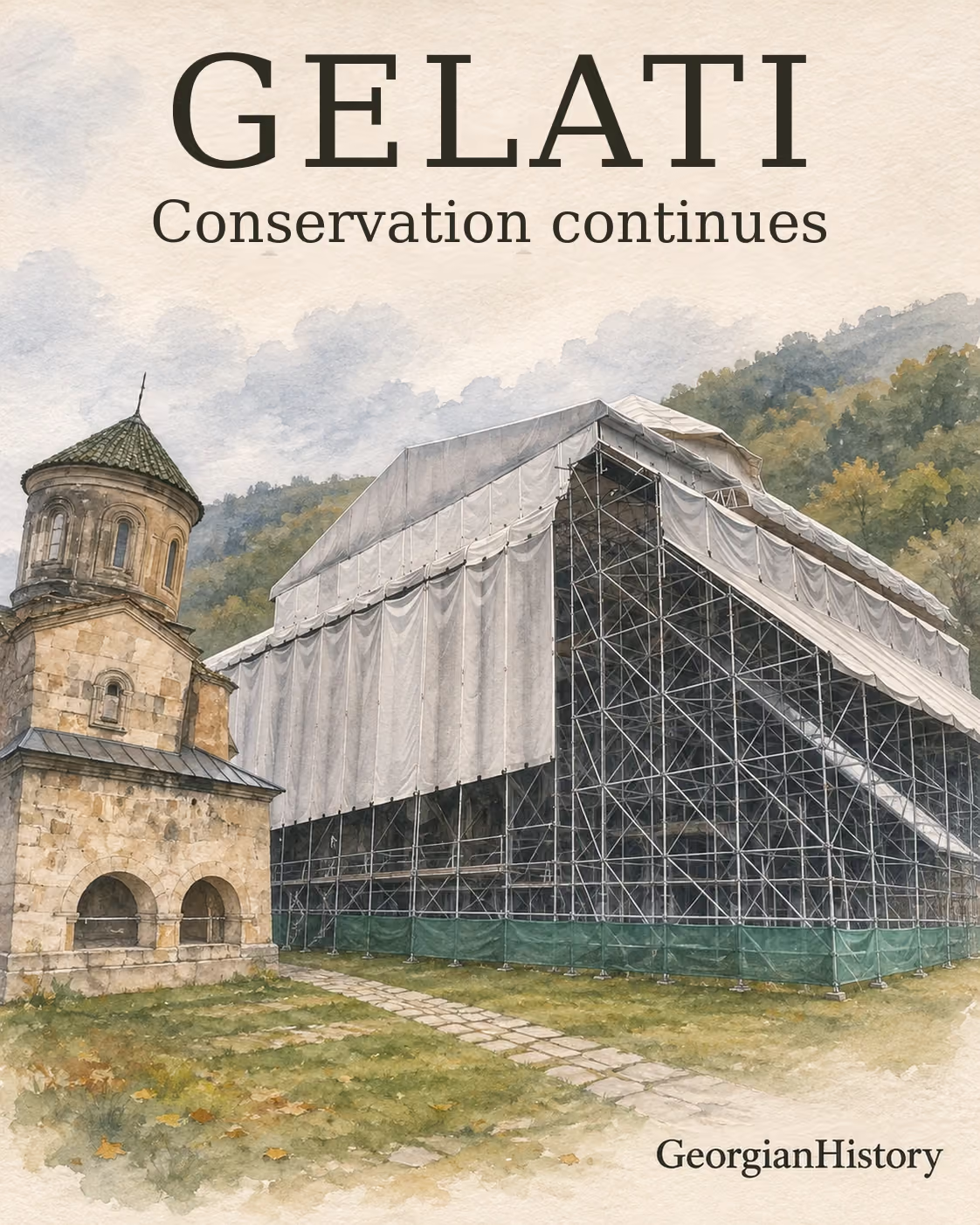
 In 1106 David IV began building Gelati on a wooded hill above the Tskaltsitela River. The main church was completed in 1130, under his son Demetre I. Buildings and paintings were added over the centuries. The ensemble preserves several periods.
A place for books and thought
An academy operated at the monastery. Its figures included Ioane Petritsi, translator and commentator on Proclus, and Arsen of Iqalto, who worked on theological texts. Scribes produced manuscripts, and the making of books was part of life at the royal monastery.
Gelati shows how state patronage helped bring scholars together and sustain education. In medieval Georgia, translation expanded the ways in which Georgian could express ideas about philosophy and faith.
What to look for at the monument
Notice the proportions of the buildings, the stone facing and the arches on the façades. The main church preserves a twelfth-century mosaic of the Mother of God, the Child and the archangels. Paintings from different centuries show how the artistic tradition continued.
Gelati is inscribed on the UNESCO World Heritage List. Its importance lies in the meeting of architecture, painting, books and landscape, which together preserve the traces of a rich cultural world.