Bagrat III and the Kingdom of the Abkhazians: Towards a United Georgia
How the western kingdom, Kartli, and the Bagrationi domains came together under Bagrat III, and why their union took decades.
 At the end of the tenth century there was still no united Kingdom of Georgia in the Caucasus. The western lands formed the Kingdom of the Abkhazians, centred on Kutaisi. Different rulers and influential families held power in Kartli, Tao, Kakheti and Hereti. In sources of the period, “Kingdom of the Abkhazians” refers to a medieval state covering much of western Georgia, far beyond the boundaries of present-day Abkhazia.
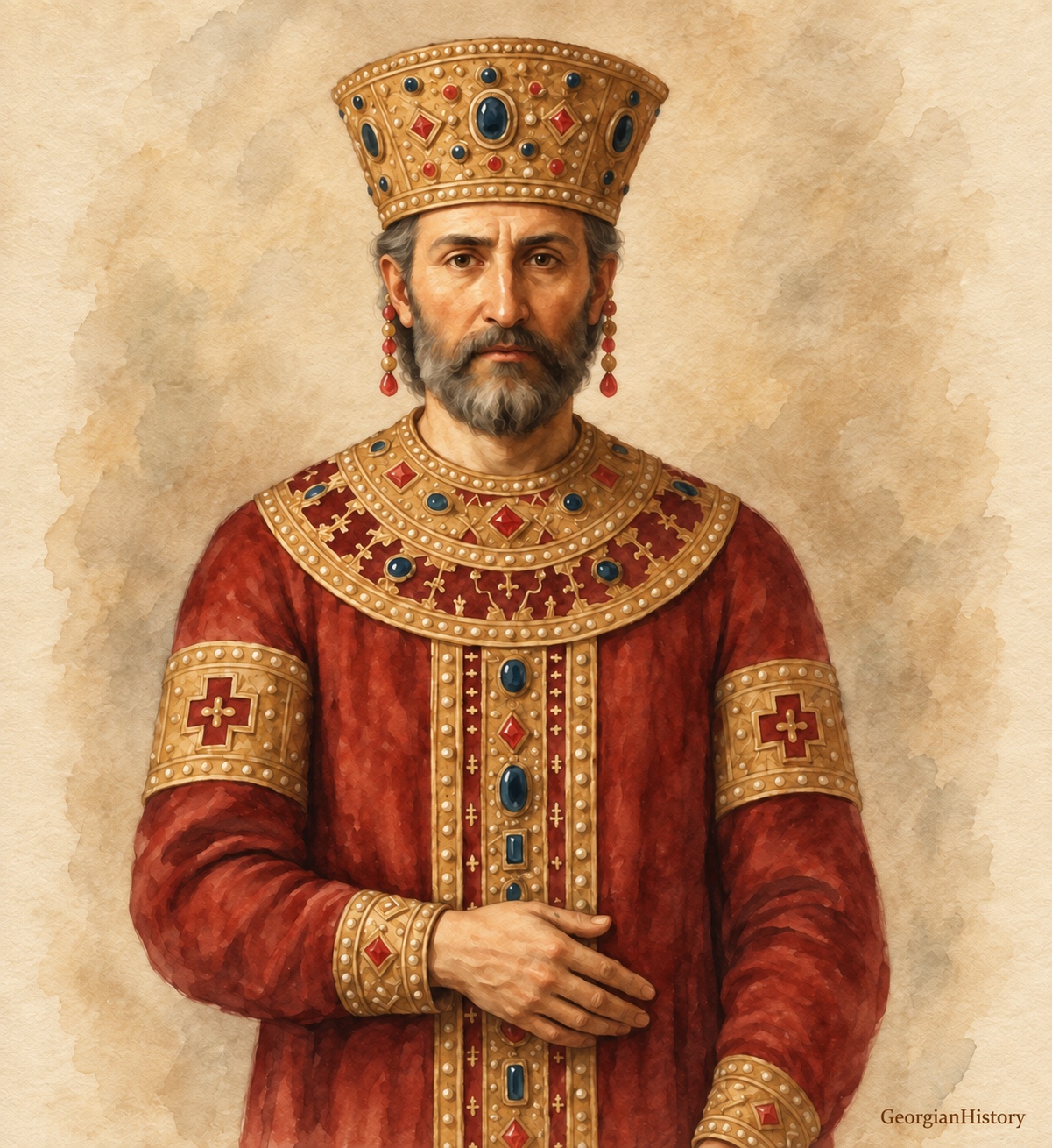
Bagrat became the figure around whom unification was possible. His mother, Gurandukht, was the daughter of George II, King of the Abkhazians. His father, Gurgen, belonged to the Bagrationi dynasty. The young Bagrat was raised by David III Kouropalates, the powerful ruler of Tao, who had no son. One heir thus combined rights to the western throne with ties to the rulers of the eastern and southern Georgian lands.
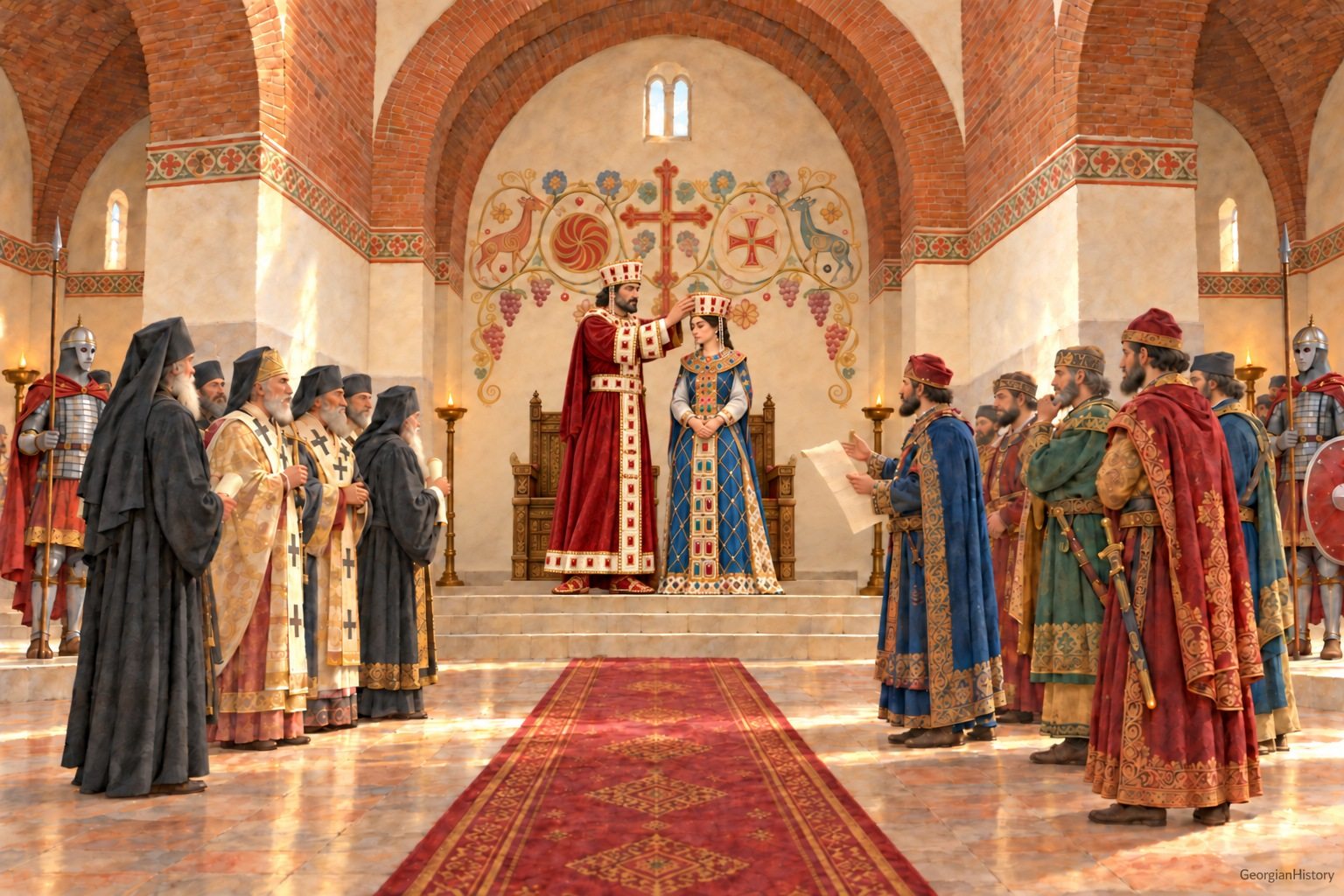
Lineage alone was insufficient. When the struggle for Kartli broke out, its eristavi Ivane Marushisdze approached David Kouropalates and proposed placing Bagrat in charge. David backed him and secured recognition for the young prince in Kartli. A few years later, in 978, the Abkhazian eristavis and nobles invited Bagrat to take the throne. The prospect of unification now had the support of royal power based in the Kingdom of the Abkhazians.
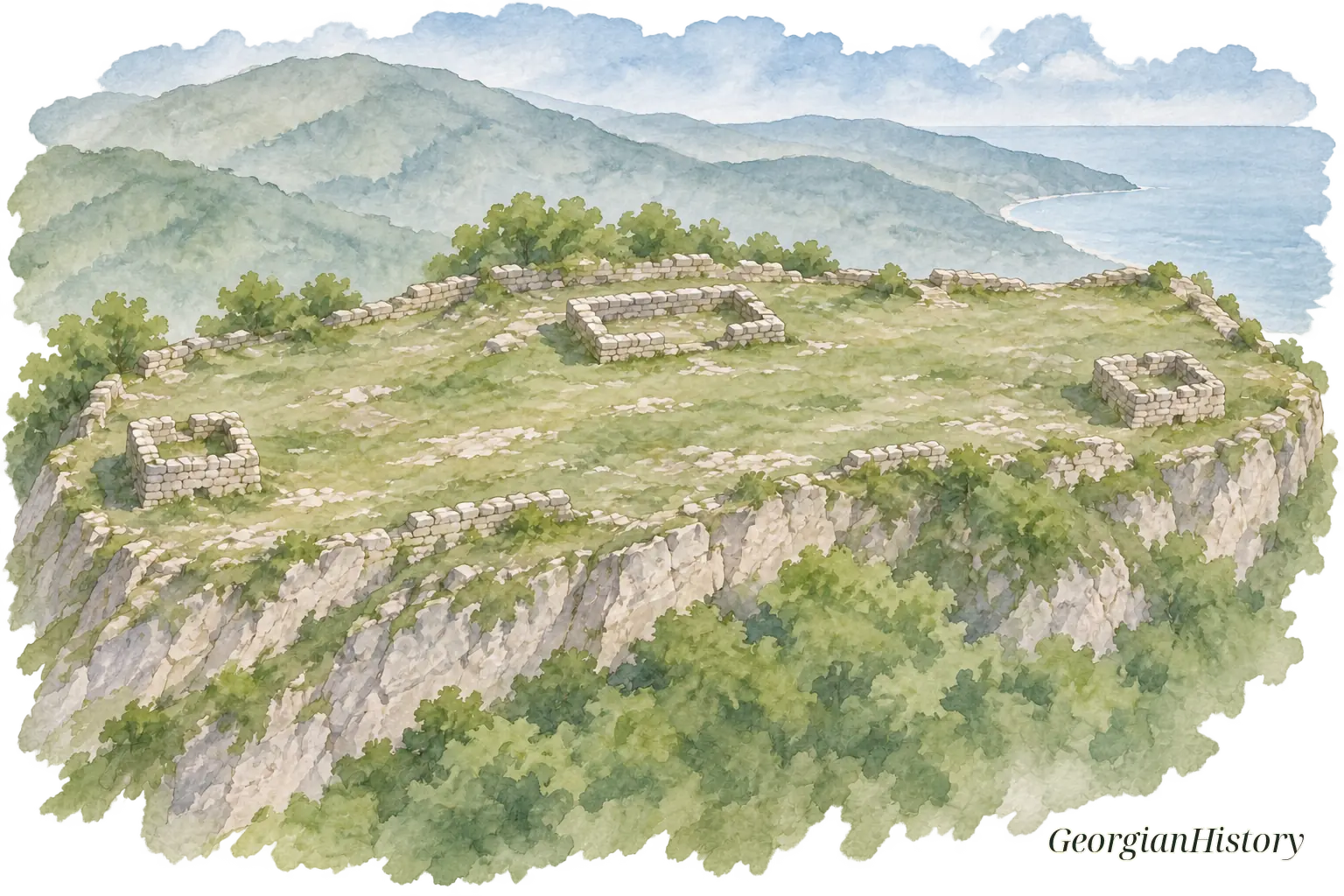
Holding power proved harder than obtaining it. Local grandees in Kartli resisted the king’s growing authority, and Bagrat had to reassert control over Uplistsikhe and replace defiant officials. Unification took shape through inheritance, agreements, contests for fortresses and the submission of local nobles. It took years rather than a single ceremony.
Gurgen died in 1008. Bagrat inherited his domains and brought the Kingdom of the Abkhazians and the lands of the Kartvelian Bagrationi under one ruler. He then extended his rule to Kakheti and Hereti. Tbilisi remained outside his kingdom, and part of David Kouropalates’s inheritance went to Byzantium. Later generations would have to defend and extend the borders of the new state.
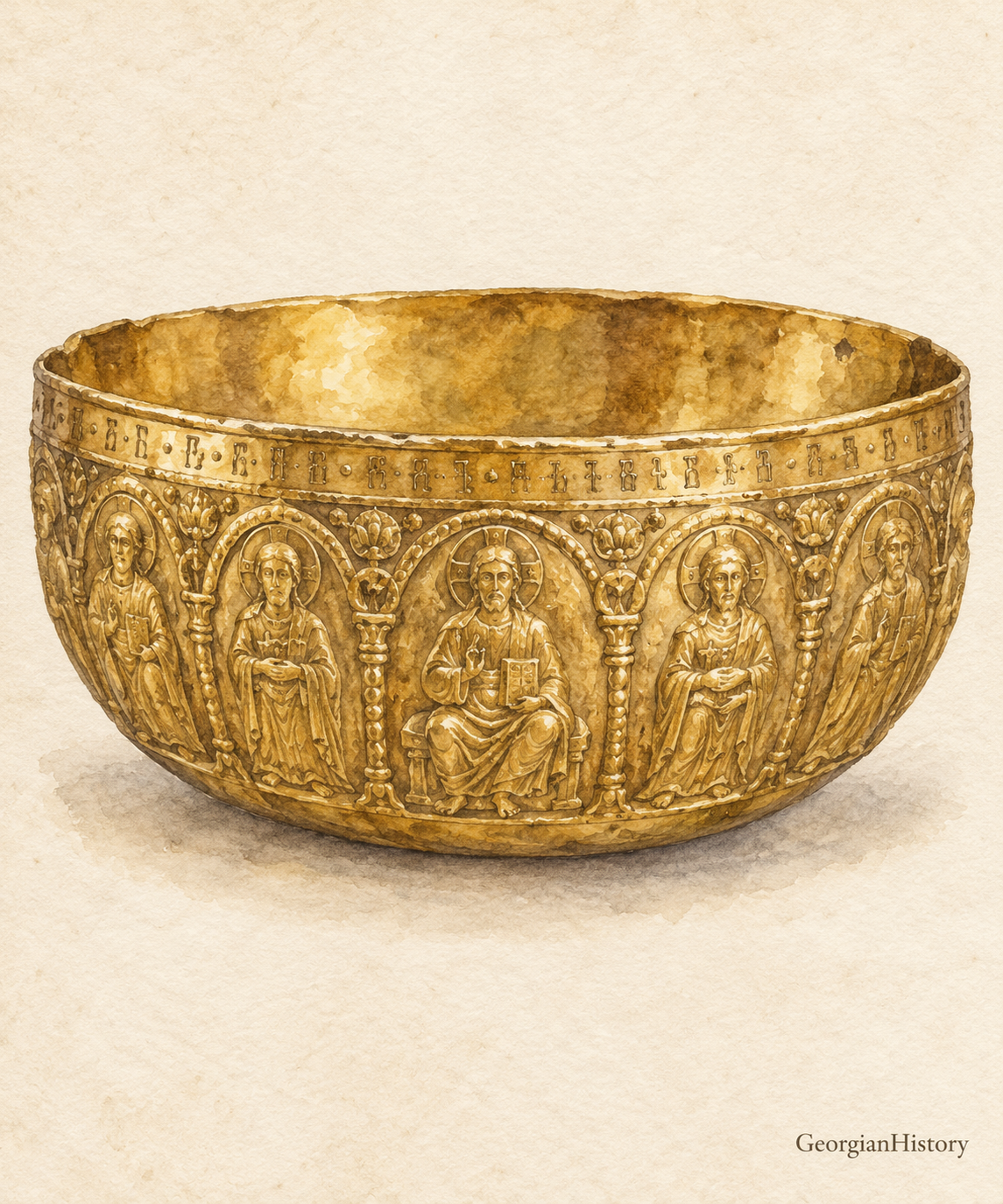
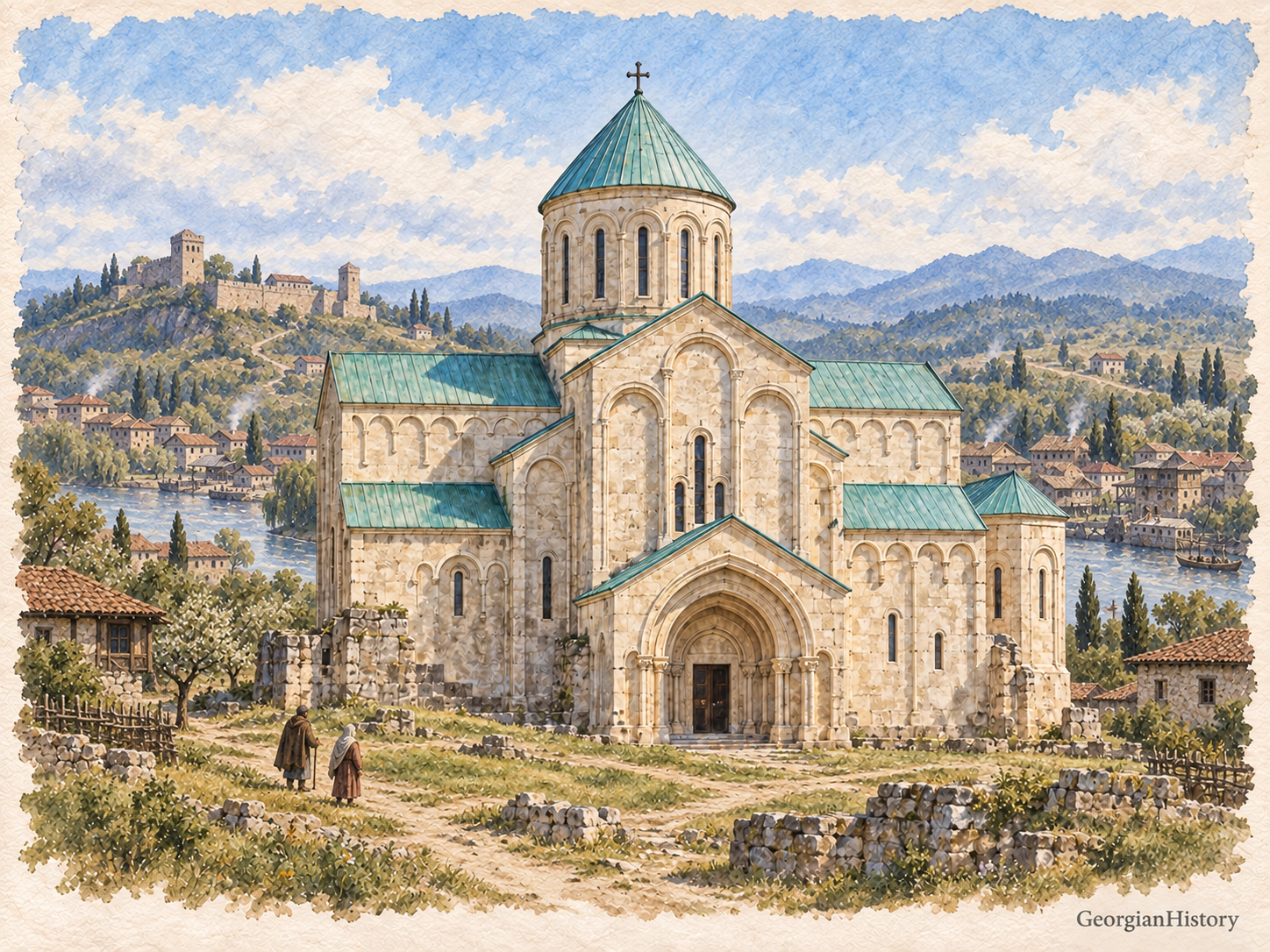
Monuments as well as chronicles recall Bagrat’s time. The cathedral later named Bagrati rose in Kutaisi under him. Bagrat and his mother Gurandukht donated a chalice to the church at Bedia, and its inscription calls him “King of the Abkhazians”. Bagrat died in 1014 and was buried at Bedia. These monuments preserve the memory of the western kingdom from which the authority of the first king of united Georgia grew.
Bagrat III did not inherit a united country. He brought together power where separate thrones and political centres had once stood. The Kingdom of the Abkhazians is therefore central to the story of the founding of the Kingdom of Georgia, and its place in that story extends beyond the moment of unification.
Illustrations for the story