The Gold of Colchis. Five Finds from Vani
Five gold ornaments from the graves at Vani and their 3D reconstructions.
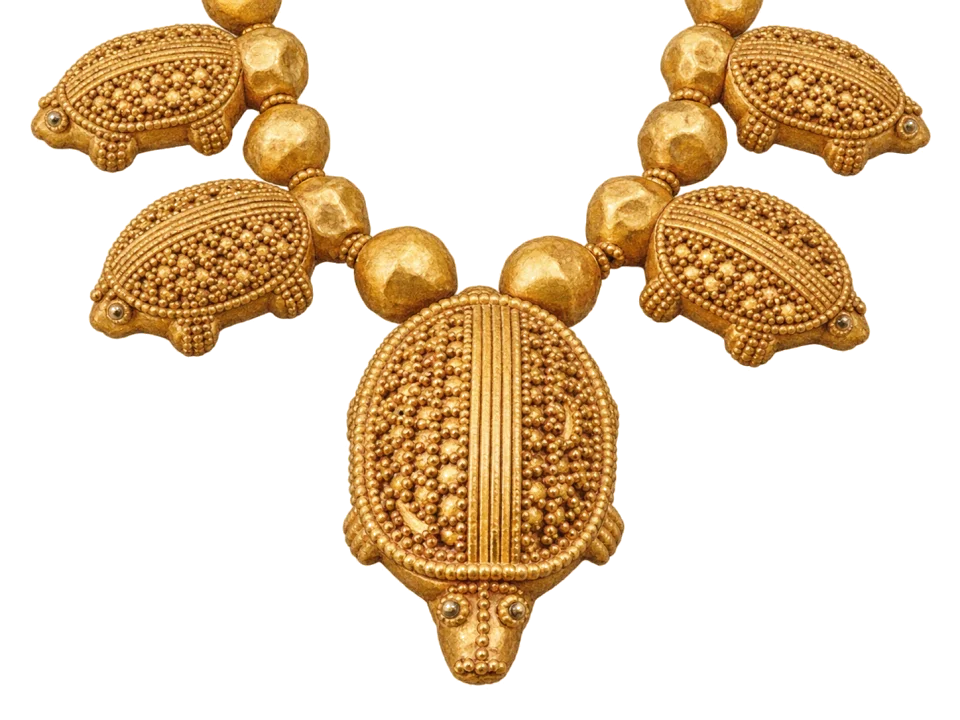
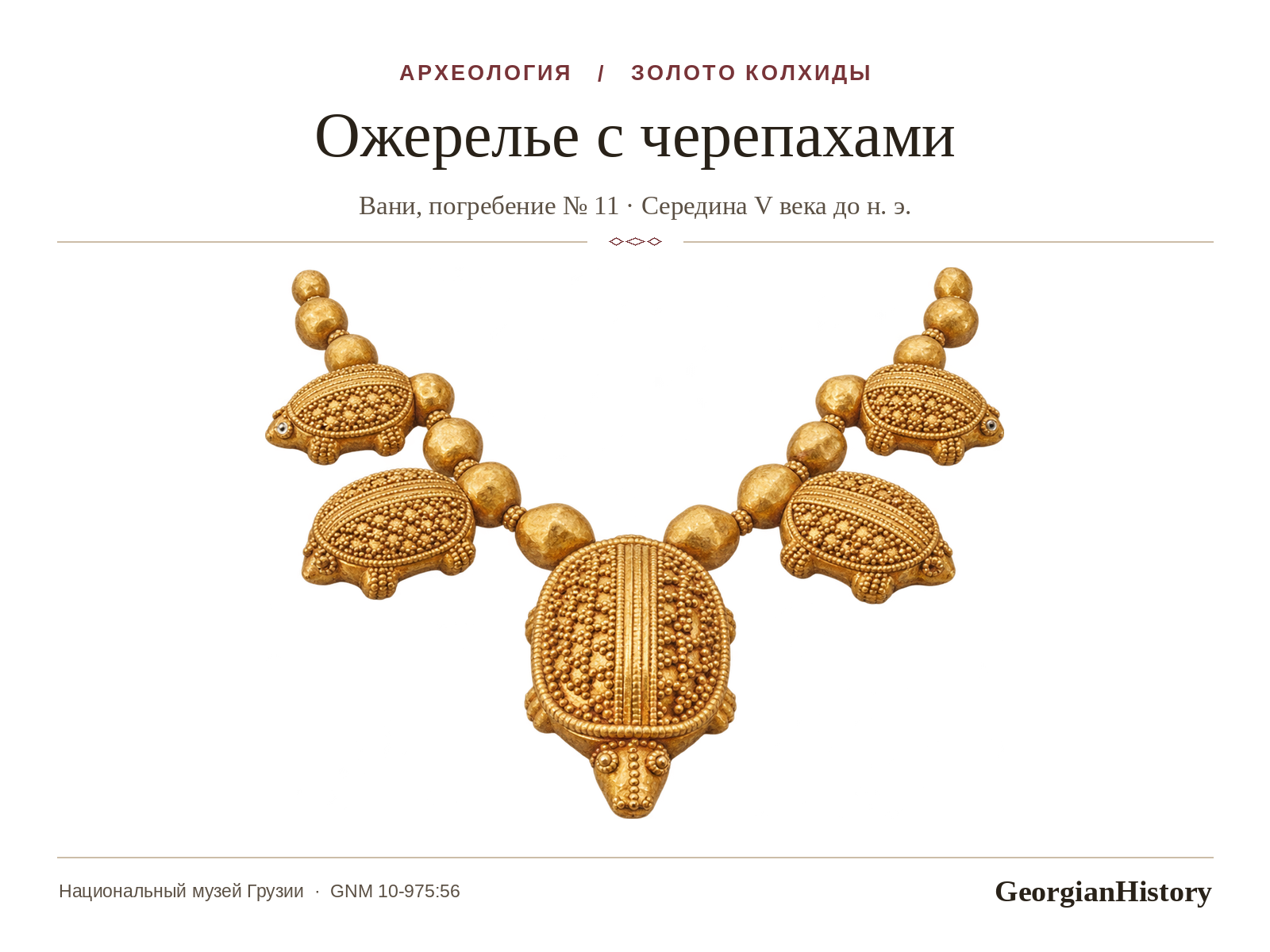
GNM 10-975:56
Necklace with tortoises
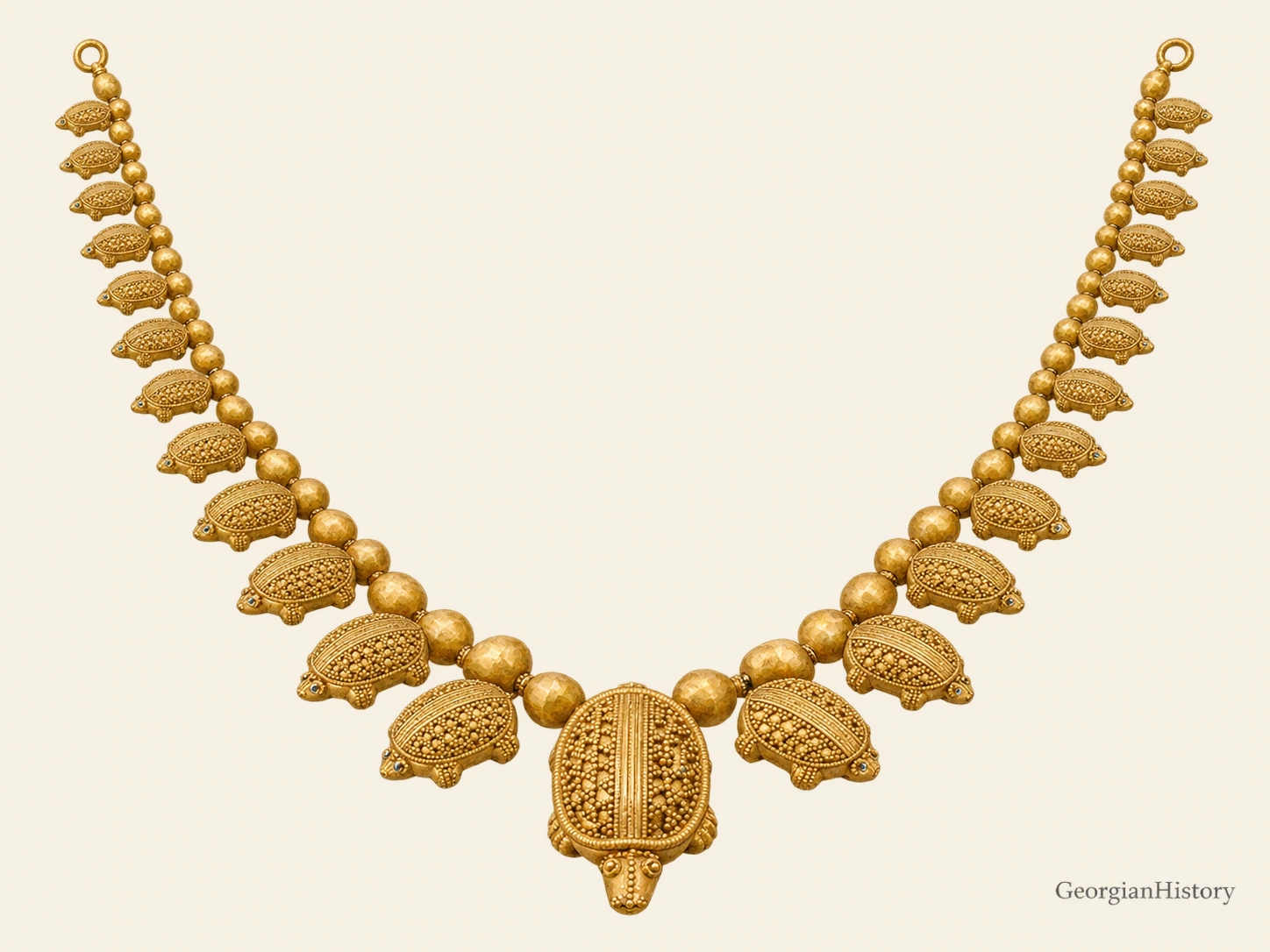
Archaeologists found a gold necklace with tortoise pendants in Grave 11 at Vani. Their shells are covered in granulation, a pattern made from tiny gold beads. The eyes are treated differently on the large and small pendants. On the largest tortoise they are gold, while the jeweller used glass inlays for the smaller ones. The difference is easy to miss in a photograph of the whole necklace. Smithsonian · necklace GNM 10-975:56
Vani lies in Imereti, in western Georgia. The tortoise necklace is dated to the middle of the fifth century BCE. The other four ornaments come from two fourth-century BCE graves. Together they show the different ways jewellers worked gold and how an ornament could change as it passed from one jewellery-making tradition to another. Getty · the graves of Vani · Fitzwilliam Museum · exhibition object list
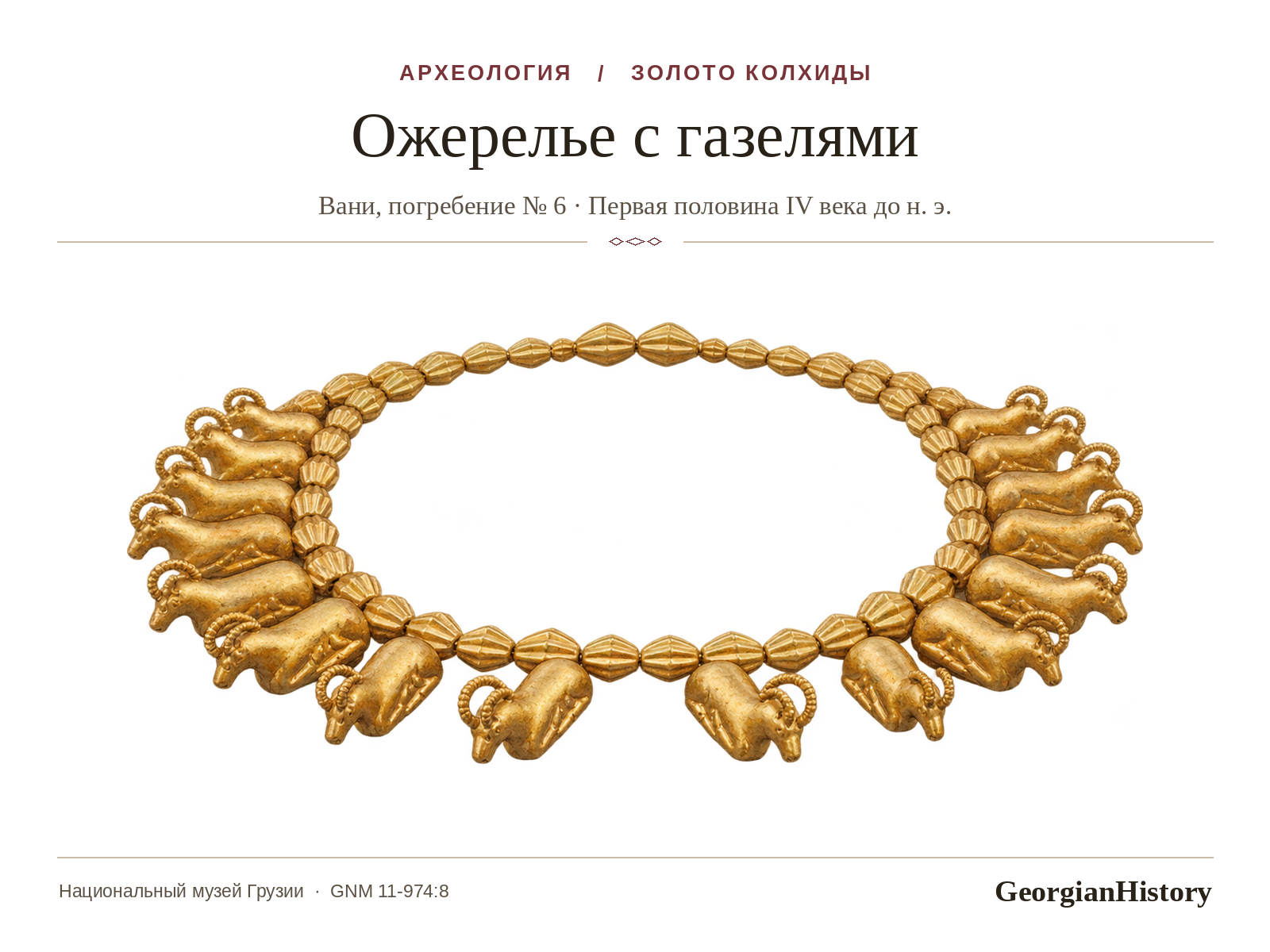
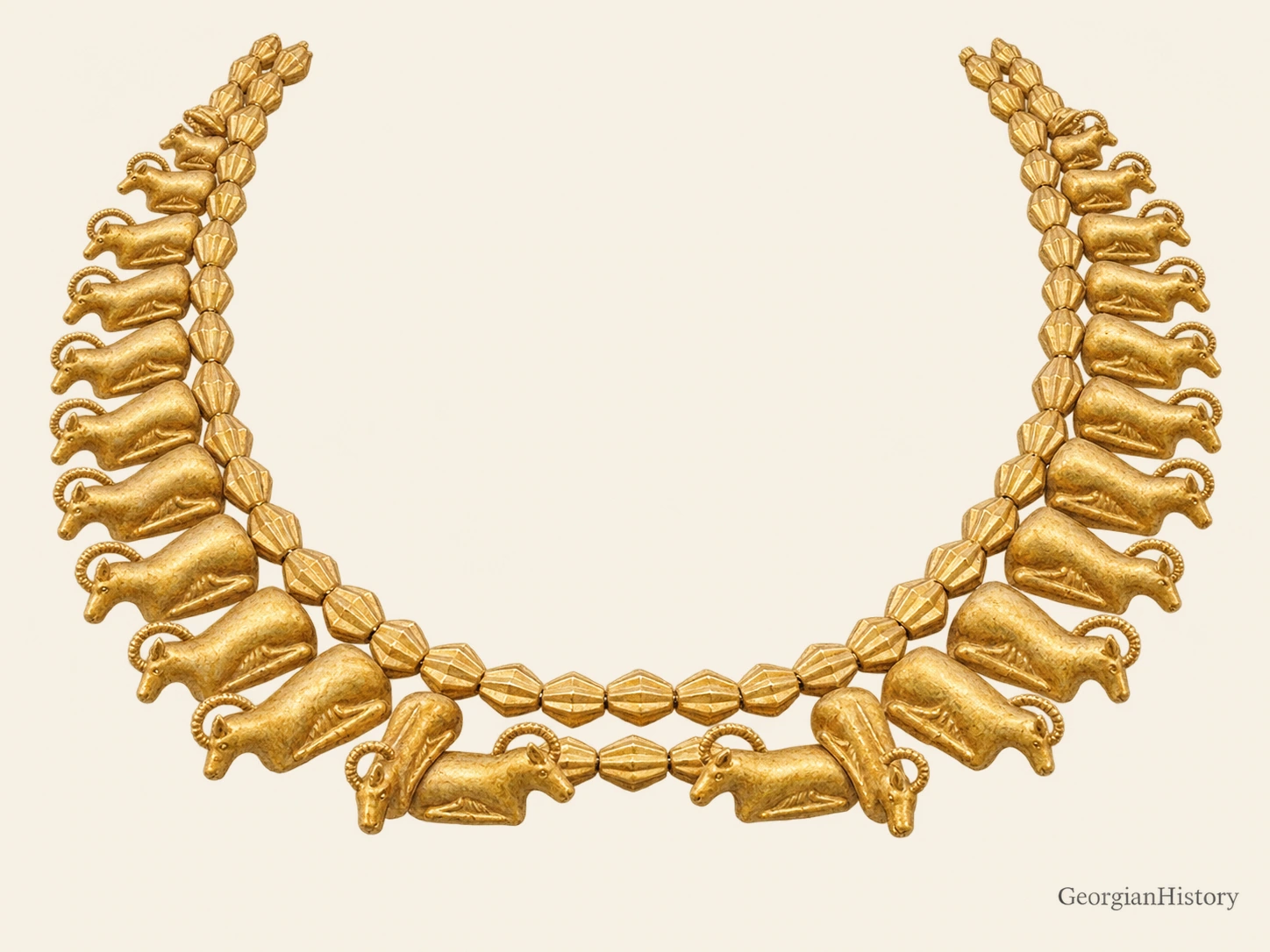
GNM 11-974:8
Necklace with gazelles
The necklace from Grave 6 was also made up of individual figures. There are 56 of them, identified as gazelles in the museum record. Each figure was made from two stamped halves, which were then soldered together. The horns and ears were attached separately. Fluted beads sat between the figures. On the jeweller’s bench these were dozens of individual parts. On the necklace they formed a repeating row of reclining animals. Smithsonian · necklace GNM 11-974:8
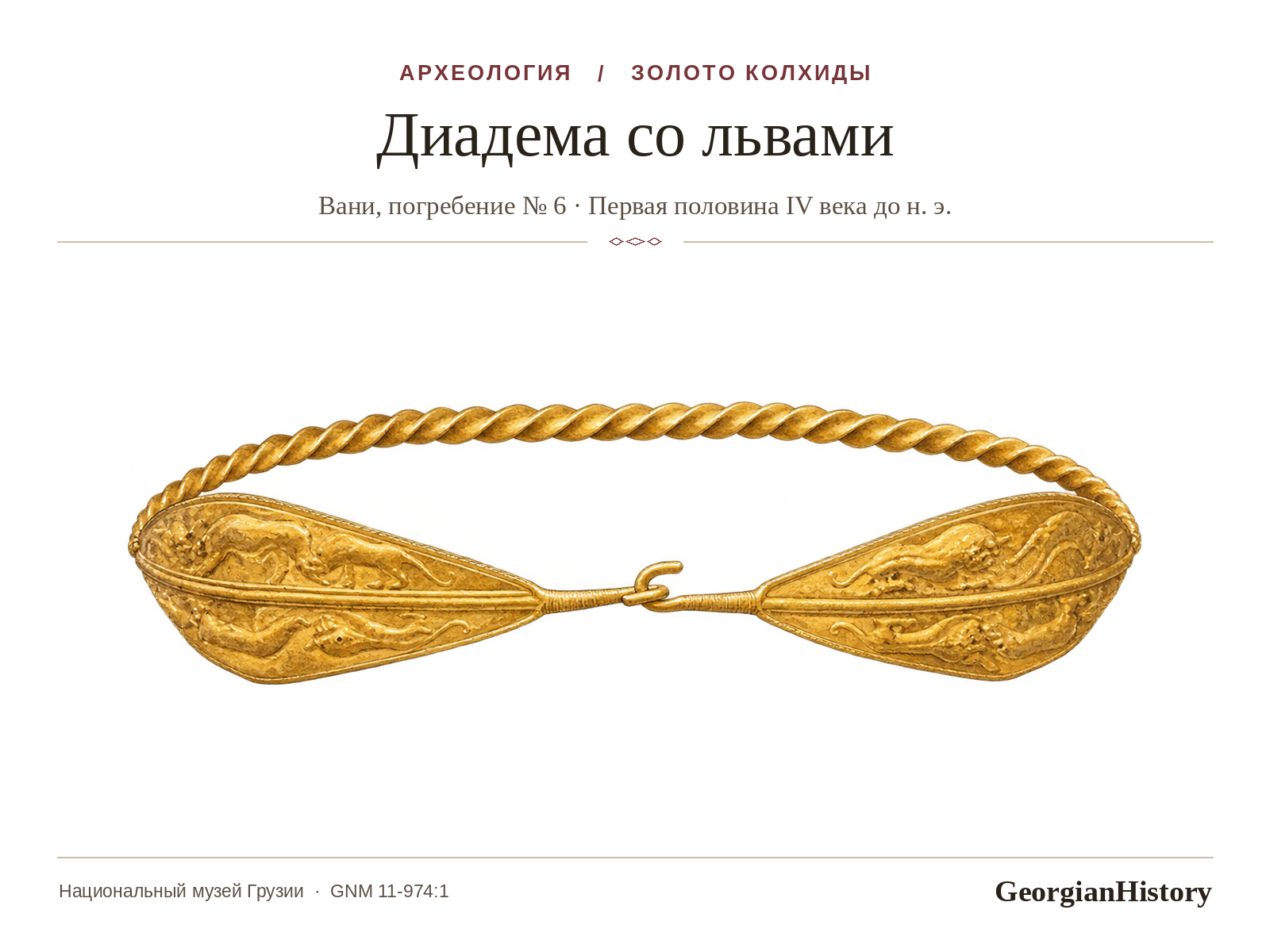
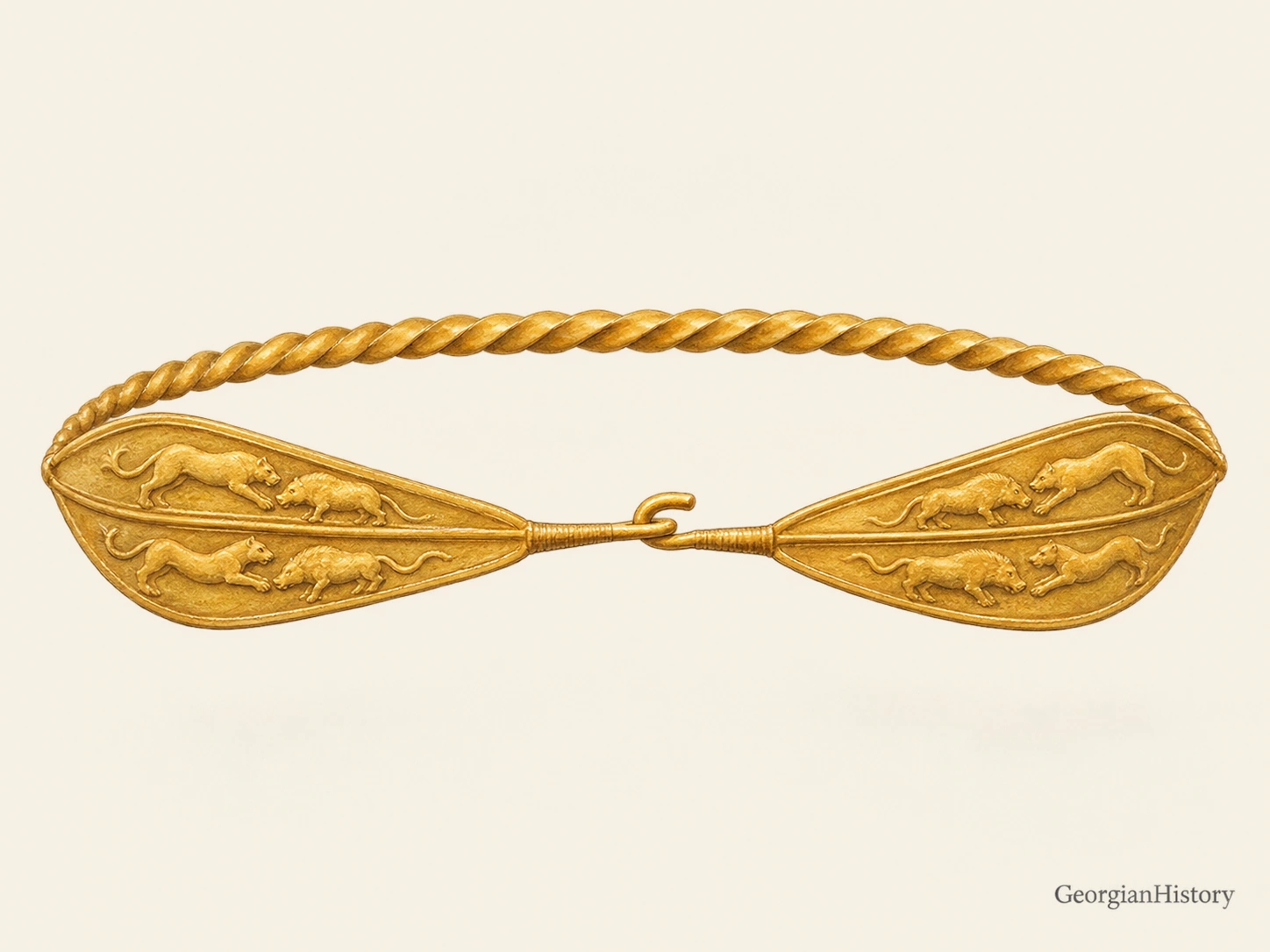
GNM 11-974:1
Diadem with lions
The same grave yielded a diadem with a twisted gold hoop. At the front, two diamond-shaped plates fastened with a hook. Two lions attacking a boar appear in two tiers on the plates. The relief was hammered from the back, a technique that raises figures from a thin sheet of metal. The Fitzwilliam Museum identifies the form of the diadem as local and notes Near Eastern parallels for the animal combat scene. Fitzwilliam Museum · diadem GNM 11-974:1
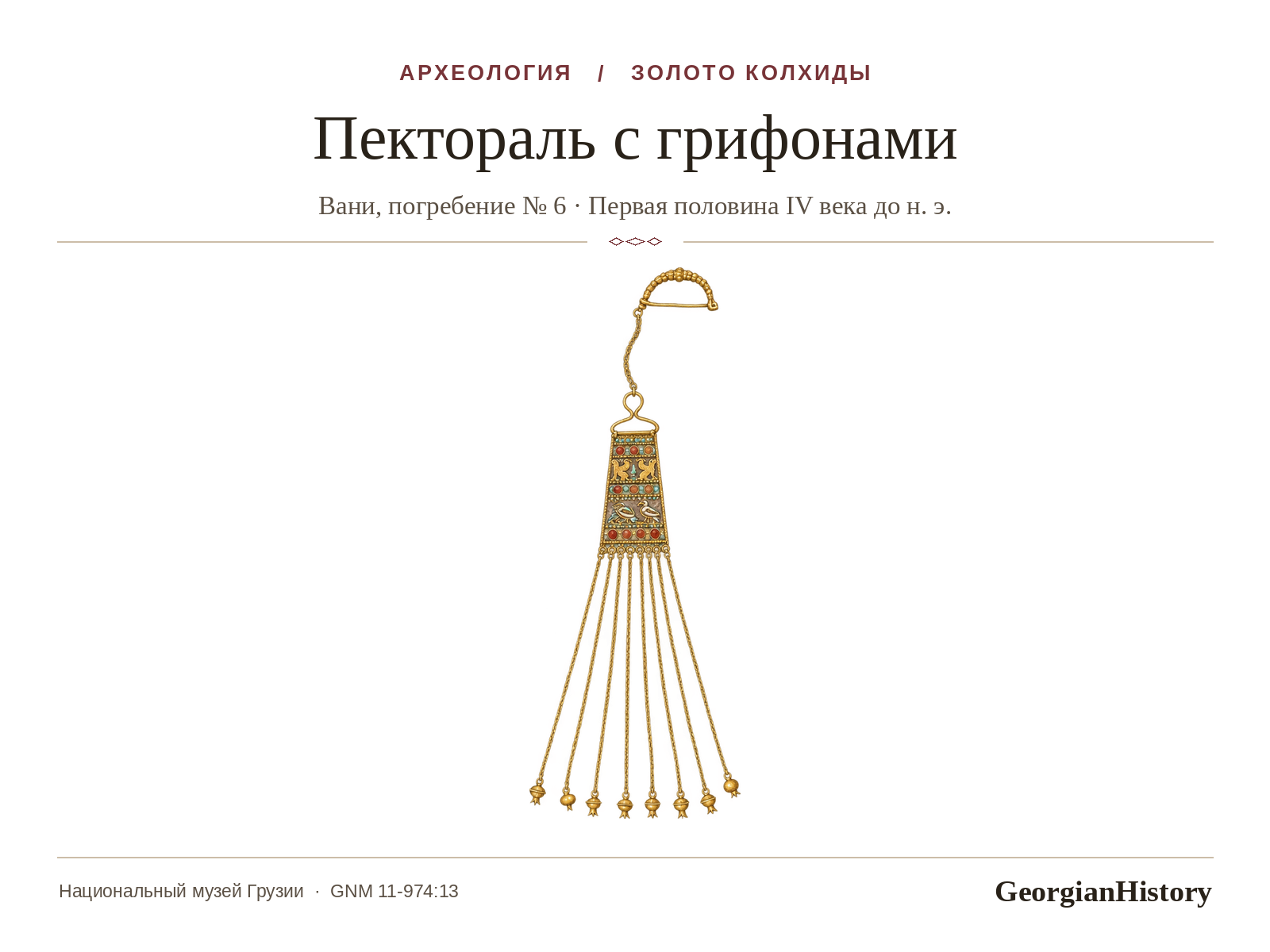
GNM 11-974:13
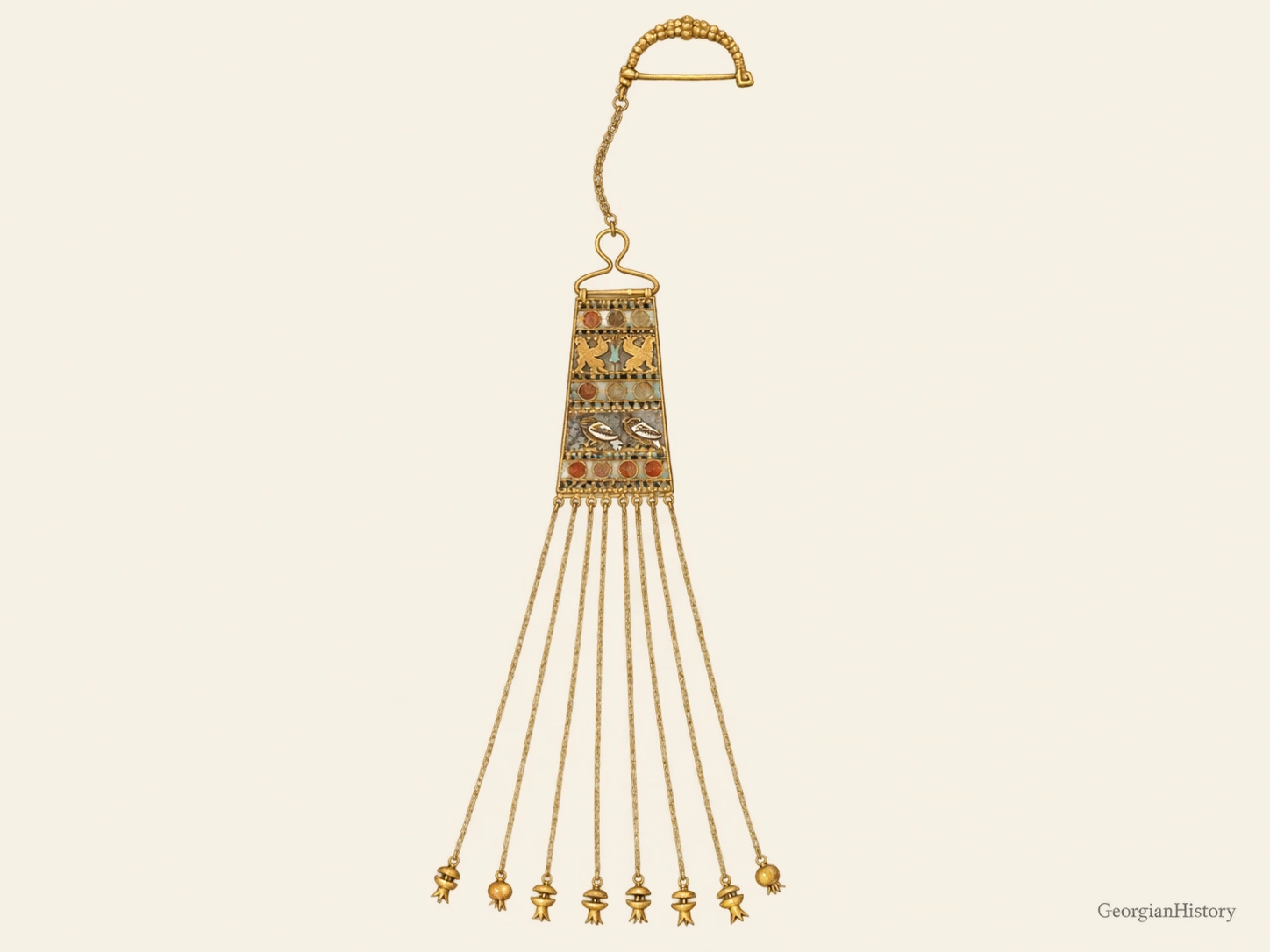
Pectoral with griffins
The third find from Grave 6 lay at the woman’s chest. It is a pectoral, or breast ornament, with a clasp and long chains ending in small garnets. On the plate, griffins flank a lotus, with birds below. Glass, turquoise and carnelian set in cells between gold partitions supply the colour. Researchers associate the plate with the Achaemenid jewellery tradition, which drew on Egyptian motifs. The chains resemble Colchian ornaments. One interpretation is that the imported plate was adapted for a local owner. ISAW · pectoral GNM 11-974:13 · John Boardman, A Jewel from Vani
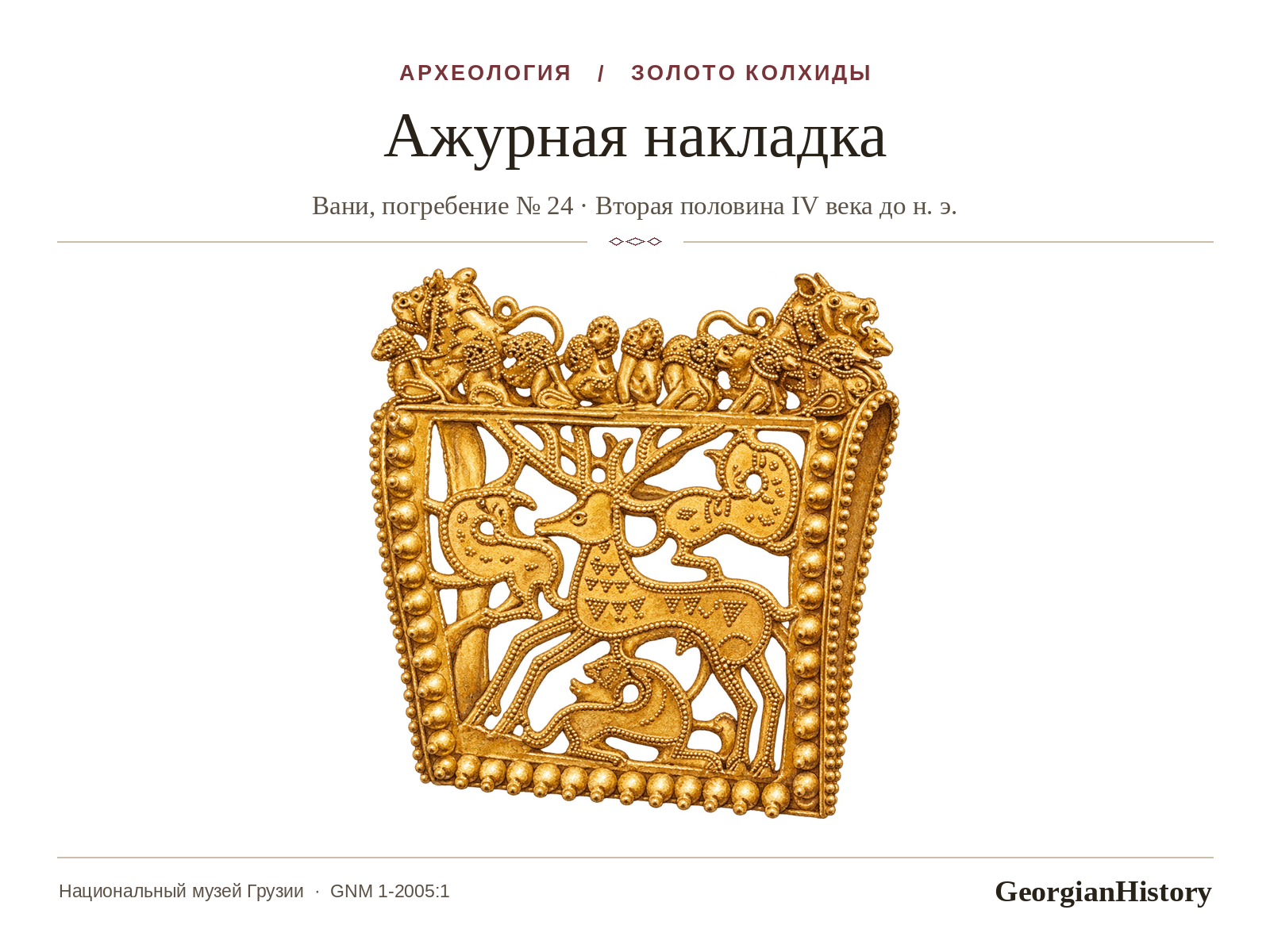
GNM 1-2005:1
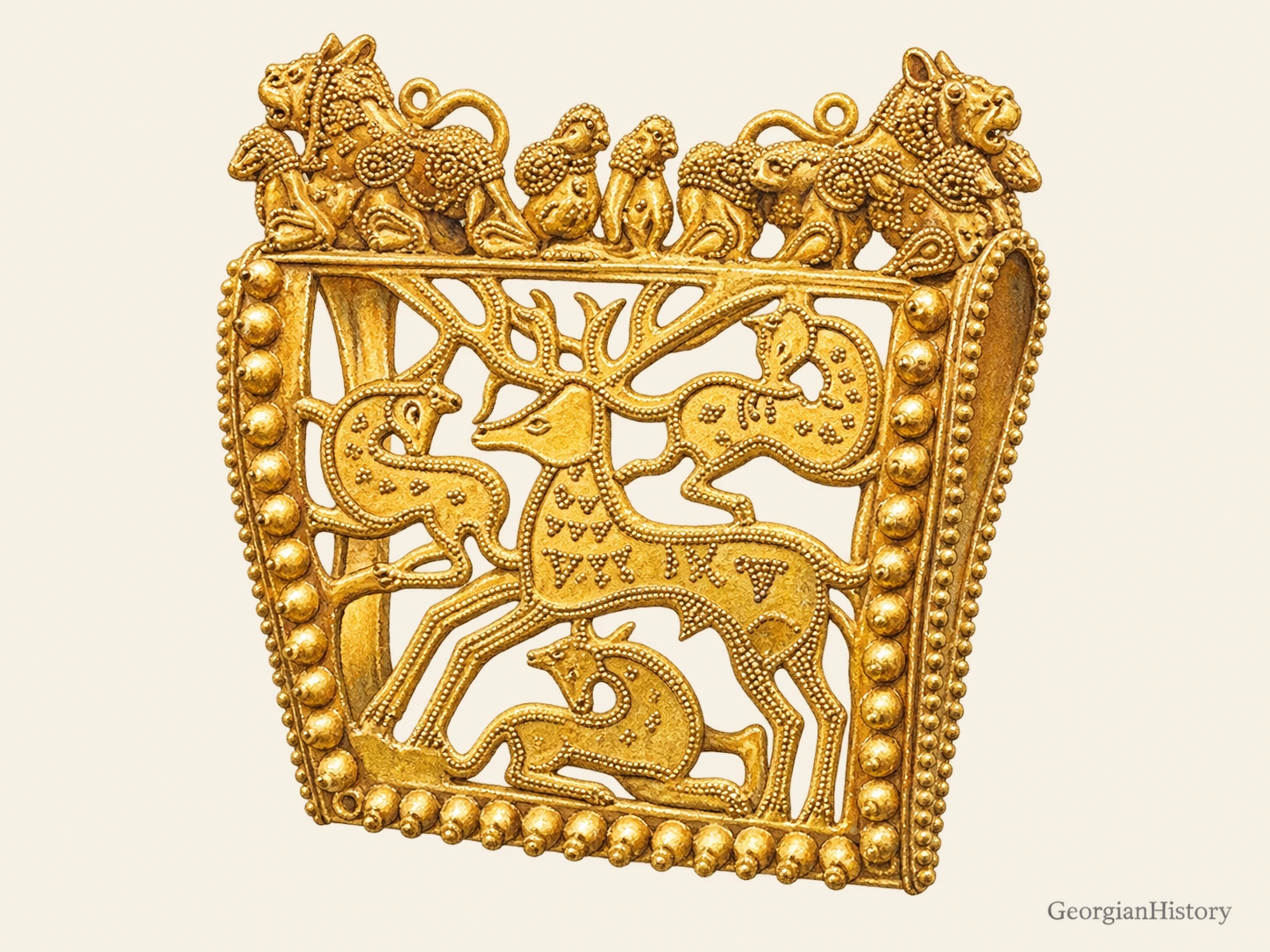
Openwork headdress ornament
A gold headdress ornament was found in Grave 24, dated to the second half of the fourth century BCE. A large deer and three smaller figures appear in the openwork. Two lions face in opposite directions along the bent edge, with birds between them. The museum suggests that this piece may have occupied the upper part of an elaborate headdress. The openings between the figures make the silhouettes legible even on a small gold plate. ISAW · ornament GNM 1-2005:1 · Fitzwilliam Museum · headdress ornament
Five finds
These five finds preserve traces of the jeweller’s work. The tortoise shell shows where the granules were laid. The gazelle shows how separate pieces became a pendant repeated along the necklace. The diadem and the headdress ornament depict animals in gold in two ways, as raised relief and as openwork silhouettes. The pectoral preserves clues to how a piece of jewellery may have taken on a new form in Colchis. Exhibition catalogue · D. Kacharava, G. Kvirkvelia and J. Chi, 2008
Sources and further reading
- Smithsonian · necklace GNM 10-975:56
- Getty · the graves of Vani
- Fitzwilliam Museum · exhibition object list
- Smithsonian · necklace GNM 11-974:8
- Fitzwilliam Museum · diadem GNM 11-974:1
- ISAW · pectoral GNM 11-974:13
- John Boardman, A Jewel from Vani
- ISAW · ornament GNM 1-2005:1
- Fitzwilliam Museum · headdress ornament
- Exhibition catalogue · D. Kacharava, G. Kvirkvelia and J. Chi, 2008