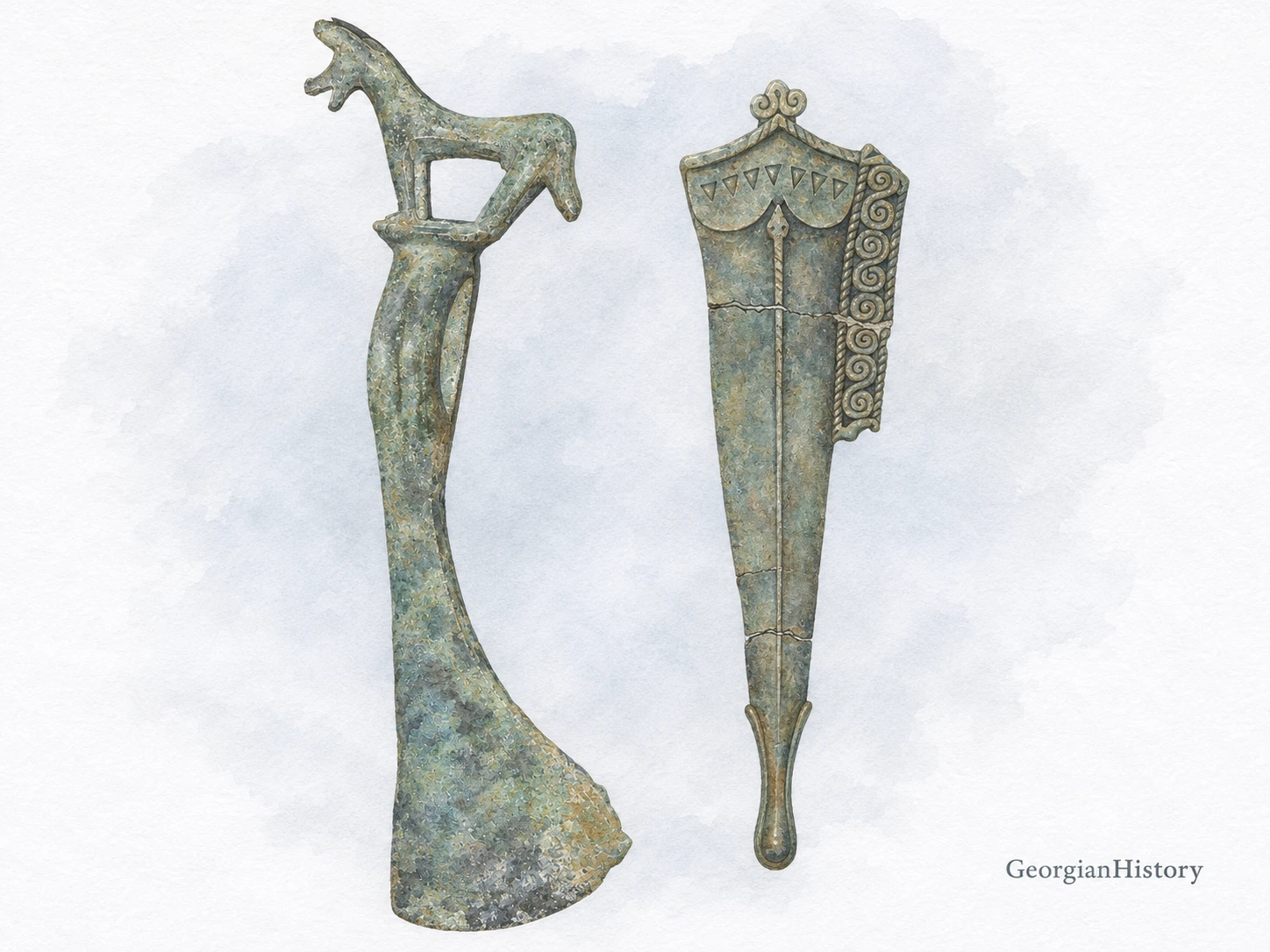
Weapons of Caucasian Iberia
Iron swords and weapon heads from graves in Kakheti and Argveti, weapons from the palace at Dedoplis Gora, and a gold scabbard from Mtskheta.
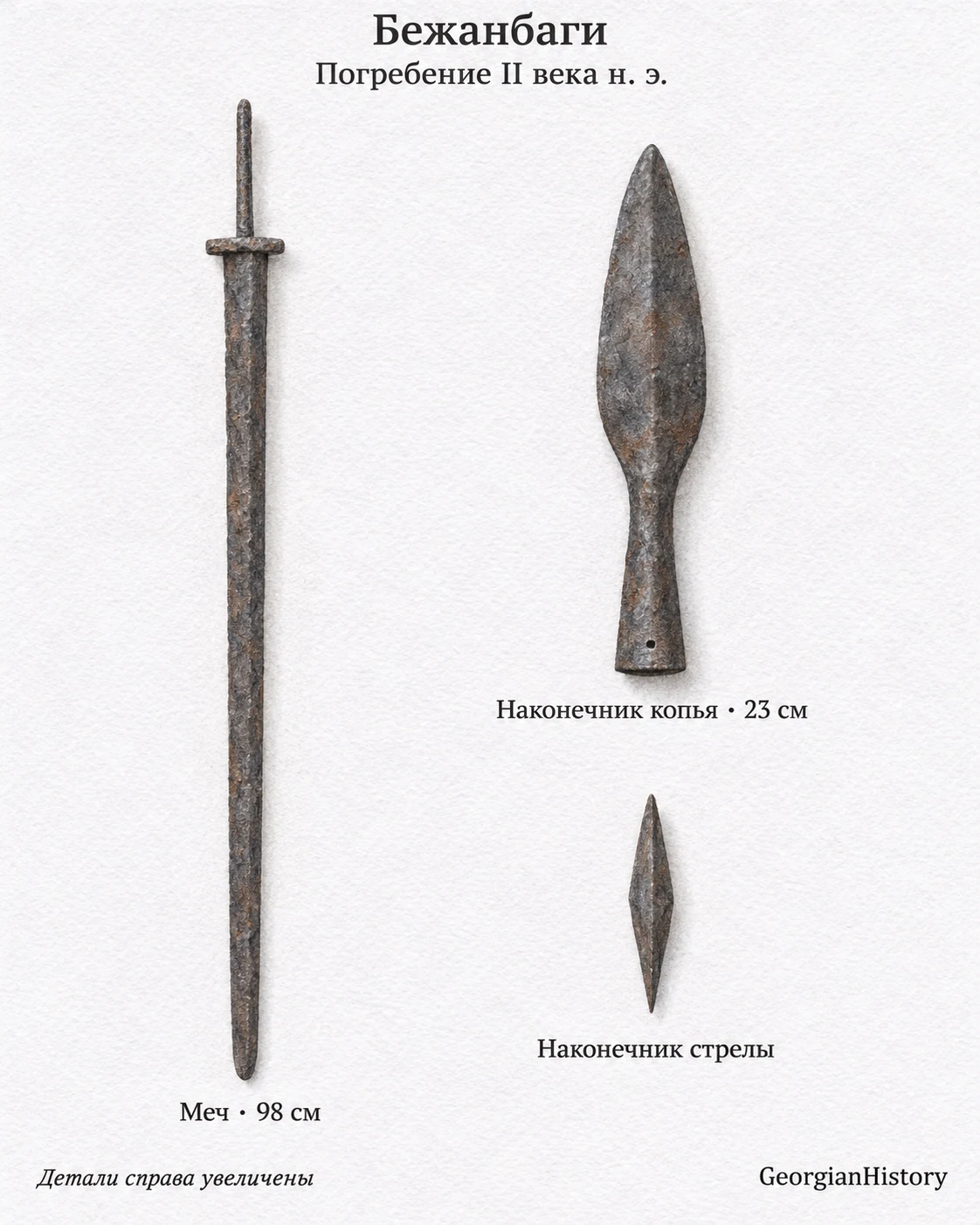
 South of the village of Gadrekila in Kakheti, archaeologists found a 98-centimetre iron sword in a second-century CE grave. Beside it lay a 23-centimetre spearhead and a four-faceted arrowhead. The site is known as Bejanbaghi. The excavation drawing shows the sword’s narrow, double-edged blade and short crossguard. Catalogue, p. 21
Weapons in a palace
At Dedoplis Gora, near the village of Doghlauri in Shida Kartli, iron weapons survived in a different setting. The palace rooms and courtyard yielded more than 800 arrowheads, parts of bows, spearheads and a fragment of a double-edged dagger. The palace complex dates from the first century BCE to the first century CE. The drawings show spearheads with rounded shoulders alongside others with long triangular blades. The watercolours focus on the surviving metal, with the shafts omitted. Catalogue, pp. 38–42
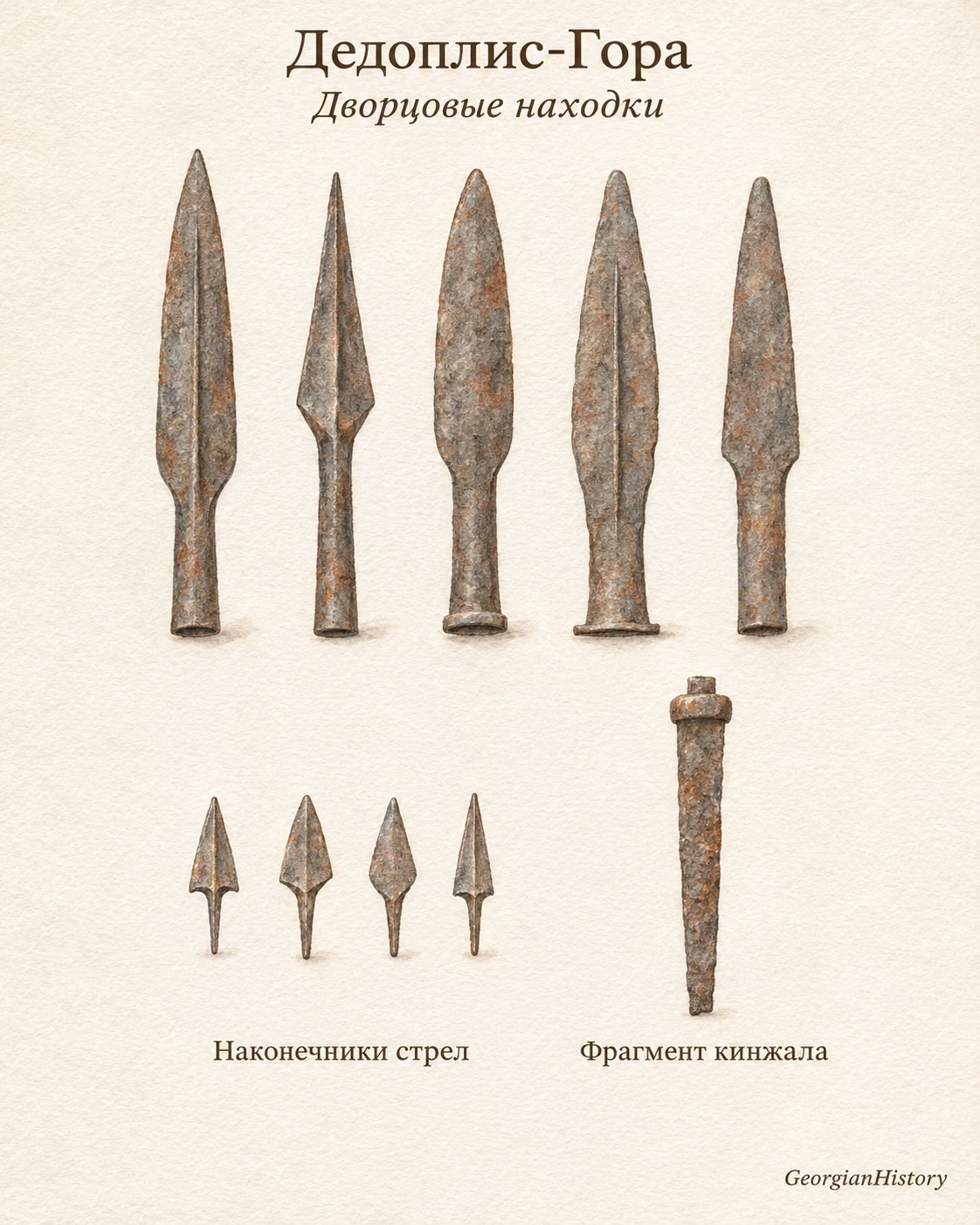
The arrows found in the ruins may have belonged to different groups. Archaeologist Iulon Gagoshidze suggested that the palace had been besieged and burned. He also points to a workshop at Sarkine, where several hundred iron arrowheads were found corroded together. The workshop find supports local production. Three-lobed arrowheads were widespread beyond Kartli, so their shape alone gives little indication of who carried them. Iulon Gagoshidze, weapons chapter in Iberia and Rome
Two graves at Kldeeti
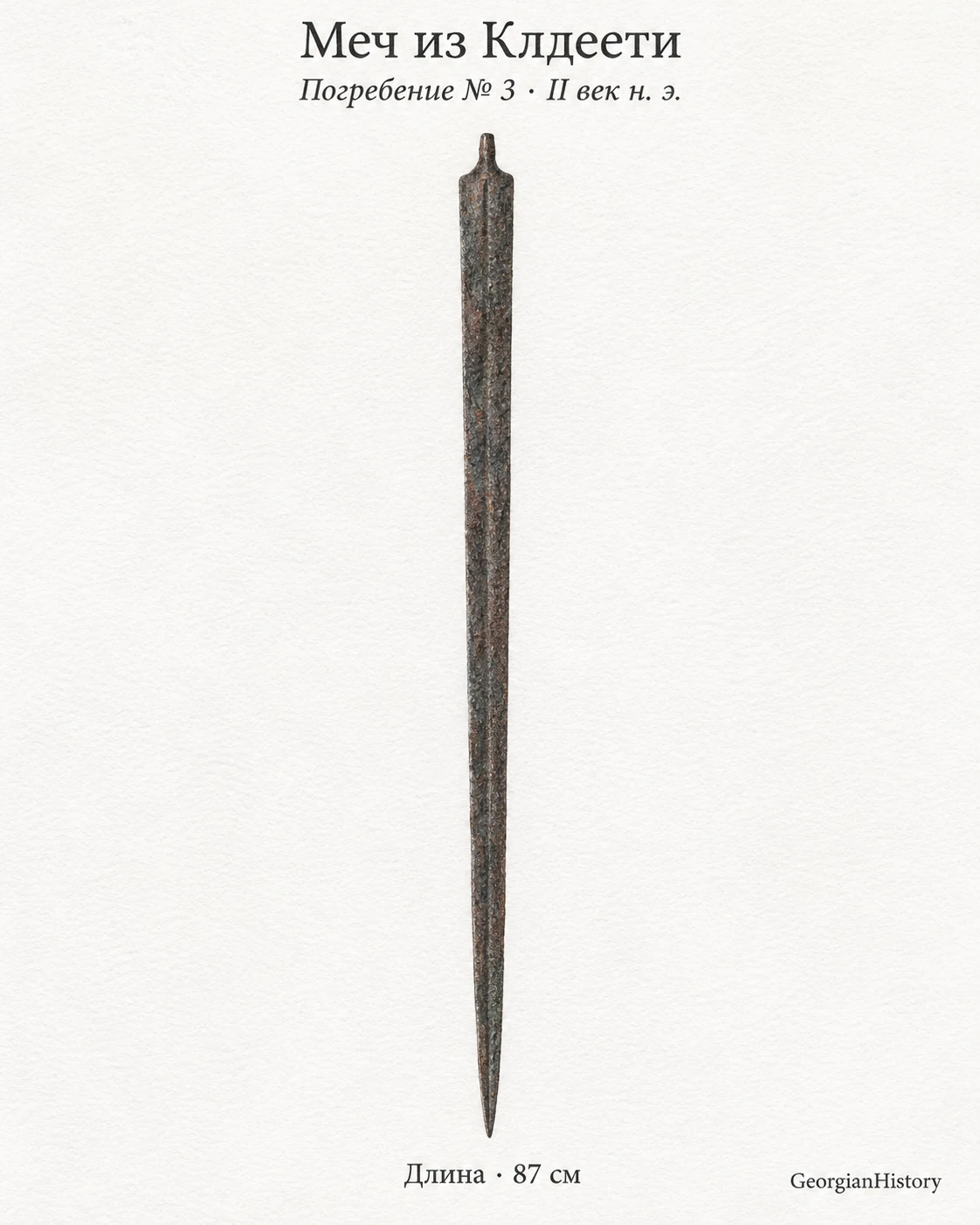
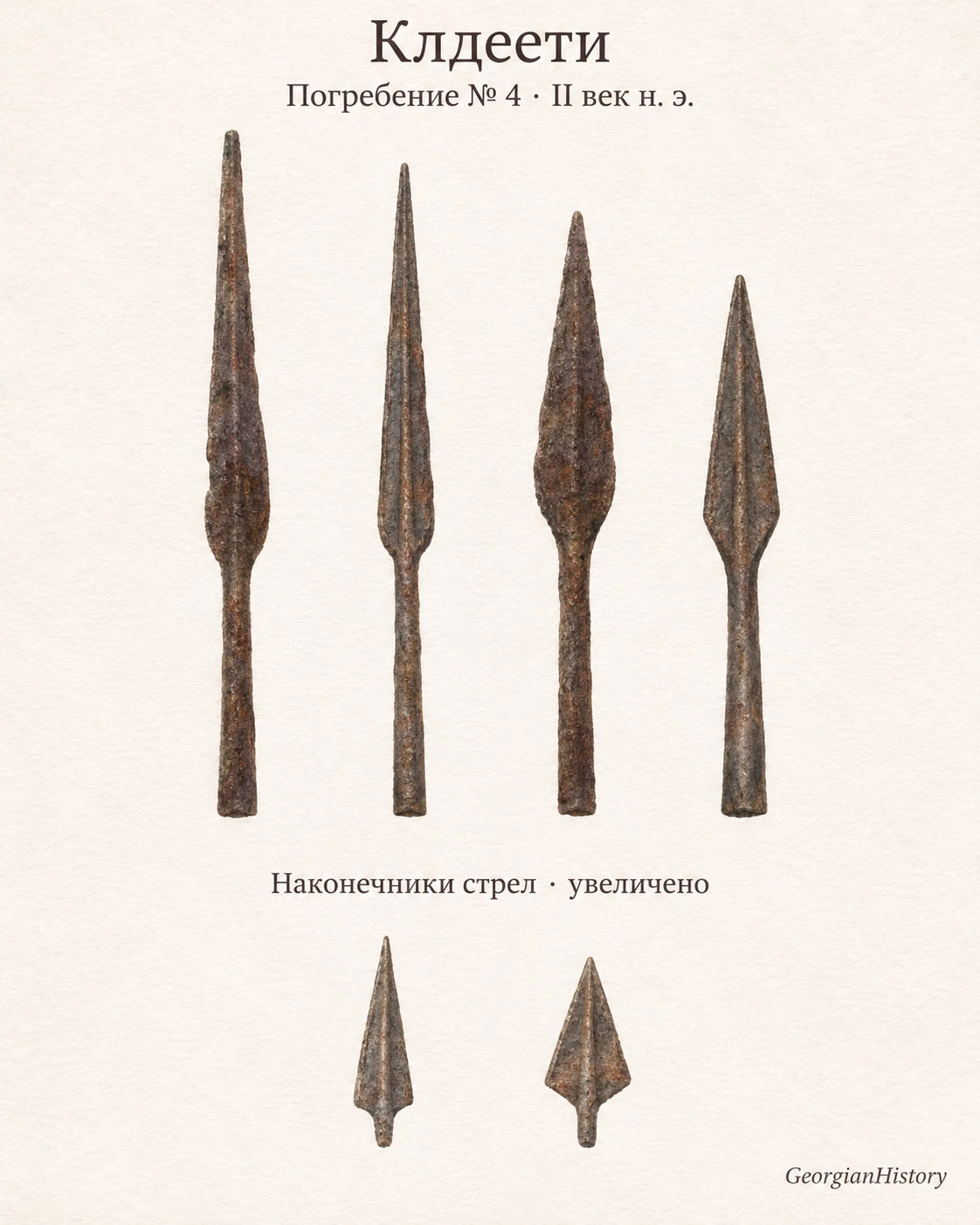
The graves containing weapons at Kldeeti, in the historical region of Argveti, date to the second century CE. Grave 3 contained an 87-centimetre double-edged iron sword. Grave 4 yielded four spearheads and twenty three-lobed iron arrowheads. The longest of the four spearheads measured 42 centimetres. The documented grave groups show which pieces were buried together. Archaeologists have compared the finds with those from Bori and Mtskheta and associated the cemetery with the elite of Argveti. Catalogue, pp. 96–98 · Essays on the History of Georgia, in Russian
A gold scabbard from Mtskheta
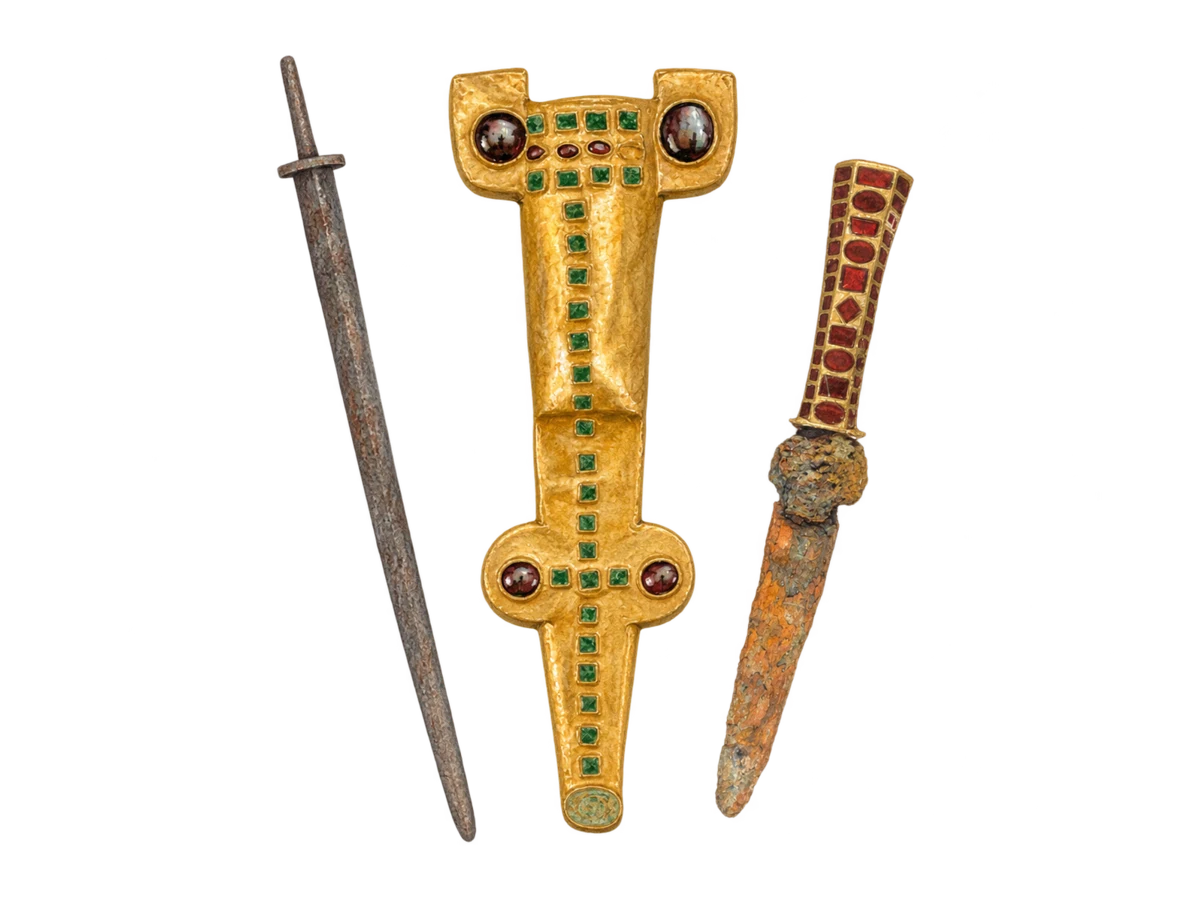
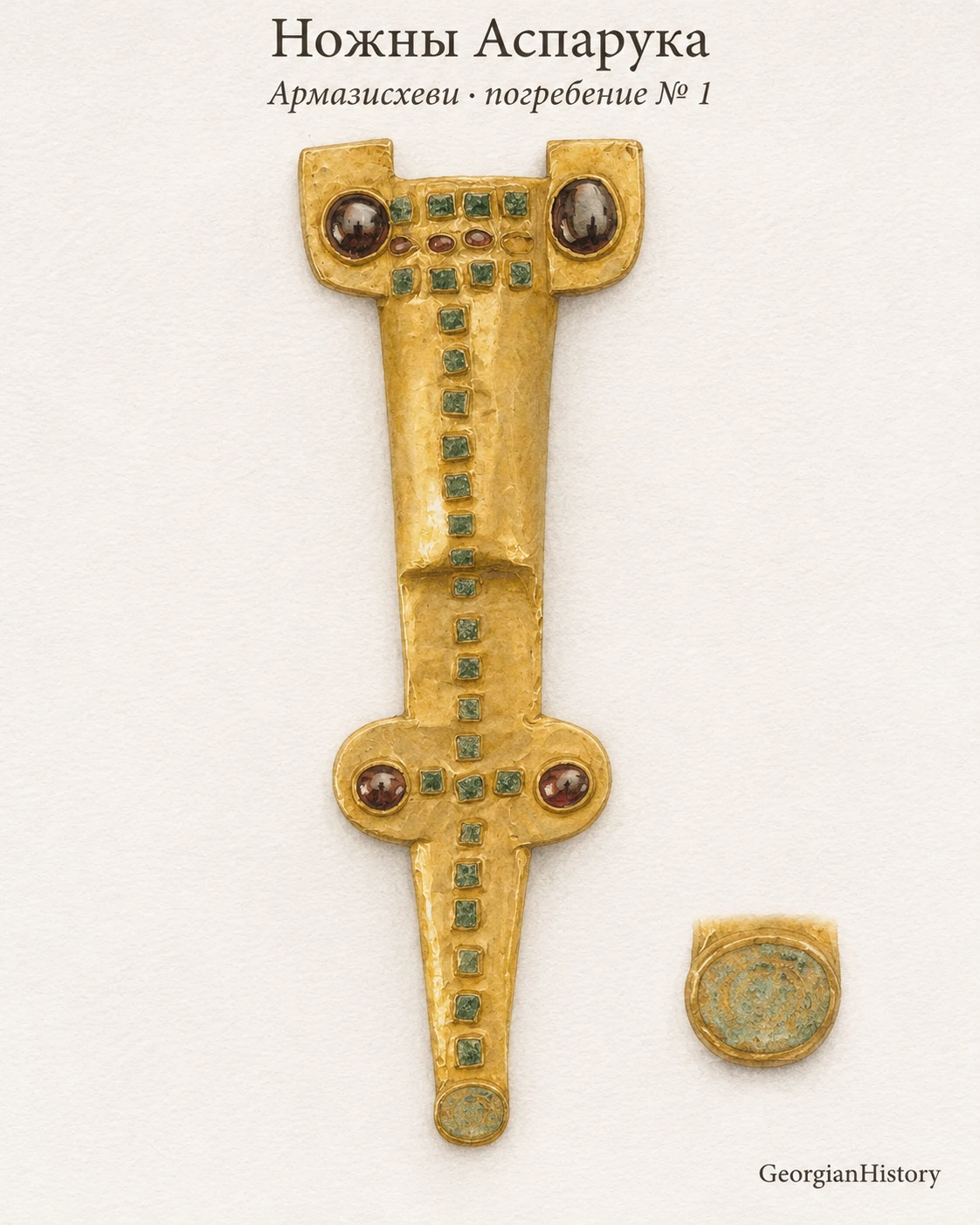
At Armaziskhevi, near Mtskheta, archaeologists excavated the cemetery of the pitiakhshes, high-ranking officials of Iberia. The gold facing of Asparuk’s scabbard came from Grave 1. Garnets sit in its projecting lobes, and green glass inlays run down the centre. The Chubinashvili Centre dates the gold facing to the second century CE. Mariam Gvelesiani gives the burial a broader date, from the second to the third century CE. Chubinashvili Centre · Mariam Gvelesiani
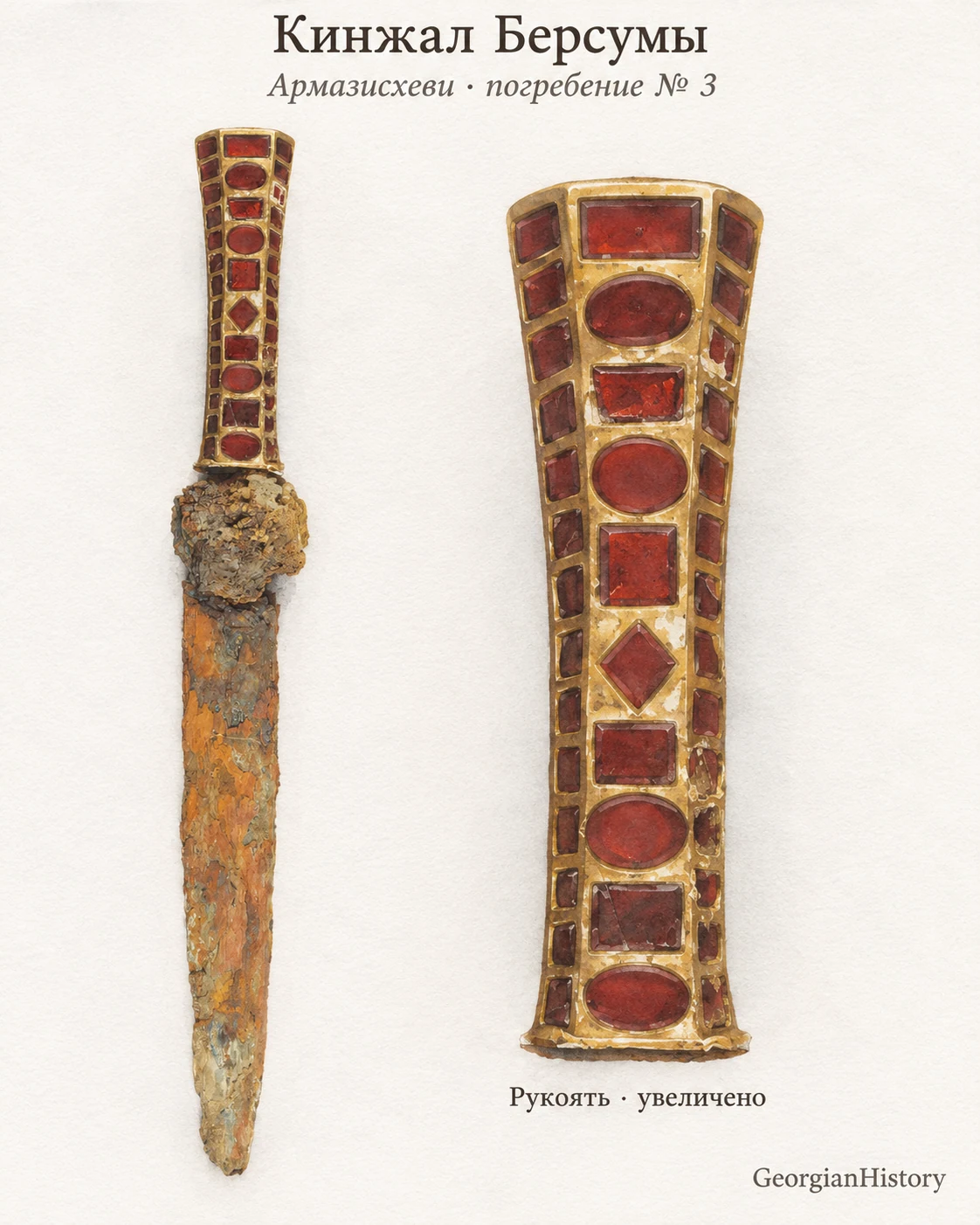
Grave 3 contained Bersuma’s iron dagger with a gold grip. Its red rectangular, oval and diamond-shaped inlays are still visible. Both pieces are associated with the high rank of their owners. Their findspots tell as much of the story as the objects themselves. The palace yielded hundreds of arrowheads, Kldeeti preserved weapons in individual graves, and Armaziskhevi yielded a dagger and scabbard that speak to the standing of the people buried there. Photographs of the finds at ATINATI
GeorgianHistory watercolours based on photographs and archaeological drawings. Scale and surface texture are approximate.
GeorgianHistory