Weapons of Ancient Colchis
A bronze scabbard with a snake-like relief, the Kulanurkhva axe, and finds from Grave 9 at Vani.
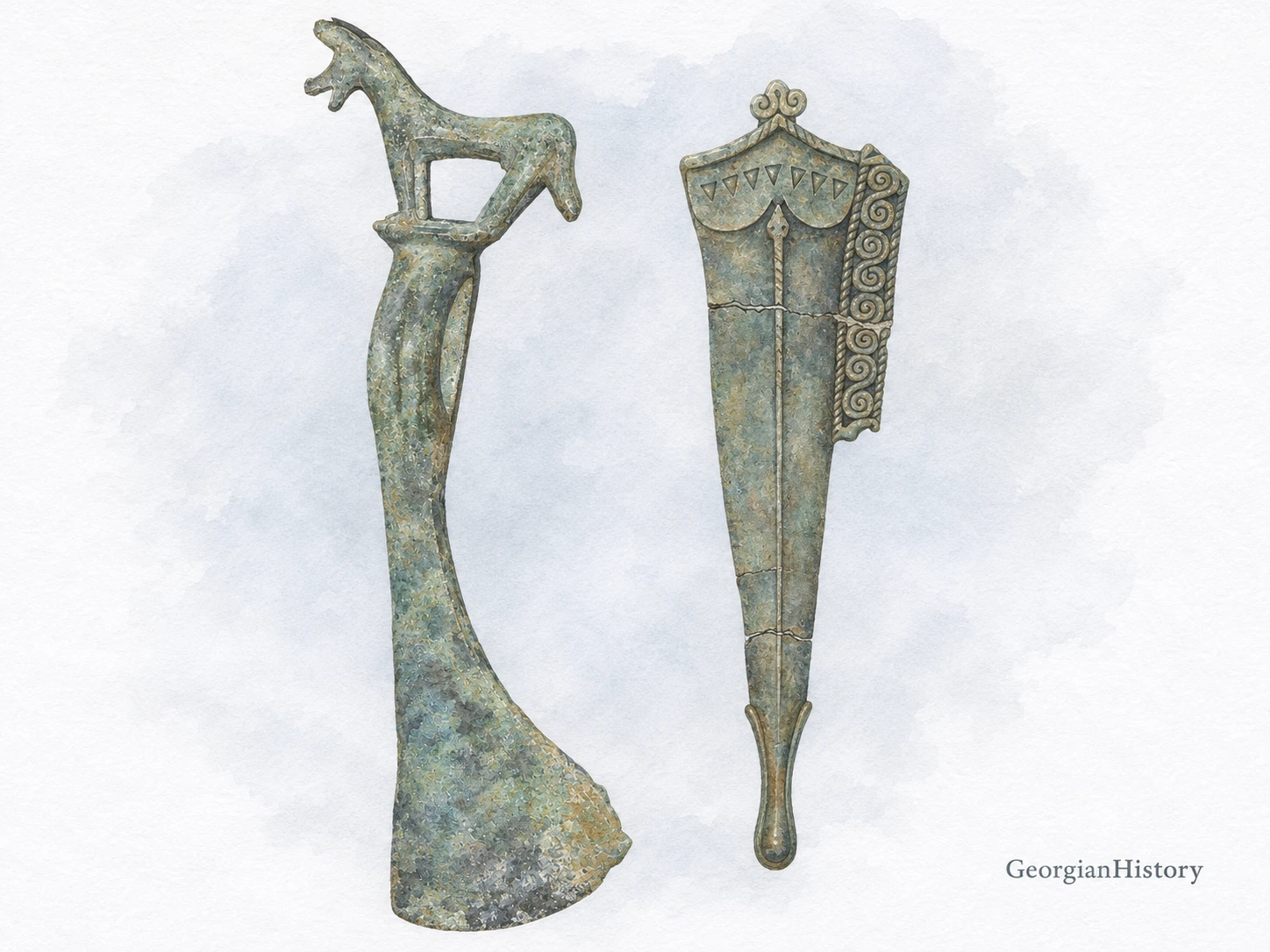
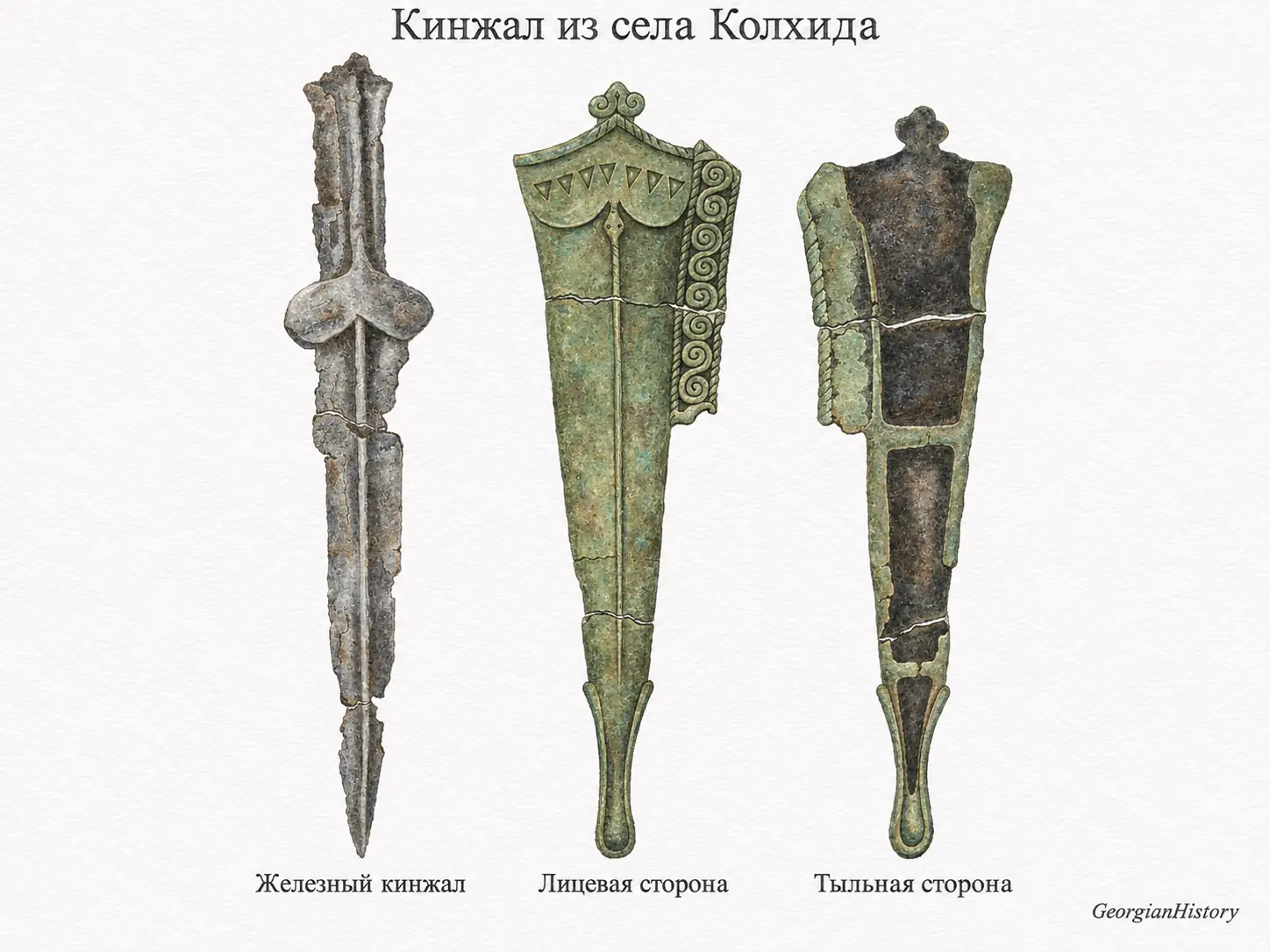
 A narrow ridge runs down the bronze scabbard of a dagger found near Gagra. It ends in a diamond-shaped head with two small hollows for eyes. The archaeologist Mikhail Trapsh saw a snake in the design. The blade itself was iron, with a guard shaped like a butterfly’s outspread wings. The find combines a dagger form known from Scythian-type examples with ornament that Trapsh compared to Colchian bronzes.
Bronze and iron
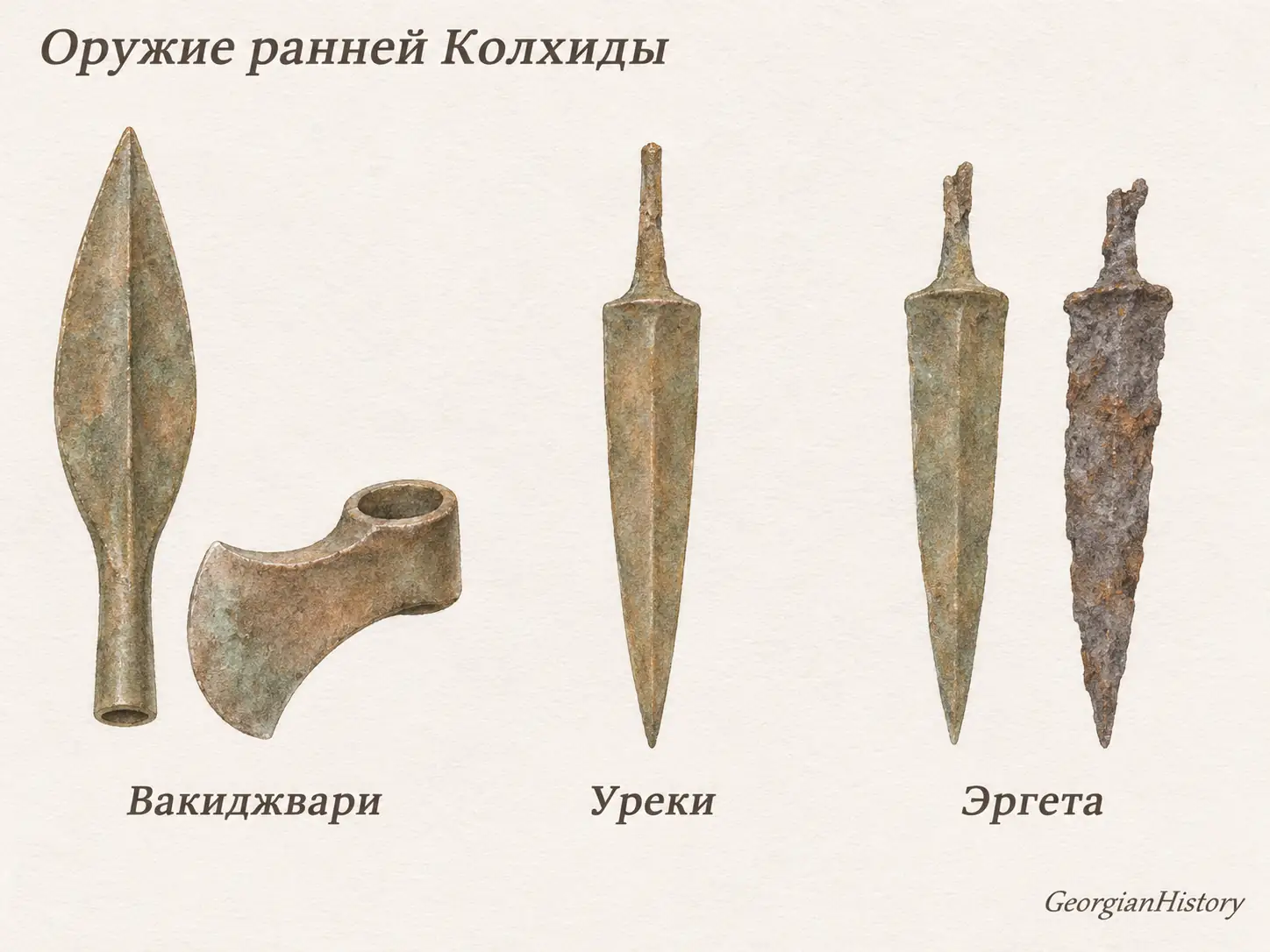
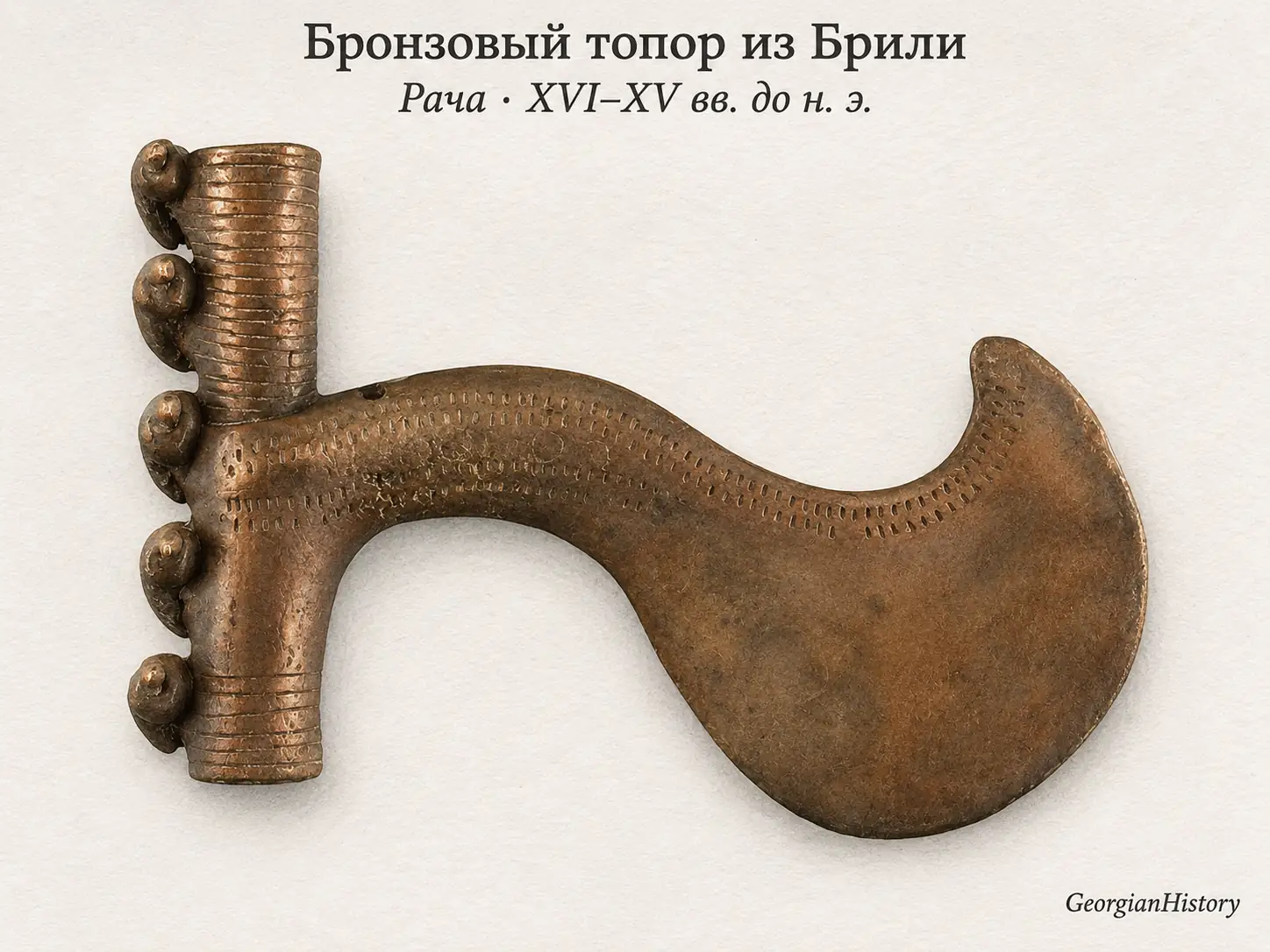
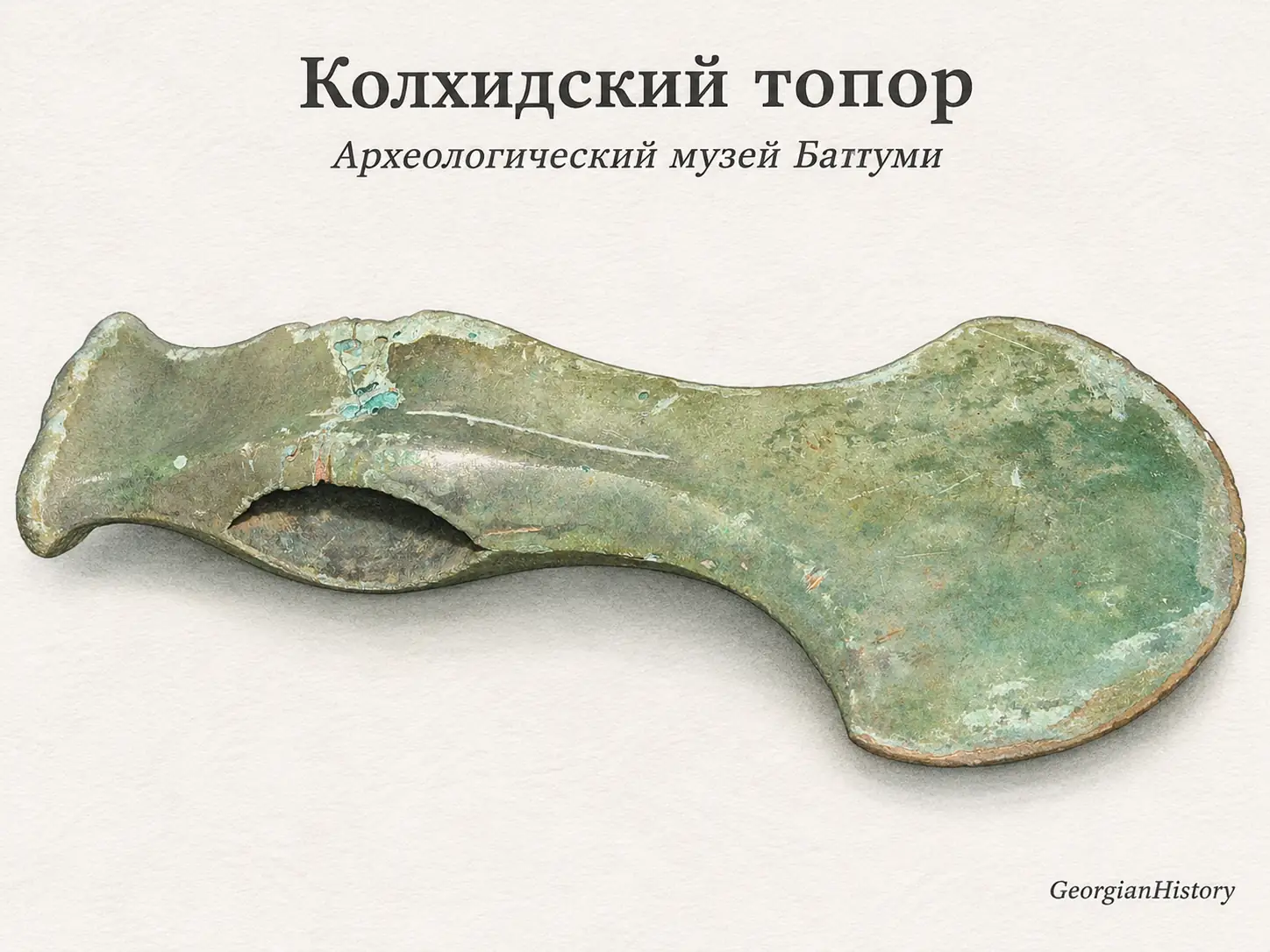
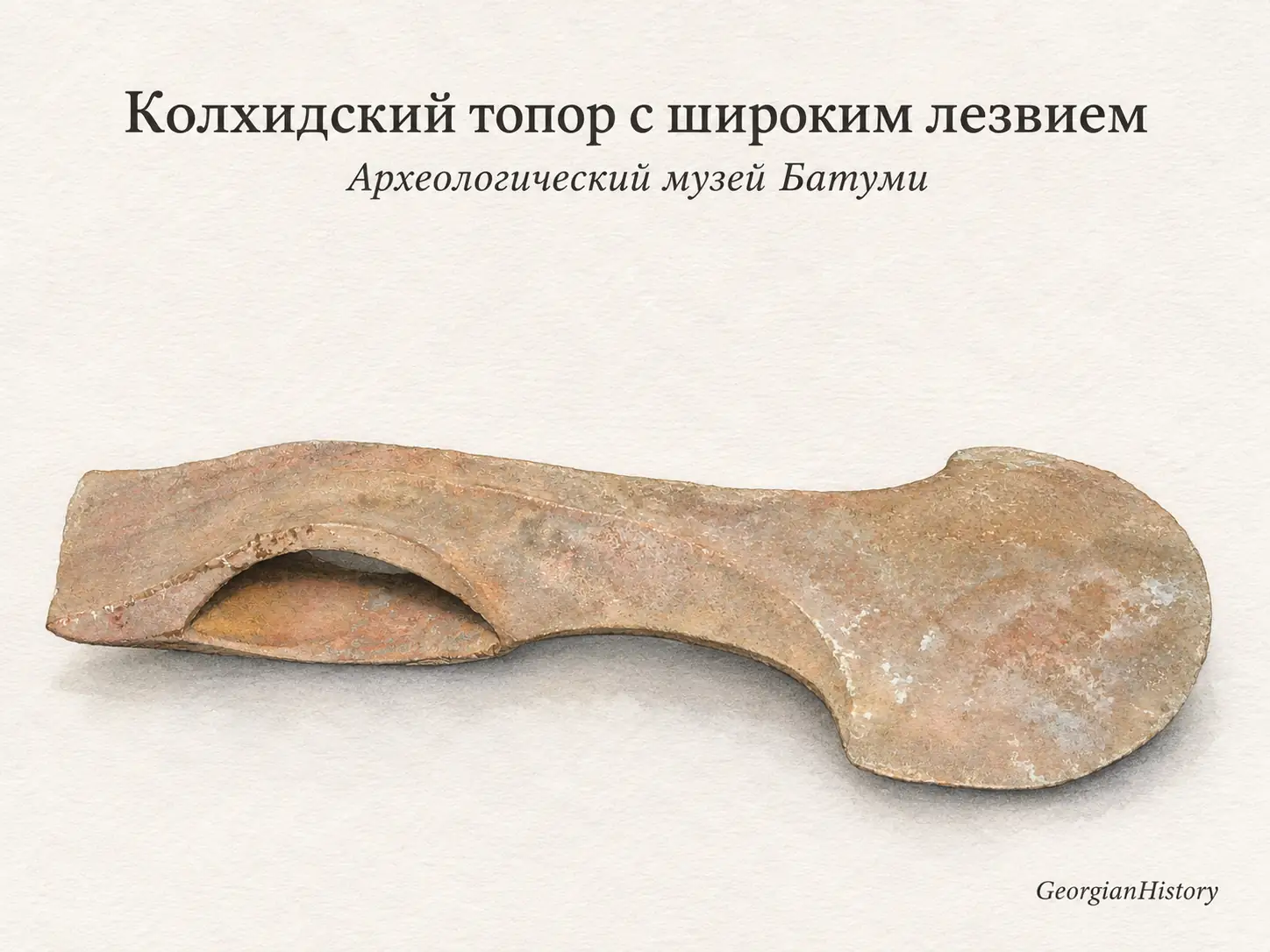
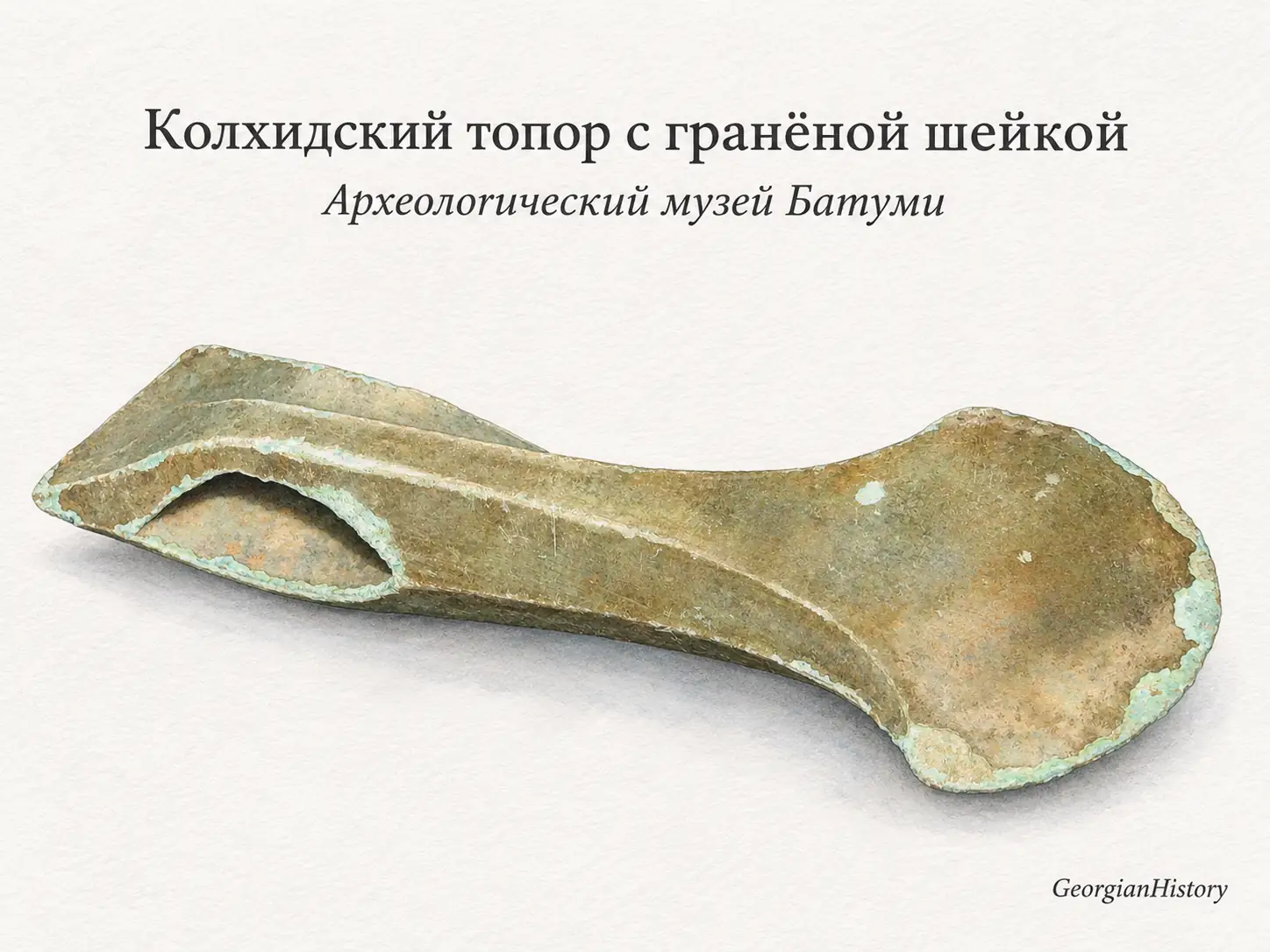
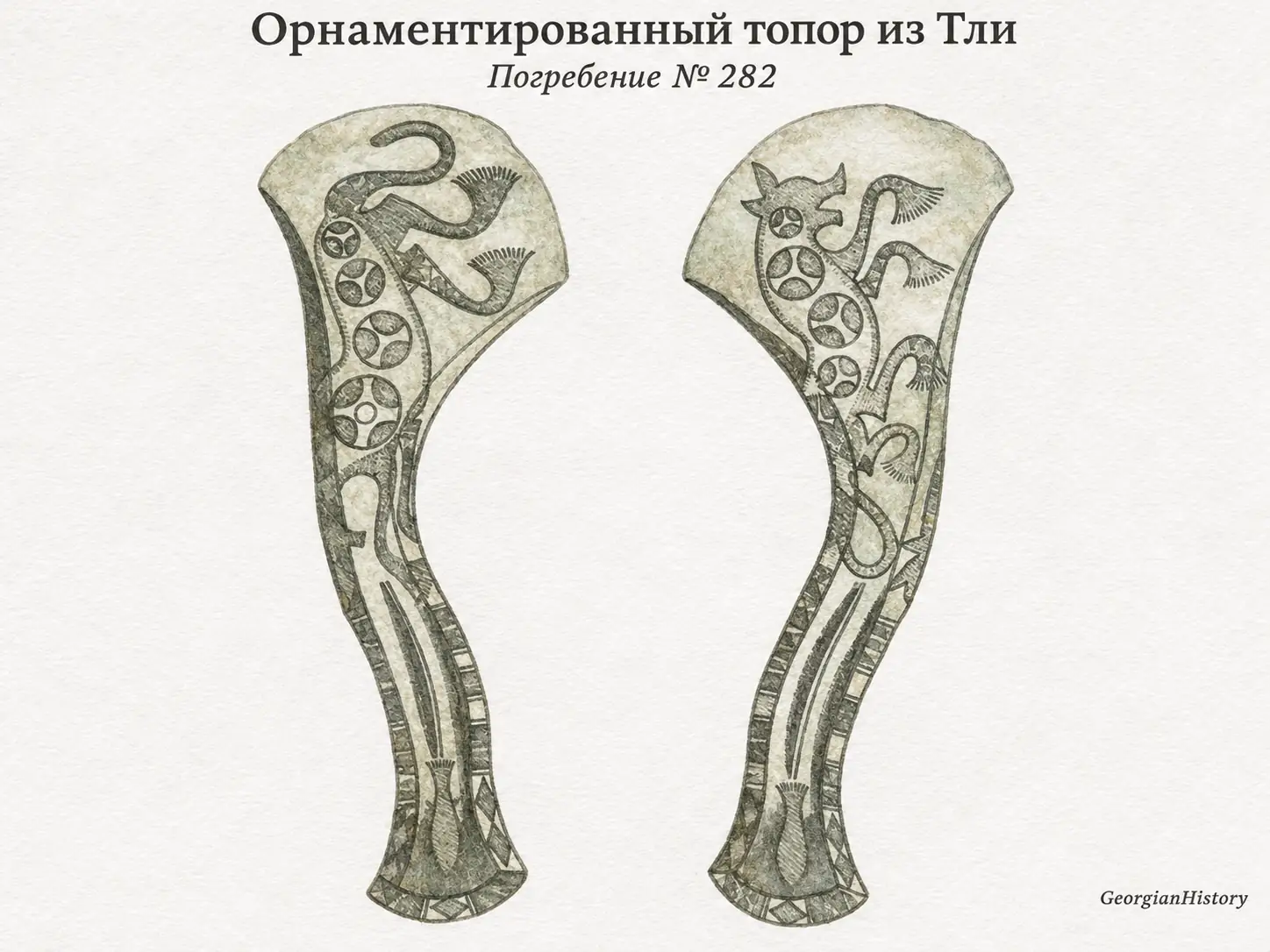
In Guria, the Vakijvari hoard, dated to the twelfth and eleventh centuries BCE, contained a bronze spearhead and a Colchian axe alongside hoes and metal ingots. The hoard brought together weapons, tools and a stock of metal. Finding the axe beside a spearhead leaves its particular use open to interpretation.
At Ergeta I in Samegrelo, collective burial 5 contained bronze and iron daggers of similar shape. Bronze examples are also known from burial 3 at Ureki. These finds show that blades of similar form were made in both metals during the Early Iron Age.
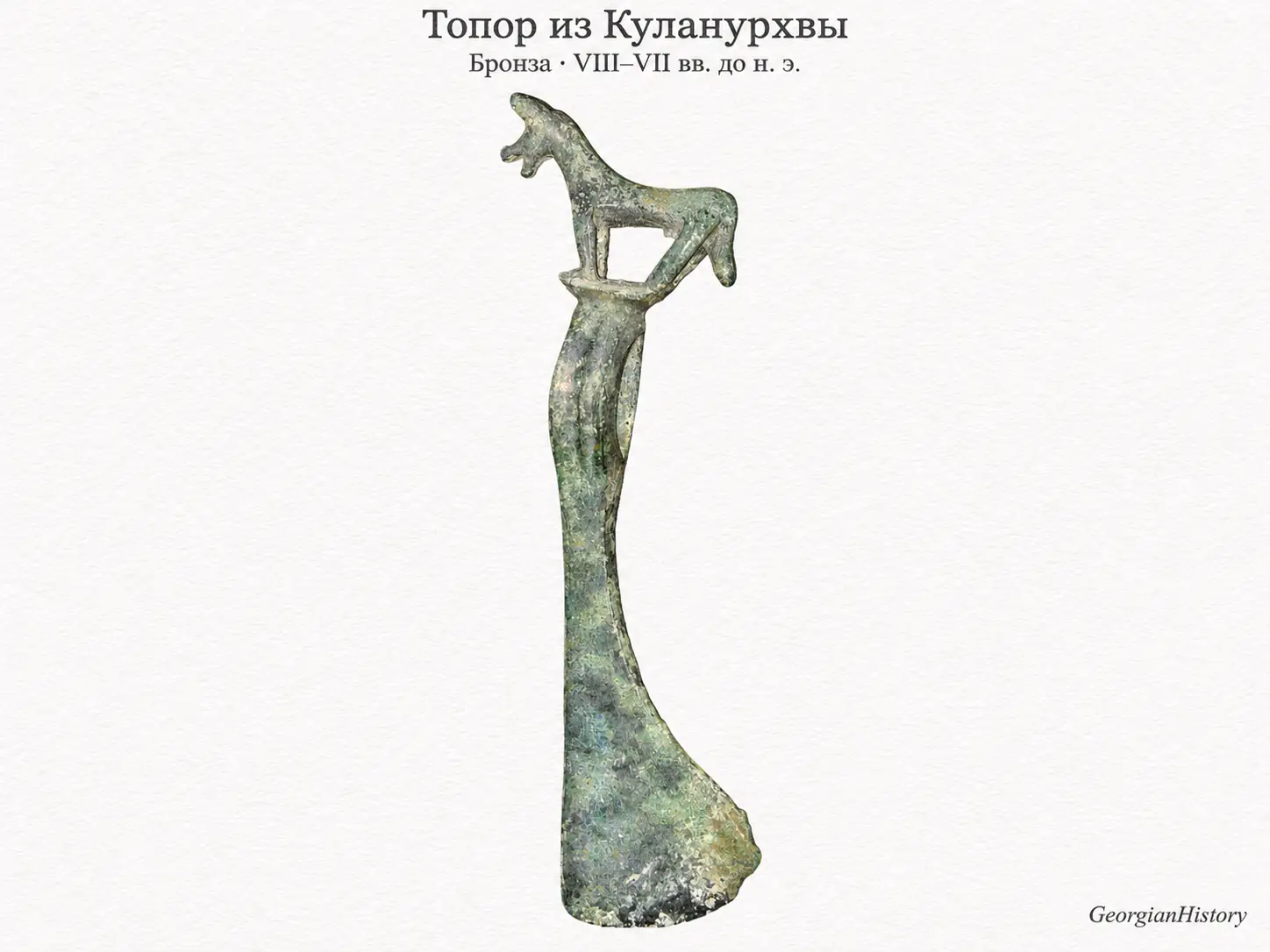
The bronze axe from Kulanurkhva has an openwork animal above its curved neck. The gap between the animal’s legs makes its silhouette easy to pick out, even in a photograph of the entire object. The Georgian National Museum dates the axe to the eighth and seventh centuries BCE.
Grave 9 at Vani
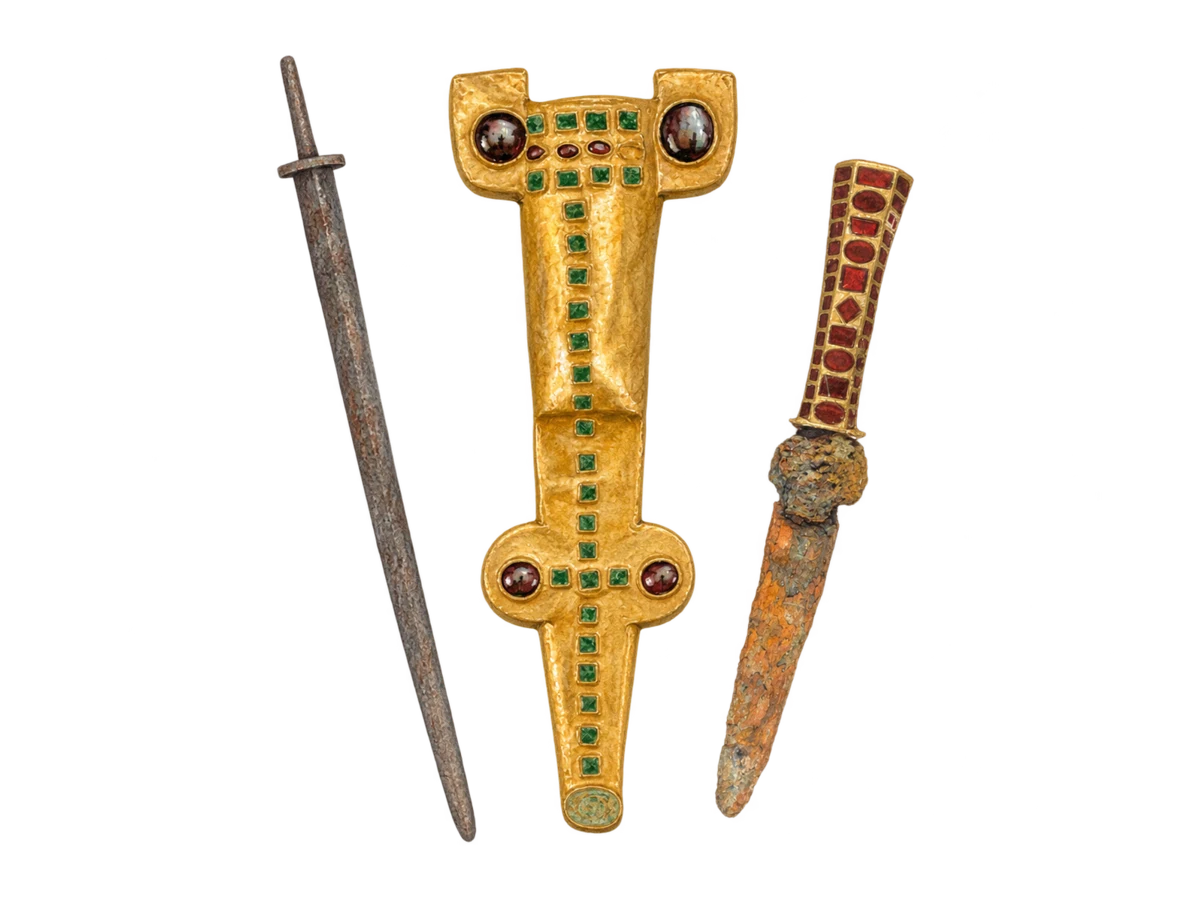
In 1969, excavators at Vani uncovered a grave dated to about 350–325 BCE. Its finds included iron blades, spearheads and arrowheads, along with bronze greaves and thigh guards. A coin of Philip II of Macedon helped date the burial.
The shield survives as distorted iron plates joined by bronze wire. Its full outline remains unknown. The catalogue suggests that the plates covered a wooden base, which has since disappeared.
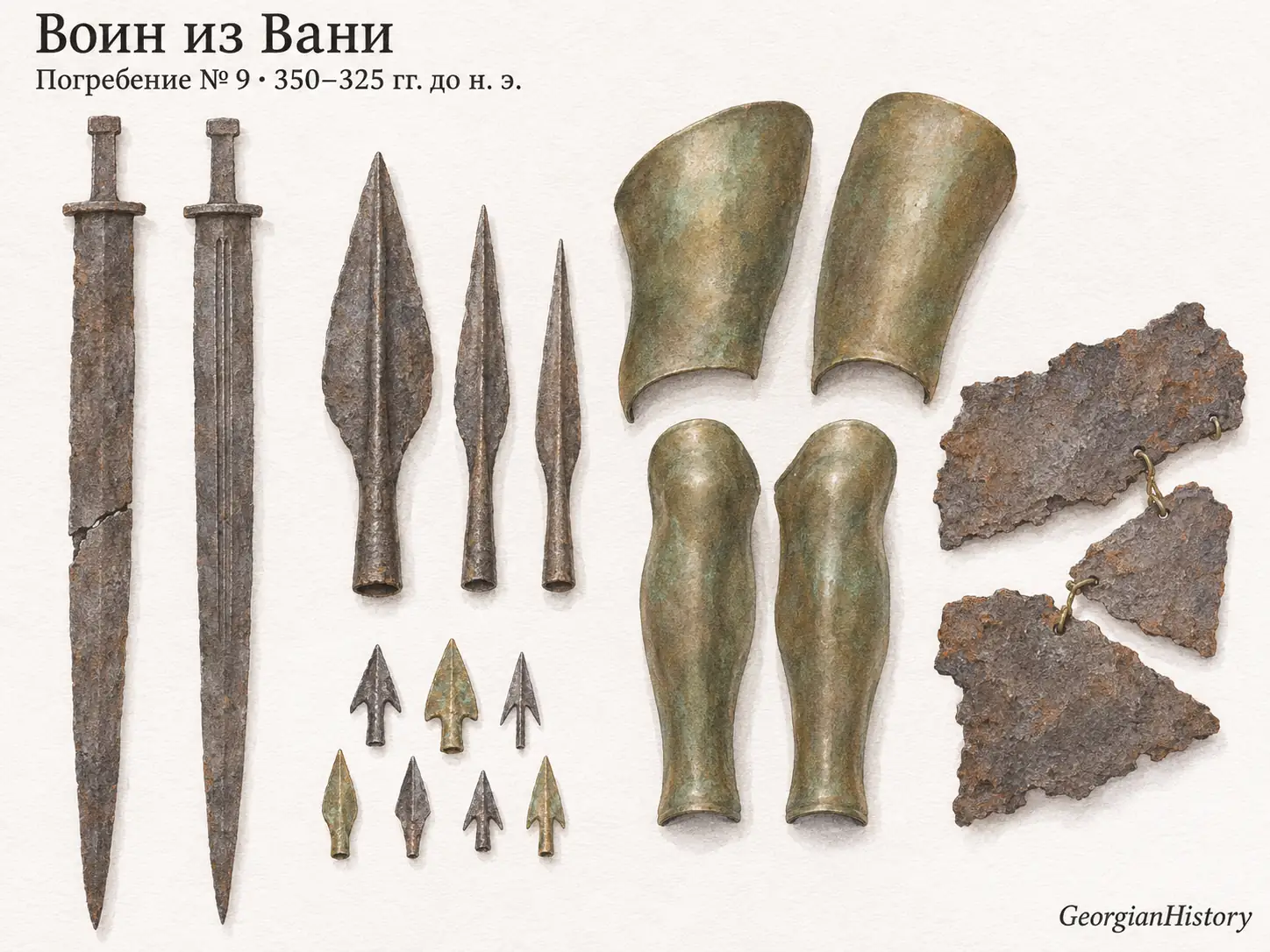
Watercolor gallery
Textures, patina colors, reconstructed details, and relative scale are approximate.
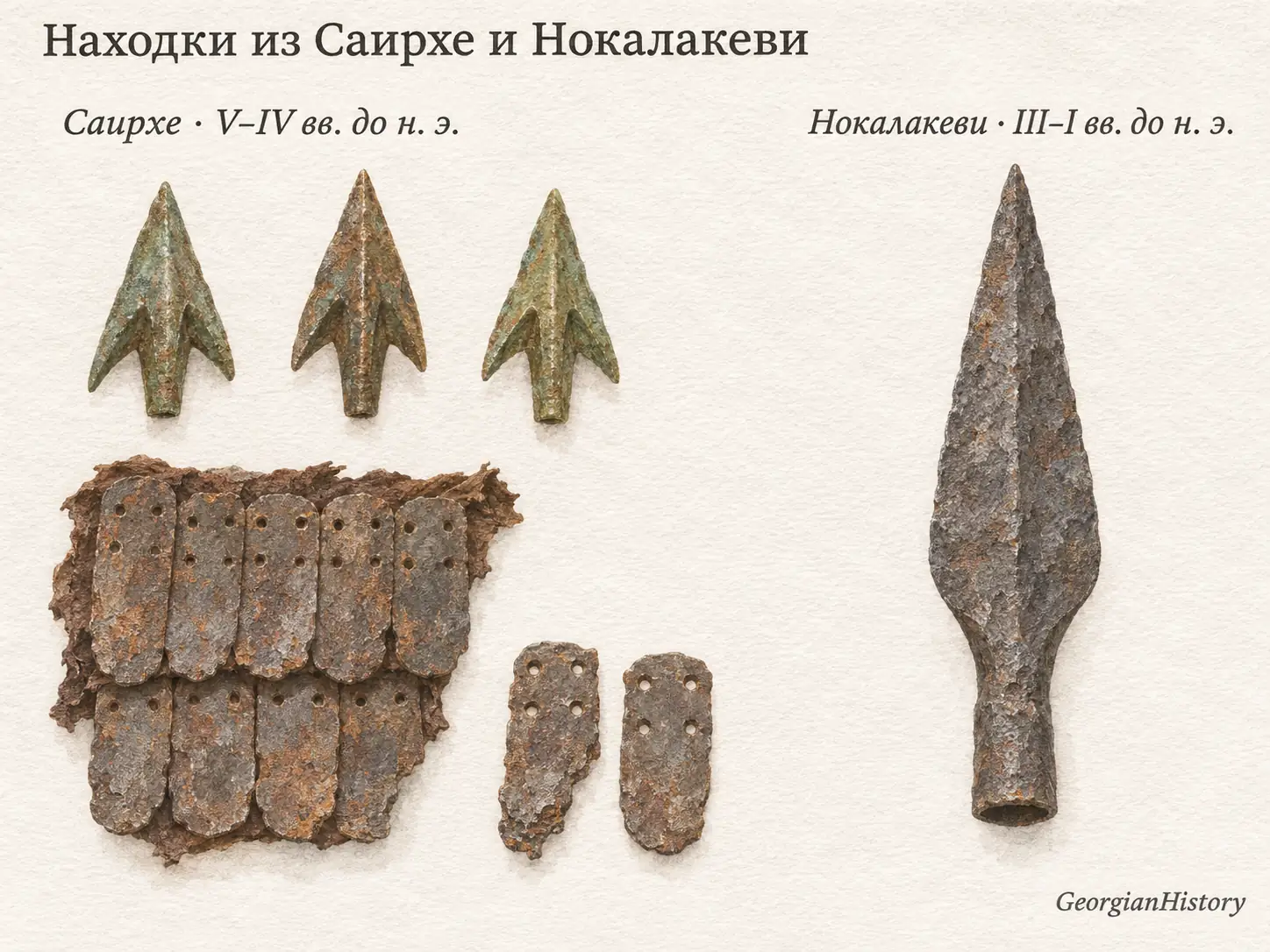
Other finds
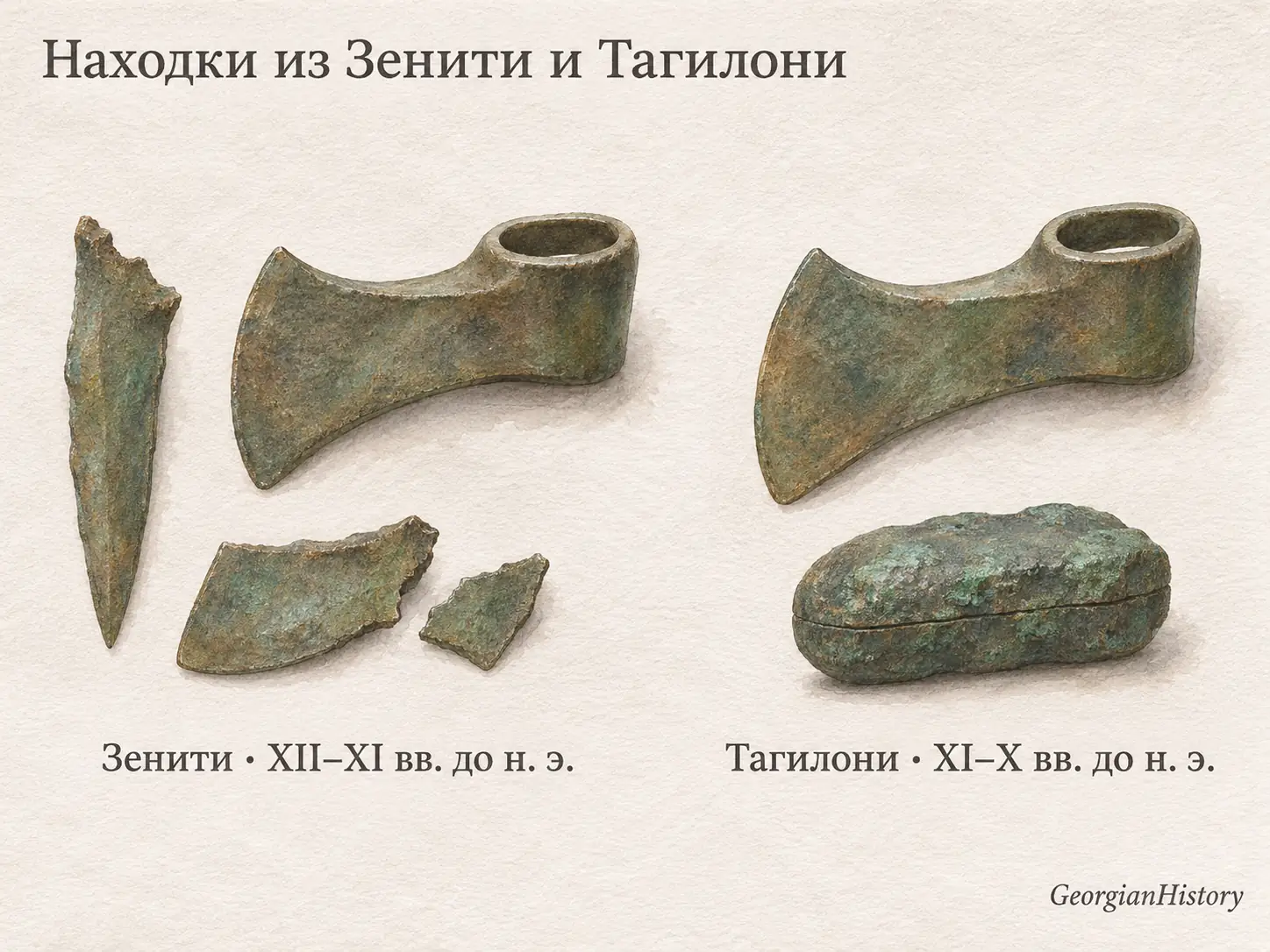
Colchian axes
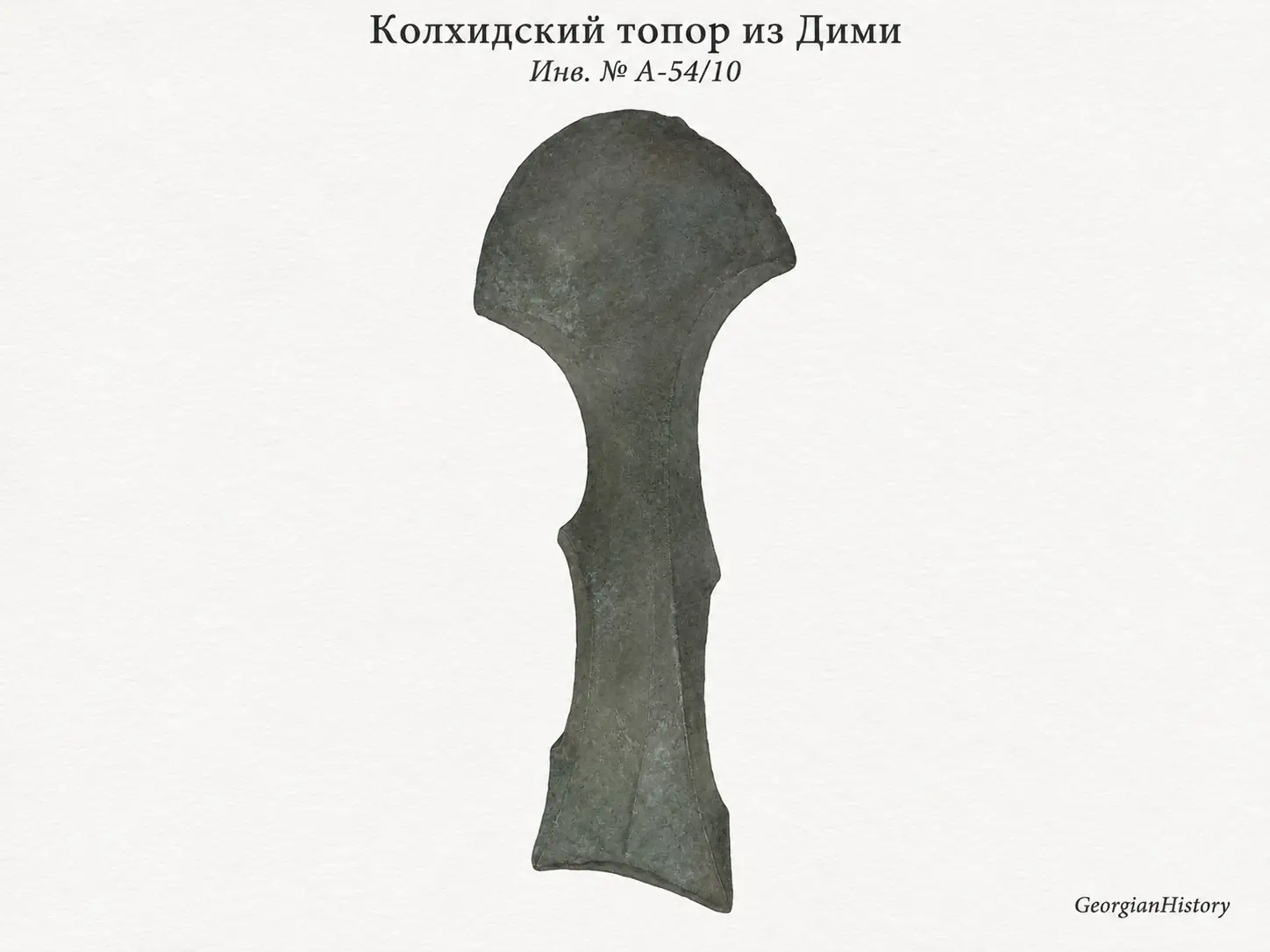
Comparative examples
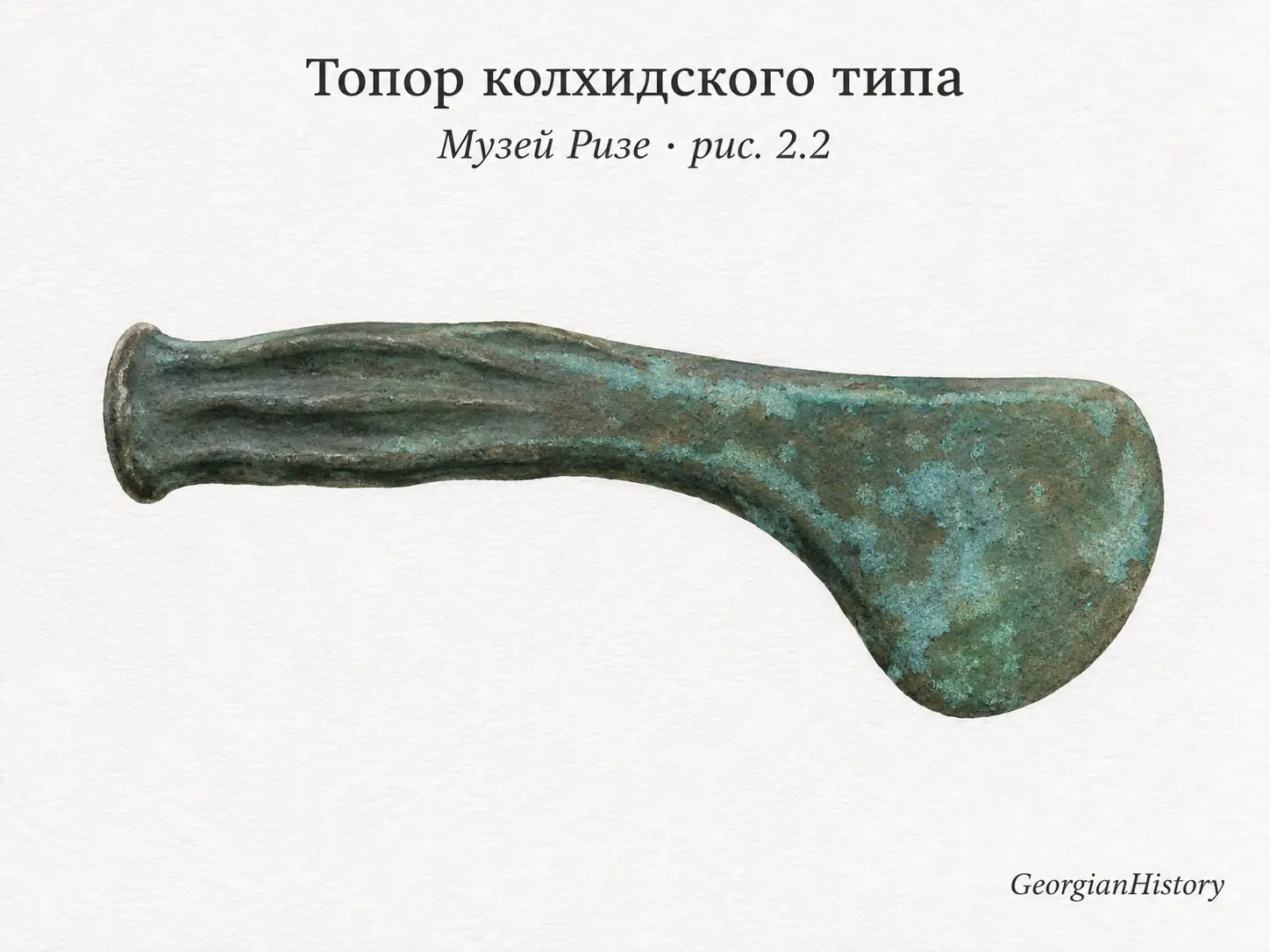
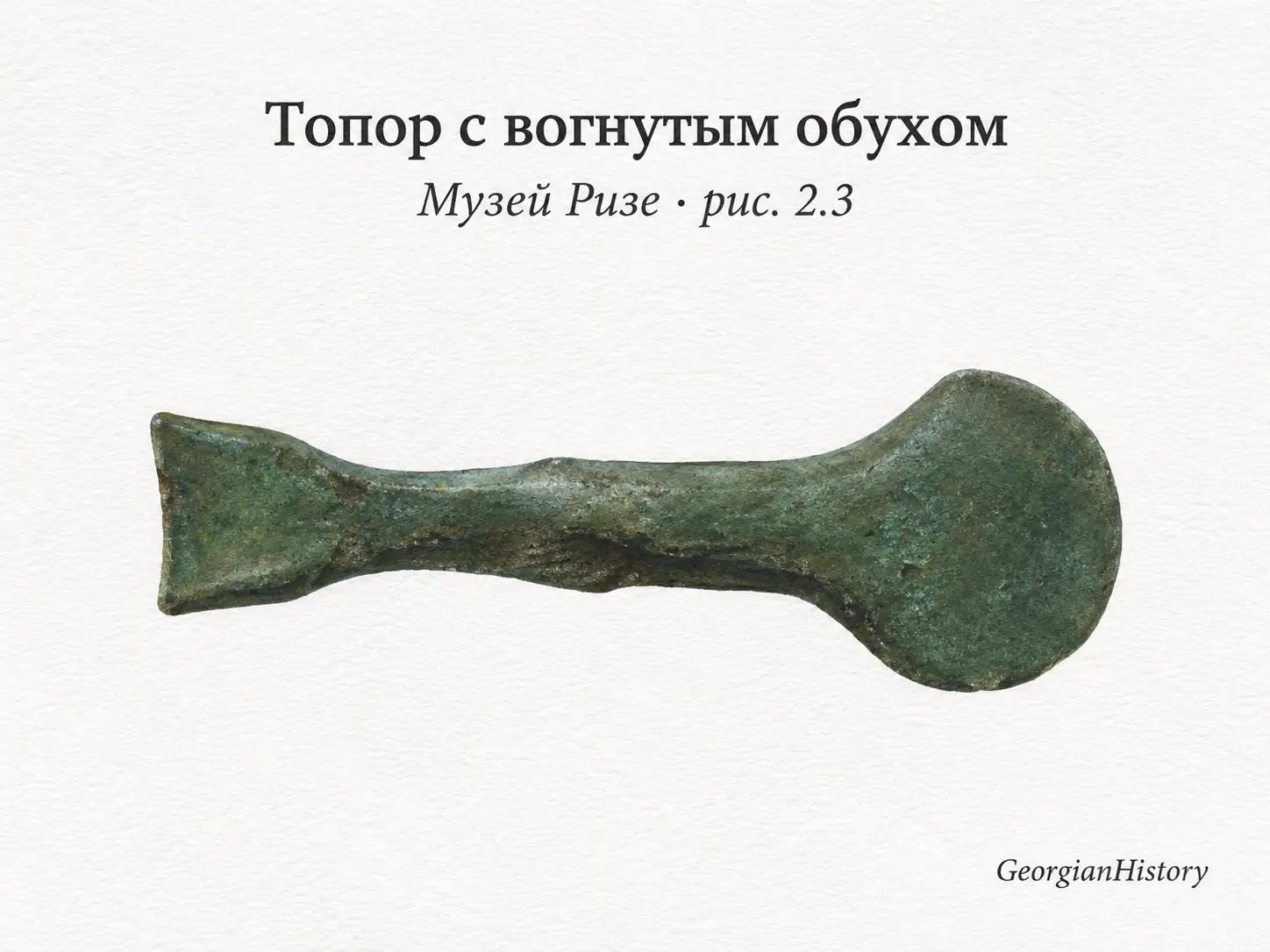
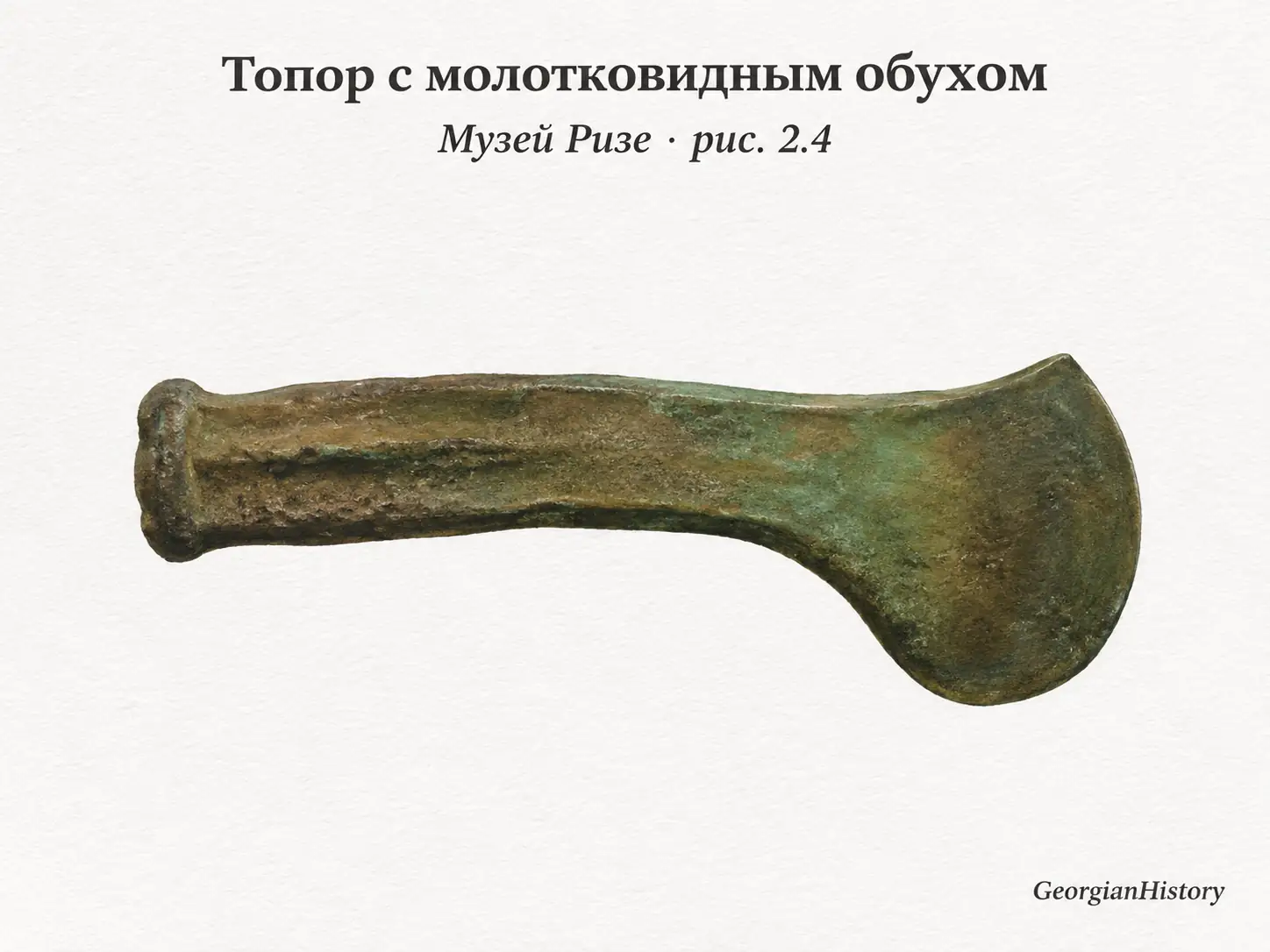
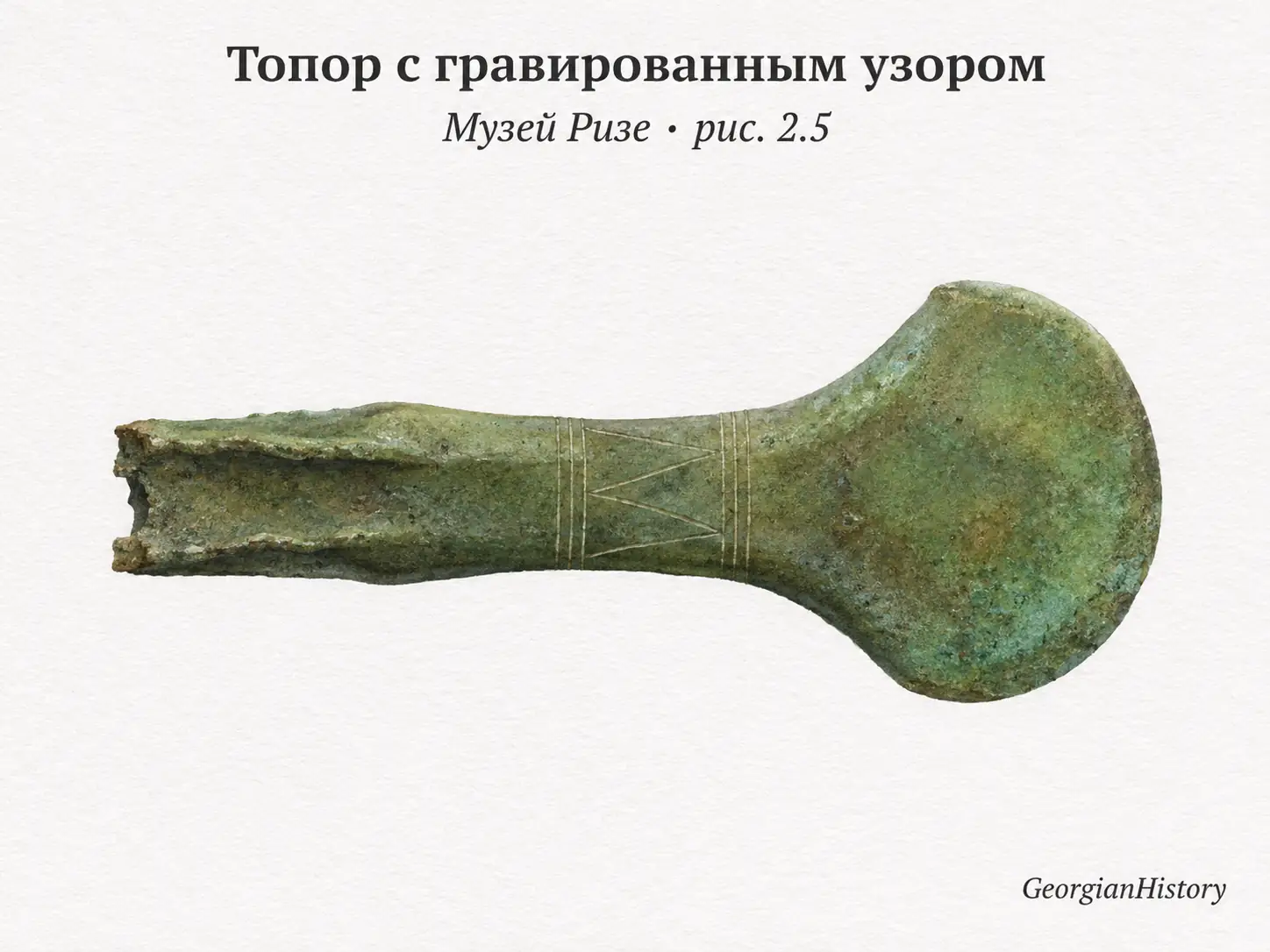
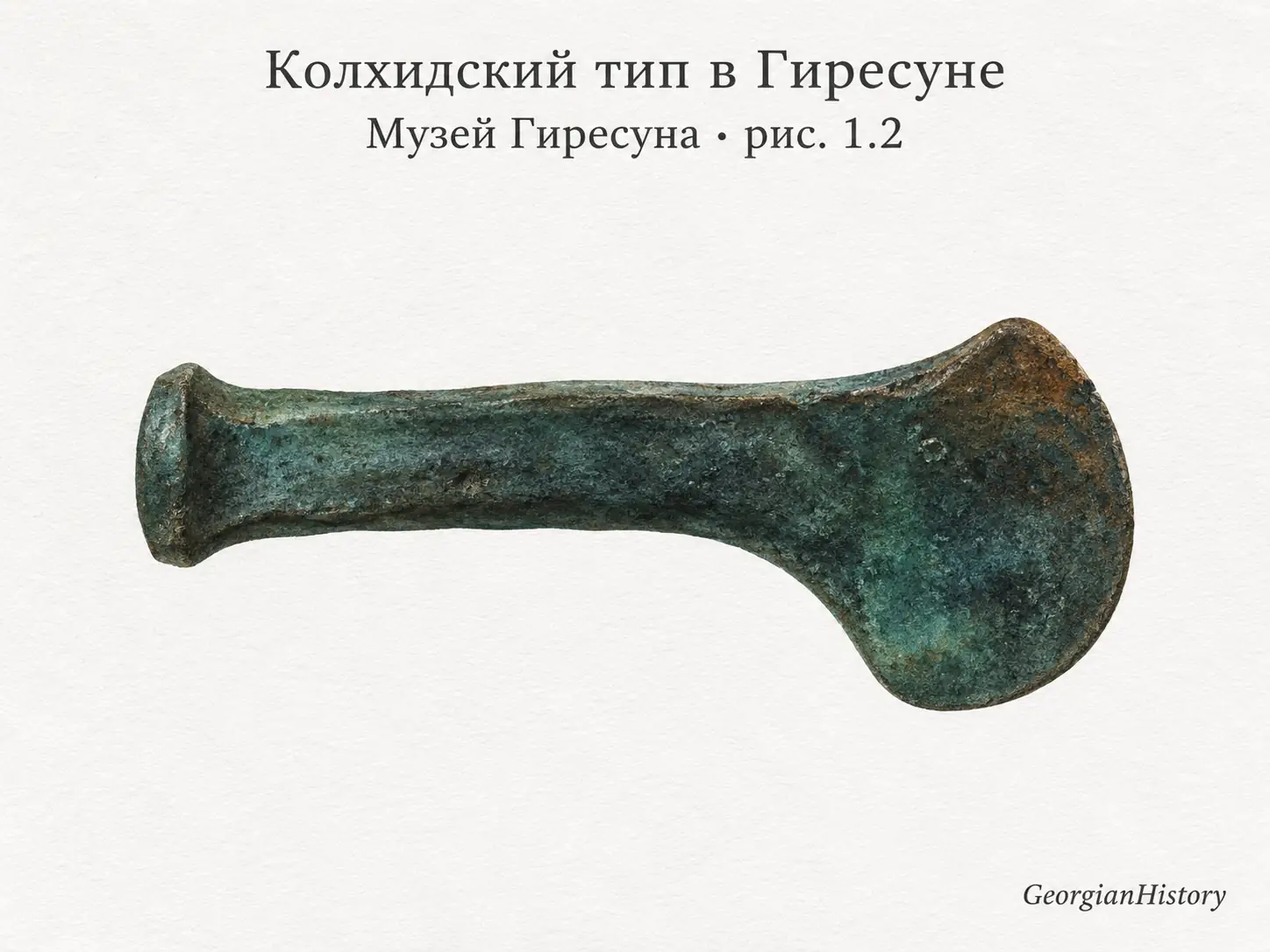
The finds in the Rize and Giresun museums are shown for comparison with the Colchian type.
Sources and materials
- Georgian National Museum: bronze axe from Kulanurkhva
- Mikhail Trapsh. A New Archaeological Find in Abkhazia, 1954, pp. 139–142, fig. 62
- Georgian Encyclopedia: Vakijvari Treasure
- G. Bedianashvili. Koban Necropolis, Tombs 9 and 12, p. 285
- J. Paul Getty Museum: Grave 9 at Vani
- Weapons and Armor in Georgia, vol. II, pp. 62–65
- Weapons and Armor in Georgia, vol. I: the Vani shield, p. 196