Gelati: Archaeologists Identify a Probable Monastic Refectory
An official report on the 2025–2026 campaign describes a large hall about 25 metres south of the main cathedral. Pottery dating from the thirteenth to the fifteenth centuries and evidence of food preparation support an interpretation as a refectory, but the authors stress that the identification is not yet final.
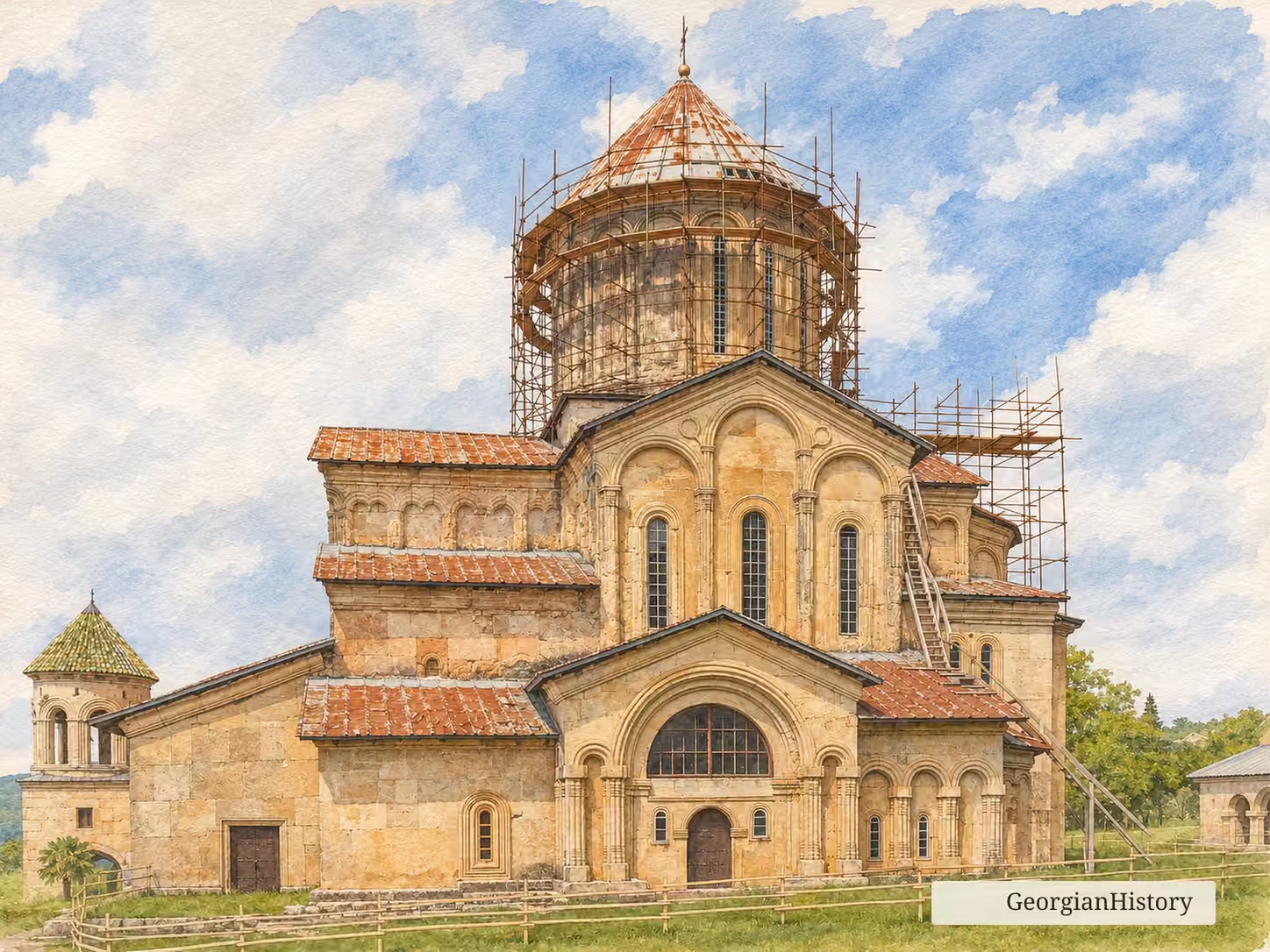
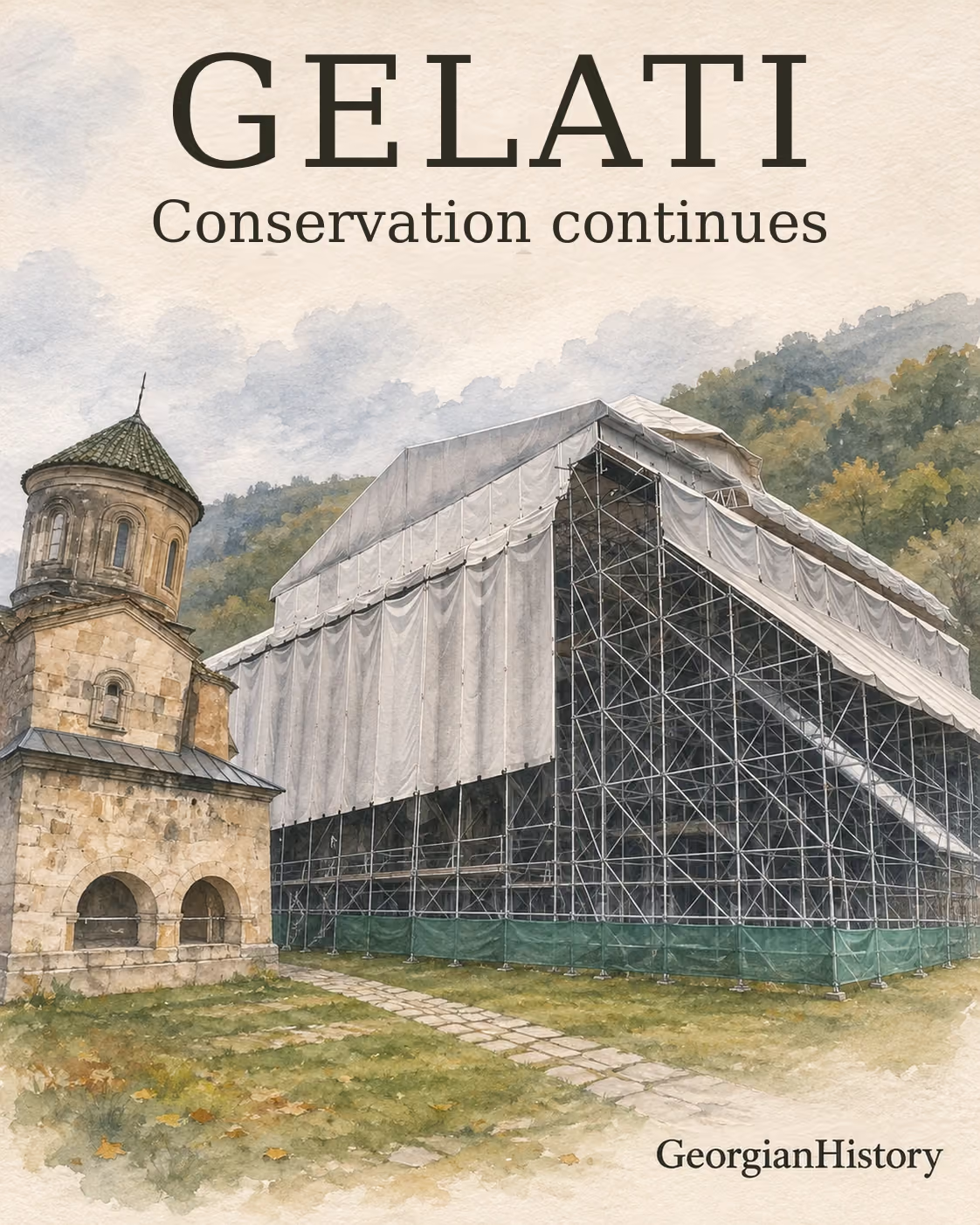
 The Patriarchate’s television channel Ertsulovneba reported on 19 November 2026 that architectural, archaeological and conservation work was continuing at the Gelati monastery complex. By 21 November, the official Gelati rehabilitation documents page included a 47-page report by the Georgian National Museum on the 2025–2026 archaeological campaign. The page does not give an exact upload date for the document: 19 November is the date of the television report, not an established publication date for the archaeological report.
A building south of the main cathedral
Archaeologists examined a 20 × 20 metre area about 25 metres south of the Cathedral of the Nativity of the Virgin. The cultural deposit ranged from about 20 centimetres in the northern part of the trench to 2.3 metres farther south. Excavation revealed a large hall building with clear evidence of prolonged use and repeated rebuilding.
Inside, the team recorded three floor levels separated by about 5–10 centimetres, plastered walls, niches and shelves. A paved courtyard and access paths lay in front of the building. These features point to part of an organised monastic infrastructure rather than an isolated, accidental structure.
Why the building may be a refectory
The building contained abundant tableware and kitchen pottery: large louterion-type trays, bowls, jugs, cauldrons and cooking pots. Many vessels bear clear traces of use over an open fire. Most of the pottery dates from the thirteenth to the fifteenth centuries; the report’s authors suggest that use of the building probably ended towards the close of the fifteenth century.
Taken together, the layout, courtyard, paths and finds give the researchers strong grounds for interpreting the structure as the monastery’s refectory — a place where food was prepared and eaten. This is the report authors’ interpretation, not a final identification: they state that further excavation, clarification of the building phases and full analysis of the finds are still required.
Why the discovery matters
The excavation adds evidence for everyday life at Gelati, extending the story beyond its churches, academy and celebrated works of art. A probable refectory would show the scale of the complex’s domestic organisation in the thirteenth to fifteenth centuries; further work in the southern area may clarify its layout and sequence of rebuilding.
GeorgianHistory
Sources and further reading
- Georgian National Museum. Report on archaeological work conducted at the Gelati monastery complex in 2025–2026, 47 pages, 2026 (PDF in Georgian).
- Temporary Committee for the Rehabilitation of Gelati. Official documents page listing the report under 2026; the exact upload date is not stated.
- Ertsulovneba, the Georgian Patriarchate’s television channel, 19 November 2026. Report on continuing architectural, archaeological and conservation work.
- Marcin Konsek. ‘2014 Imeretia, Gelati, Monastyr Gelati (19)’, 26 May 2014, Wikimedia Commons, CC BY-SA 4.0. Photographic reference for the watercolour.
- Creative Commons Attribution-ShareAlike 4.0 International. Terms governing the photographic reference and the derivative watercolour.