The Bearded Vulture: The Bird That Comes Last
A rare inhabitant of Georgia’s mountains lives on what other animals leave behind. The bearded vulture’s life among the cliffs.
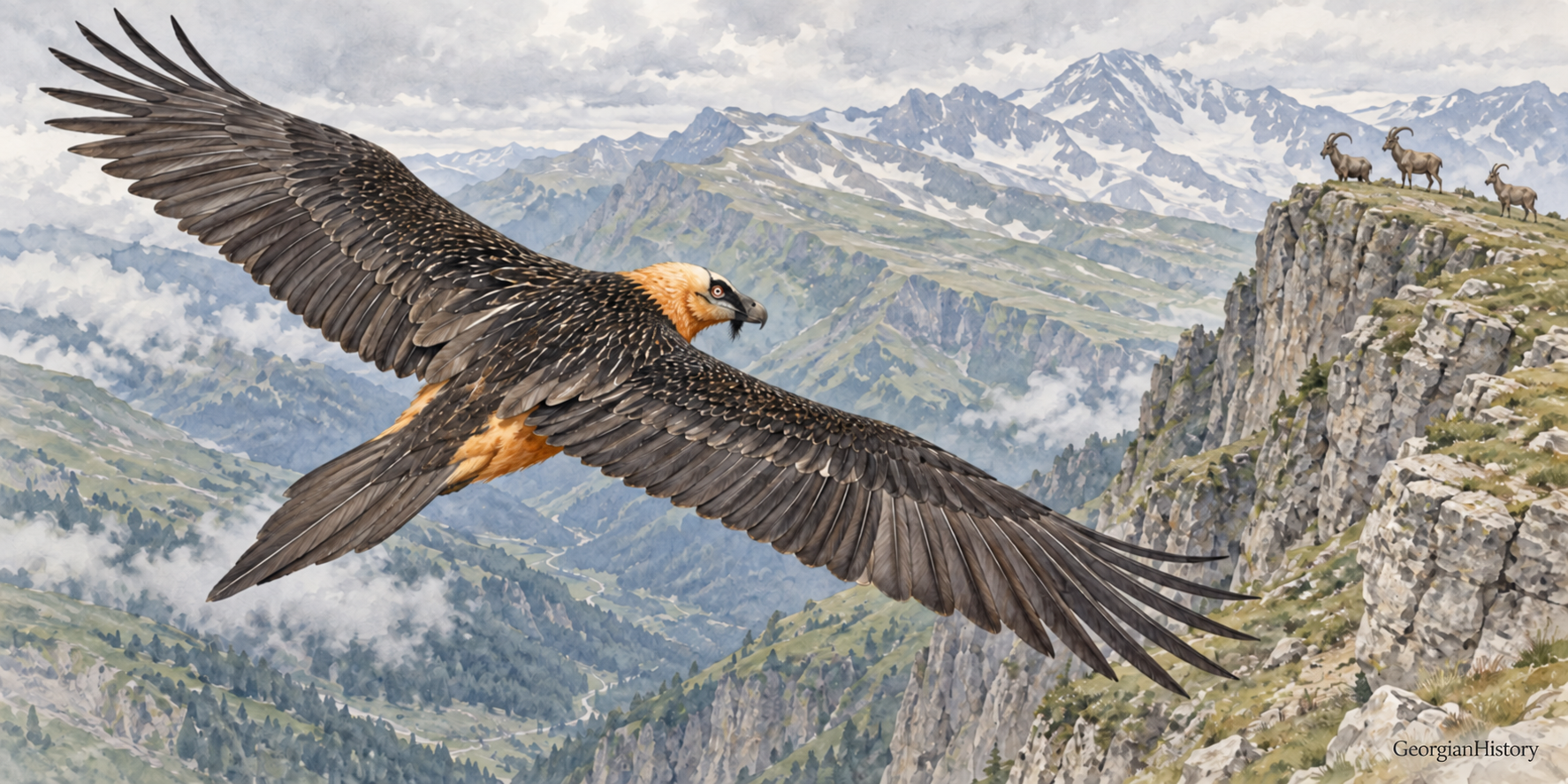
 A large bird circles for a long time above the gorge. Below, a herd of tur follows a narrow stony trail across the slope. It looks as though the bird need only fold its wings to swoop down on the herd. But the batkandzeri is looking for quite different food in the mountains.
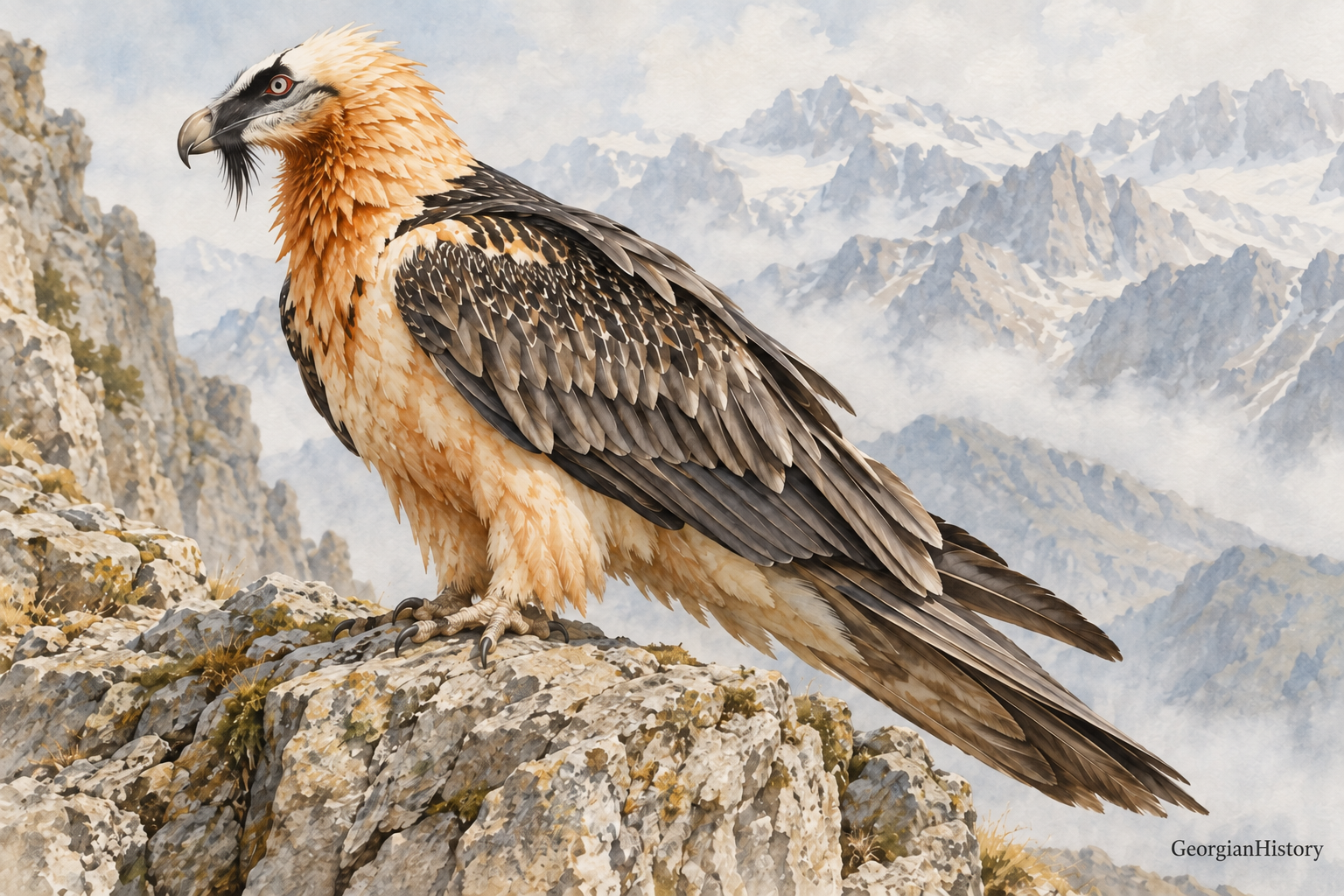
Batkandzeri is the Georgian name for the bearded vulture (*Gypaetus barbatus*). Dark feathers beneath its bill resemble a small beard. Long wings and a wedge-shaped tail make it recognisable in flight. An adult's wingspan can approach three metres. It lives along the Caucasus range and in the mountains of southern Georgia, nesting among cliffs. The bearded vulture is rare in Georgia and appears on the country's Red List.
No threat to the herd
The old name “lamb vulture” is misleading. People told stories of bearded vultures dropping lambs and tur from cliffs. But large live animals are not their usual prey. The bird looks for the remains of animals that have died. Among them may be tur, whose silhouettes are visible high on the slopes.
Mountain life spares no one. An animal can die in the snow, on a steep slope or after a long illness. Predators and scavengers arrive at the carcass. The flesh disappears, leaving something on the rocks that most other animals can no longer use: bones.
Food among the rocks
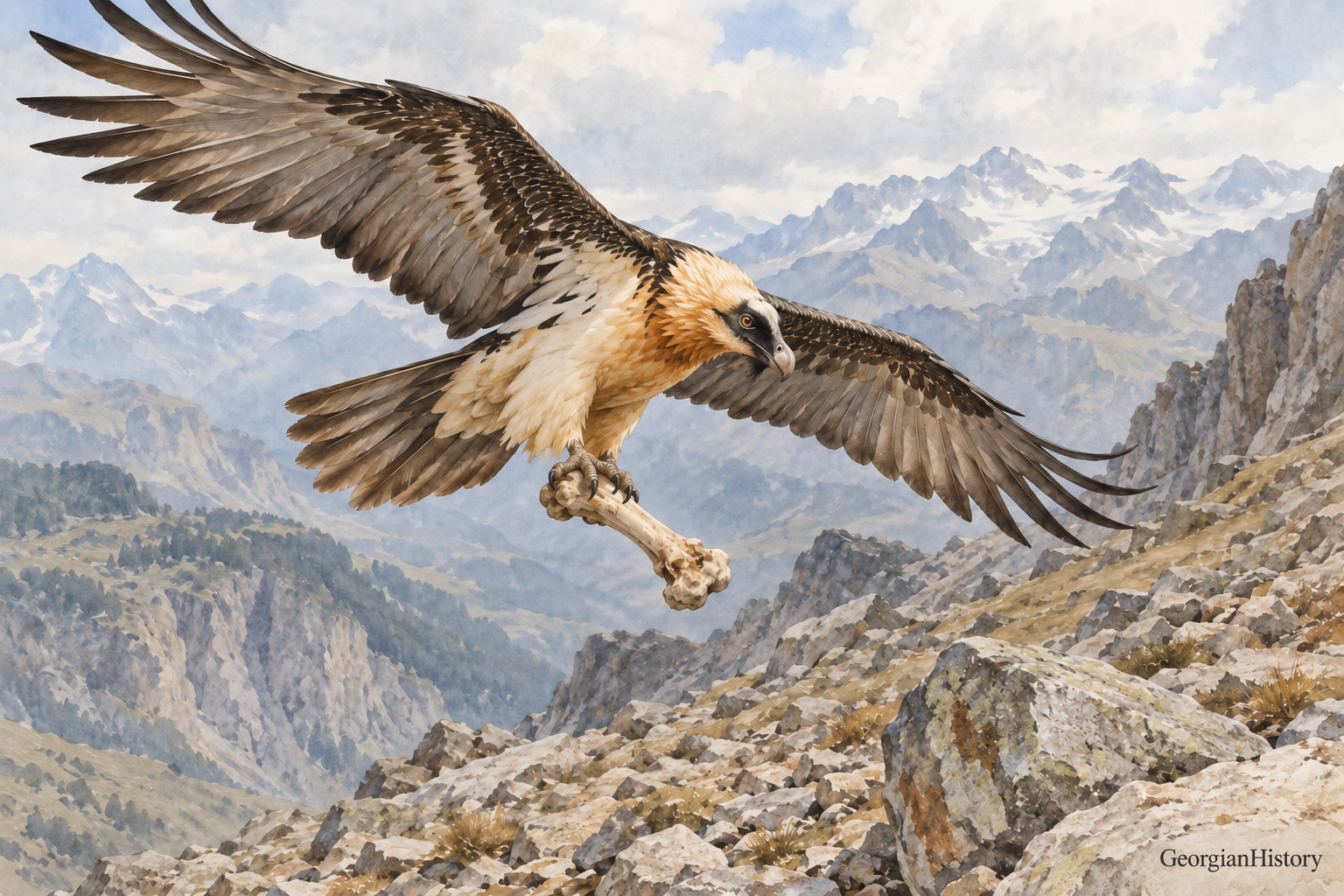
Bones are the bearded vulture's main food. They still contain nutrients, and the bird can swallow and digest some bones whole. If a bone is too large, it carries it into the air and drops it onto the rocks, sometimes more than once, until it breaks. It then returns for the fragments.
It seems almost incredible that in a harsh mountain landscape where food is hard to find, the bearded vulture can use what others pass by. Yet even here there is no rule that covers every case. Chicks need soft food in their first weeks, and an adult can arrive at a carcass while other scavengers are still there.
Even so, the image of the “last guest” captures its special place in mountain life. The bearded vulture finds food where the meal has already ended for many others. It does not leave bones for others out of nobility or hunt tur to feed them. It has the extraordinary ability to use what is left.
A bird worth knowing
The real story is no less moving. In the mountains, the death of one animal sustains the lives of others, and even a bone fragment can be useful. Broad wings spread again over the cliffs. The bird carries its find to a place where the rocks can help it break the bone.
We call the batkandzeri noble because we see a human quality in it. The bird itself knows nothing of our words. It simply lives by the laws of the mountains, reminding us how much in nature depends on creatures we barely notice.
Batkandzeri. A rare bird of Georgia. The bird that comes last.
The bearded vulture in Georgia’s mountains