85 Years of the Georgian National Academy of Sciences
The anniversary session of 29 October 2026 recalls the Academy’s founding and the scholars who studied Georgia’s history, language, and art.
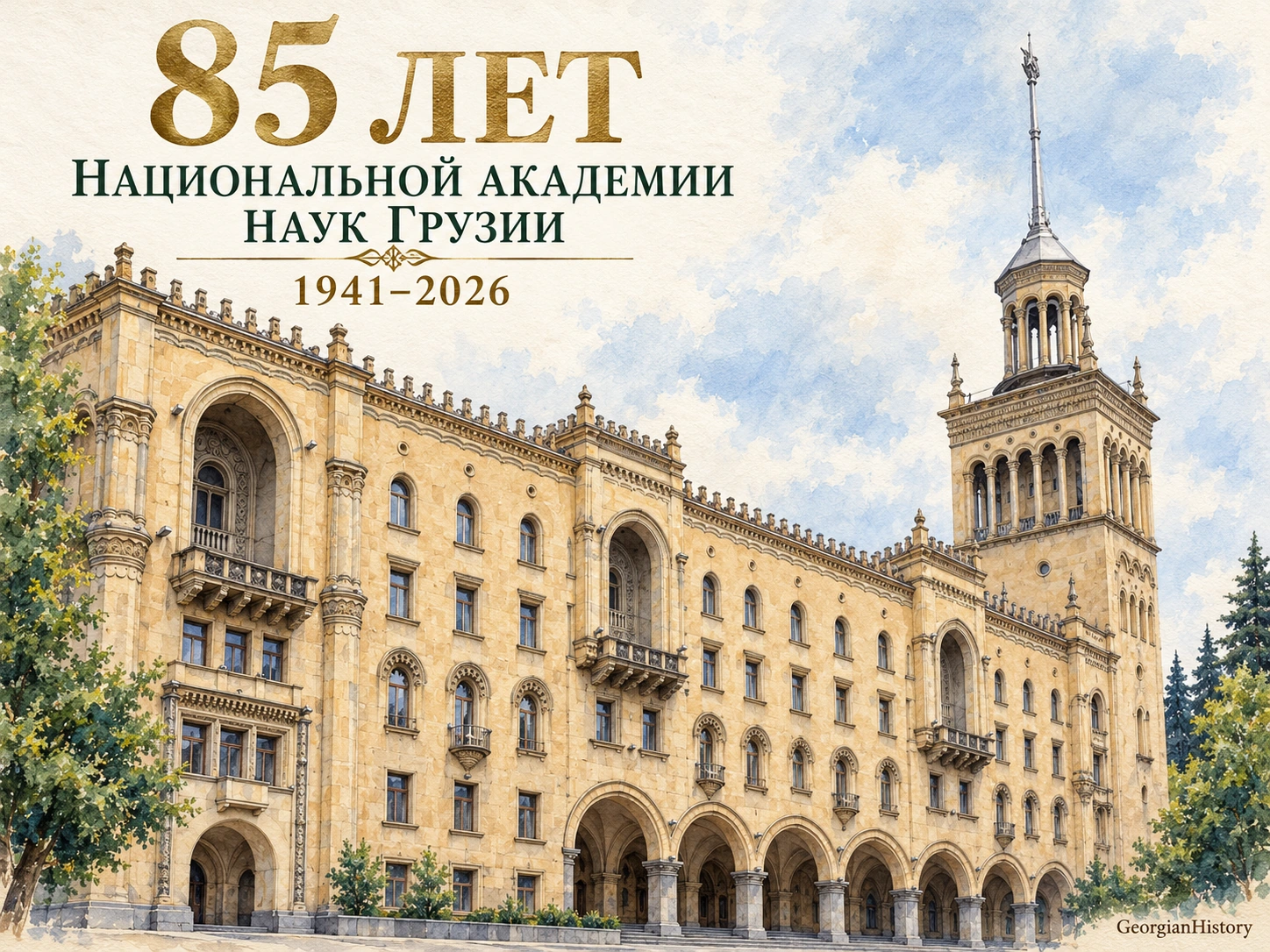
 On 29 October 2026, Tbilisi hosted a session marking the 85th anniversary of the Georgian National Academy of Sciences. Roin Metreveli, a historian and president of the Academy, opened the gathering at the Ministry of Education, Science and Youth. The anniversary marks the work of several generations who have read manuscripts, studied language, carried out archaeological research, documented monuments and developed schools of scholarship.
The Academy was founded on 10 February 1941, in the Soviet era. Its immediate predecessors were Tbilisi State University and the Georgian branch of the USSR Academy of Sciences. It began with 16 academicians and brought 14 research organisations into its structure. They included the State Museum of Georgia and units devoted to history, language, art and the natural sciences. The mathematician and mechanician Nikoloz Muskhelishvili was elected its first president.
From the start, the Academy brought together different ways of studying Georgia and the wider world. Mathematicians, geologists, botanists, physiologists and psychologists worked alongside historians and philologists. For Georgian scholarship, this brought existing schools of research into a shared academic system.
Simon Janashia was one of its founders. From 1941 to 1947 he served as vice-president of the Academy and directed historical research within it. He studied ancient Georgia, Colchis and Iberia, the emergence of feudal relations and the history of the peoples of the Caucasus. Janashia also helped organise excavations at Mtskheta and Armazi. Written sources and archaeological finds became complementary kinds of evidence about the past.
Korneli Kekelidze devoted his life to early Georgian literature. He identified, studied and published texts, tracing their origins and connections with Byzantine and Persian literature. His work on the history of early Georgian writing, his editions of hagiographic works and his descriptions of manuscripts laid the groundwork for later research. Such work gave old books scholarly descriptions and clarified when and in what setting a text originated, how it circulated and how it changed as it was copied.
Akaki Shanidze studied the structure and history of the Georgian language, its dialects and early written records. His works include the Grammar of Old Georgian, published in 1976. He helped prepare scholarly editions of biblical texts and studied The Knight in the Panther's Skin. For a historian this work has a direct use. A precise understanding of a word or grammatical form helps read a chronicle, inscription or legal document correctly.
Giorgi Chubinashvili was among the founders of the scholarly study of Georgian art. The Institute for the History of Georgian Art of the Academy of Sciences of the Georgian SSR was founded on 1 April 1941, with Chubinashvili as its first director. Medieval architecture was a principal area of study from the outset. Researchers also examined wall paintings, sculpture, manuscript miniatures and decorative metalwork. They considered monuments in relation to one another, through the dates of their creation, their local schools and their relationships with the art of neighbouring countries.
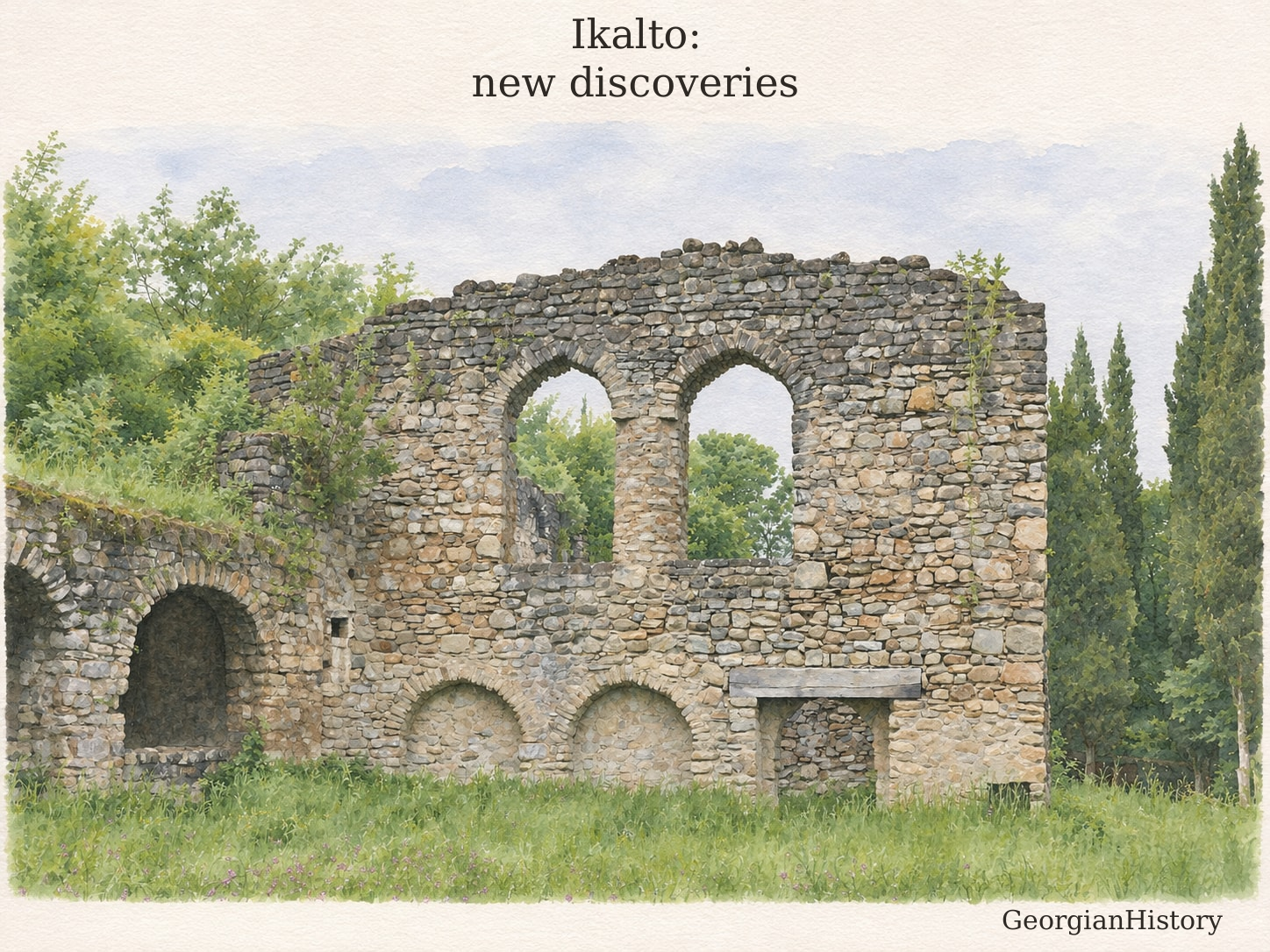
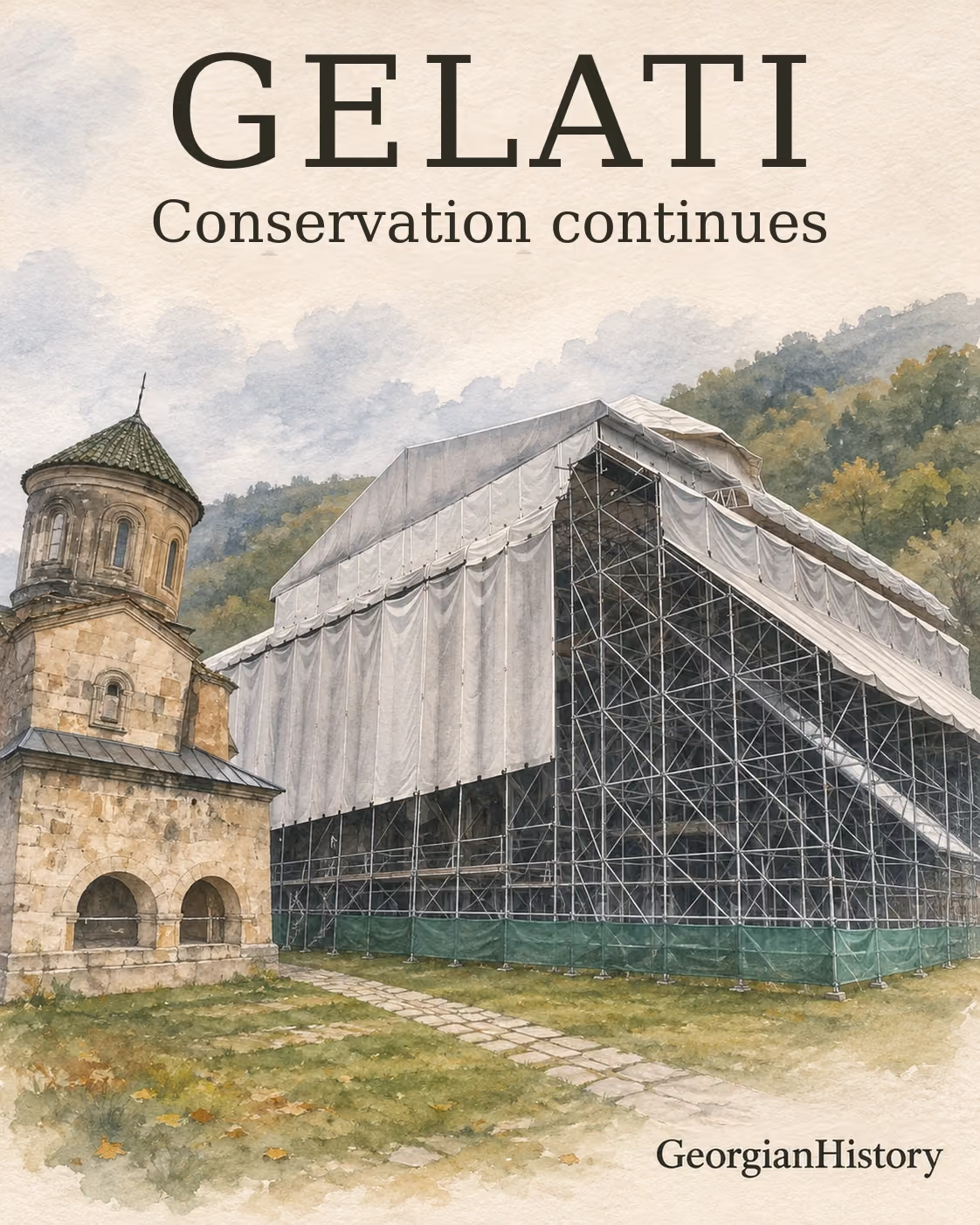
Gelati and Ikalto belong to the centuries-long history of Georgian learning to which the Academy itself looks back. The institution's own history starts in 1941 and is rooted in the university and research communities of the twentieth century. Distinguishing these periods makes it possible to recognise what each generation contributed: medieval scholars and scribes, university founders and the researchers who established academic schools.
Work on this heritage continues as sources are checked and read anew. A published manuscript may need to be dated more precisely. An old survey of a church can reveal subsequent alterations. An archaeological find may compel historians to reconsider a familiar picture of the past. A school of scholarship survives when later researchers can access its materials and its conclusions remain open to debate.
Sources and further reading
- Georgian First Channel: anniversary session, 29 October 2026
- Georgian National Academy of Sciences: official history, founding date and founding members
- Tbilisi State University: Simon Janashia
- National Library of Georgia: Simon Janashia
- National Library of Georgia: Korneli Kekelidze
- National Library of Georgia: Akaki Shanidze
- Giorgi Chubinashvili Centre: official history of the institute
- Architectural reference for the poster: Georgian First Channel, 30 January 2020
- Façade photograph: Vyacheslav Argenberg / Wikimedia Commons, CC BY 4.0. Adapted as a watercolour poster
- Reference photograph licence: CC BY 4.0