Dmanisi and Homo erectus: A Research Meeting in Tbilisi
From 10 to 13 September 2026, researchers discussed early human evolution, behaviour, and dispersal. A look at the conference programme.
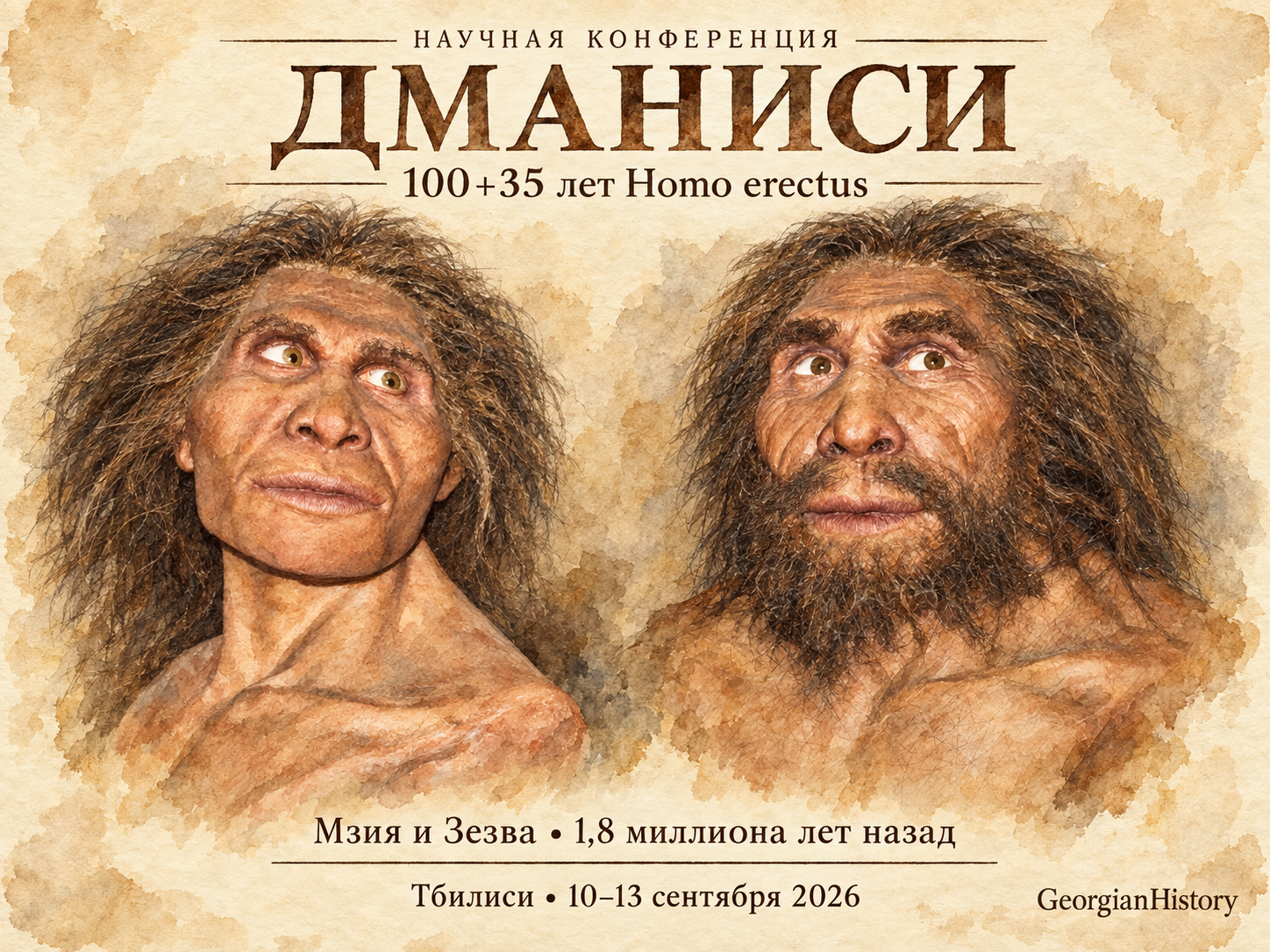
10–13 September 2026
 Tbilisi hosted the conference “100+35 years of Homo erectus: Dmanisi and beyond”. Scientific sessions took place at the Georgian National Museum on 10–12 September. The organisers scheduled a trip to Dmanisi, Orozmani and the Bolnisi Museum for 13 September.
Why Dmanisi is central to the discussion
The conference title brings together two anniversaries: 135 years since the discovery of an early human on Java in 1891 and 35 years since the first international presentation of the Dmanisi find in 1991. Subsequent excavations yielded several well-preserved skulls and new evidence of early human dispersal outside Africa.
The programme covered three areas: the evolutionary history of Homo erectus, aspects of life and behaviour, and the diversity of migrations and the natural environment. These were topics for discussion. Specific findings need to be set out in separate publications by the participants, and it would be premature to attribute a single conclusion to the conference.
The figures in the illustration
The watercolour poster shows Mzia and Zezva, artistic portrayals of early humans from Dmanisi. The palaeoanthropological finds date to approximately 1.8 million years ago. The image helps convey that span of time, while the surviving fossils cannot establish an exact portrait of the individuals.