Mirian and Nino: How Kartli Found a New Faith
From the sanctuary at Armazi to the king’s baptism, a choice that opened a new era in Kartli.
 There came a moment in Kartli’s history when royal authority embraced a new faith. Idols still stood above Mtskheta, while Christian preaching was already heard at court. Georgian memory linked this turning point with Saint Nino, Queen Nana and King Mirian III.
The Kingdom of Kartli adopted Christianity in the first half of the fourth century. This was one of the major turning points in Georgian history. The story has come down to us in ecclesiastical accounts in which historical information and miracles appear side by side. To understand the period and remain precise, we must hear both voices, history and tradition.
In the shadow of Armazi
Mtskheta was the capital of the kingdom known to classical authors as Iberia. Roads converged there, the royal court was based there and the sacred places of earlier generations survived. Religion connected the ruler to the land, his ancestors and the established order.
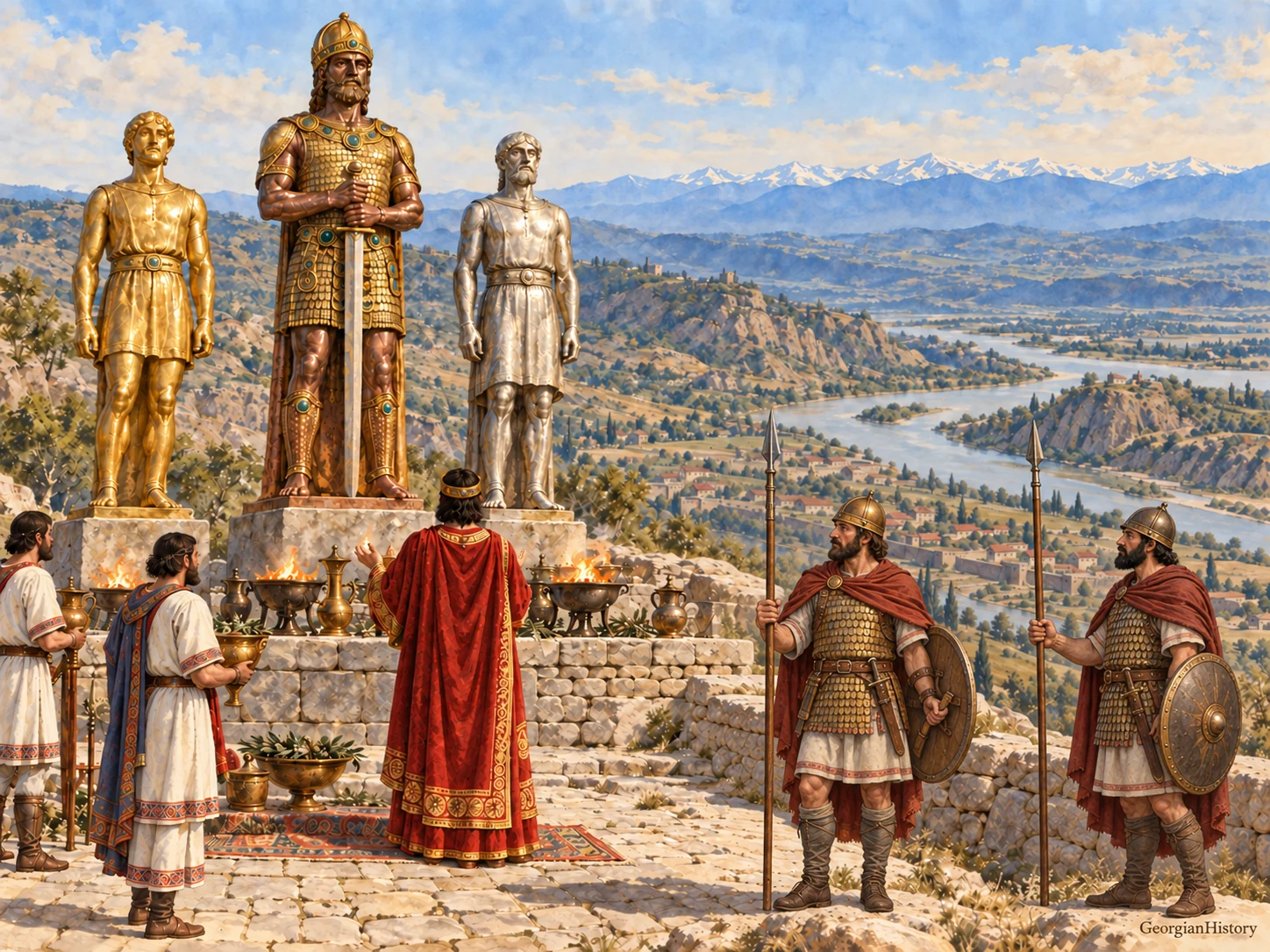
The Georgian Conversion of Kartli describes Armazi as a copper figure of a man in golden armour and a helmet, adorned with precious stones and armed with a sword. To his right stood the gold Gatsi and to his left the silver Gaim. These three idols formed an important part of the ancient cult. Kartli’s pantheon was wider.
A woman with a grapevine cross
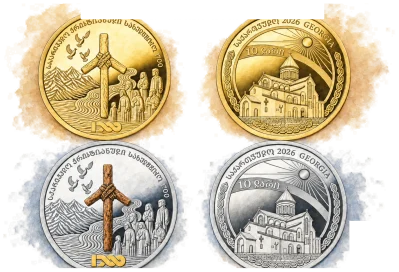
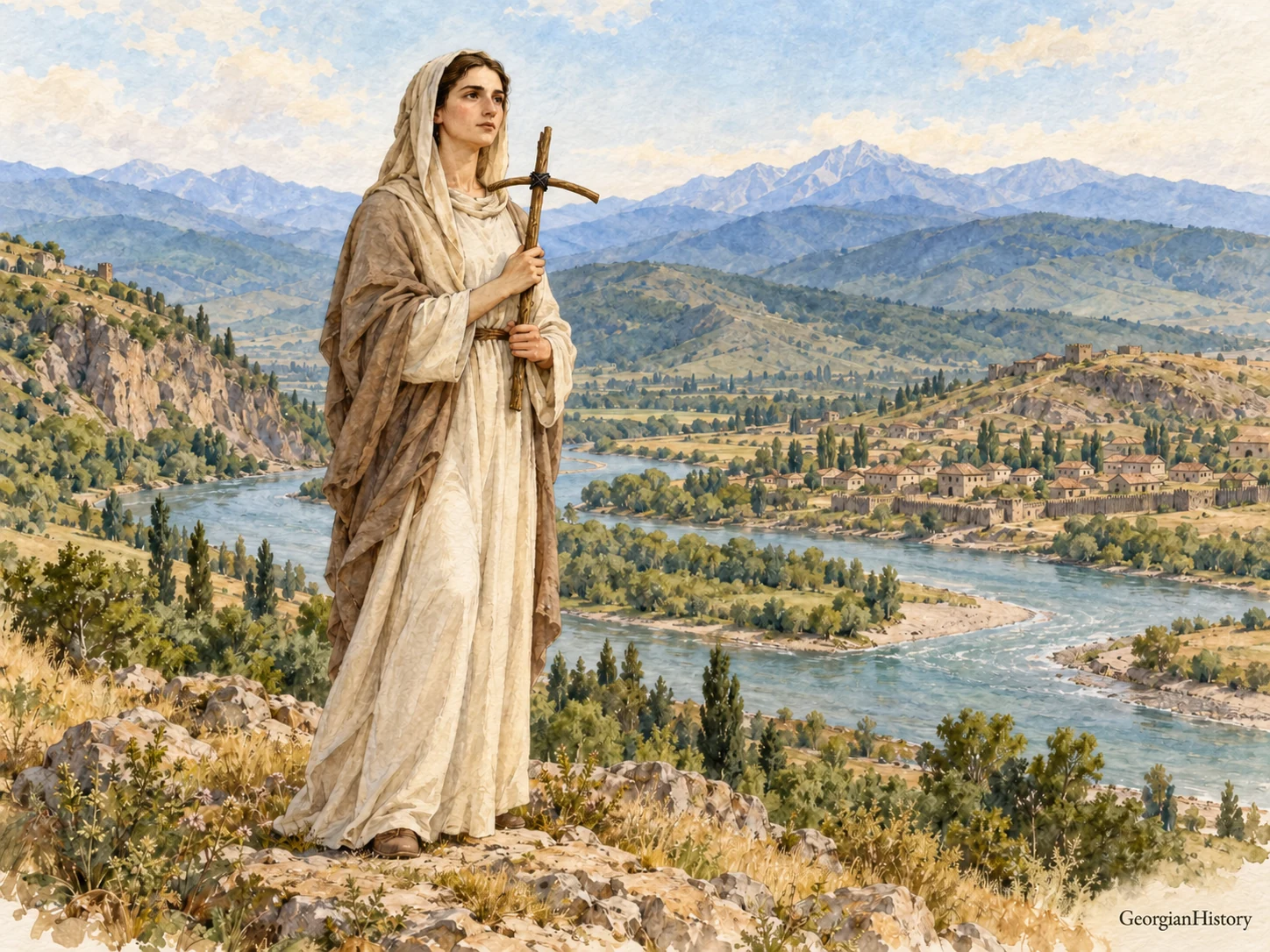
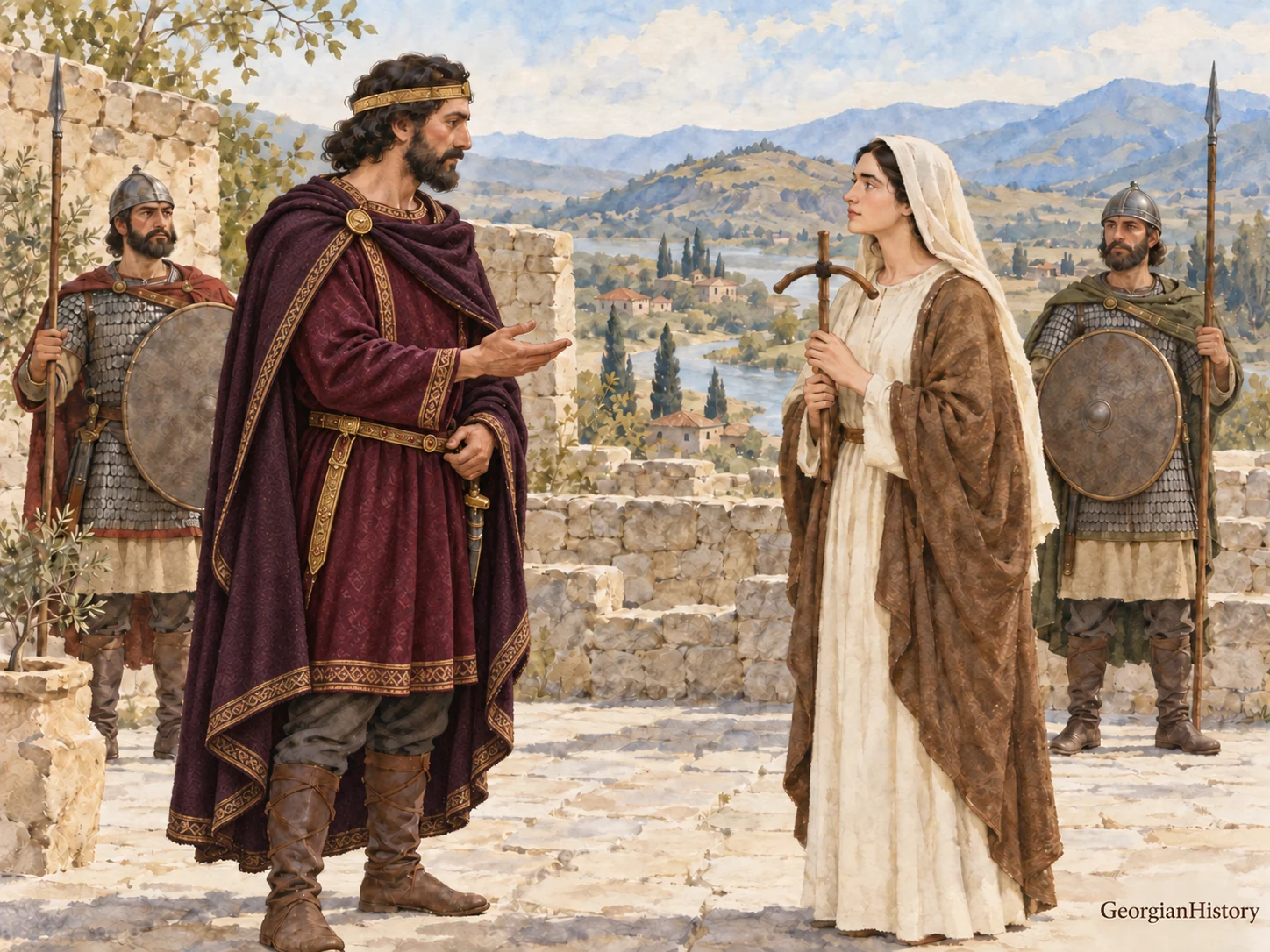
In Georgian tradition, Nino comes to Kartli as a preacher of Christianity. Her familiar image shows her in simple clothing, carrying a grapevine cross with the ends of its crosspiece drooping. In this way, the Church preserved the memory of a woman whose name became bound up with the fate of the kingdom.
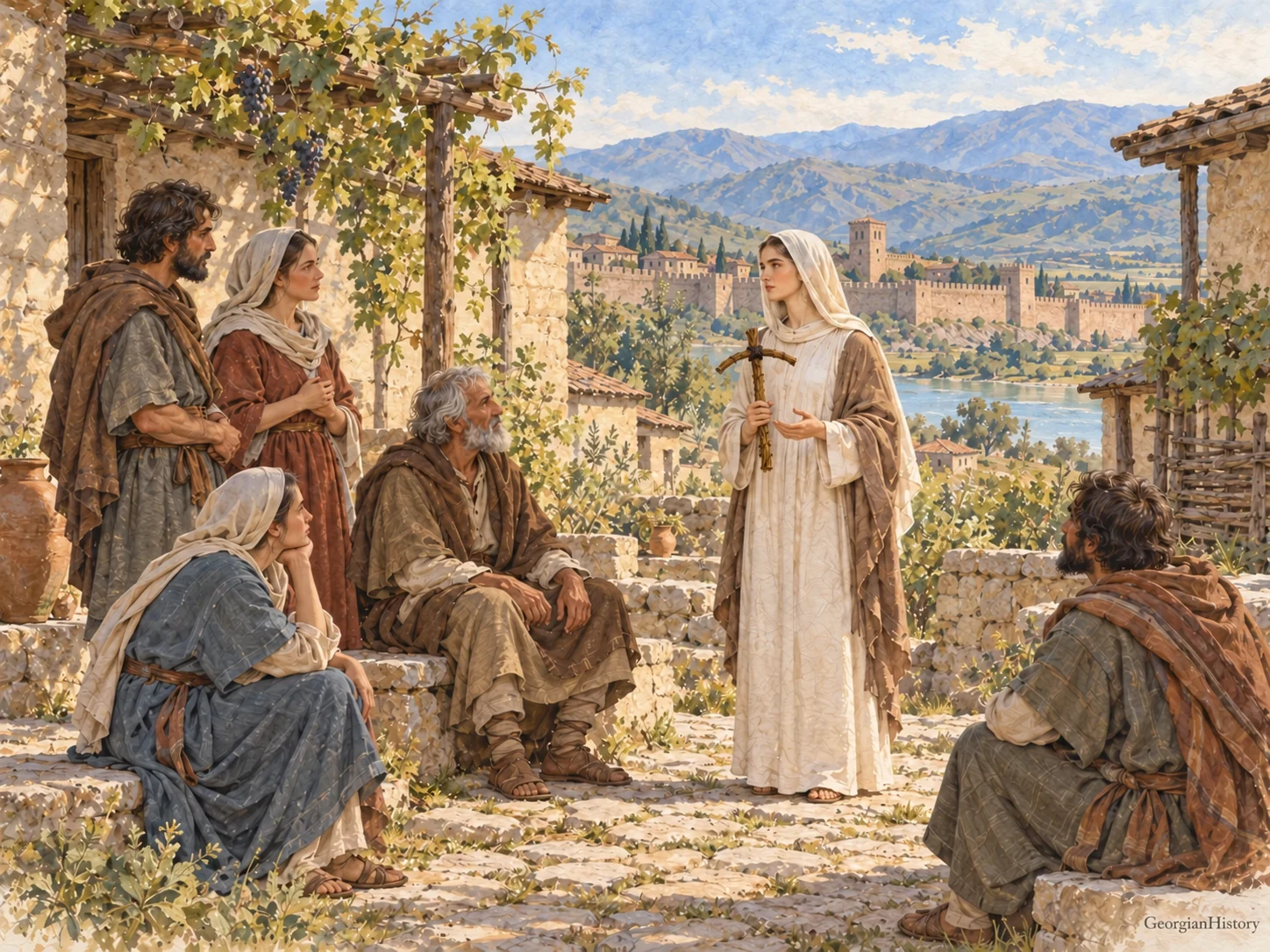
Early ecclesiastical authors relate the conversion of the Iberians through a Christian woman living among them. Her prayer, way of life and healings drew attention. Gradually her preaching reached the ruling family. In these accounts the change of faith begins with personal trust and gains royal support only later.
The faith reaches the palace
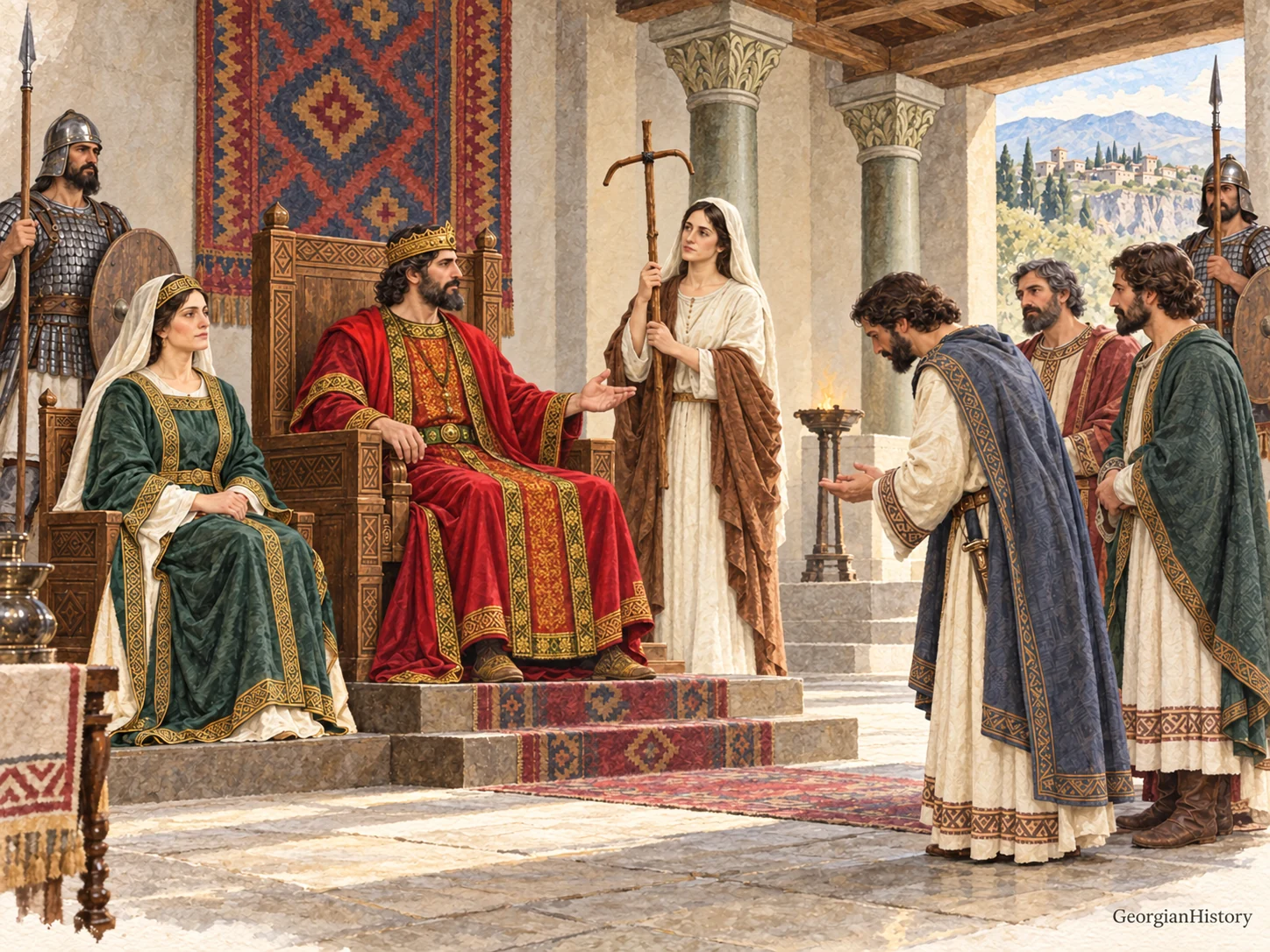
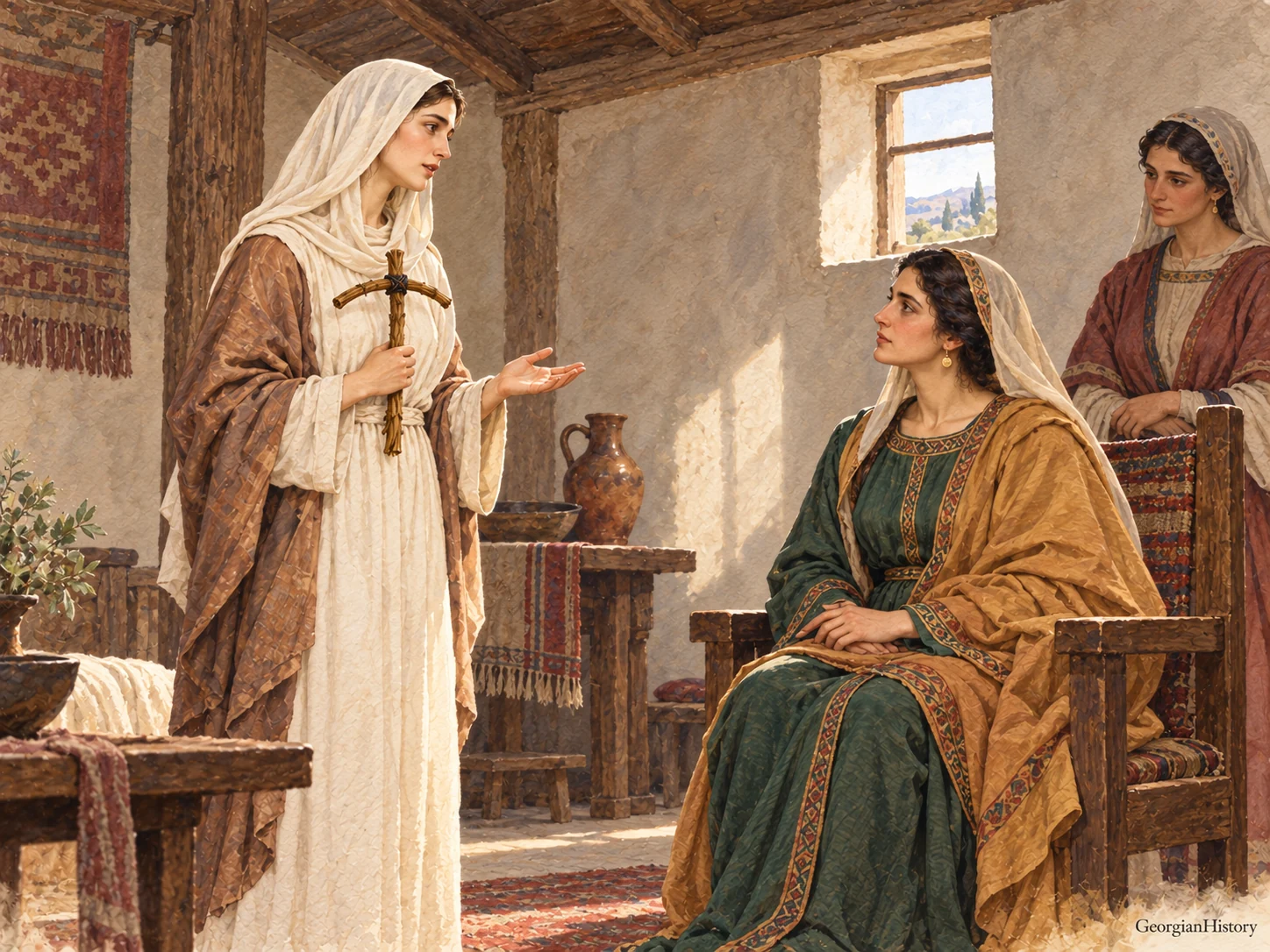
According to the ecclesiastical account, Queen Nana fell seriously ill. Help came through the prayers of the Christian preacher. On recovering, the queen embraced the new faith. She then began urging her husband to convert to Christianity.
Mirian did not follow her at once. In Theodoret of Cyrrhus’s account, the king rejoices at his wife’s recovery but still refuses to build a church. A line remained between gratitude and a change of faith, and he would have to cross it himself.
Darkness on the hunt
Tradition links the turning point to a royal hunt. Mirian was suddenly surrounded by darkness. At that moment he called for help on the God he had heard about from the Christian preacher, and the light returned.
Ecclesiastical versions differ in detail. In Socrates Scholasticus, darkness envelops those taking part in the hunt. In Theodoret, the king experiences it himself. This makes it impossible to identify any particular natural phenomenon with confidence. The story’s central theme is Mirian’s conversion in an hour of helplessness.
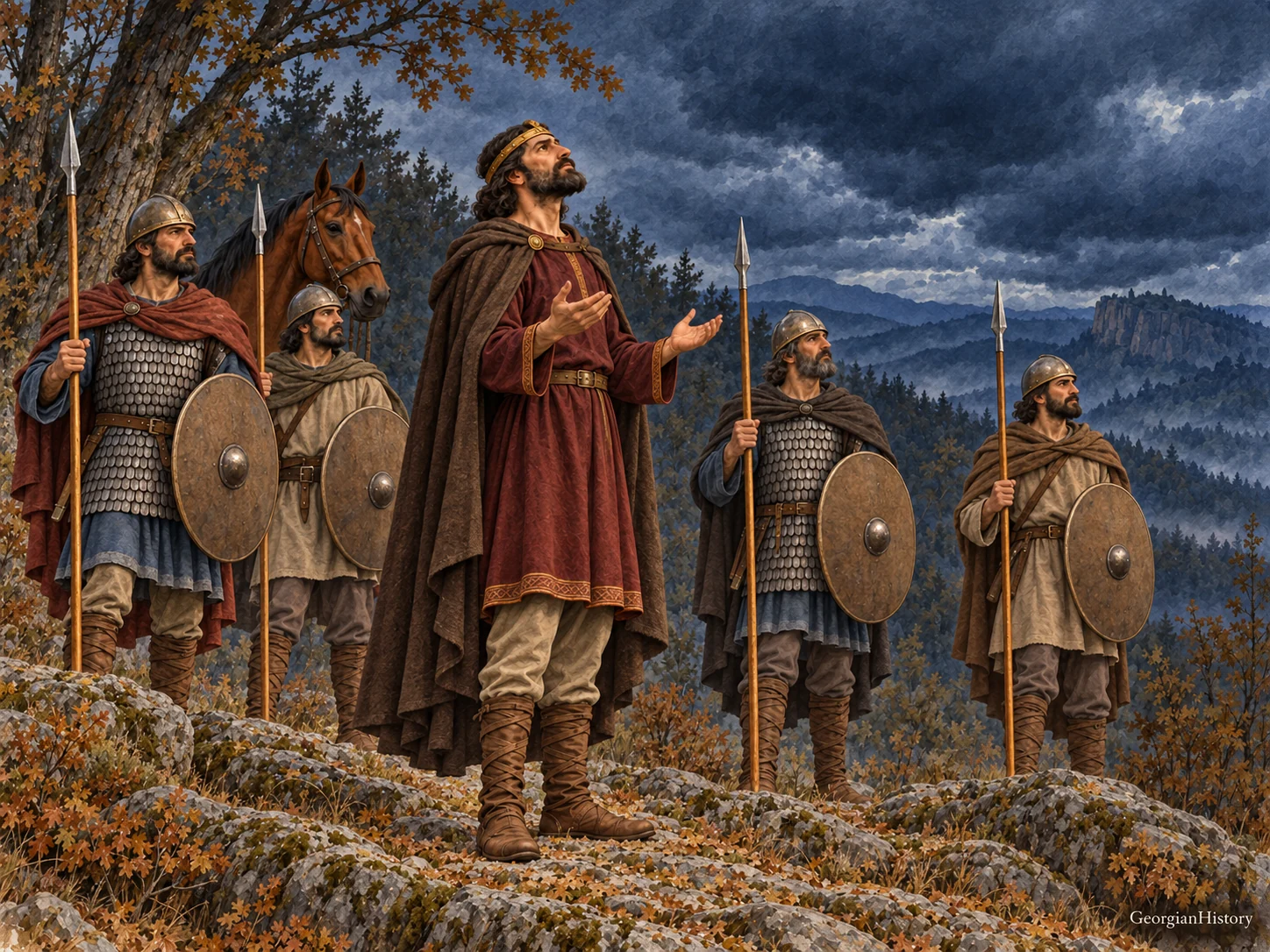
Before this, he had heard the testimony of others. Now, according to tradition, his own deliverance became the foundation of his faith. The king returned to the preacher ready to learn how to organise Christian worship and build a church.
The kingdom at the waters of baptism
The ruling family’s conversion opened the way for Christianity at the royal court. Mirian’s baptism marked his new choice. The ruler’s decision cannot be read as an immediate change in the convictions of every inhabitant. The kingdom’s adoption of a new faith and its taking root in everyday life were different processes.
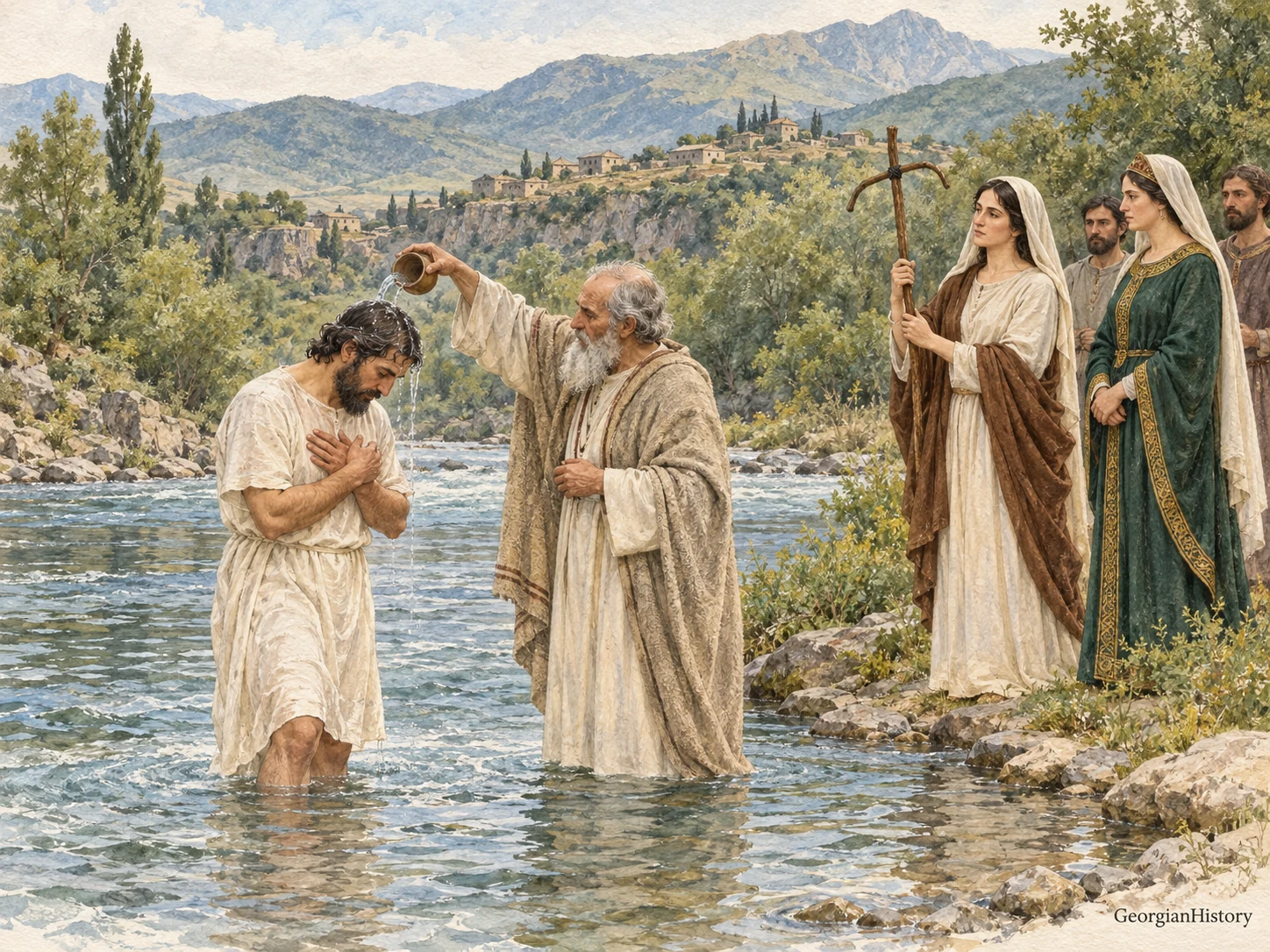
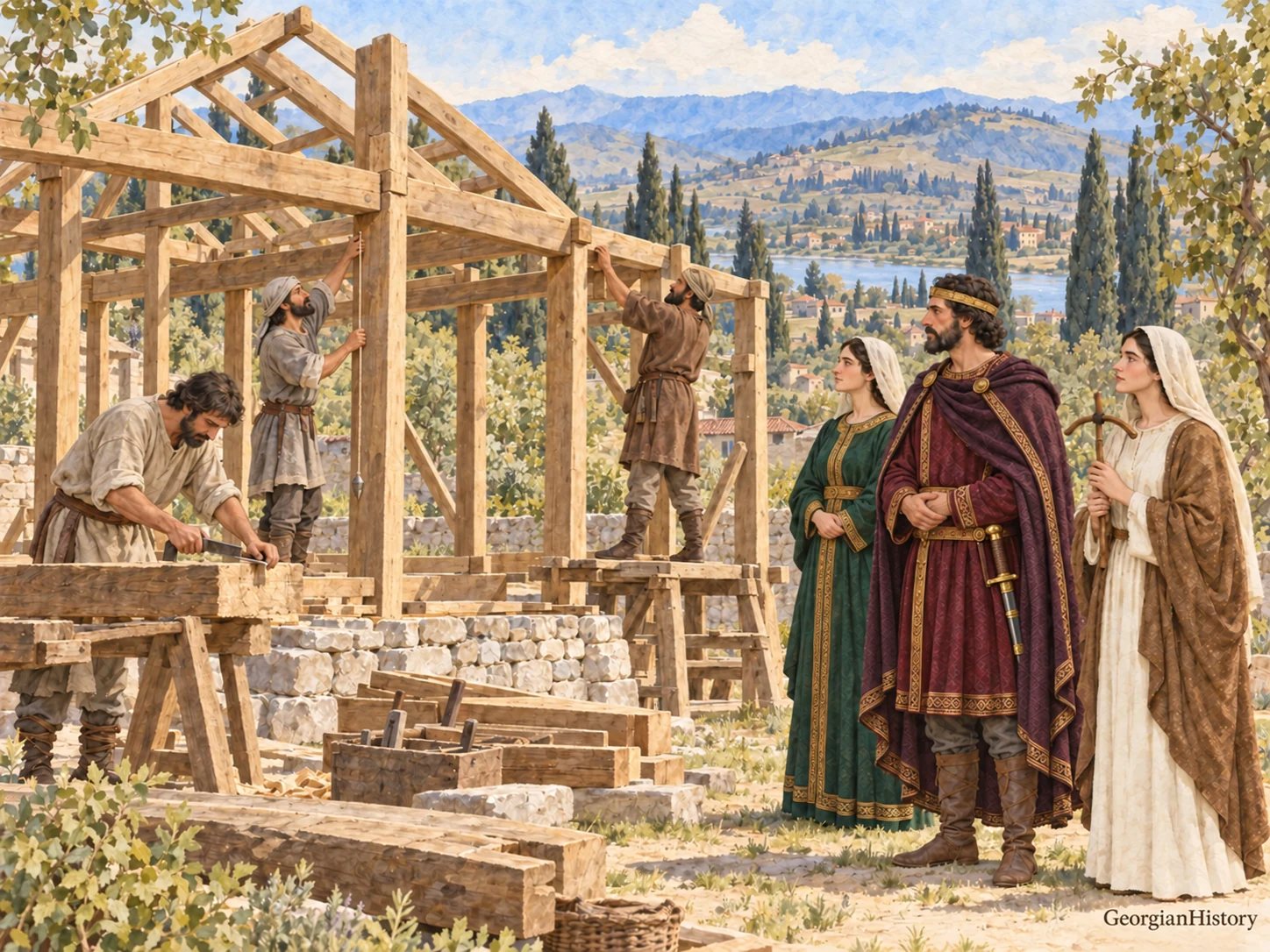
Action followed the spiritual decision. Mirian supported the building of a church and sent envoys to Emperor Constantine to ask him to send clergy. A bishop arrived from the Roman Empire. Christian preaching gained the support of ecclesiastical organisation and royal authority.
What became of the old gods
It is important to preserve the sequence in the tradition. The Conversion of Kartli places the destruction of Armazi, Gatsi and Gaim earlier, before the king’s conversion. In the text, Nino prays before the idols, after which a storm and heavy hail smash the statues.
There is thus no firm basis for depicting Mirian as a king who broke Armazi with his own hands after his baptism. The sources are clearer about his adoption of Christianity, his support for church building and his invitation to clergy. This support made his conversion an event of consequence for the state.
The beginning of a new era
The cross above Mtskheta became one of the principal images of Kartli’s Christian history. Behind it lay preaching, prayer and a royal decision whose consequences went far beyond a single reign.
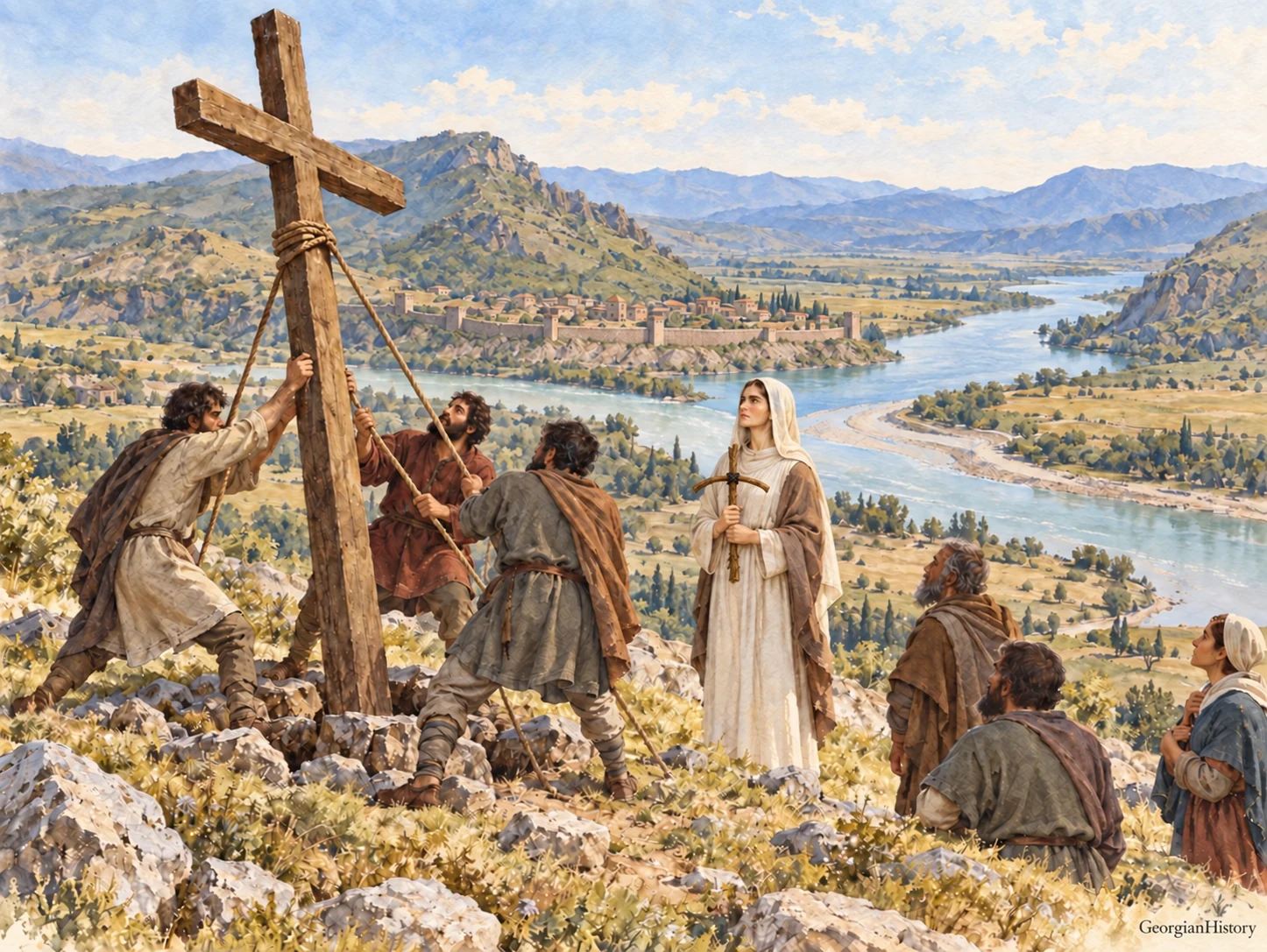
In Georgian memory, Nino, Nana and Mirian remained together, the preacher, the queen and the king. Their story tells how a faith entered the royal court and won the support of those in power. From this choice grew a tradition that left its mark on the country’s churches, books and historical memory.
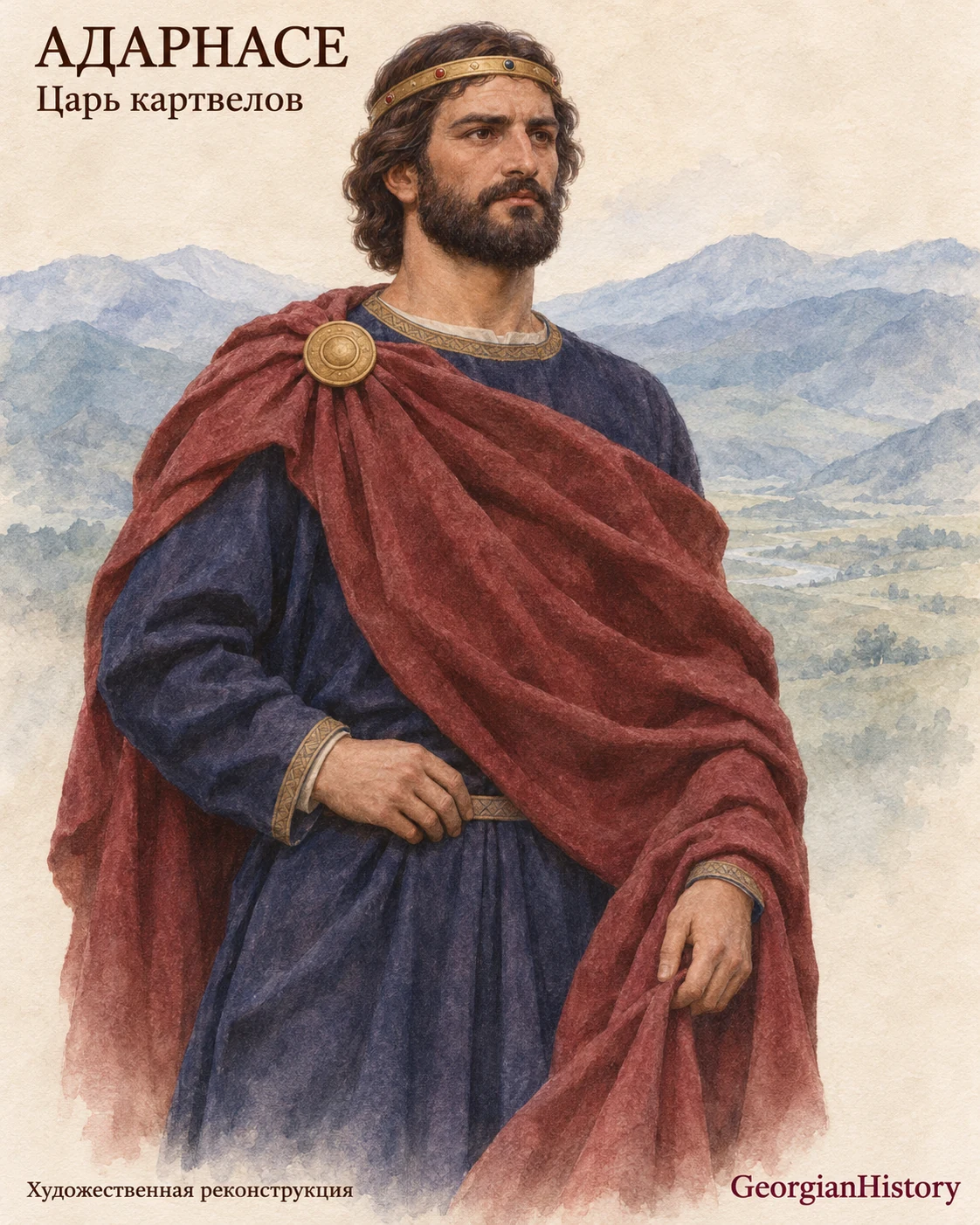
All the illustrations were created by GeorgianHistory as artistic reconstructions. The appearance and clothing of the figures, the architecture and the placement of those shown are conjectural. The scenes are illustrations, while the evidence comes from the sources.
Sources and further reading
- Conversion of Kartli / მოქცევაჲ ქართლისაჲ. Chapter V, on the description and destruction of the idols (Georgian text)
- Socrates Scholasticus. Ecclesiastical History, I, 20, on the conversion of the Iberians (English translation)
- Theodoret of Cyrrhus. Ecclesiastical History, I, 23, on the queen, the king and the embassy to Constantine (English translation)
- David Marshall Lang. Armazi. Encyclopaedia Iranica